

Quick summary
Organizing a company party usually involves far more coordination than most teams expect. The venue, catering, permits, tax implications, and entertainment all need to work together seamlessly. Handle those pieces separately, and things can get messy fast.
- Start planning at least three to six months in advance; for larger groups (100+), earlier is often better
- In 2025, a staff party at an external venue falls under the discretionary budget of the Dutch WKR scheme (2% on the first €400,000 of taxable payroll)
- One full-service partner with its own venue, catering, and project management can save several weeks of vendor coordination in practice
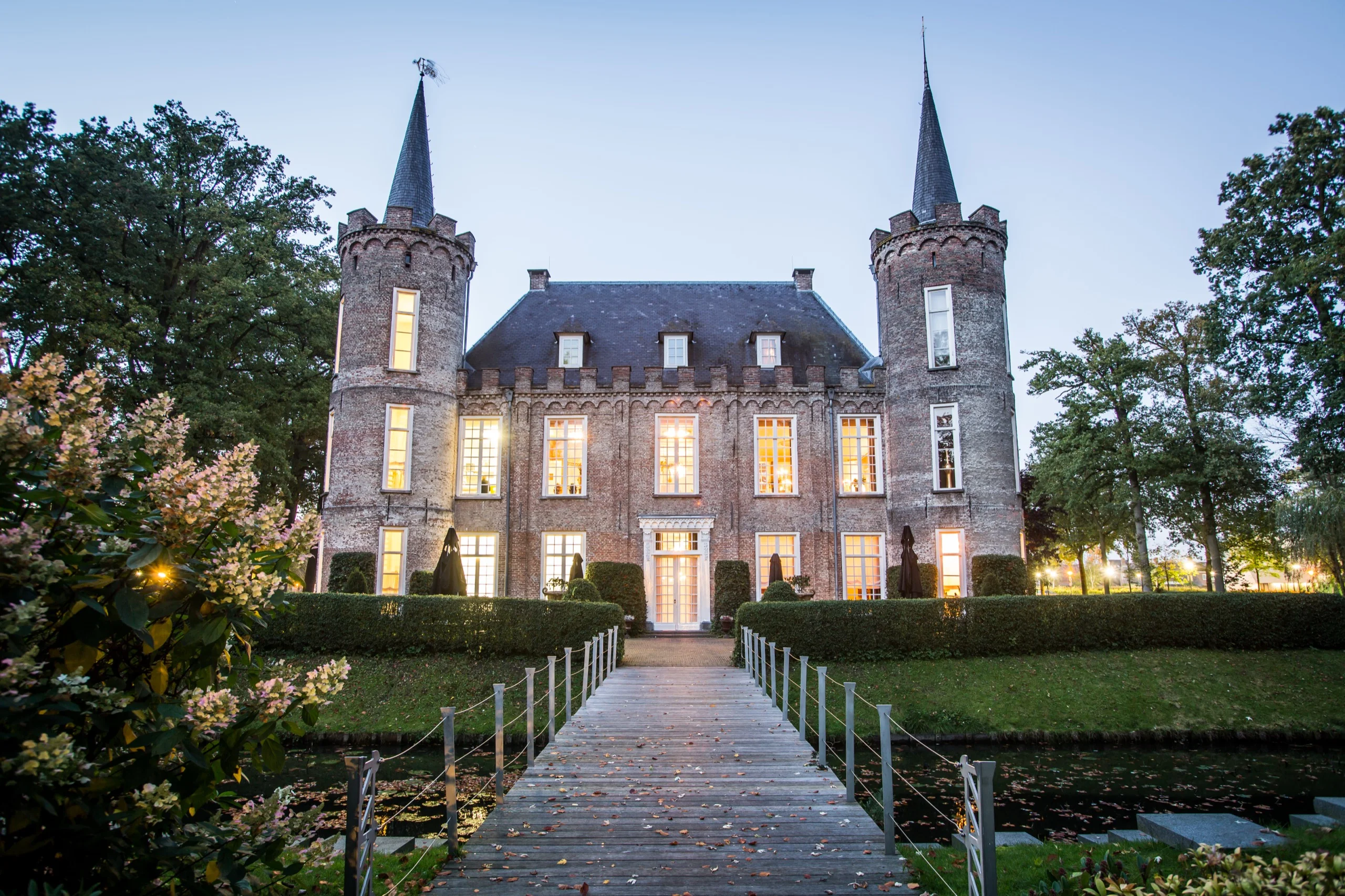
- Kasteel Henkenshage in Sint-Oedenrode can host up to 1,000 guests and offers multiple event spaces, gardens, and overnight accommodation
- Het Ketelhuis in Eindhoven offers an industrial-style setting for up to 200 guests
Why company parties often turn into more work than expected
You get the brief: organize a company party for 120 colleagues, budget €8,000, date set for four months from now. Sounds manageable. Until you discover the preferred venue is already fully booked, the caterer requires a separate marquee, the sound system comes at an extra cost, and the municipality needs a permit because part of the event is outdoors. (Services)
This is exactly the pattern La Casserole sees time and again with new clients. The real issue usually is not a lack of ideas, but underestimated logistics. Venue, catering, AV, furniture, entertainment, and scheduling are all booked separately, each with its own quote, contact person, and risk if something falls through.
According to Statistics Netherlands (CBS), the number of businesses in Dutch event catering increased by 83 percent between 2007 and 2024, with the strongest growth among one-person businesses. That means plenty of choice, but also a fragmented market: a different supplier for every service. If you want to organize things efficiently, it pays to take a different approach.
Step 1: Define the goal and guest profile before requesting a single quote
The purpose of the event shapes every decision that follows, from the venue to the format. A Christmas drinks reception for 40 people needs a very different setup from an anniversary party for 200 employees and their partners.
Sum up the goal in one sentence
Is the main goal to show appreciation, celebrate a milestone, or strengthen team spirit? It sounds simple, but the answer has direct consequences. If the focus is purely celebratory, a walking dinner or food stations usually work better than a formal seated gala dinner. If team building matters most, you want room for interaction rather than a long line-up of speeches. During the intake, La Casserole always asks one key question: what should guests still remember the next morning? That answer drives the entire concept.
Match the guest list to the catering format
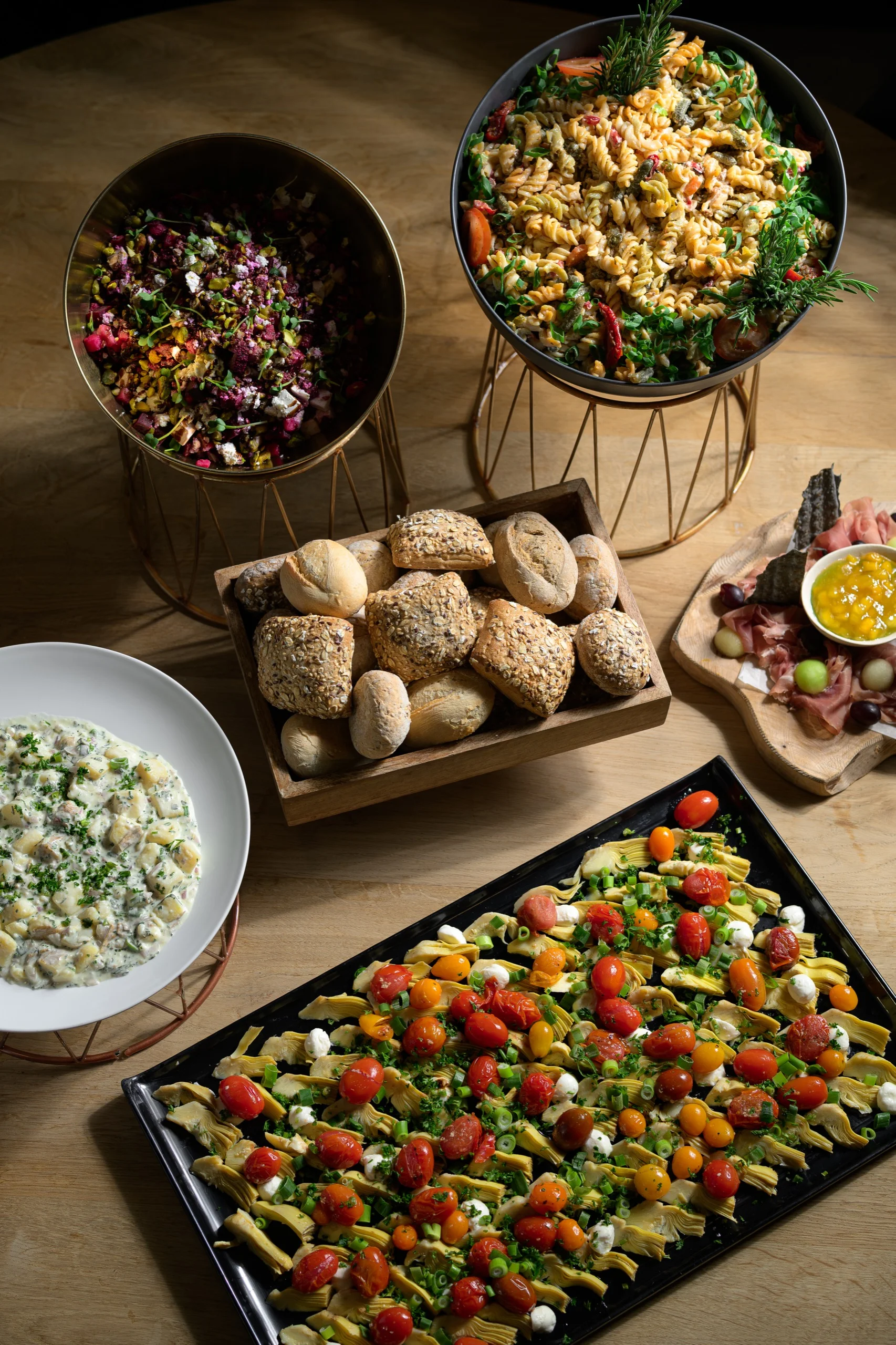
Guest numbers do not just determine the size of the venue, but also the best catering setup. For groups of up to around 50 people, a seated dinner can work very well. Above that, a walking dinner, food station concept, or buffet is usually more effective because it encourages guests to mingle and talk. You can also read the latest styling trends for weddings and events for current ideas on food concepts that work just as well for corporate events.
Are partners invited or not?
This choice also has tax implications. If partners attend and the party takes place at an external venue, their costs count toward the employee’s taxable benefit under the Dutch WKR scheme. So this is something to decide consciously, not as an afterthought.
What to do now:
- Write the event goal in one sentence: appreciation, milestone, or team building
- Decide whether partners are invited and note the tax implications (see the section on WKR)
- Draft a rough guest list: number of attendees, age mix, and roles
- Choose an initial catering format based on group size: seated dinner, walking dinner, or food stations
Step 2: Venue selection and permits, the two most underestimated factors
Choosing the right venue affects more than just the atmosphere. It also determines which permits may be required, what the WKR implications are, and how many additional suppliers you may need.
External venue versus your own premises
A party held at your own workplace usually falls outside the discretionary budget of the Dutch WKR scheme, which can be attractive from a tax perspective. A party at an external venue, such as an event hall or castle, does fall within that discretionary budget, and therefore counts toward the 2025 limit. If you exceed that threshold, employers generally pay an 80% final levy on the excess. Always consult a tax adviser for your specific situation.
The practical downside is that most office locations are not set up as event spaces. Furniture, heating, catering, and sound equipment often all need to be hired separately, which means the real cost can end up surprisingly close to that of a fully serviced external venue.
Permits and noise regulations
For a company party at an external venue, especially one involving amplified sound beyond local limits, a municipal notification or permit may be required. The Dutch Environmental and Planning Portal can be used to check the rules in the relevant municipality. Leave this too late, and you risk the event not being allowed to go ahead, or being subject to last-minute sound restrictions on the night itself.
Venues such as Kasteel Henkenshage and Het Ketelhuis have been operating as event venues for years and are familiar with local permit procedures. In practice, that can save organizers several rounds of back-and-forth with the municipality.
North Brabant as an events region
According to CBS data, North Brabant accounts for around 13% of all hospitality businesses in the Netherlands, behind North Holland and South Holland. That means the region offers a solid range of event venues, but popular dates in busy seasons book up quickly. Ideally, reserve your venue three to six months in advance.
What to do now:
- Check via the Environmental and Planning Portal whether an event permit or notification is required
- Calculate the available WKR discretionary budget for the current year before setting your budget
- Ask external venues whether permit support is included
- Compare venues to see whether furniture, catering, and AV are included or need to be hired separately
Step 3: Build your budget, including the hidden costs
A realistic event budget includes far more than just venue hire and catering. If those are the only two line items you focus on, the rest will almost certainly catch you off guard.

The five budget categories every company party has
For most company parties, costs are spread across venue, catering, entertainment, styling, and project management. The exact ratio depends on the type of event, but the comparison below gives a realistic sense of what to expect:
| Approach | Venue costs | Catering costs | Coordination costs | Risk of extra work | Typical group size |
|---|---|---|---|---|---|
| Own venue, hire everything separately | Low (your own premises) | €30-60 per person | High (5-8 suppliers) | High | Up to 100 people |
| External venue, separate suppliers | €20-50 per person | €45-80 per person | Medium (3-5 suppliers) | Medium | 50-250 people |
| External venue, full-service partner | Included in package | Included in package | Low (1 point of contact) | Low | 20-1,000 people |
The middle option is where most stress tends to happen. Multiple suppliers mean more calls, more invoices, and more room for things not to line up properly on the day.
Calculate the WKR discretionary budget
According to the Dutch Tax Administration, the discretionary budget in 2025 is generally 2% over the first €400,000 of taxable payroll and 1.18% above that. A staff party at an external venue is charged against that budget. So for a company with a payroll of €500,000, the available discretionary budget in 2025 would be €8,000 + €1,180 = €9,180. If the party exceeds that amount, an 80% final levy is generally due on the excess.
Build in a buffer
In practice, it is wise to keep a buffer of around 10% of the total budget for unforeseen costs, such as extra guests, last-minute changes, or additional technical requirements.
What to do now:
- Calculate the WKR discretionary budget based on your current payroll and compare it with the event budget
- Always ask whether quotes include or exclude VAT, setup, and breakdown
- Add a buffer of around 10% to the total budget
- If you receive package pricing, ask for one combined quote showing all cost items clearly
Step 4: One full-service partner or multiple suppliers?
The choice between a single full-service partner and separate suppliers has the biggest impact on how stressful the planning process feels.
What you gain from having one point of contact
For an average company party with 80 to 120 guests, separate sourcing usually means dealing with five to eight different parties: a venue, a caterer, a furniture and tableware rental company, an AV supplier, an entertainment agency, and sometimes a stylist too. Each has its own planning, delivery window, and terms.
La Casserole’s approach is to bring all of those moving parts together under one project manager: catering, styling, AV, furniture, rentals, and entertainment all come from one central point. That means one quote, one invoice, and one contact person overseeing everything on the day itself. For a deeper look at the practical benefits, read how full-service catering takes the pressure off corporate events.
Kasteel Henkenshage: 14th-century history with modern event capabilities
Kasteel Henkenshage in Sint-Oedenrode likely dates back to the early 14th century and has a remarkable history, including use as the headquarters of the 101st Airborne Division during the Second World War. Since 1998, the castle has been used for private celebrations and corporate events, accommodating groups of up to 1,000 guests across multiple rooms, reception spaces, and castle gardens.
That combination of historic character, practical facilities, and proven event experience makes it an excellent fit for staff parties, anniversaries, and product launches alike. If you want to get a feel for the venue, explore Kasteel Henkenshage and its event options directly on the La Casserole website.
When separate suppliers still make sense
For very small events (under 30 people), or when you are working with a very tight budget and already have certain elements in-house, booking separate suppliers may still be the more cost-effective option. The trade-off is simple: add up how many hours you will personally spend coordinating five different vendors. That is time you are not spending on your actual job.
What to do now:
- Note how many hours you realistically have available for event coordination alongside your regular work
- List how many suppliers you would need if booking separately, and how many quotes that would involve
- Ask full-service partners for a reference from a comparable event in type, size, and venue
- Compare the full-service quote with the total of separate quotes based on exactly the same specifications
Step 5: Planning and run sheet, the difference between a smooth event and a chaotic evening
A run sheet is the document that keeps everyone aligned at the right moment. Without one, miscommunication on the day is almost inevitable, and that usually leads to delays, confusion, and frustration.
A timeline that works
For most company parties, the following schedule is a solid guide:
- Three to six months before the event: reserve the venue, secure the full-service partner or key suppliers, confirm the date
- Two months before the event: finalize the program, catering format, and theme, and send out invitations
- Four weeks before the event: submit the final guest list, dietary requirements, and technical specifications
- One to two weeks before the event: review the run sheet with everyone involved and confirm logistics
- On the day itself: assign one contact person who is responsible for communication with the supplier or full-service partner
Communication with colleagues
A successful party starts with a good invitation. Send invitations out well in advance and ask colleagues about dietary requirements and allergies early on. For larger groups, that is one of the most common sources of last-minute stress if it is left too late.
Let the professional take over on the day
The biggest advantage of working with a full-service partner is what does not happen on the day: no phone calls about delayed deliveries, no debates about table layouts, no confusion over who is handling what. La Casserole assigns a dedicated project manager to every event, present on site and in control throughout. That is the real difference an HR manager or office manager feels: you get to enjoy the event instead of running around managing it.
What to do now:
- Create a timeline using the five steps above and add firm deadlines to your calendar
- Appoint one internal contact person for all communication with external parties
- Ask the caterer or full-service partner for a draft run sheet no later than four weeks before the event
- Check that the run sheet includes setup and breakdown times, dietary requirements, and contact details for every supplier involved
Frequently asked questions
How far in advance should you book a company party?
The ideal booking window depends on the group size and the season. For parties of up to around 50 people, booking three months ahead is usually enough. For larger groups (100 people or more), or for popular periods such as Christmas, six to twelve months is a more realistic guideline. Popular venues in Brabant, such as Kasteel Henkenshage, can book out quickly during peak times. So as a rule, start earlier than you think you need to.
What are the WKR rules for a staff party at an external venue in 2025?
Under the Dutch Work-Related Costs Scheme (WKR), a staff party at an external venue is charged against the discretionary budget. In 2025, that budget is 2% over the first €400,000 of taxable payroll and 1.18% over the amount above that. If you exceed the available budget, the employer generally pays an 80% final levy on the excess. A tax adviser can calculate exactly what fits within your payroll. Always check the latest guidance from the Dutch Tax Administration, as percentages may change from year to year.
How do you avoid stress when organizing a company party?
The biggest source of stress is usually coordinating multiple separate suppliers. Choosing one full-service partner that combines venue, catering, AV, and styling removes most of that coordination burden. La Casserole works with one project manager per event who keeps everything aligned, so the internal organizer can focus on the event itself rather than the logistics. Having a run sheet ready four weeks before the event also brings a lot more clarity and peace of mind.
What catering format works best for a company party with 100 guests?
For larger groups, a walking dinner or food station concept generally works better than a seated dinner. It encourages interaction, gives you more flexibility with the layout, and allows guests more freedom in how and when they eat. For groups of roughly 80 to 150 people, a walking dinner with three or four courses is one of the most popular formats. If business presentations or speeches are also planned, a hybrid setup can work well too: a short seated section followed by a walking dinner.
Why is Kasteel Henkenshage a good fit for a company party?
Kasteel Henkenshage in Sint-Oedenrode combines historic atmosphere with modern event facilities. The castle likely dates back to the early 14th century and has been used as an event venue for private celebrations and business gatherings since 1998, with capacity for up to 1,000 guests. It offers multiple rooms, castle gardens, and overnight accommodation. La Casserole manages the venue and provides the catering, styling, and AV on site, so there is no need to coordinate separate suppliers.
Conclusion
Organizing a company party without stress is not about luck. It is about having a clear method. Start with the goal, match the venue choice to the tax and logistical implications, build a realistic budget that includes the less obvious costs, and make a conscious decision about how many suppliers you want to coordinate yourself.
Choosing a full-service partner with its own venues in Brabant can save weeks of coordination time in practice and dramatically reduce the risk of unpleasant surprises on the day. With more than 40 years of experience, plus its own venues such as Kasteel Henkenshage and Het Ketelhuis, La Casserole manages the entire process from concept to breakdown.
Explore the full range of options for corporate and private events and schedule a no-obligation intake to see what fits your event, group size, and budget. If you are also planning a conference or more formal gathering, this step-by-step guide to organizing a conference in Brabant offers additional practical guidance.
Looking to host a stylish event in Brabant? Let us handle it!
Sources
- Volgens CBS-cijfers — Cbs
- Een feest op een externe locatie, zoals een feestzaal of kasteel, valt daarentegen wel binnen de vrije ruimte — Timelessevents
- Via het Omgevingsloket valt te controleren welke regels in de betreffende gemeente gelden — Ondernemersplein
- Volgens de Belastingdienst — Belastingdienst
- waarschijnlijk van het begin van de 14e eeuw — Dagvanhetkasteel
- Sinds 1998 is het kasteel in gebruik als locatie voor besloten feesten en zakelijke evenementen — Bezoekmeierijstad
- Meer restaurants en catering, minder cafés — CBS (Centraal Bureau voor de Statistiek)
- Kasteel Henkenshage – Dag van het Kasteel — Dag van het Kasteel