

Quick summary
Organizing a conference in Brabant takes a clear structure and an early start. According to Evenementorganiseren.nl, a professional knowledge-sharing event of any size typically requires six to twelve months of preparation. It is also smart to set aside a contingency of around 10% of your total budget. For a venue such as Kasteel Henkenshage in Sint-Oedenrode, specific permit requirements apply through the municipality of Meierijstad.
- Start at least six months in advance; for larger conferences, twelve months is even better
- Apply for an event permit no later than 8 weeks in advance (16 weeks for large-scale events)
- Set aside a contingency budget of around 10% of the total
- Make sure your caterer works with a food safety plan based on HACCP
- Consider working with one full-service partner for venue, catering, AV, and styling to reduce coordination pressure
Why most conferences run into trouble
If you have ever managed an event, the pattern is instantly familiar: three months before the conference, the venue is booked, but the caterer turns out to be unavailable on that date. The AV supplier never received the confirmation. And the permit application still has not been submitted. (Services)
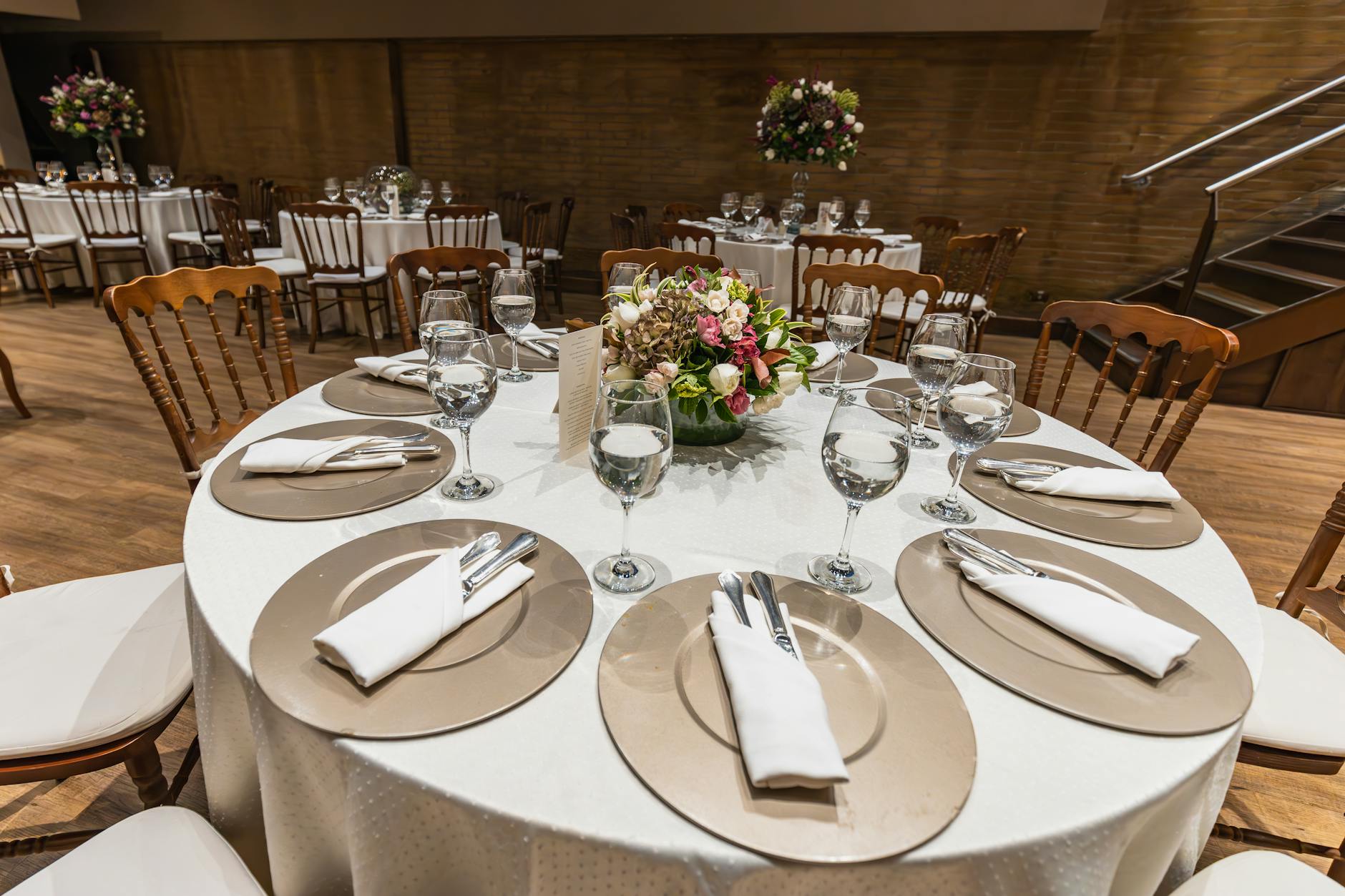
This is exactly the kind of situation la-casserole regularly sees with business clients. On paper, conference planning looks manageable. In reality, once multiple vendors all work to their own timelines and no one owns the full picture, things can unravel fast. The result is usually the same: stress in the final weeks, last-minute costs, and an event day that never quite runs the way it should.
This checklist is designed for marketing managers, HR managers, and office managers in Brabant who want to deliver a polished conference for anywhere from 50 to 600 attendees. The steps below follow the same order most real-world decisions are made.
Step 1: Define your goal, audience, and budget
Your objective is the foundation of the entire conference. Without a clear goal, every choice that follows, from venue to program format, becomes guesswork.

Turn the idea into a clear objective
If your organization is planning a conference for the first time, start by defining what success actually looks like. Is the goal to share knowledge within your industry, generate leads, strengthen client relationships, or reinforce your brand position? That answer will shape the format, speaker lineup, and ultimately the kind of venue you need.
Define your audience and expected attendance
Once the objective is clear, the next step is to describe your audience in detail. Who are you inviting? What do they expect from the day? And how many people are you realistically aiming to attract? That number directly affects venue capacity. Kasteel Henkenshage in Sint-Oedenrode can host groups from 20 to around 600 guests, with the venue always reserved exclusively. That makes it a strong fit for a mid-sized business conference, but not for a national trade fair with thousands of visitors.
Build your budget and include a contingency
Create a budget with fixed costs such as venue hire, speaker fees, and AV, alongside variable costs such as catering per guest, printed materials, and entertainment. In every event budget, include a contingency line of around 10% of the total. That buffer covers the things no one plans for: extra setup time, replacement equipment, or an additional catering round at the end of the day. Evenementorganiseren.nl specifically recommends this as standard practice.
Action steps:
- Write your objective in one sentence: what should attendees know, be able to do, or feel by the end?
- Define expected attendance as a range, not an exact number
- Build a budget with separate lines for venue, catering, AV, marketing, and contingency
- Check whether your budget is realistic by requesting quotes from at least two venues
Step 2: Choose the venue and arrange permits
Your venue choice has a direct impact on both the attendee experience and the complexity of the logistics behind the scenes.
Why the venue atmosphere matters
A standard meeting space may be fine for an internal team session. A conference, however, needs an environment that takes people out of their day-to-day routine and puts them in the right mindset for learning, conversation, and fresh ideas. Kasteel Henkenshage in Sint-Oedenrode, surrounded by a moat and parkland, offers exactly that. The castle dates back to the early 14th century. Since 1998, la-casserole has managed the venue and hosted everything from small meetings to large-scale conferences there.
The venue has three halls, modern AV facilities including projectors and flatscreens, free Wi-Fi, and ample free parking. That blend of historic character and modern functionality is hard to match in Brabant.
Practical venue criteria
When choosing a conference venue in Brabant, atmosphere is only part of the picture. Accessibility matters too, especially via the A50 and A58. You should also check whether there are breakout spaces for parallel sessions and whether the venue can be booked for exclusive use. Exclusive use, which comes standard at Kasteel Henkenshage, prevents attendees from running into unrelated groups and helps maintain a professional feel throughout the day.
Permits: apply earlier than you think
One area organizers often underestimate is the permit process. Sint-Oedenrode falls under the municipality of Meierijstad, which requires an event permit application at least 8 weeks in advance. For large-scale or higher-risk events, the deadline is 16 weeks. Private gatherings on your own premises may be exempt, but as soon as a conference is open to the public or includes outdoor elements, a permit is often required. If there is any doubt, contact the municipality early.
Action steps:
- Visit at least two venues in person, ideally with a colleague
- Check whether the venue is available exclusively on your preferred date
- Ask the municipality whether an event permit is required and what the lead time is
- Confirm the venue booking in writing as soon as the date is set
Step 3: Program, speakers, and catering
The program is what determines whether attendees leave feeling the day was worthwhile, or check out mentally by mid-afternoon.
Build a program that keeps people engaged
One of the most common mistakes is overloading the schedule. Back-to-back talks with no room to breathe quickly drain the energy in the room. Build in intentional white space: a longer coffee break, a networking lunch, or even a guided walk through the castle grounds can be part of the program rather than time lost.
Mix up the session formats too. A plenary keynote followed by two breakout sessions and a panel discussion is much more engaging than a string of lectures. Save your strongest speaker for just before the close. That gives people a reason to stay until the end.
Treat catering as part of the experience
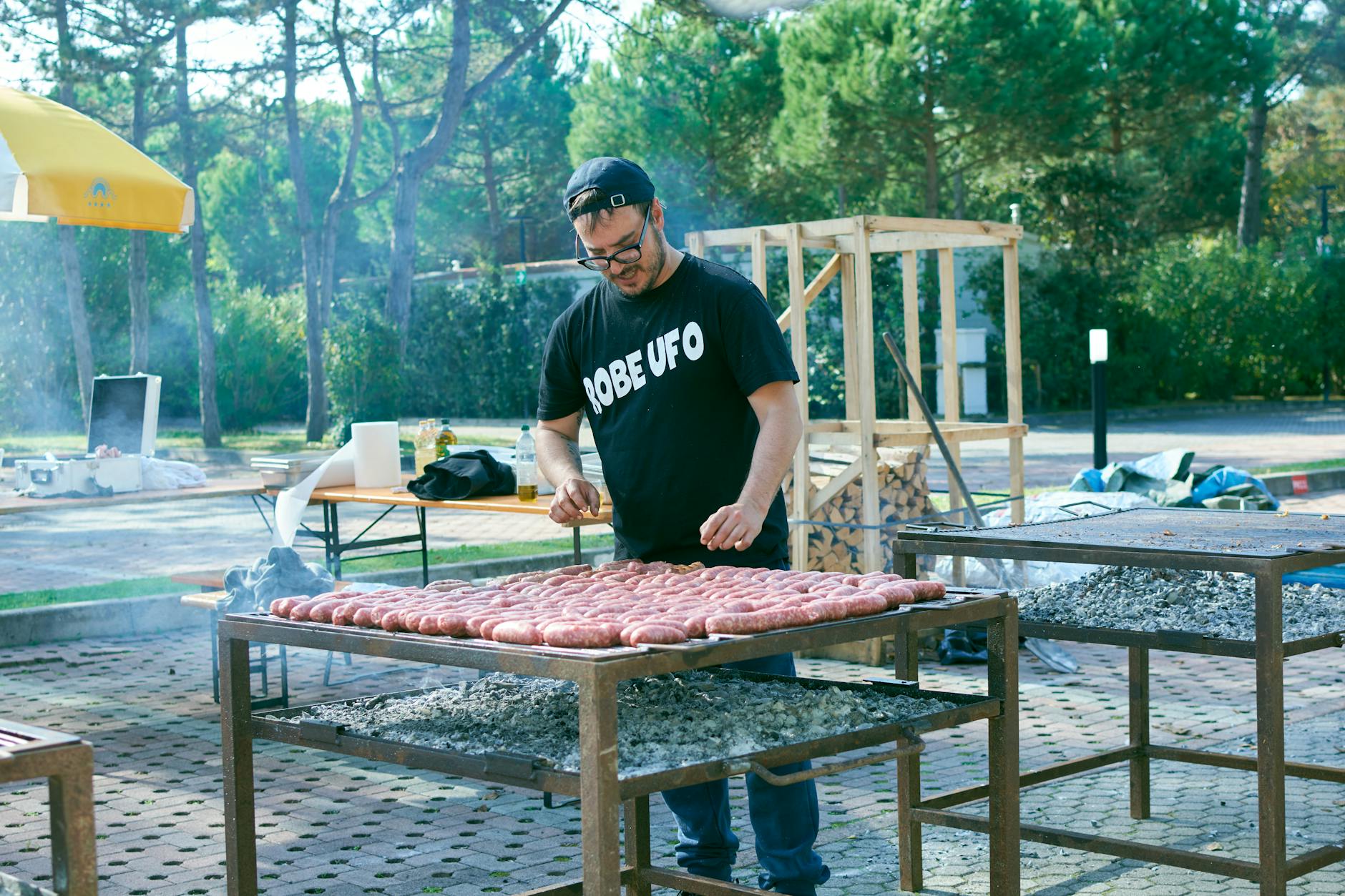
At a conference, catering is not a side issue. A good lunch, enough variety, and the right setting all influence the energy of the afternoon. At conferences hosted at Kasteel Henkenshage, la-casserole aligns the catering format with the flow of the day: a walking lunch for a dynamic networking event, for example, or a seated dinner for a more formal closing session. That way, the food supports the atmosphere the program is designed to create. For more ideas on catering and event styling, see this overview of trends for events and weddings.
Any caterer preparing or serving food at an event is legally required to work with a food safety plan based on HACCP. The NVWA actively monitors compliance. When requesting quotes, always ask for the caterer’s HACCP documentation.
Create a clear run of show and assign responsibilities
A solid run of show should list, for every part of the day, the time, the location within the venue, the responsible person, and the activity itself. You should also appoint one person as the point of contact for all external vendors on the event day. That person should not be tied up with a content role in the program, so they can focus fully on coordination.
Action steps:
- Build a schedule in 15-minute blocks, including setup and breakdown time
- Check that every speaker has confirmed their presentation format: slides, video, live demo, or other needs
- Ask the caterer to send over the HACCP food safety plan before signing the contract
- Create a run of show with name, time, location, and owner for every activity
Organize it yourself or outsource it? An honest comparison
Many organizations weigh the same trade-off: handling everything internally gives you control, but it also eats up time and capacity. Working with one full-service partner gives you peace of mind, but it does require trust. The table below compares both approaches on the criteria that usually matter most in practice.
| Aspect | Full-service partner (la-casserole) | Coordinating separate vendors yourself |
|---|---|---|
| Number of contacts | 1 central point of contact | Usually 5 to 10 separate suppliers |
| Turnaround time for changes | Adjusted internally the same day | Multiple vendors need to be contacted again |
| Food safety (HACCP) | Built into the internal process | Must be checked with each caterer separately |
| Permit support | Guidance based on experience | Entirely your own responsibility |
| Venue and catering coordination | Integrated at one location | Separate contracts, higher risk of miscommunication |
| Handling unexpected issues | Immediate internal capacity available | Depends on the availability and willingness of separate parties |
The clearest benefit of working with one full-service partner is speed when plans change. Imagine your expected attendance jumps from 180 to 240 guests two weeks before the event. With separate suppliers, that means calling the caterer again, updating chair rental, reworking the floor plan, and informing the AV team. With an integrated partner such as la-casserole, that is one conversation. For more insight into the practical benefits of full-service catering for business events, read this article about full-service catering and what it delivers.
After the conference: evaluation and follow-up
Evaluation may be the least glamorous part of conference planning, but it is often the most valuable when you start preparing the next one.
Gather feedback while the experience is still fresh
Send a short survey to attendees within 48 hours of the conference. The sooner you ask, the better the response rate and the sharper the feedback. Keep it to no more than eight questions, focused on the program, venue, catering, and logistics. Include one open question as well: what could have been better?
Thank and evaluate your suppliers
Send a thank-you email to speakers, suppliers, and volunteers too. That is not just good manners; it also helps keep relationships warm for future events. Internally, note what worked well with each supplier and what could be improved. Those notes are incredibly useful next time around.
Reconcile the budget
Close out the budget once all invoices have been received. Compare the final costs with the original estimate and document where the differences came from. That analysis will help you build a more realistic budget for the next conference. If the contingency budget was used up completely, that is a sign you should plan more generously next time.
Action steps:
- Send the attendee survey within 48 hours of the event
- Compare actual costs with the budget by cost category
- Review the event internally with the organizing team: what were the three biggest bottlenecks?
- Reconfirm agreements with regular suppliers if the conference is an annual event
Frequently asked questions
How far in advance should you start planning a conference in Brabant?
A conference of any real size usually requires six to twelve months of preparation. According to Evenementorganiseren.nl, that is the standard lead time for a professional knowledge event. The more attendees and external speakers you have, the earlier you should begin. Venues such as Kasteel Henkenshage in Sint-Oedenrode can be booked up nine to twelve months ahead for popular dates, so venue selection should be your very first step.
How does la-casserole help with organizing a conference in Brabant?
la-casserole brings together venue, catering, AV, styling, and project management in one complete solution. With more than 40 years of experience and its own venues, including Kasteel Henkenshage in Sint-Oedenrode, la-casserole acts as one central point of contact for every part of the conference. In practice, that means if your guest count changes or your program shifts, you only need to contact one party instead of five or more separate suppliers. Want to learn more about this approach? Take a look at la-casserole as your event partner.
What permit do you need for a conference in Sint-Oedenrode?
In many cases, an event permit is required for public or large-scale gatherings at a venue such as Kasteel Henkenshage. The municipality of Meierijstad requires applications at least 8 weeks in advance; for large-scale or higher-risk events, the lead time is 16 weeks. Private events on your own premises may be exempt, but if you are unsure, contact the municipality well in advance to avoid delays.
What does a conference cost per person in Brabant?
The cost per attendee depends heavily on the venue, program format, and level of catering. As a rough guide, the industry often starts at around 100 euros per person for a basic conference, but a full-day event with catering, AV, and speaker fees can rise quickly from there. For a more accurate estimate for your specific situation, read the article about the cost of off-site catering, or request a quote from la-casserole.
Why is HACCP required for conference catering?
HACCP (Hazard Analysis and Critical Control Points) is the legally required food safety system for all parties preparing or serving food at events. The NVWA checks whether caterers work with an approved food safety plan or recognized hygiene code. For organizers, the practical takeaway is simple: ask every caterer for their HACCP documentation before signing the contract. A professional caterer such as la-casserole will have this built into its standard process and can provide the paperwork straight away.
Conclusion
A successful conference in Brabant is not a matter of luck. It comes down to handling the right things in the right order. The biggest risks, such as applying for permits too late, miscommunication between separate suppliers, and an understaffed run of show, are all preventable if you start early and assign responsibilities clearly.
As a venue, Kasteel Henkenshage in Sint-Oedenrode offers a combination that is hard to find elsewhere in Brabant: historic atmosphere, modern facilities, and exclusive use for groups of up to around 600 guests. Combined with the full-service approach of la-casserole, where catering, AV, styling, and project management all sit under one roof, it creates exactly what every conference organizer wants: control without having to chase every detail yourself.
If you are planning a conference in Brabant and want to explore what is possible at Kasteel Henkenshage or another la-casserole venue, you can find more information at la-casserole.nl.
Looking to host a stylish event in Brabant? Let us handle it!
Sources
- Evenementorganiseren.nl — Evenementorganiseren
- Kasteel Henkenshage in Sint-Oedenrode — Feestjegeven
- Kasteel Henkenshage — Kasteel-henkenshage
- gemeente Meierijstad — Meierijstad
- NVWA — Nvwa
- Congres organiseren: de checklist — Evenementorganiseren.nl
- Evenement organiseren – Gemeente Meierijstad — Gemeente Meierijstad
- HACCP — Nederlandse Voedsel- en Warenautoriteit (NVWA)