

Quick summary
A chef-at-the-table dinner show is a seated multi-course dining experience where the chef cooks and presents live at or beside the dining table. A walking dinner consists of five to eight small courses served to standing guests, without assigned seating. Both can deliver a high-end culinary experience, but they serve very different purposes.
- A chef-at-the-table format is best suited to events with speeches, presentations, or a more formal client or stakeholder setting.
- A walking dinner works better for networking events, larger groups, and venues that are not set up for a banquet-style dinner.
- For groups of more than 100 guests, a fully served seated dinner becomes significantly more demanding both logistically and financially, according to Catering Culinair.
- A five-course walking dinner typically lasts 1.5 to 2 hours; an eight-course version usually runs 2.5 to 3 hours, according to KOM Catering & Events.
- La Casserole delivers both formats as fully developed culinary concepts, including its own chef, styling, and complete on-site logistics.
Two formats, two completely different experiences
Say you’re an HR manager at a manufacturing company with 60 employees, and you’re planning the annual staff party. You want people to mingle, meet colleagues they don’t usually speak to, and leave feeling like the evening was genuinely memorable. The question is simple: do you seat everyone for a multi-course dinner, or do you choose a format that lets guests move around and decide who they spend time with? (Services)
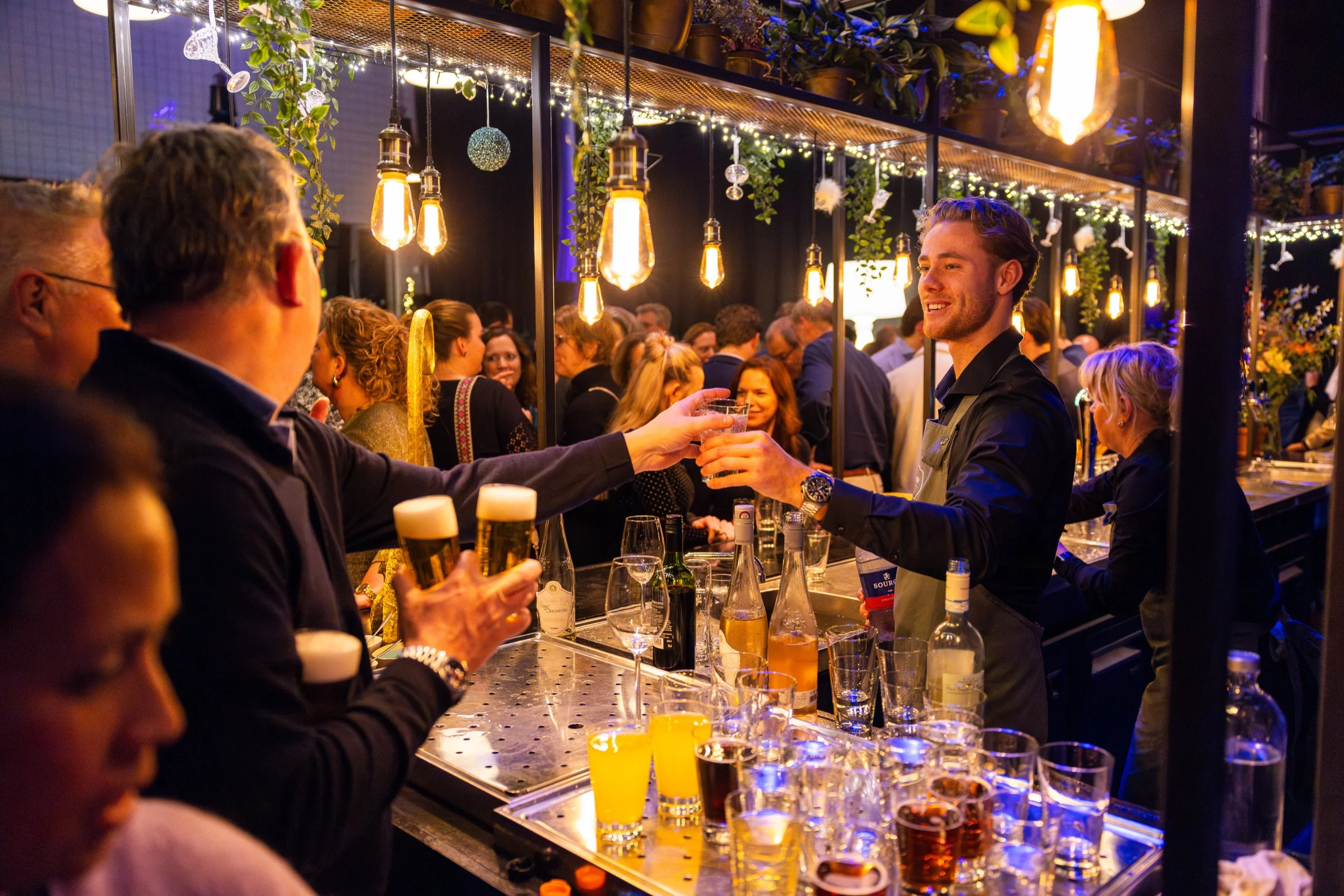
This is exactly the kind of decision event caterers deal with every day. And the answer is not just “it depends.” There are clear criteria that should guide the choice, and knowing them leads to a better decision.
According to the Centraal Bureau voor de Statistiek (CBS), the number of event catering businesses in the Netherlands more than tripled between 2007 and 2024, with 27.000 companies now falling into the category. That growth has dramatically expanded the range of catering formats on offer. Where the choice used to be limited to a buffet or a seated dinner, there are now dozens of options. That makes the decision more complex, but also more interesting.
In practice, La Casserole sees clients make this distinction too late in the planning process. If you wait until the quotation stage to decide on the format, you may already be limited by venue constraints, staffing availability, and timing.
What makes a chef-at-the-table dinner show unique?
The chef as part of the programme
A chef-at-the-table dinner show puts the chef front and centre rather than behind the scenes. They cook, explain, and interact with guests in real time. That turns the food into part of the entertainment. Guests can watch a tartare being prepared, smell the herbs as they hit the pan, and hear the story behind the ingredients.
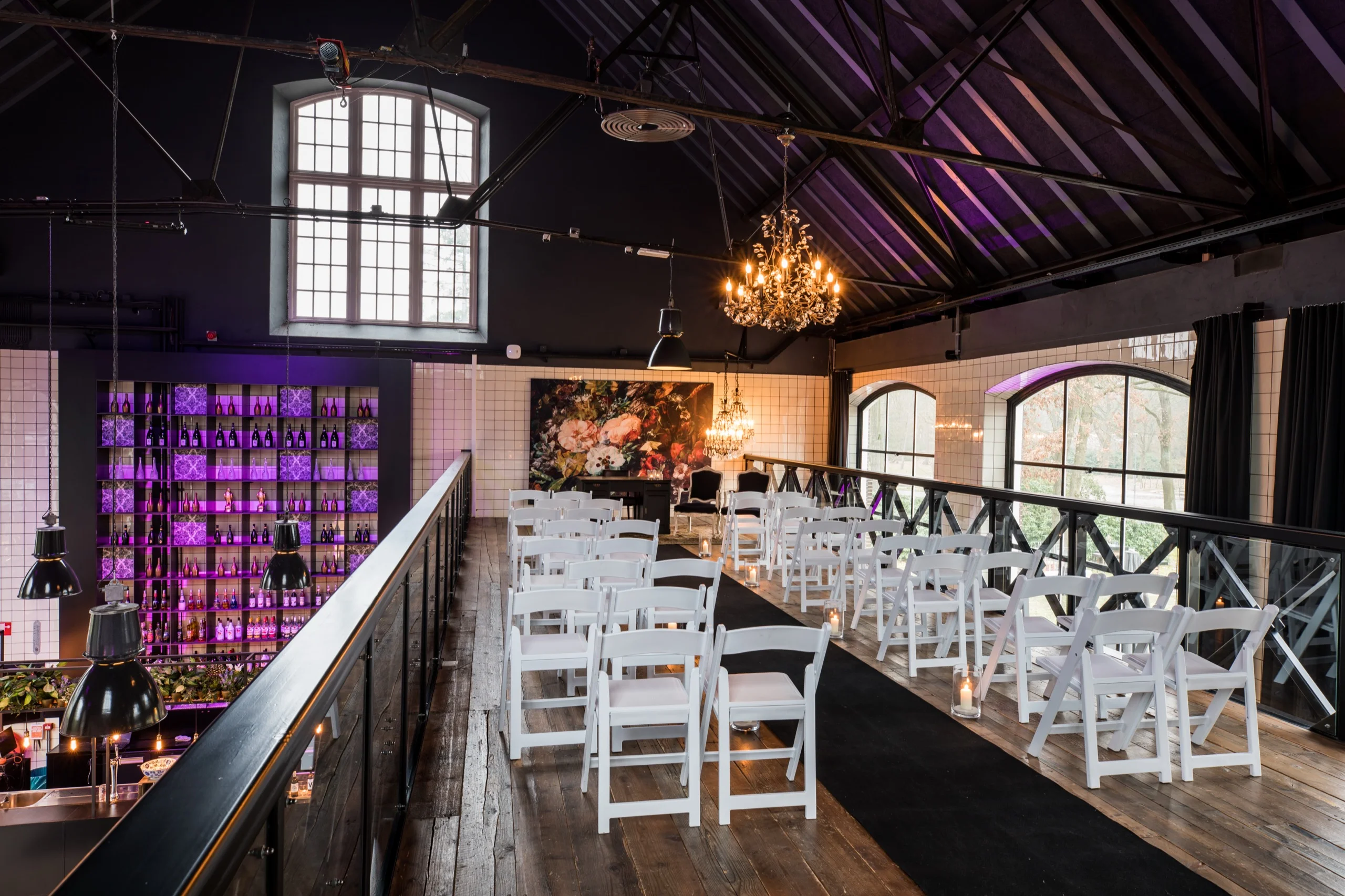
This format is closely related to what the catering world often calls private dining or a chef’s table experience. The value is not just in the food itself, but in the full experience: visual, social, and culinary all at once. For a board dinner with twelve guests or a client evening with a carefully selected group, it brings a real sense of occasion.
When this format works in practice
A chef-at-the-table setup depends on a few practical conditions. The venue needs a fixed table layout. There must be power access for induction hobs or other cooking equipment at or near the table. And the chef needs to be more than a strong cook; they also need to be comfortable presenting and engaging with guests.
Just as importantly, this format works best when the evening has structure. Speeches before the second course. A product launch between starter and main. A short address from the director as dessert is served. According to KOM Catering & Events, a seated dinner with a chef at the table is better suited to events that include speeches, presentations, or formal moments. That makes sense: fixed seating creates a shared focus that is much harder to achieve during a walking dinner.
Group size and staffing
A fully served dinner with a chef at the table typically requires at least one service staff member for every ten to twelve guests, in addition to the chef. As group size increases, the coordination becomes far more complex. Catering Culinair notes that seated service for events of 100 guests or more is certainly possible, but it requires substantial staffing and coordination, which drives costs up quickly. In practice, La Casserole most often uses this format for groups of 10 to 60 guests.
What to check before you book:
- Make sure the venue supports a fixed dining layout and has power access near the table.
- Review the programme: if you have speeches, presentations, or ceremonial moments planned, a seated format is usually the stronger choice.
- Ask the caterer how many service staff will be assigned per 10 guests; below 1 per 12 guests, the experience usually starts to suffer.
- Confirm early: a dinner show built around a dedicated chef generally needs more lead time than a walking dinner.
What makes a walking dinner the right choice?
Designed for movement and interaction
A walking dinner is a format in which guests are served five to eight small courses while standing, circulating, or gathering around cocktail tables. Its biggest strength is freedom of movement: guests choose who they speak to, move naturally through the room, and set their own pace. That creates a level of interaction that a fixed table layout simply cannot match.
According to Josselin’s Catering, a walking dinner combines the best of both worlds: the luxury of a multi-course dinner with the flexibility of a reception. That sums up the appeal perfectly.
A scalable option for larger groups
With a walking dinner, space works in the organiser’s favour. Without a dedicated table and chair for every guest, a venue can accommodate significantly more people. Service is also easier to scale, because dishes are passed on trays or served from stations rather than plated and served individually at set places.
This is where a walking dinner clearly outperforms a chef-at-the-table format for larger events. For groups of 80 to 300 guests, it is usually the more efficient option while still delivering an excellent food experience. La Casserole typically structures this format around six to eight courses, starting with colder dishes that are easier to serve and building towards warmer, richer courses later in the evening.
Timing and flow
The timing of a walking dinner is relatively easy to plan. Five courses usually take 1.5 to 2 hours; eight courses often stretch to 2.5 to 3 hours. That makes it ideal as one part of a broader evening programme, leaving room before or after the meal for other activities. By contrast, a chef-at-the-table dinner is usually a longer, more focused part of the event, often lasting 2 to 3.5 hours.
What to consider before choosing this format:
- Start with group size: under 50 guests, a chef at the table is realistic; above 80, a walking dinner is usually easier to manage.
- Check the venue size: as a rule of thumb, allow at least 1.5 to 2 square metres per guest for a walking dinner, including circulation space.
- Decide on the number of courses based on how long you want the dinner element to last and where it fits in the wider programme.
- Ask the caterer how the menu is paced: the balance between cold and hot dishes, and lighter and richer courses, has a big impact on whether guests stay engaged until the end.
Detailed comparison: chef at the table vs walking dinner
| Aspect | Chef at the table (dinner show) | Walking dinner |
|---|---|---|
| Group size | Usually 10-60 guests | Suitable for 30-300+ guests |
| Duration | 2 to 3.5 hours seated | 1.5 to 3 hours, depending on the number of courses |
| Speeches and programme | Easy to incorporate | More difficult; guests are standing and moving around |
| Space needed | Requires a fixed table layout | Flexible; cocktail tables and circulation space |
| Staffing | High (min. 1 staff member per 10-12 guests) | Lower per guest; easier to scale |
| Networking potential | Limited to table neighbours | High; guests can move freely |
| Food experience | Immersive, story-driven, theatrical | Varied, light, interactive |
| Cost level | Usually higher per guest | Usually lower per guest for larger groups |
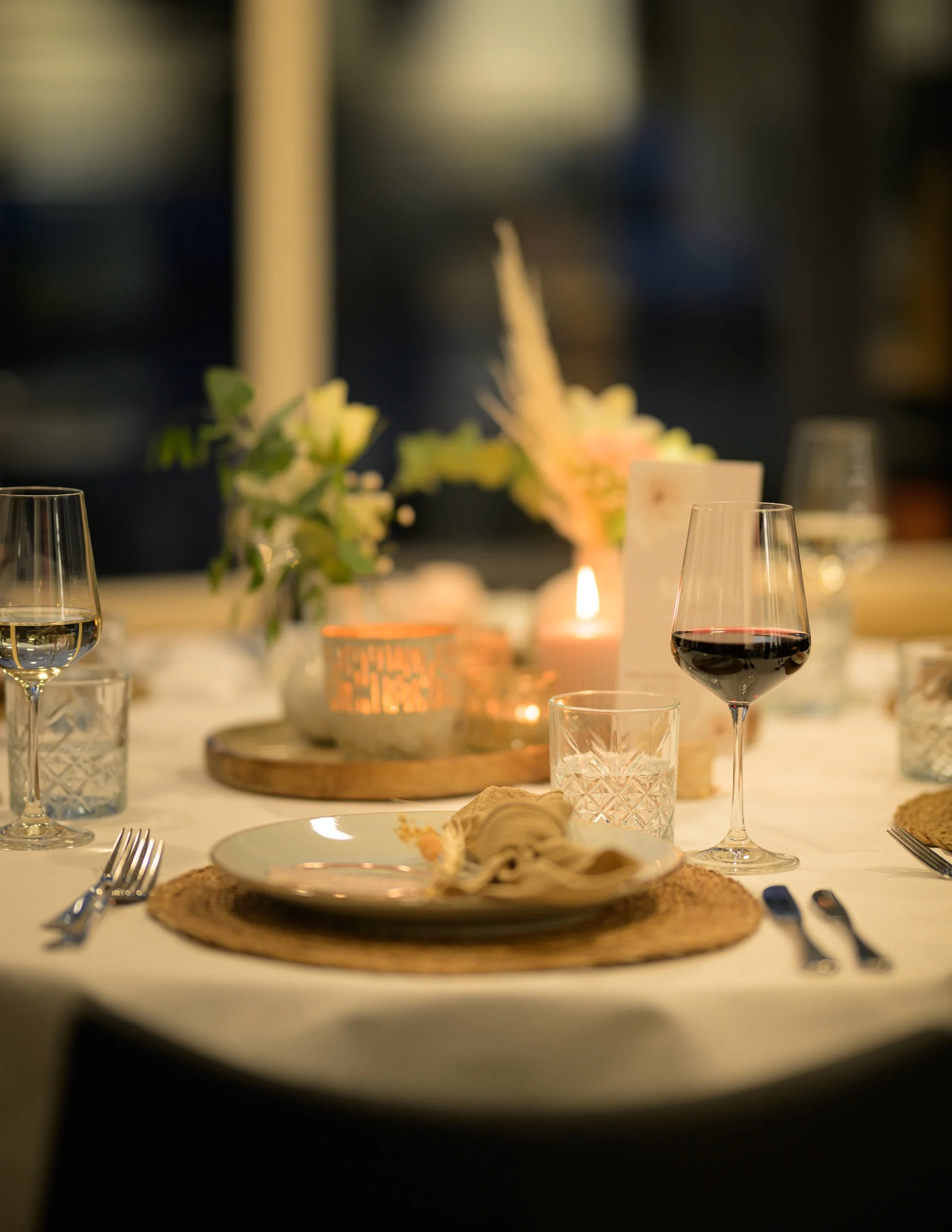
The comparison makes one thing clear: this is not a question of quality, but of function. Both formats can be equally impressive from a culinary point of view. The real question is what you want the event to achieve.
Which option is right for your event?
A practical decision-making framework
Imagine a marketing manager at a mid-sized technology company is hosting a client evening for 30 selected guests. The goal is to have meaningful conversations, introduce a new product, and create an evening people will remember. This is a textbook case for a chef-at-the-table dinner show. Assigned seating encourages focused conversation. The live chef adds a shared talking point. And the more formal tone suits the importance of the relationships being hosted.
Now imagine the same manager is organising a staff party for 150 employees three months later. The goal this time is to celebrate, help new colleagues get to know each other, and let people unwind after a busy year. In that case, a walking dinner is the better fit. The freedom to move around directly supports the social aim of the event.
The article on private dining in Brabant explores small-scale exclusive dining in more detail, including the styling and logistics involved.
The hybrid option: combining a dinner with a food truck
A third option La Casserole is using more and more often is a hybrid format that combines a walking dinner with a food truck. Guests begin with three or four walking dinner courses, after which the main course is served from a food truck in a more relaxed, festival-style setting. This works especially well for company events that gradually shift from formal to informal over the course of the evening.
La Casserole’s approach to food truck catering in Eindhoven shows what that looks like in practice: one truck can comfortably serve 30 to 80 guests per hour, and food trucks can be combined with passed bites and reception catering as part of one cohesive event. That is exactly what makes a hybrid format feel intentional rather than like two separate concepts bolted together.
According to Foodclicks.nl, the number of food trucks registered with the Dutch Chamber of Commerce grew from nearly 1.200 in 2017 to nearly 2.500 in 2022, an increase of around 110% in five years. That growth reflects a broader shift in how clients want to experience catering: less formal, more experiential, and more flexible.
If you are planning an event in Brabant and still weighing up the right setup, the article on full-service catering for corporate events offers additional insight into how catering, styling, and technical production work together to shape the overall experience.
A simple way to decide:
- Start with three core questions: what is the goal of the event: networking, celebrating, or presenting? How many guests are attending? And what else is happening around the meal?
- For groups under 60 with a structured programme, a chef-at-the-table format is often the strongest option.
- For groups above 80 or events focused on networking, start by considering a walking dinner.
- Open to a hybrid format? Combine a shorter walking dinner (3-4 courses) with a food truck main course for events of 80-250 guests.
- Lock in the catering format at least eight weeks before the event so there is still room to adapt venue logistics and staffing.
Frequently asked questions
What is the difference between a chef-at-the-table dinner show and a walking dinner?
A chef-at-the-table dinner show is a seated multi-course dining experience in which the chef is visibly present, cooking and presenting live. Guests sit at a fixed setup and follow a shared sequence of courses. A walking dinner is a standing format in which five to eight small courses are served while guests are free to move around. The difference is not about quality, but about structure, group size, and the goal of the event.
When is a walking dinner better than a seated dinner?
A walking dinner is the better choice when networking, free-flowing interaction, or a more informal atmosphere is the main goal. It also becomes more attractive logistically and financially for groups of more than 80 guests, because the staffing requirement per guest is lower than for a fully served seated dinner. If your event includes speeches or shared presentations, a walking dinner is usually less suitable because it is harder to hold everyone’s attention at the same time.
How many courses does a walking dinner include, and how long does it last?
A walking dinner usually includes five to eight small courses. A five-course format typically lasts around 1.5 to 2 hours, while eight courses generally take 2.5 to 3 hours. If the walking dinner is just one part of a wider evening programme, six courses is often the sweet spot: enough variety to feel substantial without letting the meal dominate the whole event.
How does La Casserole help you choose the right catering format?
La Casserole starts every event with an intake based on the event goal, group size, venue, and programme. Those factors shape the format recommendation. With more than 40 years of experience and over a thousand events delivered, La Casserole has extensive experience with both formats, including hybrid versions that combine a walking dinner with a food truck or live cooking station. Its broad experience with catering in Eindhoven and the surrounding area also means venue logistics can be handled from start to finish.
What does a chef-at-the-table dinner cost compared with a walking dinner?
The cost difference depends heavily on the group size and event specifications, but in practice, a fully served chef-at-the-table dinner is usually more expensive than a walking dinner for the same group size because it requires more staff per guest. For smaller groups of 10 to 30 people, the per-head cost is still relatively manageable and often justified by the exclusivity of the experience. For larger groups over 80 guests, the price gap becomes much more noticeable, which is why many clients deliberately choose a walking dinner or hybrid setup to stay within budget without compromising on quality.
Conclusion
Choosing between a chef-at-the-table dinner show and a walking dinner is not really about personal taste. It is a strategic decision. A chef-at-the-table format adds gravitas to formal client moments, gives structure to an evening with speeches or presentations, and creates a theatrical dining experience that smaller, carefully chosen groups are likely to remember for a long time. A walking dinner is the more efficient choice for larger groups, networking-focused events, and occasions where the atmosphere is meant to become more relaxed as the evening unfolds.
The earlier you make that choice in the planning process, the more freedom you have to align the venue, staffing, and programme around the format. Leave it until the quotation stage, and you may already have ruled out your best options. La Casserole advises every client with this framework in mind, integrating the catering format into a complete event solution where styling, technical production, and logistics are treated as one seamless whole. Want to see what that could look like for your event? Explore the full overview of culinary event concepts at La Casserole.
Looking to host a stylish event in Brabant? Let us handle it!
Sources
- Catering Culinair — Catering-culinair
- volgens KOM Catering & Events — Kenjekom
- Centraal Bureau voor de Statistiek (CBS) — Cbs
- Josselin’s Catering — Josselinscatering
- Foodclicks.nl — Foodclicks
- Meer restaurants en catering, minder cafés — Centraal Bureau voor de Statistiek (CBS)
- Groei aantal foodtrucks blijft doorgaan — Foodclicks.nl
- Walking dinner organiseren: wat je moet weten — KOM Catering & Events