

La Casserole always chooses the dinner format for corporate events in Brabant based on three factors: the goal of the event, the available square footage, and the kind of interaction you want guests to have. A walking dinner is usually the better fit for networking-focused events where people should be free to move around, while a seated dinner makes more sense for speeches, toasts, or a more formal schedule. That decision should not start with food preferences, but with space, logistics, and the flow of the evening.
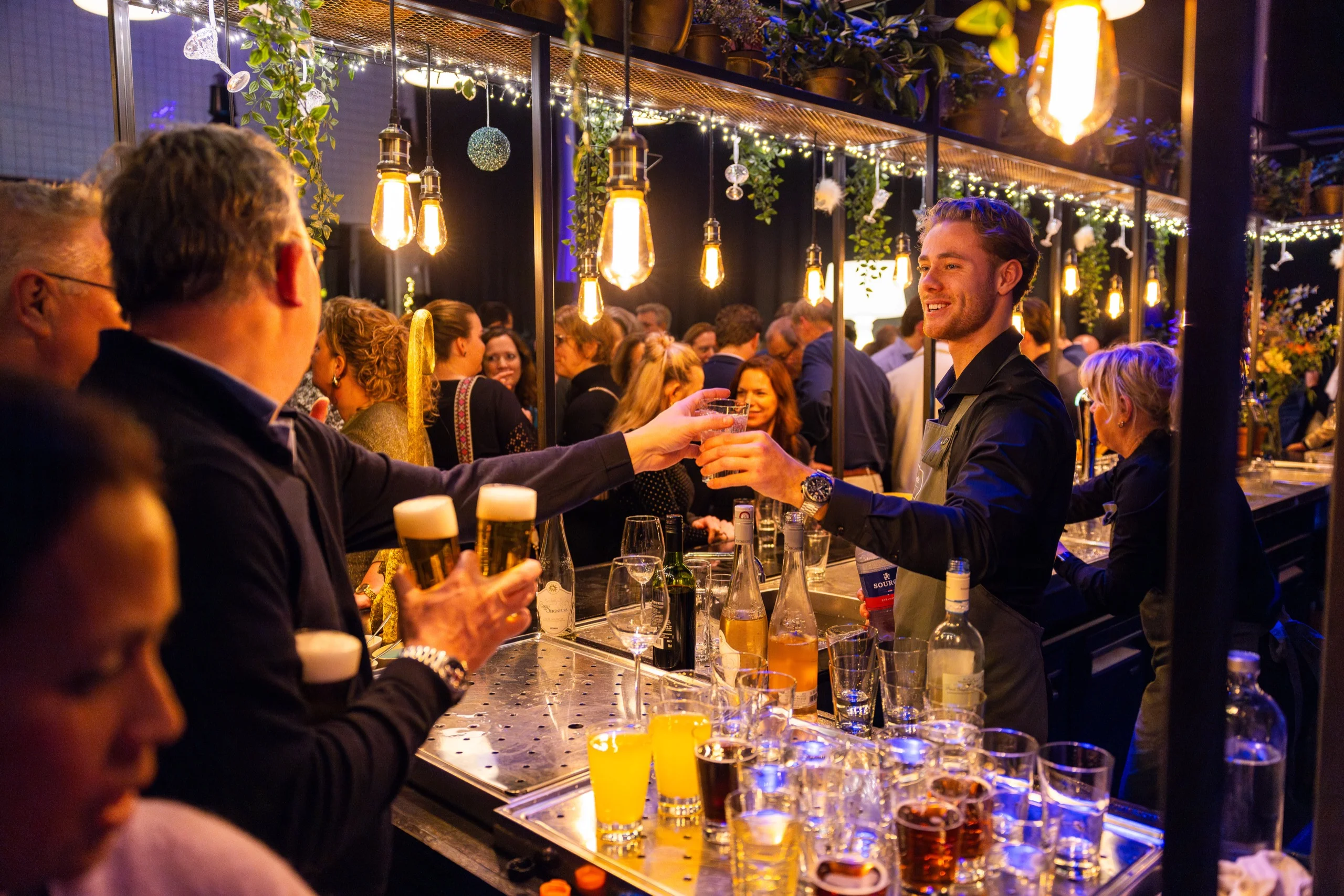
- A walking dinner usually includes five to eight courses, building from light to more substantial dishes, with around 80 to 120 grams per course.
- A seated dinner is better suited to weddings, gala dinners, and events with a tightly structured program.
- La Casserole aligns the format, space, and service through one single point of contact.
- Not sure? Combine both: start standing, finish at the table.
Introduction (Services)
La Casserole sees the same issue time and again with corporate clients in Brabant: the dinner format is chosen too late, often only after the venue has already been booked. The result? A beautiful room that turns out to be far too tight for the number of guests, or a formal gala dinner in a space that would have been much better suited to informal networking.
At first glance, choosing between a walking dinner and a seated dinner can seem like a matter of taste. It isn’t. It’s a practical calculation based on space, objectives, and logistics.
A walking dinner allows guests to circulate and mingle while smaller courses are served throughout the event. A seated dinner gives everyone a fixed place and a more structured program. Both can deliver a high-end culinary experience, but they place completely different demands on your venue, your service team, and even your event schedule. When those requirements are clear from the start, you avoid an event that works on paper but falls flat in practice. In this article, La Casserole breaks down the key considerations, with concrete figures and real-world event catering scenarios.
Why the Choice Between a Walking Dinner and a Seated Dinner So Often Goes Wrong
Most event planners choose a dinner format based on instinct rather than the purpose of the event. That’s where the trouble starts.
The Room Is Overestimated
The most common misconception is assuming that a room suitable for 200 seated guests can also handle 200 guests for a walking dinner. In reality, the opposite is true. A walking dinner needs space for movement, conversation, and standing tables. According to KOM Catering & Events (kenjekom.nl), a walking dinner requires at least 1.5 to 2 square meters of floor space per guest, meaning a room that accommodates 200 seated guests may only comfortably fit 120 to 150 people in a walking format.
The Event Goal Gets Lost
Take a marketing manager at a tech company with around 180 employees planning a client event. The goal is to help clients and colleagues connect. But instead, a seated dinner is booked, leaving guests at the same table for three hours next to people they already know. The networking objective disappears the moment everyone sits down.
Catering Is Planned Separately From the Space
Often, the venue is booked first and catering comes later. That’s when mismatches happen: the kitchen is too small for hot courses, or there’s no logical route for the service staff. In practice, La Casserole sees that events where format, space, and menu are sourced separately are far more likely to run into bottlenecks and cold dishes.
What you can do:
- Calculate your net floor space and divide it by 1.75 m² to estimate realistic walking dinner capacity.
- Write your event’s main objective in one sentence. If it includes words like “networking” or “connection,” a walking dinner is probably the better fit.
- If it includes “recognition,” “anniversary,” or “speech,” a seated dinner usually makes more sense.
- Whenever possible, book the venue and catering together—or through one provider—so the kitchen setup and service flow actually work.
Why Traditional Dinner Formats Are Falling Short More Often
A classic three-course dinner at long tables is not a bad concept. But it no longer fits what many modern events actually need.
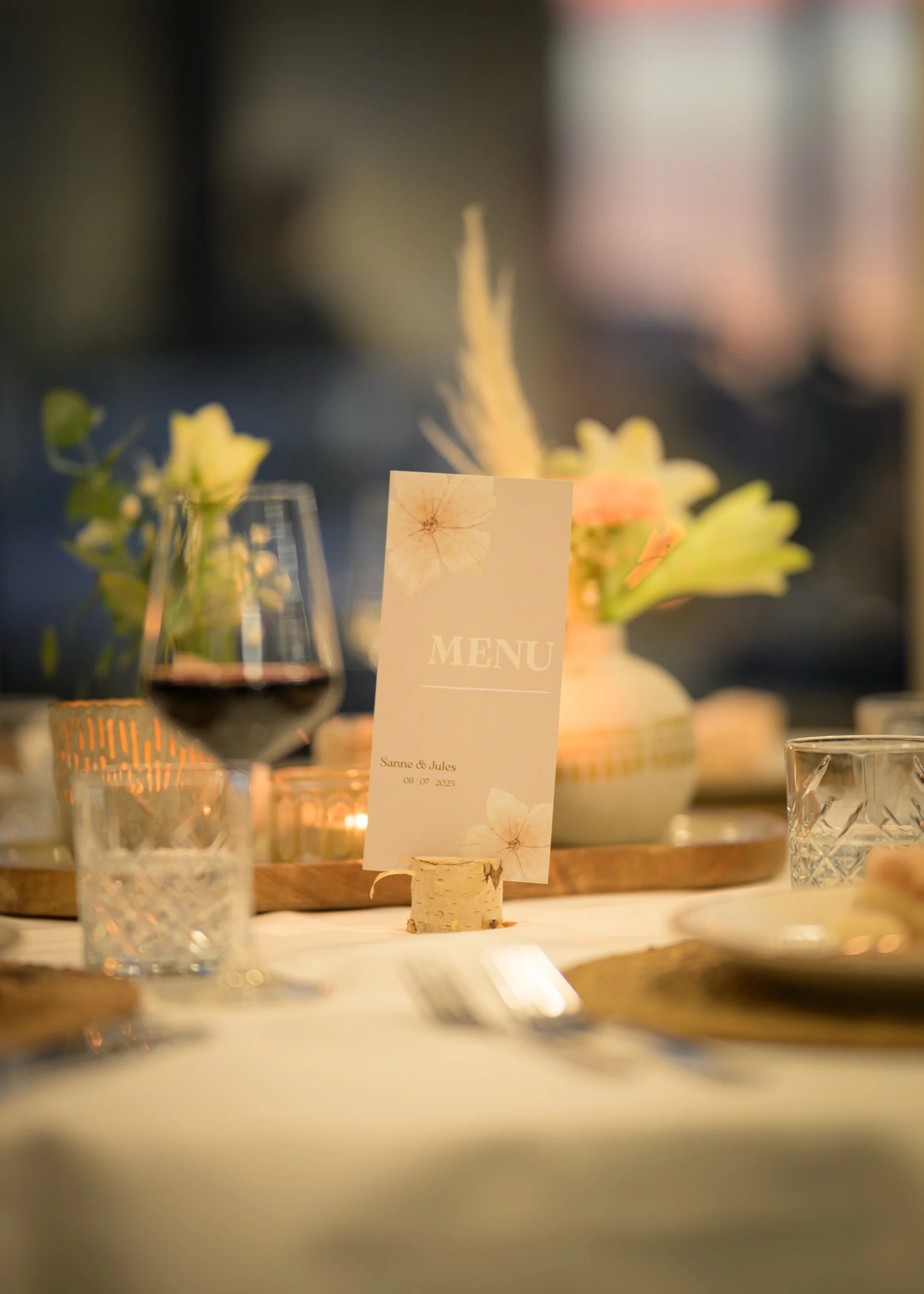
Guests Want to Move and Have Options
Guest expectations have changed. At a business event, few people want to sit still for three hours waiting for the next course. A walking dinner gives people freedom: they can stand up, join another conversation, and set their own pace. A rigid seated format often clashes with that need for movement and flexibility.
Healthier and More Sustainable Catering Is Becoming the Standard
Clients increasingly want food that offers more than just good flavor. The Dutch Nutrition Centre developed the Richtlijn Eetomgevingen for caterers, hospitality managers, and facilities teams to help make food offerings gradually healthier and more sustainable in line with the Schijf van Vijf. In a walking dinner with five to eight smaller courses, that’s easier to achieve than with a fixed three-course menu, because each course gives you room to vary with vegetables, fish, and plant-based options.
The Format Doesn’t Match the Program
A product launch with a live demo needs guests who can easily move toward the stage. A gala dinner with an award presentation calls for fixed seating and clear sightlines to the lectern. Choose the wrong format and you spend the whole evening working against your own program. The format should support the event flow, not get in its way.
What you can do:
- Review your program in 15-minute blocks. If there are moments when everyone needs to watch or listen, a seated setup may be the better choice.
- Want guests to have more choice in what they eat? Build a walking dinner with at least one vegetarian and one plant-based course.
- Test your menu against the Richtlijn Eetomgevingen: does the offering move closer to the Schijf van Vijf?
- Check whether your dinner format supports your program—or competes with it.
A Smarter Approach: Choose the Format Based on Goal, Space, and Menu Together
The solution is simple, but rarely applied: choose the dinner format before the venue booking is final, and align your objective, space, and menu all at once. That is exactly how La Casserole works. As a full-service event partner based in Best, it brings together catering, styling, technical production, rentals, and project management through a single point of contact.
Start With the Event Goal, Not the Food
La Casserole follows a fixed order: first the goal, then the format, and only then the menu. If your priority is connection and networking, a walking dinner makes sense. If the event is about honoring, celebrating, or addressing guests formally, a seated dinner is the better route. Only once the purpose is clear does the culinary concept come into focus.
Calculate the Space Realistically
For a walking dinner, La Casserole works with the standard of 1.5 to 2 m² per guest, including standing tables and circulation space. For a seated dinner, the calculation is different: around 1.2 to 1.5 m² per guest, including tables and aisles, depending on the floor plan. Mapping those numbers onto the venue layout in advance helps you avoid booking a room that feels either cramped or oddly empty. At La Casserole’s own distinctive event venues in Brabant, those calculations can be worked out down to the square meter.
Build the Menu Around the Format
A walking dinner typically includes five to eight courses, building from light to more substantial, with around 80 to 120 grams per course—together forming a complete meal. A seated dinner works with larger portions and a fixed number of courses. La Casserole designs the menu around the chosen format, not the other way around, so the kitchen, service, and timing all line up.
| Criteria | Walking dinner | Seated dinner |
|---|---|---|
| Space per guest | 1.5 to 2 m² | 1.2 to 1.5 m² |
| Room capacity if venue fits 200 seated | 120 to 150 guests | 200 guests |
| Number of courses | 5 to 8 (small) | 3 to 5 (full-sized) |
| Portion size per course | 80 to 120 grams | 150 grams or more |
| Best for | networking, connection | speeches, recognition, celebration |
| Guest movement | high | low |
What you can do:
- Compare your event objective, guest count, and floor plan before signing off on a venue.
- Ask your caterer to calculate capacity based on net square footage, not just the number of chairs.
- Match the menu to the format: more smaller courses for standing events, fewer larger courses for seated dinners.
- Where possible, work with one provider for venue, catering, and technical production to avoid mismatches. For more on that, see how La Casserole handles off-site catering.
Practical Tips: How to Turn the Format Into an Event That Actually Works
Once the format is chosen, the real work begins: execution. This is where events are most likely to stumble, regardless of the format.
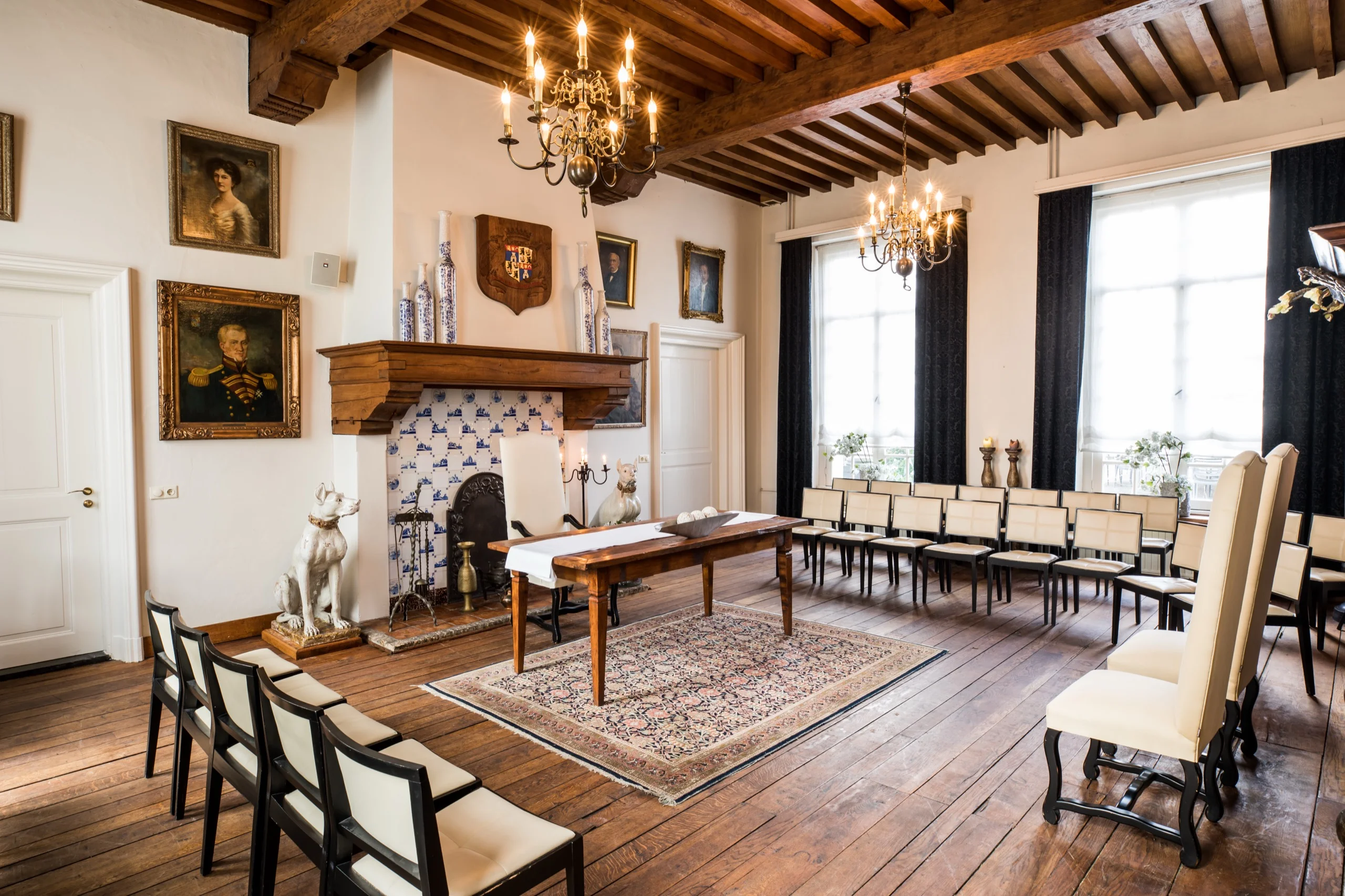
Match Service and Technical Setup to the Format
With a walking dinner, the route taken by the service staff matters even more than it does at a seated dinner. If staffing is too tight or the route is inefficient, courses arrive cold or too slowly. Imagine an office manager at a manufacturing company with around 250 employees planning an anniversary event as a walking dinner. If the team is understaffed, lines build up at the bar and long gaps appear between courses. La Casserole adjusts staffing levels, bar capacity, and kitchen logistics to suit the chosen format so the pacing feels right.
Think Through Rentals and Layout
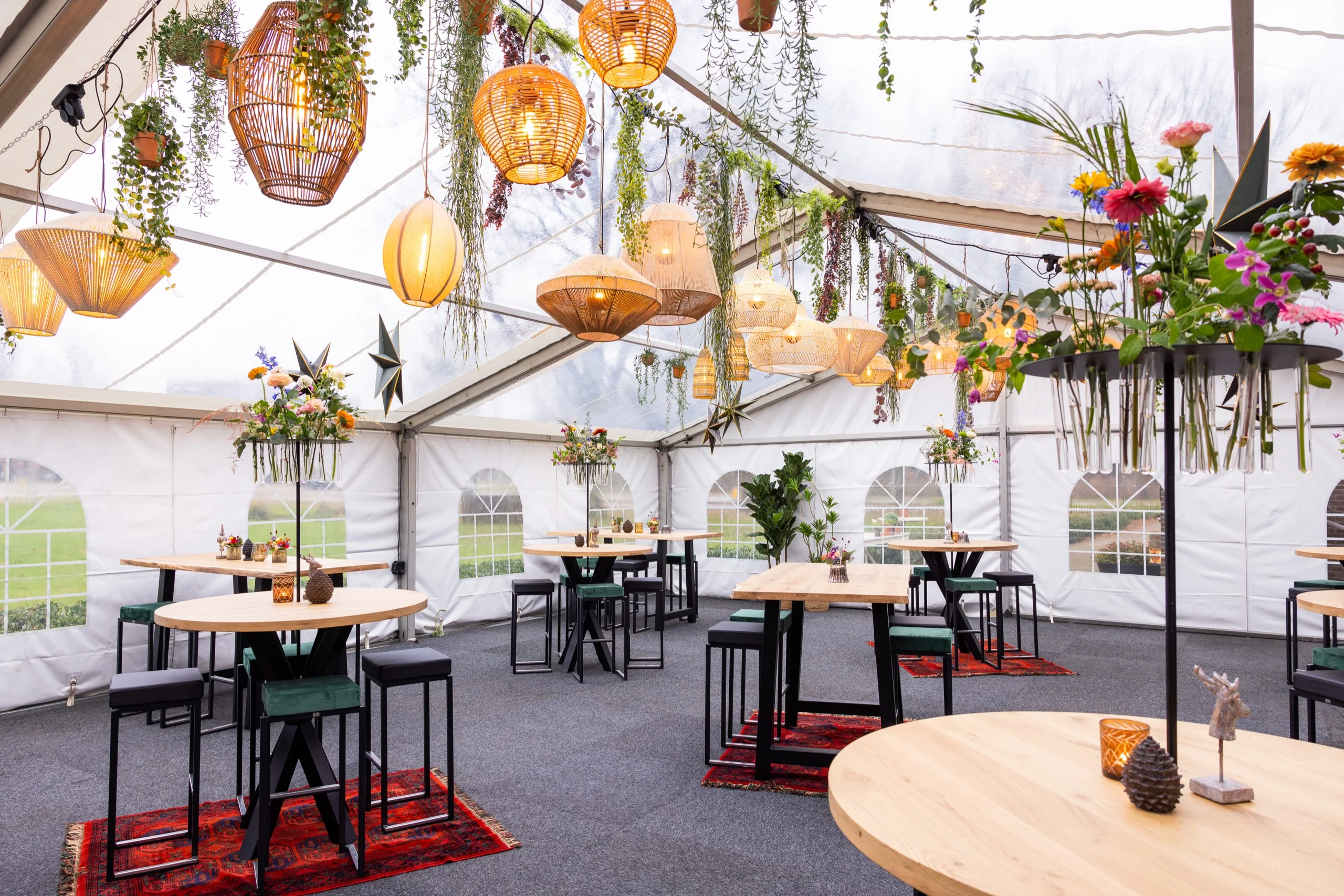
A walking dinner depends on enough standing tables, atmospheric lighting, and a layout with clear zones. A seated dinner needs a thoughtful table plan, the right tableware, and suitable chairs. La Casserole handles this through party rentals in Brabant, including tents, standing tables, and tableware, so the setup fits the format instead of becoming a disconnected afterthought.
Factor In Region and Season
Noord-Brabant has grown into one of the Netherlands’ leading event regions and, according to Follow the Beat, now ranks second in number of festivals, just behind Noord-Holland. In practical terms, that means the best venues and suppliers book up early during peak season. So start planning well in advance, especially if you’re still deciding between formats, because that final choice will directly affect the type of venue you need. Want to know which venue size fits your guest count? Read how to choose an event venue in Brabant with catering the smart way.
What you can do:
- For a walking dinner, plan for at least one server per 25 to 30 guests, depending on the number of courses.
- For standing events, reserve enough cocktail tables: usually one for every four to six guests.
- In peak season, book your venue and suppliers at least a few months ahead.
- Don’t stay stuck in decision mode for too long: choose the format first, or your venue search will keep dragging on.
When a Combination of Both Formats Works Best
Sometimes the best answer isn’t either-or, but both. A hybrid setup often solves the most common gray-area cases.
Start Standing, Finish Seated
A popular solution is to begin with a standing reception and walking dinner courses for networking, then end with a seated main course and speech. That gives you the informal energy of the opening and the focus of a formal finale. It works especially well for weddings and anniversaries where both mingling and speeches matter.
Use Separate Zones for Different Formats
In a larger venue, you can create zones: a lounge area for standing and networking, and a dining area with tables. Guests move between the two. This does require enough square footage, so the 1.5 to 2 m² calculation per guest still applies to the standing portion.
Align the Technical Setup With the Transition Moment
The switch from standing to seated is usually the most challenging logistical moment. Sound, lighting, and service all need to shift together. La Casserole manages that transition through project management, so it feels natural to guests rather than awkward or disruptive. For more ideas around team-focused food experiences, read why a cooking workshop in Brabant works as a corporate outing.
What you can do:
- Torn between networking and a formal closing? Choose a hybrid setup: standing first, seated at the end.
- Create physical zones if space allows, and calculate the standing area at 1.5 to 2 m² per guest.
- Build in one clear transition point in the program, not several switches.
- Let one party manage the transition so lighting, sound, and service stay in sync.
Frequently Asked Questions
What is a walking dinner, and how does it work?
A walking dinner is a dining format where guests eat while standing or moving around, with smaller courses served throughout the event or presented at stations. It typically includes five to eight courses, moving from lighter to more substantial dishes, with around 80 to 120 grams per course. Together, these courses make up a complete meal. It is ideal for networking because guests are free to move around and mingle.
How many guests can fit into a room for a walking dinner?
Capacity is significantly lower than for a seated dinner because guests need room to move. As a rule of thumb, allow at least 1.5 to 2 square meters per guest. That means a room suitable for 200 seated guests will typically hold around 120 to 150 people for a walking dinner. Always calculate your net floor space before locking in guest numbers.
When is a seated dinner the better choice?
A seated dinner works best for events with a fixed program, such as a gala dinner, awards presentation, wedding, or anniversary with speeches. In those situations, you want every guest to have an assigned place with a clear view of the stage or lectern. As a general guideline, allow around 1.2 to 1.5 m² per guest, including tables and aisles.
How can La Casserole help you choose between a walking dinner and a seated dinner?
La Casserole aligns your event goal, available space, and menu in one coordinated plan, all through a single point of contact. As a full-service event partner based in Best, with more than 40 years of experience and its own event venues in Brabant, La Casserole calculates capacity down to the square meter and builds the menu around the format. That helps you avoid a room that feels too tight—or a format that doesn’t fit your program.
Can you combine a walking dinner and a seated dinner?
A hybrid setup is often the best solution if you’re unsure. Start with a standing reception and walking dinner courses for networking, then finish with a seated main course and speech. This works especially well for weddings and anniversaries. Just make sure there is one clear transition point, with lighting, sound, and service shifting together.
Conclusion
Choosing between a walking dinner and a seated dinner is not about personal taste. It comes down to your event objective, the available space, and the way the menu needs to work within that setup. If you want guests to move around and connect, a walking dinner is usually the right fit—with 1.5 to 2 m² per guest as the hard planning benchmark. If your event revolves around speeches, recognition, or celebration, a seated dinner is often the stronger choice. And if you’re somewhere in between, a hybrid setup can give you the best of both.
The biggest mistake is leaving the format decision until after the venue is already booked. So start with the purpose, calculate the space realistically, and build the menu around the format you choose. La Casserole brings those three elements together through one single point of contact, making sure the format, space, and service all work before the first guest arrives. Start early—especially in a busy event region like Brabant—and the right choice usually becomes clear on its own.
Sources
- KOM Catering & Events (kenjekom.nl) — Kenjekom
- Richtlijn Eetomgevingen — Voedingscentrum
- Follow the Beat — Followthebeat
- Walking dinner organiseren: wat je moet weten — KOM Catering & Events
- Checklist Richtlijn Eetomgevingen — Voedingscentrum
- Festivals Nederland: de stand van zaken in 2024 — Follow the Beat