

The short answer
At La Casserole, we see a corporate party in Brabant as one connected process. For businesses across Brabant, seven decisions shape the atmosphere, attendance and guest experience: the date and timing, guest profile, venue type, catering format, technical setup, management model and follow up. Most of these choices are locked in before the first invitation goes out. Treat them separately and you may end up with an event that looks great on paper but falls flat in the room. Take an integrated approach and you can actively improve attendance rather than simply hoping for it. That is why we start with the venue and guest numbers, as they set the boundaries for everything that follows.
Key takeaways
- According to the NVWA, anyone preparing and selling food several times a year, including at events, must work with a HACCP food safety plan.
- Practical serving standards are clear: hot food must remain above 60°C and chilled food below 7°C, according to Foster’s HACCP knowledge base.
- For staff parties under the Dutch work related costs scheme, tax rules have required an event to be open to at least 75% of employees, according to Showtime and its interpretation of the regulations.
- Dutch occupational health and safety law makes both employers and employees responsible for safety, including at corporate events where alcohol is served (HR-kiosk).
- A useful attendance rule of thumb: the shorter the journey after work and the clearer the finish time, the more confirmed guests will actually show up.
Why is turnout often disappointing at a staff party?
La Casserole works in a market where caterers, party venues, event agencies and hire companies each provide one piece of the puzzle. That fragmented approach explains why so many events disappoint. Time and again, we see that turnout is not decided by the entertainment. It is decided weeks earlier, through choices made by different people who are not coordinating with one another. (Services)
Sound familiar? You send an invitation to 180 employees. 140 sign up. On the night, 95 turn up, and by 10.30 pm the room is half empty. No one necessarily made a mistake. The date fell during a busy production week, the venue was a forty minute drive from the factory, and dinner did not begin until eight o’clock.
For human resources managers and directors, this is an especially frustrating kind of failure. The entire budget has been spent, yet the return on investment in engagement and employee pride never materialises. A party that misses the mark costs just as much as one that succeeds.
The seven decisions below are the levers you can use. They are listed in the order they are usually confirmed, because every choice limits the next one. If you want a stylish event that suits both the setting and the people attending, our guide to planning a stylish party in Sint-Oedenrode offers the wider planning framework behind these seven decisions.
Planning a corporate party in Brabant: which 7 decisions shape atmosphere, attendance and guest experience?
1. Date and timing: your first attendance filter
The date is not simply a diary decision. It is an attendance tool. A Thursday evening event after work will attract a very different group at a shift based company than a Saturday evening party where partners are invited.
State the finish time in the invitation, not just the start time. People are more likely to say yes when they know when they can expect to get home. And never schedule the event during a week with a quarter end, audit or peak delivery period.
2. Guest profile: who can realistically attend?
There is a tax consideration here that many organisers discover too late. For staff parties under the Dutch work related costs scheme, the event must have a collective character. According to Showtime, the tax authorities applied a guideline requiring at least 75% of employees to be able to attend. A party open only to the sales team may therefore be treated differently from an event for the entire organisation. Ask your tax adviser to review the guest criteria before finalising the list.
3. Venue type: your own premises, a function room or a venue with character
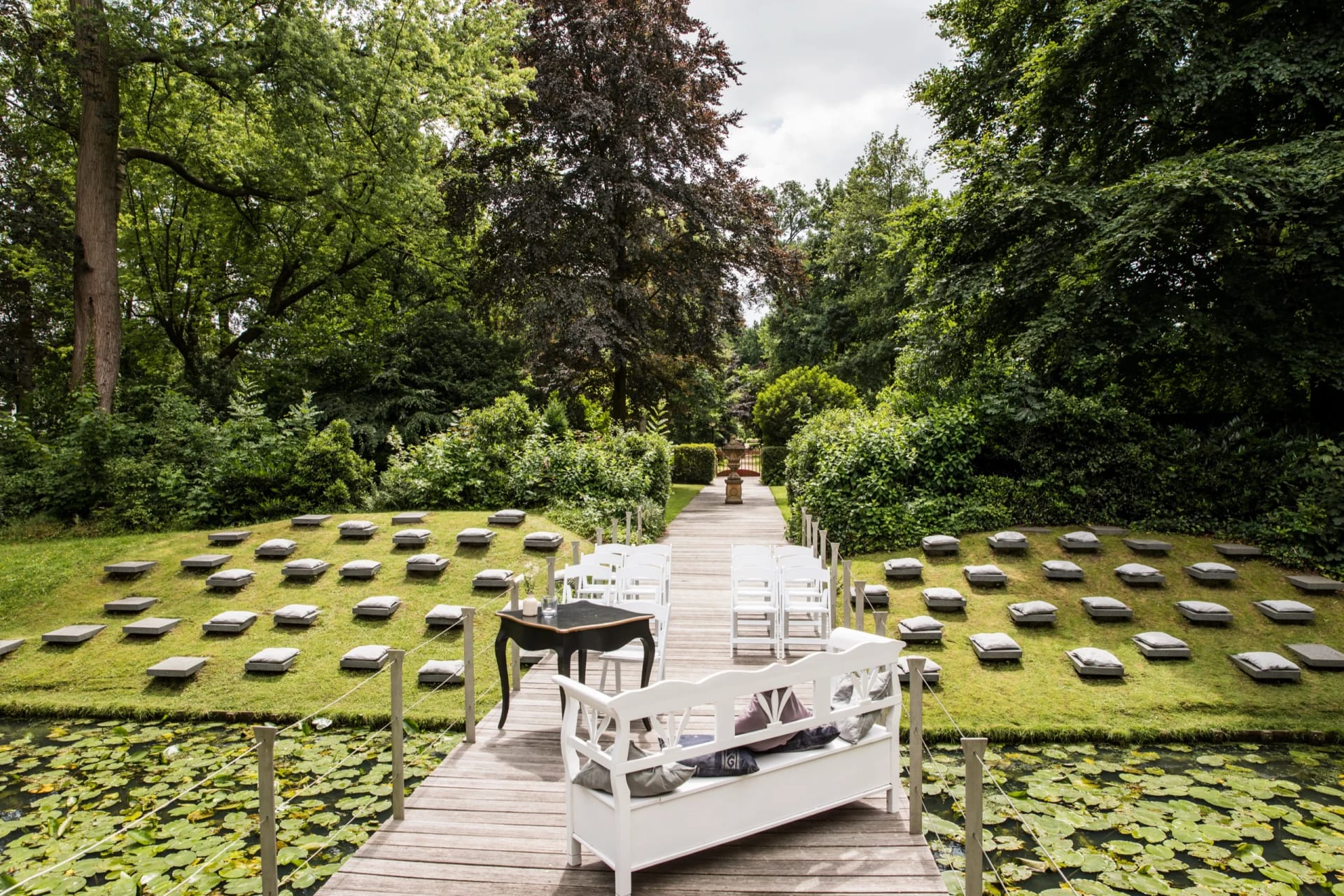
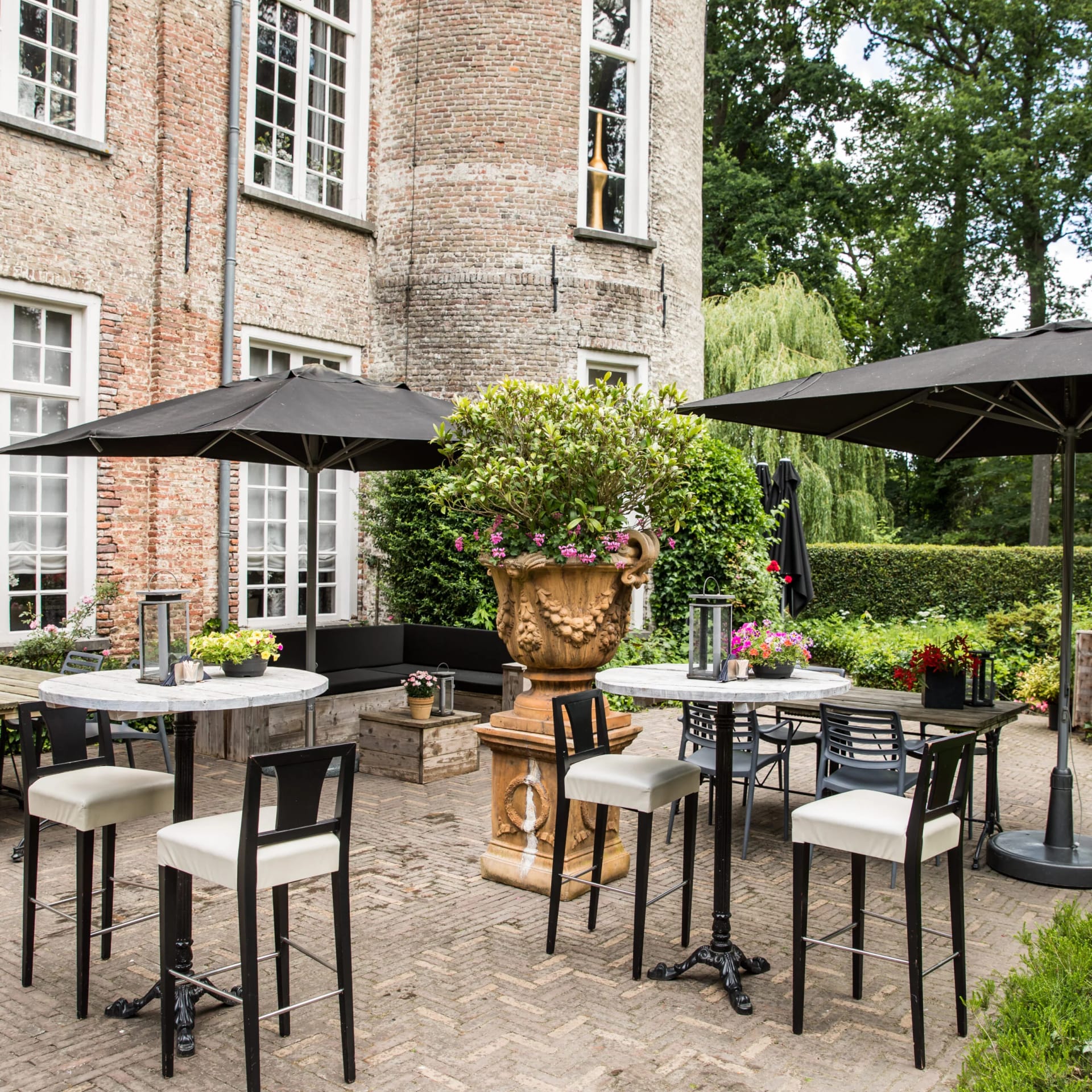
These three options create three completely different evenings. Hosting the event on site keeps people in a work mindset. That can be ideal for a relaxed summer drinks reception, but it rarely feels special enough for an anniversary celebration. A neutral party venue creates distance from the workplace. A venue with real character gives guests something to talk about before the first glass is poured.
The regional infrastructure works in your favour. Brabant has a well developed leisure sector. According to VisitBrabant, overnight stays in the province grew by 10% to more than 3.1 million during the summer of 2019, ahead of the national average of 8%. More choice also means popular dates are booked earlier.
Things to do:
- Measure travel time from your busiest site, not from head office. Once the journey exceeds 35 to 40 minutes, attendance tends to drop noticeably.
- Check whether there is parking for at least one car per two guests, or arrange transport.
- Ask about the venue’s noise limits before booking a band. Those limits determine whether the party can continue after eleven.
- Check the on site kitchen capacity. No kitchen means mobile refrigeration and additional power requirements.
4. Catering format: buffet, walking dinner or seated meal
Your catering format determines how people move through the evening. A buffet puts guests in a queue, then sends them back to their own table, usually with their own department. A walking dinner keeps the group moving and naturally brings different teams together. A seated meal encourages deeper conversations, but within smaller circles.
For a team event where departments need to get to know one another, guest flow matters more than the number of courses. Read four questions that determine whether a walking dinner suits your corporate party for a closer look at the decision.
| Catering format | Typical guest numbers | Space needed per guest | Effect on mixing | Service intensity |
|---|---|---|---|---|
| Buffet | 60 to 250 | 1.2 to 1.5 m² | Low: guests tend to stay at their own table | Low to medium |
| Walking dinner | 40 to 150 | 1.5 to 2 m² of circulation space | High: continuous movement | High |
| Seated meal | 20 to 120 | 1.8 to 2.2 m² including tables | Limited to table companions | Medium to high |
| Outdoor food truck or barbecue | 30 to 120 | 2 m² plus setup space | Medium: guests gather around service points | Medium |
These are practical guidelines. They vary with the room layout, number of courses and amount of standing furniture.
5. Technical production and food safety: the invisible foundation
This is where things most often go wrong, and guests only notice when something fails. The NVWA requires anyone who regularly prepares and sells food at markets and events to work with a HACCP food safety plan. The regulator checks compliance and can issue warnings or fines.
The temperature standards are non negotiable: hot dishes must remain above 60°C and cold dishes below 7°C (Foster). At a company site without a professional kitchen, that means mobile refrigeration, sufficient three phase power and a serving schedule calculated course by course. Outdoor cooking also brings weather and power challenges. Our guide to catering for garden parties explains these practical risks in more detail.
6. Event management: one point of contact or five suppliers
The sixth decision is operational, but it has the biggest impact on your own workload. Five suppliers mean five schedules, five arrival times and five parties pointing at one another when the power supply turns out to be too limited. One partner managing catering, styling, production, furniture and project management takes that coordination risk away from your human resources team.
7. Follow up: what stays with people afterwards
This final choice is almost always overlooked. Decide in advance how the event will be captured, shared and evaluated, and its impact can last for weeks. A short survey two days later also gives you the only meaningful evidence to improve next year’s event.
Why is relying on separate suppliers becoming less effective?
There are three reasons, and they reinforce one another.
First, there is the technical side. Parties are increasingly held at venues without a permanent kitchen, including company premises, industrial spaces and gardens. As soon as the kitchen becomes mobile, refrigeration, power and serving times become one interconnected challenge. A caterer supplying only food and a hire company supplying only a marquee cannot solve that challenge on their own.
Second, there is the legal aspect. Dutch occupational health and safety law makes employers and employees jointly responsible for wellbeing, health and safety, including at corporate events. Risky situations, such as alcohol consumption, should be limited wherever possible (HR-kiosk). That responsibility cannot simply be passed on to an independent bar supplier.
Third, there is the human factor. With five separate contracts, coordination automatically falls to the person who commissioned the event, usually a human resources or office manager with no spare hours to manage it. On the night itself, that person is on the phone instead of enjoying time with the guests.
This is the central misconception: many organisations assume a bigger budget automatically creates a better party. In reality, the alignment between the seven decisions is a far better predictor of guest experience than the spend per person. A well organised buffet in an accessible venue will beat an expensive four course dinner forty minutes away every time.
How do you keep catering, production and planning aligned?
The approach that solves the coordination problem is all about sequence. Confirm the guest numbers and venue type first, choose the catering format second, then calculate the technical requirements from those two decisions. La Casserole works through this chain by bringing catering, styling, production, furniture, marquees and project management together under one central point of contact. As a result, power calculations, refrigeration capacity and service timings all come from the same event plan.
That event plan is the real product. It sets out who is where during each time slot, when each course is served and which temperatures are checked at each point. At dedicated Brabant venues such as Het Ketelhuis in Eindhoven, kitchen capacity and noise limits are already known, removing much of the uncertainty around mobile production requirements.
Imagine a human resources manager at a technical manufacturing company with around 220 employees. She wants to hold an anniversary party on site. With separate suppliers, she collects quotes from four companies and has to work out herself whether the available power supply can handle both refrigeration and lighting. With one lead event partner, that calculation is handled by the company providing the equipment. Her role is then limited to the guest list, budget and internal communication. In many cases, preparation time can fall from several months to just a few weeks.
Our corporate catering approach for Brabant organisations shows how that level of event management works in practice, from a meeting lunch to a full staff celebration.
What should you include in a staff party event plan?
A useful event plan is not just a timetable. It is a set of checkpoints, each with a clear standard.
Things to do:
- Ask your caterer for the HACCP plan and the temperature check points for service. If no plan is available, ask more questions.
- Calculate power demand in kilowatts and compare it with the available connection. Not enough capacity? Schedule a generator rather than improvising on the day.
- Set one clear finish time and include it in the invitation. This increases the proportion of confirmed guests who actually attend.
- Decide in advance who can make decisions if the plan changes on the night, and make sure that person is not also hosting the event.
- Schedule a short, five question survey for attendees two days after the party.
One final practical rule: book the venue before developing the theme. Themes are flexible, sought after autumn dates are not.
Frequently asked questions
How much does on site catering cost for a corporate party?
On site catering costs usually consist of four elements: food and drinks per guest, service staff hours, kitchen production and logistics, plus furniture or styling if required. At events without a permanent kitchen, equipment and transport often account for a substantial share of the total. Always ask for a quote that shows these costs separately. It is the only way to compare suppliers fairly.
Is a HACCP plan required for a corporate party on company premises?
Yes. The NVWA states that anyone who prepares and sells food several times a year at markets and events must work with a HACCP food safety plan. The regulator can inspect compliance and issue warnings or fines for breaches. As the client, request the plan from your caterer before signing the contract.
Which is better for a team event, a walking dinner or a buffet?
Guest flow should guide the decision. If you want departments to mix, a walking dinner is usually the better choice because guests continue moving instead of being tied to one table. For groups above roughly 150 guests, a buffet is often more practical, as the service demands of a walking dinner increase significantly. Allow more free circulation space per guest for a walking dinner than for a seated format.
Who can manage catering, production and planning for a corporate event in Brabant?
Full service event partners can bring these elements together under one contract. La Casserole combines catering, styling, production, furniture and project management through one central point of contact, and has its own Brabant event venues, including Het Ketelhuis in Eindhoven. This saves clients from coordinating separate suppliers, which is often where delays begin.
How many employees must be able to attend for a tax efficient staff party?
At least 75%. According to Showtime, based on tax regulations, the Dutch tax authorities have applied the rule that an event under the work related costs scheme must have a collective character and be open to at least three quarters of employees. If you limit the event to one department, the tax treatment may change. Have the arrangement checked in advance by your tax adviser or payroll team.
Conclusion
The seven decisions have one thing in common: every one of them is made before a single guest walks through the door. The date and timing filter attendance. The guest profile determines the tax route. The venue type sets the limits for catering. The catering format influences how people mix. Technical production determines whether food is served at the right temperature. Event management decides who can relax on the night. Follow up determines how long the event continues to make an impact.
Start by measuring travel time from your busiest site, then confirm guest numbers, and only then calculate the technical requirements. When you plan a corporate party in Brabant in that order, you stay in control of the only outcome that truly matters: people attend, stay and are still talking about it the following week. For organisations that would rather delegate the coordination, the integrated approach from La Casserole is a natural place to start.
About La Casserole
La Casserole is a full service event partner based in Best, combining catering, styling, production, rentals and project management into one complete solution for corporate and private events. With more than 40 years of experience, over a thousand events delivered and its own event venues in Brabant, including Kasteel Henkenshage and Het Ketelhuis, the company supports clients from initial concept through to delivery.
Looking to host a stylish event in Brabant? Let us handle it!
Sources
- NVWA — Nvwa
- Foster — Fosterrefrigerator
- Showtime
- HR-kiosk — Hr-kiosk
- Eten en drinken verkopen op markten en evenementen — Nederlandse Voedsel- en Warenautoriteit (NVWA)
- HACCP horeca: regels en verplichtingen — Foster
- Bedrijfsuitje WKR en personeelsfeest werkkostenregeling — Showtime
- Alcohol en de Arbeidsomstandighedenwet — HR-kiosk.nl