

## The short answer
La Casserole has seen time and again that a calm, well organised company party starts with five early decisions: the type of venue, guest numbers and permit requirements, the catering format, technical requirements and the number of suppliers you will need to manage. When looking for catering in Den Bosch, the biggest time saving rarely comes from the menu. It comes from reducing the number of people you need to coordinate. The points below will help you make that call early.
– **Notify the local authority in good time**: in the municipality of ‘s-Hertogenbosch, events with fewer than 150 visitors must be notified, while events with more than 500 visitors require a permit and safety plan.
– **Ask for the food hygiene code**: caterers are legally required to work in line with HACCP.
– **Arrange written allergen information**: there are 14 legally recognised allergens.
– **Allow 4 to 8 hours of planning time** for every additional supplier you coordinate yourself.
– **Decide before choosing the menu** whether you want one event partner or several separate suppliers.
## Why do company party plans so often get stuck on the details?
La Casserole works in a market where caterers, hire companies, event agencies and venues each provide one part of the celebration. One thing stands out again and again: clients compare quotes by price per person, but the stress later comes from the items that never appear in the quote. Who supplies the generator? Who notifies the local authority? Who takes responsibility for noise levels at 23.00? ([Services](https://la-casserole.nl/services/))
You may know the situation. You are an office manager, you hear in March that there will be a summer party for 180 colleagues in June, and the first thing you do is request menus. Three weeks later, you discover the outdoor venue has no kitchen, the municipality requires notification and the DJ needs a separate power supply. The menu was never the issue.
This article covers the five decisions that break that pattern, in the order they tend to arise in real life. For a broader approach to corporate events in the region, see this [detailed guide to organising a business event in Brabant](https://la-casserole.nl/blog/hoe-organiseer-je-een-zakelijk-evenement-in-brabant-zonder-gedoe/), which covers the planning process from start to finish. People searching for catering in Den Bosch or catering in Eindhoven are often looking for the same thing: someone who can keep an eye on the whole picture.
## When do you need a permit for a company party?
The rules are more specific than many organisers realise. According to the [municipality of ‘s-Hertogenbosch](https://www.s-hertogenbosch.nl/product/evenementenvergunning/), events with fewer than 150 visitors must be notified, while gatherings with more than 500 visitors are classed as large events and require a permit and safety plan. That distinction shapes your entire timeline.
There is another detail that often catches organisers off guard. The municipality operates an event calendar. According to the [municipality of ‘s-Hertogenbosch’s event guidance](https://www.s-hertogenbosch.nl/evenementen/), an event can only apply for a permit if it is listed on that calendar. This is rarely an issue for a private company party in an indoor venue, but the moment you move to a square, courtyard or temporary marquee on your own premises, the situation changes.
What does that mean in practice? Set your guest numbers first, then choose the venue. A party for 120 colleagues on private grounds will generally only require notification. If the list grows to 250 guests after inviting external contacts, you are in a different category, with longer lead times and extra safety and noise requirements. Rules also vary by municipality. What applies in ‘s-Hertogenbosch may not be identical in Eindhoven or Helmond.
**Your practical checklist:**
– Confirm your estimated guest count with a 10 percent buffer, then check it against your municipality’s thresholds.
– Call the permits department as soon as you have a venue in mind, not after you have booked it.
– For an outdoor venue, ask specifically whether the site must appear on the event calendar.
– Confirm in writing who will submit the notification or application: you, the venue or your event partner.
– For a large event, allow several weeks for the permit and safety plan process.
## What should you agree on for food safety and allergens?
**A caterer cooking on site is legally required to work with a food safety plan or hygiene code based on HACCP.** This is clearly explained by the [Netherlands Food and Consumer Product Safety Authority](https://www.nvwa.nl/onderwerpen/voedselveiligheid/haccp). It is not an optional quality mark. It is a basic requirement that you are fully entitled to request.
The authority is equally clear about events. At [markets and events](https://www.nvwa.nl/onderwerpen/voedselveiligheid/voedselveilig-werken-in-horeca-ambacht-en-retail/markten-en-evenementen), a HACCP plan is required for anyone who prepares and sells food several times a year. Inspections look at hygiene, storage temperatures and whether the food preparation space is suitable. That last point is often underestimated at company parties. A striking industrial venue without a workable prep area requires a mobile kitchen, which has implications for power, space and cost.
### Allergens are not just dietary preferences, they are a legal duty to inform
Businesses serving unpackaged food must tell guests about the presence of 14 legally recognised allergens under European Regulation 1169/2011. The [allergen guidance from the Netherlands Food and Consumer Product Safety Authority](https://www.nvwa.nl/onderwerpen/voedselveiligheid/allergenen) includes cereals containing gluten, eggs, fish, peanuts, nuts, soy, milk, crustaceans, molluscs, celery, mustard, sesame seeds, sulphites and lupin.
In practice, compliance still falls short. Research by the authority at more than 6.500 hospitality, retail, craft business and institutional locations found that sellers of unpackaged food too often provide inadequate allergen information, even though around 500.000 people in the Netherlands have a food allergy. At a company party for 200 guests, that means there will almost certainly be several people for whom this is far from a minor detail.
### How to cover this during the quote stage
Ask for three things before you sign: the hygiene code the caterer works to, how allergen information will reach each guest (a card, menu label or informed waiting staff), and how cross contamination will be prevented on site. La Casserole records allergens for every dish and briefs the service team on the specific guest list in advance. This avoids that all too familiar moment when a guest has to ask someone at the buffet whether the sauce contains nuts.
One rule of thumb works especially well: collect dietary requirements through the registration form seven to ten days before the party at the latest, rather than through scattered emails. This gives the caterer time to purchase and prepare separate options instead of having to improvise.
## Walking dinner, buffet or seated dinner: which works best for catering in Den Bosch?
Your catering format influences how many people get to talk to one another. That may sound intangible, but you can see it in how long guests stay and in how many colleagues say afterwards that they finally met someone from another department.
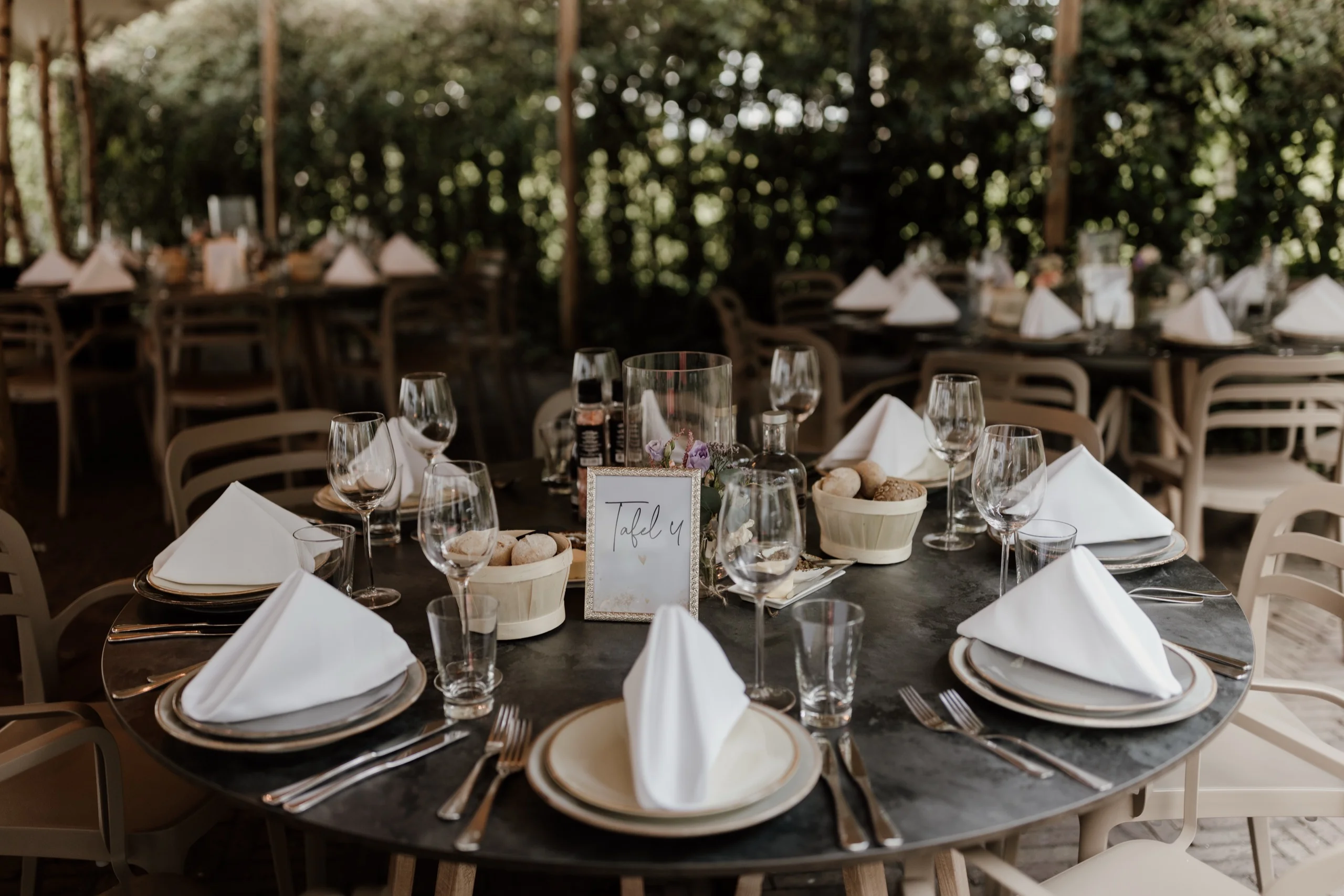
A seated dinner works well for around 60 to 80 guests and puts the focus on table conversation. A walking dinner gets people moving and generally suits groups of 80 or more, provided there is enough room to circulate. A buffet is the simplest option logistically, but it can create queues. As a rule of thumb, allow one serving point for every 60 to 80 guests to keep waiting times below five minutes.
If you are weighing up the options, [four questions that determine whether a walking dinner suits your company party](https://la-casserole.nl/blog/vier-vragen-die-bepalen-of-een-walking-dinner-bij-je-bedrijfsfeest-past/) offers a useful framework. The central question remains simple: do you want people to sit and talk, or move around and network?
## One event partner or separate suppliers: how much time does it really save?
This is the decision that has the biggest impact on stress levels, yet it is also the one that receives the least attention.
The common assumption is that separate suppliers are cheaper because you can negotiate hard on every element. On the invoice, that is often true. But there is another cost that rarely gets calculated: your own time. Every additional supplier means a separate quote, separate briefing, separate delivery time, separate contact person and separate interpretation of the event schedule. In practice, coordinating one extra supplier typically takes four to eight hours of emails, calls and on the day coordination.
### The calculation few people make
Imagine an HR manager at a technical company with around 180 employees organising an anniversary party. She books the venue, a caterer, a furniture hire company, a lighting and sound supplier, a food truck and a photographer. That is six suppliers. On paper, she may save several thousand euros compared with a full service solution. But consider the reality: six briefings, six quote rounds, six delivery schedules and six phone numbers that only she knows on the day. If she is ill, the entire coordination process grinds to a halt.
The hidden costs also lie in the handovers. The hire company arrives at 10.00, the caterer needs access to the kitchen at 11.00, but the furniture is still blocking the route. No one is contractually responsible for that clash, so it becomes your problem.
### Why local knowledge matters
There is another factor that remains invisible in most quotes: knowledge of the venue itself. A supplier that works regularly in the region knows which rooms have a small lift, where loading access is tight and which venues impose a noise limit after 23.00. It may not lower the quote, but it prevents avoidable problems on the day. For clients looking for [catering in Den Bosch](https://la-casserole.nl/catering-den-bosch/), this is often the deciding factor. It is not just about the menu, but whether the supplier understands the logistics of the city and its surrounding venues.
### Comparing the points that matter
| Aspect | One event partner, the La Casserole approach | Separate suppliers |
|---|---|---|
| Points of contact | 1 project lead | 4 to 8 contacts |
| Your coordination time | Usually 5 to 10 hours in total | Often 25 to 45 hours in total |
| Responsibility when problems arise | ✅ Assigned to one supplier | ⚠️ Shared, often unclear |
| Event schedule and timeline | ✅ One integrated schedule | ❌ Separate schedule for each supplier |
| Additional upfront cost | Usually 5 to 15 percent higher | ✅ Lowest quoted price |
| Risk of queues at service points | ✅ Calculated in advance | ⚠️ Depends on coordination |
| Permits and notifications | ✅ Included in the process | ❌ Usually your responsibility |
The point is not that separate suppliers are always the wrong choice. For drinks with 40 people in your own staff restaurant, calling a caterer may be all you need. But once you have more than around 100 guests, an external venue and several different requirements, the balance shifts. A full service approach is not a luxury at that stage. It is risk management.
### What a good project lead actually does
The value comes down to four things: one integrated timeline that aligns deliveries, setup, service and pack down; one person with authority to make decisions on the day; one contract that covers power, refrigeration and furniture; and one escalation route if the weather turns. La Casserole brings catering, styling, technical production, hire services and project management together in one event schedule for exactly that reason. More than forty years of experience and over a thousand organised events deliver one major benefit: a long list of issues that have gone wrong elsewhere, and the knowledge to prevent them for you.
**Your practical checklist:**
– Count the number of external suppliers in your current plan. If there are more than four, consider consolidating them.
– Multiply that number by four to eight hours and block that time in your own diary.
– Ask every supplier who has final responsibility for delays or cancellations.
– Check that power, refrigeration, furniture and waste removal are specifically included.
– Agree who has decision making authority on the day and give that person one phone number.
## Which approach suits your type of company party?
The choice depends on three variables: guest numbers, venue type and how much of your own time you can set aside.
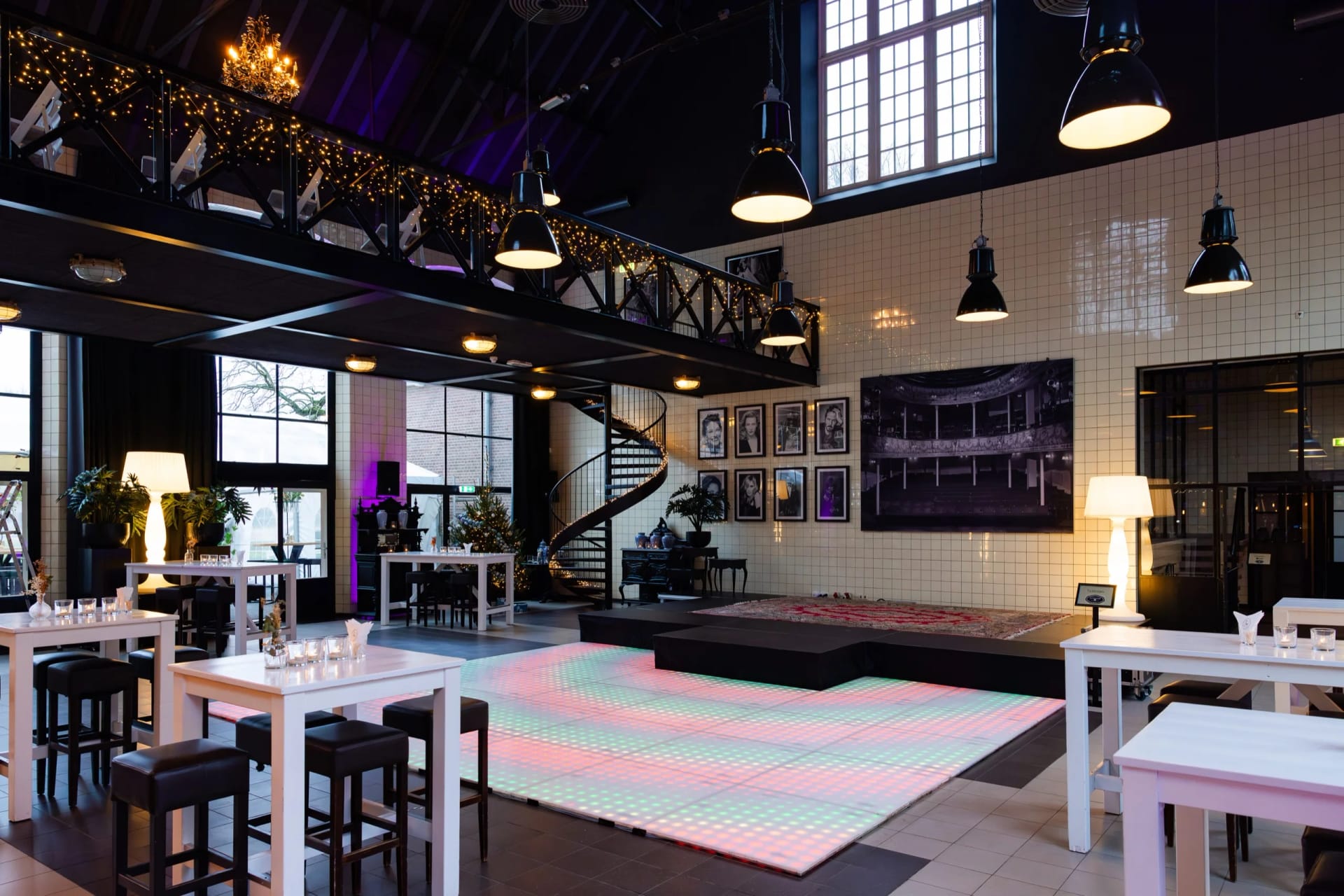
For up to around 50 guests at your own office with an existing pantry, one caterer is usually enough. You can manage the rest yourself, and it will likely take half a working day. For 50 to 120 guests at an external venue with a kitchen, a caterer and the venue can work well, provided the venue supplies the technical equipment and furniture. Ask detailed questions about exactly what is included.
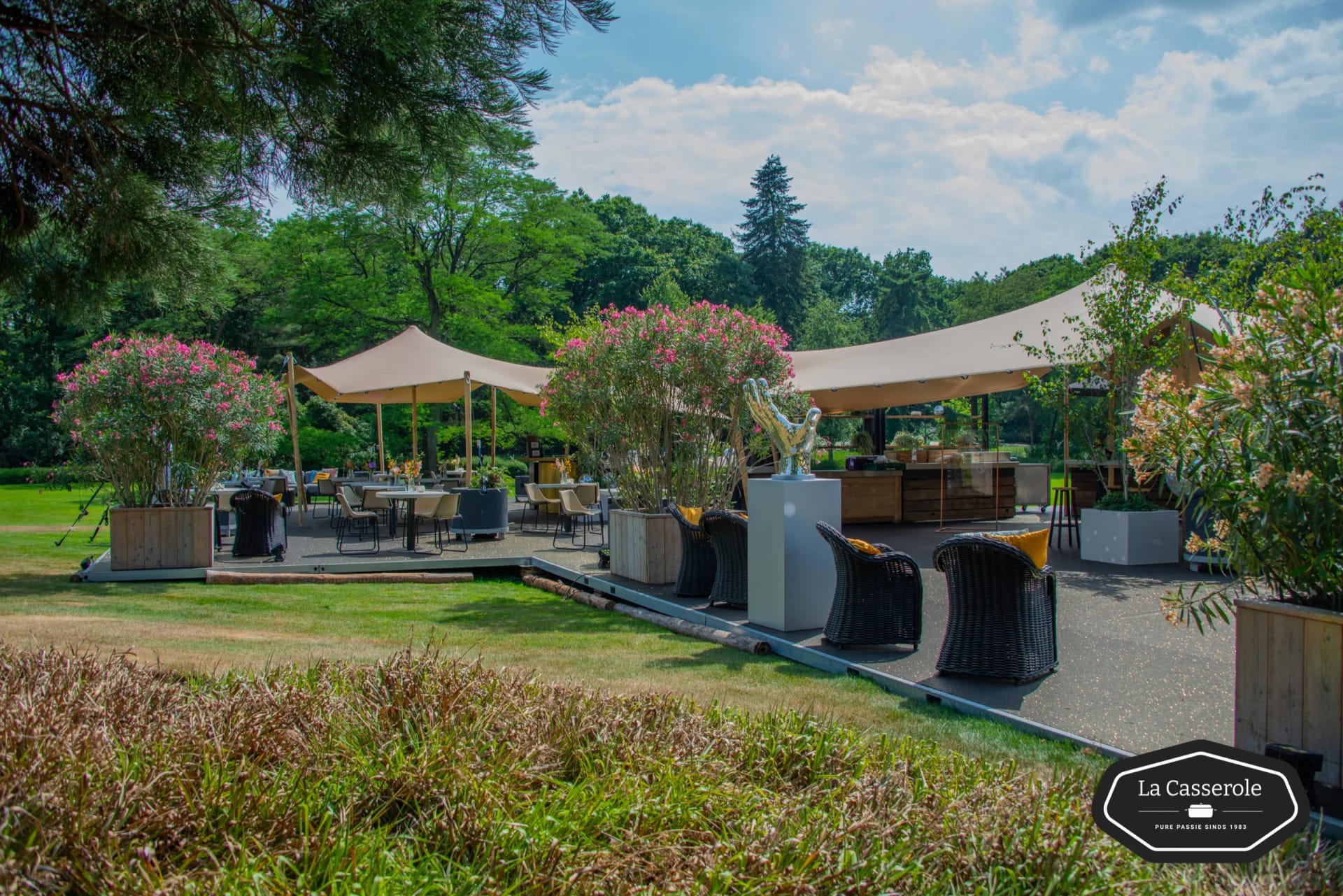
Above 120 guests, or once you move to an outdoor venue, marquee or industrial space without a kitchen, the nature of the job changes. You are no longer simply organising a party. You are temporarily setting up a hospitality operation in a place where one does not exist. Power, refrigeration, water, drainage and food preparation space all need to be brought in. At that point, one supplier overseeing the full operation is not a convenience, it is essential. If you would like to understand how this works in practice, see [the practical steps to organising a company party without stress](https://la-casserole.nl/blog/bedrijfsfeest-organiseren-zonder-stress-zo-pak-je-het-slim-aan/).
One final consideration is the season. An outdoor summer party needs a weather contingency that is finalised no later than 48 hours in advance. This should include clear agreements on who arranges the marquee or cover, and until what time that decision can be made at no extra cost. Without that agreement, bad weather automatically becomes your problem.
## Frequently asked questions
### How many people can attend a company party without a permit?
**This varies by municipality.** In ‘s-Hertogenbosch, events with fewer than 150 visitors must be notified, while an event with more than 500 visitors is classed as a large event and requires a permit and safety plan. This is usually not an issue for private parties in an established hospitality venue. If your event is outdoors or in a temporary venue, contact the municipality early.
### Is a caterer legally required to provide allergen information?
**Yes, it is a legal duty to inform.** Anyone serving unpackaged food must tell guests about the presence of 14 legally recognised allergens under European Regulation 1169/2011. Research by the Netherlands Food and Consumer Product Safety Authority found that this is still too often handled inadequately, even though around 500.000 people in the Netherlands have a food allergy. Always ask in advance how guests will receive this information.
### Who handles logistics for catering in Den Bosch at an external venue?
**It depends on the setup you choose.** With separate suppliers, you are responsible for coordinating arrival times, loading access, power and refrigeration. With a full service provider such as La Casserole, one project lead handles this through an integrated timeline, typically saving you dozens of hours of coordination. Confirm in writing who has decision making authority on the day.
### What does a fully catered company party cost per person?
**The price range is broad and depends mainly on the catering format and number of hours.** A drinks reception with canapés will generally cost considerably less per person than a seated dinner with waiting staff. Other key factors include whether the venue already provides a kitchen, furniture and technical equipment, and how long the service team is required. Always request a quote that specifically includes power, refrigeration and waste removal.
### How far in advance should you plan a company party?
**For groups of up to around 100 guests, six to ten weeks is usually enough.** For larger events, external or outdoor venues, or events that require a permit, allow three to six months, particularly because of permit and safety plan lead times. In practice, dietary requirements and final guest numbers should be submitted seven to ten days in advance.
## Conclusion
A stress free company party does not come from negotiating a better menu. It comes from making five decisions in the right order: first guest numbers and permit requirements, then the venue, then food safety and allergens, then the catering format, and finally how many suppliers you are prepared to manage yourself.
That last choice carries the most weight. For fewer than one hundred guests in an established venue, separate suppliers can work perfectly well. Above that number, or at a venue without a kitchen, one point of contact gives you peace of mind and a clear line of responsibility.
Start this week with three practical steps: call the municipality about notification requirements, ask every caterer for their hygiene code and allergen process, and count the suppliers in your plan. If you are looking for catering in Den Bosch or elsewhere in Brabant, those three answers are the best way to assess your options. Not the prettiest menu.
Looking to host a stylish event in Brabant? Let us handle it!
Sources
- gemeente ‘s-Hertogenbosch — S-hertogenbosch
- Nederlandse Voedsel- en Warenautoriteit — Nvwa
- HACCP — Nederlandse Voedsel- en Warenautoriteit (NVWA)
- Allergenen — Nederlandse Voedsel- en Warenautoriteit (NVWA)
- Eten en drinken verkopen op markten en evenementen — Nederlandse Voedsel- en Warenautoriteit (NVWA)
- Evenementenvergunning of melding — Gemeente ‘s-Hertogenbosch
- Evenementen — Gemeente ‘s-Hertogenbosch