

The short answer
La Casserole stands apart from caterers, wedding venues, event agencies and hire companies by bringing the kitchen, service staff, equipment and planning for corporate parties under one responsibility. That means suppliers cannot pass the blame when something goes wrong. Organising everything yourself usually works for up to around 30 guests in your own premises with a fully equipped kitchen. Beyond that point, permits, the cold chain and logistics tend to matter more than the menu price. The points below show where most of the preparation time and risk sit in practice.
- As a rule of thumb, organising it yourself takes 15 to 25 hours of your own working time for 60 to 100 guests
- The NVWA oversees food safety, including at private corporate parties with hired catering
- Hot food must stay above 60 degrees, which requires the right equipment, not simply good intentions
- In Tilburg, a permit application may need to be submitted up to 12 weeks in advance
- Having one point of contact mainly prevents mistakes during the hour before guests arrive, which is the busiest part of the day
Why does planning a corporate party so often get out of hand?
La Casserole sees that corporate clients spend most of their time not on the menu, but on coordinating suppliers who have never worked together. An office manager calls the caterer, the cocktail table hire company, the DJ and security separately. Every individual conversation is straightforward. Put them together, and that is where the problems start. (Services)
The same pattern appears throughout the region, from catering in Tilburg to events in Eindhoven and Den Bosch. When arranging catering in Tilburg, the client often becomes the accidental project manager of an event they have no experience producing.
And it usually happens when their diary is already packed. Corporate parties are rarely planned during a quiet spell. They tend to coincide with a year-end celebration, an anniversary or a strong quarterly result, along with everything else that comes with it.
The sector itself is growing steadily. According to CBS, canteens and catering businesses saw the largest revenue increase of all hospitality sectors in the second quarter of 2024, at 7,7 percent. More choice does not automatically mean less work for the client. More often, it simply means more quotes that are difficult to compare. Getting the basics of organising a corporate event in Brabant right first makes everything else easier to manage.
What goes wrong at a corporate party, and where does the real time go?
Consider this scenario: an HR manager at a technical services company with around 180 employees is planning an anniversary party for 120 guests at the company premises in Tilburg. The budget is approved and the date is set. What follows are four pressure points that almost every client will recognise.

A kitchen that is not really a kitchen
A workplace canteen generally has a reheating kitchen, not a production kitchen. It may have one combi oven, limited refrigeration and hardly any counter space. That is not enough for 120 hot meals. In practice, this often only becomes clear when the caterer carries out a site visit a week beforehand. By then, hiring mobile equipment is more expensive than building it into the original plan from day one.
Temperature is not a detail, it is a standard
The NVWA sets clear limits: keep hot food above 60 degrees, heat raw ingredients to above 75 degrees, and cool prepared food as quickly as possible to 7 degrees or below. Straightforward on paper. In a canteen without a blast chiller and with a buffet open for an hour and a half, it becomes an operational challenge that needs proper equipment.
Permits nobody accounted for
A private party in your own garden or home does not require notification in Tilburg, according to the municipal Prettig Geregeld policy. However, the situation changes when there is a marquee in the car park, amplified music outdoors or guests from outside the company. For events requiring emergency services, the municipality of Tilburg requires applications up to 12 weeks in advance, including a site plan, safety plan and event schedule.
The final sixty minutes
The fourth pressure point is the most underestimated. There is usually one hour between the delivery team’s arrival and the first guest arriving, and everything happens at once: unloading, setting up, the sound check and briefing the service staff. When several suppliers are involved, nobody is in charge of that critical hour.
Why does buying from separate suppliers stop working beyond 50 guests?
For catering in Tilburg, the traditional approach looks attractive on paper: choose the cheapest provider for each element. In reality, three issues quickly pile up.
First, there is liability. Under the RIVM hygiene guidelines for events, the NVWA is the food safety regulator and enforcement body for events, and organisers must follow the hospitality hygiene code or use their own HACCP plan. This also applies when several hired caterers work at the same event. With three food suppliers on one site, you have three plans that need to work together, and one client trying to keep track of them all.
Second, there is the time calculation. For 60 to 100 guests, coordinating everything yourself typically takes 15 to 25 hours, spread across comparing quotes, site visits, aligning schedules and managing the event day itself. Cost those hours at a realistic internal hourly rate and the apparent saving per guest often disappears completely.
Third, there is room for error. Separate suppliers each optimise their own part of the job. The hire company provides electricity for the marquee, but not for the caterer’s mobile refrigeration. Nobody is being dishonest, but nobody owns the connection between those two requirements. That is exactly where an event can unravel.
Checklist:
- Count the suppliers with their own arrival time on the day: once there are more than four, the risk of delays at the loading area rises sharply
- Ask every food supplier for their HACCP plan or hygiene code in writing. If they cannot provide it, the responsibility remains with you
- Include your own coordination hours in the comparison, using a realistic internal hourly rate
- Check that the electrical capacity in kilowatts covers refrigeration, heating and sound together, rather than each supplier calculating separately
- Agree who makes the call if the weather turns, and set a time when that decision must be made
Why does full service catering in Tilburg work differently, both financially and practically?
With catering in Tilburg, one supplier providing the kitchen, service staff, furniture, equipment and planning shifts the coordination burden from the client to the delivery team. It is not a luxury. It is simply a different allocation of risk.
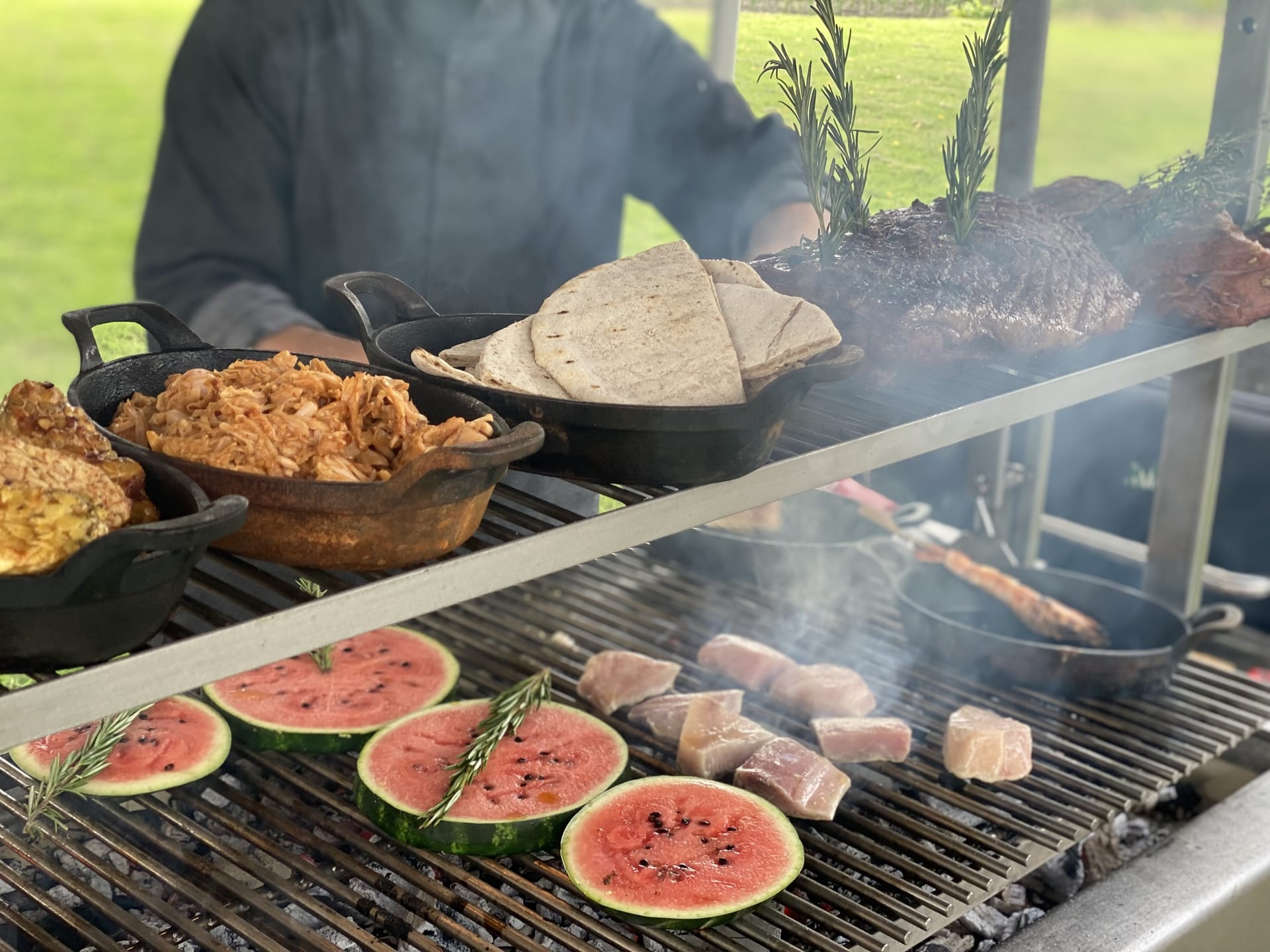
La Casserole’s approach to catering in Tilburg starts with a site visit that establishes three things at the same time: available kitchen capacity, electrical capacity in kilowatts at each connection point, and the logistics route from the loading area to the serving point. Together, these determine which menu format is feasible in the first place. A five-course walking dinner needs a very different serving capacity than a buffet, and that difference should be clear before the quote is prepared, not afterwards.
The comparison then becomes more concrete. The example below assumes an illustrative corporate party for 100 guests at company premises, with hot food and service staff.
| Aspect | Separate suppliers | One event partner |
|---|---|---|
| Number of contacts | 4 to 6 | 1 |
| Your own coordination time | typically 15 to 25 hours | typically 3 to 6 hours |
| Responsible for HACCP | client manages coordination | delivery team, documented in the event schedule |
| Setup window before the event | often 60 to 90 minutes | typically 3 to 5 hours |
| Additional costs when something goes wrong | negotiated separately with each supplier | handled within one agreement |
| Price per guest | appears lower | comparable to slightly higher |
The final row is the honest one. Full service is rarely dramatically cheaper on menu price alone. The value lies in what does not happen: no missing electrical circuit, no service staff who were briefed too late, and no buffet falling below temperature because the chafing dishes were ordered from the wrong supplier.
There is also a practical advantage. One partner can adapt the menu to the space, rather than forcing the space to fit the menu. If the serving area proves too tight, the concept can shift to dishes served in shorter rounds. That decision is made during planning, not on the night itself. For clients unsure about the right service format, comparing a walking dinner and a seated dinner often provides more clarity than arranging another tasting.
The local element matters more than many clients expect. Travel times, city-centre loading restrictions and the availability of regular service teams vary by municipality. A provider that regularly delivers catering in Tilburg and the surrounding area knows these differences from experience and builds them into the schedule rather than improvising around them.
What practical steps can you take to organise a stress-free corporate party?
For catering in Tilburg, follow these six steps in this order. Change the order and you are likely to get stuck at step four.
- Set the objective before choosing the menu. A department that needs to get to know one another calls for movement and an informal standing format. An anniversary with speeches needs seating and quiet at the right moments.
- Confirm guest numbers with a margin of around 10 percent. Anything below that is manageable. Anything above it can result in additional costs on the day.
- Check the venue against three hard limits: kitchen capacity, electrical capacity in kilowatts, and the noise limit that applies at the time your event continues.
- Check whether a permit is required within two weeks of confirming the date. For events involving emergency services, a deadline of up to 12 weeks may apply, and missed time cannot be recovered.
- Choose the catering format to suit serving capacity, not the preferences of the leadership team.
- Create an event schedule with timings and responsibilities, including the hour before guests arrive.
What should the event schedule include as a minimum?
The arrival time for every supplier, the setup sequence, the time of the sound check, the service staff briefing, the start of food service and the name of the person who makes decisions if anything changes. That final point is the one most often overlooked, and it causes the most delays.
What if the event is outdoors?
For a garden party or terrace setup, the main risks shift to weather and electricity. A decision point agreed in advance, usually 24 to 48 hours beforehand, prevents last-minute panic. The practical realities of electricity and weather for outdoor catering deserve just as much attention as the menu itself.
Checklist:
- Date confirmed? Check the municipal permit or notification requirement within 14 days
- More than 75 hot dishes being served at once? Ask specifically about mobile refrigeration and hot-holding capacity
- Outdoors or in a marquee? Calculate electricity for refrigeration, heating and sound as one combined requirement, not separately
- Speeches planned? Schedule a food service pause of at least 15 minutes around them
- Put one named final decision-maker, including their phone number, on the event schedule and make sure every supplier has it
Frequently asked questions
How much does catering in Tilburg cost per person for a corporate party?
The price per guest depends mainly on the service style and the kitchen facilities available, not on the number of dishes. Drinks reception bites with service staff generally sit at the lower end of the price range, while a walking dinner or seated dinner costs considerably more because it requires more staff hours and serving capacity. Always ask whether transport, equipment, refrigeration and staff hours are included. In practice, these are responsible for most of the differences between quotes.
Do I need a permit for a corporate party in Tilburg?
It depends on the venue and whether the event is private. A private party in your own garden or home does not need to be reported under the municipal Prettig Geregeld policy, but many other corporate parties are subject to notification or permit requirements under local bylaws. Events involving emergency services have an application deadline of up to 12 weeks in advance. Check this as soon as the date is confirmed, not after suppliers have been booked.
Who is responsible for food safety if I hire several caterers?
The organiser remains ultimately responsible for coordination. According to the RIVM hygiene guidelines for events, the NVWA is the regulator, and work must follow the hospitality hygiene code or an individual HACCP plan, even when several hired suppliers are active. Ask every food supplier for their plan in writing beforehand. With one delivery partner, that responsibility is contractually placed in one location.
From how many guests does an event partner make more sense than organising it yourself?
As a rule of thumb, the balance shifts at around 50 guests, and sooner if the venue does not have a fully equipped kitchen. Below that number, organising it yourself is still manageable, especially for a simple setup. Beyond it, coordination hours, the cold chain and permits create a workload that no longer fits around a normal working week.
Why does La Casserole work with one central point of contact?
Because most mistakes happen during handovers between suppliers. With more than 40 years of experience and over a thousand events delivered, the approach is built around one project lead who schedules the kitchen, service staff, furniture and equipment in the same event schedule. This means the hour before guests arrive, usually the most vulnerable moment, is planned in advance rather than improvised.
Conclusion
When it comes to catering in Tilburg, the choice between buying from separate suppliers and outsourcing to one provider is not a matter of taste. It is a calculation. Count the guests, count the suppliers, count your own hours and check the permit requirement. Above around 50 guests in a venue without a fully equipped kitchen, one accountable partner nearly always comes out ahead, not on menu price, but on the problems that never arise.
Start with three practical actions: confirm the date and check the municipal notification or permit requirement within two weeks, arrange a site visit to assess kitchen and electrical capacity, and create an event schedule with one final decision-maker. Once those three essentials are in place, you can spend the evening talking to colleagues instead of directing delivery teams.
Looking to host a stylish event in Brabant? Let us handle it!
Sources
- CBS — Cbs
- NVWA — Nvwa
- Prettig Geregeld — Lokaleregelgeving
- de gemeente Tilburg — Tilburg
- Hygiënerichtlijn voor evenementen van het RIVM — Rivm
- Hygiënerichtlijn voor evenementen — RIVM
- Checklist Veilig omgaan met eten op markten en evenementen — NVWA
- Omzet horeca groeit in tweede kwartaal met 2,7 procent — CBS