

The short answer
For on-site catering in Brabant for 100 guests or more, success depends less on the menu than on four essentials you need to confirm in advance: sufficient electricity and access to water, a practical kitchen workspace within a short distance of guests, the local authority’s permit timeline, and enough service staff for your chosen dining format. A venue without a kitchen can work perfectly well with mobile equipment, provided those four points are covered. A room with a permanent kitchen reduces the technical workload, but gives you less freedom over the atmosphere and layout.
Key takeaways
- HACCP is a legal requirement, not an optional extra. According to the NVWA, every business preparing and selling food must work with a food safety plan or hygiene code based on HACCP, including food prepared at an event venue.
- Serving alcohol outside licensed premises requires a separate exemption. Article 35 of the Dutch Alcohol Act places this under the mayor’s authority. The exemption is valid for a maximum of twelve consecutive days (source: Municipality of Lelystad).
- Permit timelines increase with the scale of the event. Brabant’s safety regions use a joint assessment process: the larger and more complex the event, the higher the risk category and the longer the approval process (Event Policy, Municipality of Son en Breugel 2026).
- The market is busy and fragmented. The number of event catering businesses in the Netherlands has increased more than sixfold since 2007 (CBS, 2024), making quotes harder, not easier, to compare.
- Plan for a kitchen area, not a spare corner. For 100 to 200 guests, you will usually need a screened-off working area of several dozen square metres, plus vehicle access for a refrigerated van.
Why do events with 100 guests run into technical issues more often than food issues?
La Casserole works in a market where caterers, wedding venues, event agencies and hire companies may each handle one part of the event. The same issue comes up time and again: the client picks a beautiful venue first, chooses a menu next, and only then discovers that the garden or warehouse has just one 3x16A distribution board. Suddenly, the menu has to change. (Services)
Imagine an office manager at a technology company with around 180 employees booking a company party at a country estate. The plan is a walking dinner with four hot courses. It looks perfect on paper. In reality, that setup may need several induction hobs, hot-holding equipment, refrigeration and lighting all at once. That rarely fits on a single existing circuit. The answer is either a generator or a menu with more chilled and pre-cooked elements. Both can work brilliantly, but deciding in week one rather than week six can save hundreds of euros and a great deal of hassle.
That is why professional event planning starts with the venue’s physical limitations, then moves on to the food concept. This sequence is central to our complete guide to planning a corporate event in Brabant.
What does on-site catering in Brabant involve, and why is it harder to choose a supplier?
On-site catering in Brabant means a caterer brings the complete kitchen setup, refrigeration, service team and equipment to a location without permanent hospitality facilities. That could be a castle garden, a company warehouse, a museum or an empty commercial property.
The province has no shortage of suppliers. According to CBS (2024), 13 percent of all Dutch food and drink businesses are located in North Brabant, the third-largest concentration after North Holland and South Holland. The same publication reports that the number of event catering businesses has increased more than sixfold since 2007.
More suppliers does not mean quotes are easier to compare
Much of this growing market consists of specialists: food truck operators, staffing agencies and hire companies. For drinks with 30 guests, that arrangement can work well. For 100+ guests, you may receive four quotes that all include and exclude different things, leaving you to compare apples with rental agreements.
Where hidden costs appear
Items routinely missing from separate quotes include transport and setup time, an electrician for power distribution, crockery and glassware hire for multi-course meals, waste removal and post-event breakdown hours. Ask every supplier specifically whether setup and breakdown hours are included. If they cannot answer, there is a good chance they have not properly assessed the venue.
What should you confirm about power, space and permits before booking on-site catering in Brabant?
Three things should be documented before you discuss the menu: technical capacity, the site layout and the permit process.
Electricity and water: measure, do not guess
Ask someone to photograph the electrical panel and count the available circuits. A hot kitchen serving 150 guests will generally draw far more power than a standard domestic connection can handle. Three-phase power (400V) often makes the difference between needing a generator and not needing one for larger hot kitchens. Water is less critical. In many cases, a tap within walking distance and water containers brought by the caterer are enough, but wastewater disposal still needs to be arranged.
Kitchen area and service routes
The distance between the kitchen and guest area directly affects the temperature of each plate. As a rule of thumb, the shorter the service route, the better a multi-course meal will work. Once the walk exceeds fifty metres, plated dining becomes difficult. A buffet, walking dinner or live cooking station closer to guests will usually make more sense.
Permits and exemptions
The event policy of the Municipality of Son en Breugel (2026) explains the joint assessment process used by Brabant’s safety regions: the bigger or more complex the event, the higher the risk category and the more extensive the permit process. For a private indoor company party, a simple notification may often be enough. Add a marquee, outdoor music or members of the public, and the paperwork becomes more substantial. Start the conversation with the municipality at least several months ahead, and earlier for larger or more complex events.
If you serve alcohol at a location that is not licensed premises, you need an exemption under Article 35 of the Dutch Alcohol Act. It is issued by the mayor and is valid for a maximum of twelve consecutive days.
Checklist:
- Photograph the electrical panel and count the available circuits. Record whether 400V is available.
- Measure the distance from kitchen to guest area. If it exceeds fifty metres, reconsider the service format.
- Ask the municipality which risk category applies before confirming the date.
- Apply for the Article 35 exemption as soon as the venue and date are confirmed, not in the final month.
- Confirm in writing who is responsible for the HACCP plan on the day.
Private outdoor venue or function room with a kitchen: which option offers better value?
The honest comparison is not about cost per guest. It is about everything else you need to arrange. The table below compares both options for 100 to 200 guests.
| Aspect | Outdoor venue or empty space | Function room or venue with a permanent kitchen |
|---|---|---|
| Technical preparation | Power plan, possibly a generator, water supply | Usually available, but capacity still needs checking |
| On-site setup time | Often a full day or longer | Usually a few hours |
| Additional hire costs | Marquee, flooring, furniture, toilets, refrigeration | Largely included |
| Permit process | More extensive, depending on risk category | Often a notification or covered by an existing permit |
| Freedom over atmosphere and layout | Very high | Limited by the venue’s facilities |
| Weather dependency | High, a backup plan is essential | Low |
| Realistic lead time | Usually three to six months | Usually six to twelve weeks |
The counterintuitive reality is that an empty but characterful venue is rarely cheaper than a venue with a kitchen once every cost is included. What you save on venue hire is often spent on technical equipment and labour. The reason to choose the empty venue is therefore not budget, but guest experience. That is a perfectly valid choice, as long as you make it deliberately.
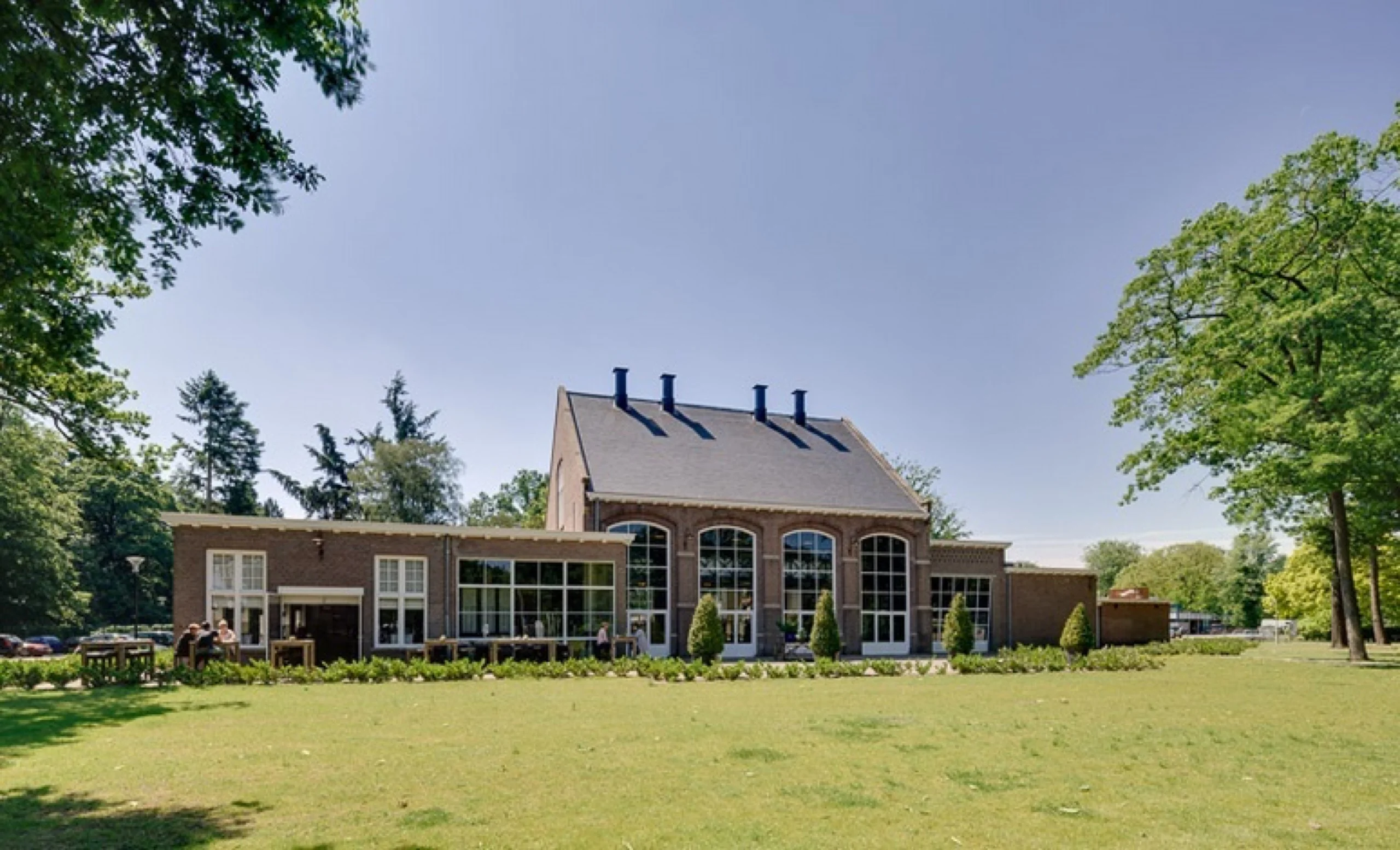
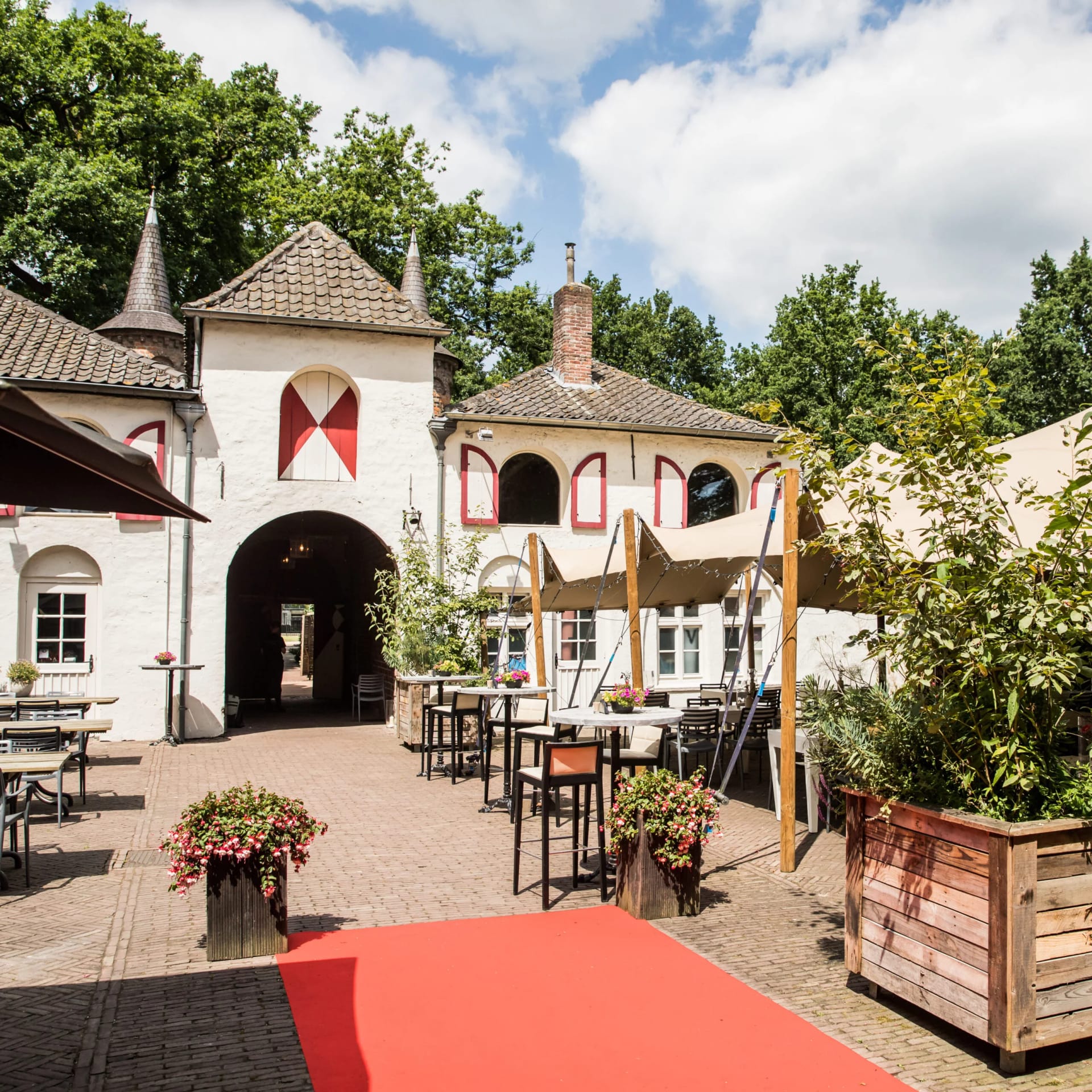
La Casserole’s approach, which brings catering, styling, technical production, furniture and project management together under one contract, makes the full cost visible at once rather than spreading it across four separate quotes. For a clearer side-by-side comparison, see how kitchen facilities, guest flow and costs connect in this comparison of Het Ketelhuis and a castle venue.
Plated dinner, buffet or walking dinner for 100+ guests
A plated dinner requires the largest service team and the shortest service route, but gives you the most precise timing. A buffet reduces staffing needs and works well when guests arrive at different times, although queues quickly form if there are too few serving points. For larger numbers, plan several double-sided serving points. A walking dinner keeps guests moving and is ideal for networking, but it needs more kitchen capacity per guest than many people expect.
What should be on your on-site catering checklist before you sign?
Use this list to review the venue and caterer in a single meeting. Every unanswered point will cost you later.
- Power capacity confirmed in writing: prevents last-minute menu changes two weeks before the event.
- Vehicle access and unloading point checked: if a refrigerated van cannot get within one hundred metres of the kitchen, setup will take considerably longer.
- HACCP responsibility assigned: the NVWA requires a food safety plan or hygiene code, including for food prepared on site.
- Article 35 exemption submitted: without this exemption, alcohol cannot be served outside licensed premises.
- Service team matched to the dining format: a plated dinner needs considerably more staff than a buffet for the same guest count.
- Weather backup plan confirmed: an outdoor event needs a marquee or indoor alternative, plus a decision point and deadline.
- Setup and breakdown hours included in the quote: this is the item most often omitted from separate quotes.
- One point of contact on the day: where multiple suppliers are involved, someone must own the timeline.
This is the same approach used for garden parties where power and weather shape the entire plan, simply with more guests and less room for improvisation.
Which mistakes cost the most money at larger events?
The most expensive mistake in on-site catering in Brabant is confirming the date before the venue has had a proper technical assessment. The next biggest mistake is comparing quotes by their final total rather than by what is actually included.
Starting too late with the municipality
Processing times increase for higher-risk events. If you approach the municipality six weeks before an event with a marquee for 200 guests, you may be refused or forced into a scaled-back setup.
Underestimating service staff
For a plated dinner, staff numbers determine whether the third course still arrives hot. Cutting service staff can look like the easiest saving, but it is almost always the most noticeable one.
Nobody owns the timeline
Four suppliers with four separate schedules create three conflicts. Solve this by appointing one supplier to manage the timeline, or by assigning an in-house project manager who genuinely has the time to do it.
Checklist:
- Confirm the date only after an on-site venue inspection with the caterer present.
- Compare quote line items, not just totals: transport, staffing, equipment, setup and waste removal.
- Call the municipality before making the final booking and ask about the risk category.
- Create one timeline covering every supplier’s arrival and setup time.
Frequently asked questions
How much does a wedding for 100 guests cost?
Wedding catering for 100 guests can vary widely because the dining format, number of courses, drinks and styling all shape the final cost. A buffet with limited service sits in a very different price range from a plated dinner with a sommelier and full styling. Always request a quote that separately lists staffing, equipment, transport and setup, otherwise you are not comparing like for like.
How much does on-site catering cost for a company party with 150 guests?
The cost per guest for on-site catering in Brabant depends largely on what the venue already provides. A venue with a kitchen, furniture and toilets can save a significant amount compared with an empty space that also needs a marquee, refrigeration, electricity and tableware. For an empty venue, expect an additional technical and hire package on top of the food and drink costs, and ask for this to be itemised in the quote.
Do I need a permit for catering on private property?
A private event on your own property may often only require notification, but that can change once you add a marquee, play music outdoors or increase visitor numbers. Brabant’s safety regions use a joint assessment process, under which bigger and more complex events fall into a higher risk category with a longer permit process. Check with your municipality before making the date final.
Can a caterer serve alcohol at an external venue?
Only with an exemption. To serve low-alcohol drinks outside licensed premises, you need an exemption under Article 35 of the Dutch Alcohol Act, issued by the mayor. The exemption is valid for a maximum of twelve consecutive days, which is more than enough for a one-day celebration, provided you apply in time.
How far in advance should I book on-site catering?
The lead time is determined by complexity, not guest numbers alone. A function room with a permanent kitchen can usually be arranged within a few months. An empty venue involving a marquee, technical production and permits needs a more realistic lead time of three to six months. Caterers and hire companies book up earlier in spring and December, so allow even more time during those periods.
Conclusion
On-site catering in Brabant for 100+ guests is a technical project with a culinary finish. The order that works is simple: assess the venue’s power, water, kitchen space and vehicle access first. Then start the permit process with the municipality. Only after that should you choose the menu and dining format. Reverse that order and you will pay for it in changes and additional work.
Choosing between an empty venue with character and a function room with a kitchen is not really a budget decision. It is a guest experience decision. Make it knowingly and cost both options in full, including setup hours and waste removal. A supplier that combines catering, technical production, furniture and project management under one timeline, as La Casserole does through its own venues and established partner network, makes the complete picture visible in one document. Start with a venue inspection and a conversation with the municipality. Everything else follows from there.
About La Casserole
La Casserole is a full-service event partner based in Best, combining catering, styling, technical production, hire services and project management into one complete solution for corporate and private events. The company has more than 40 years of experience, has organised more than a thousand events, and operates its own event venues in Brabant: Kasteel Henkenshage and Het Ketelhuis. Its clients include marketing managers, HR managers, directors and office managers, as well as private hosts looking for a fully managed celebration at their chosen venue.
Looking to host a stylish event in Brabant? Let us handle it!
Sources
- NVWA — Nvwa
- gemeente Lelystad — Gemeentelelystad
- Evenementenbeleid gemeente Son en Breugel 2026 — Lokaleregelgeving
- CBS (2024) — Cbs
- HACCP — Nederlandse Voedsel- en Warenautoriteit (NVWA)
- Alcoholwet, Ontheffing artikel 35 — Gemeente Lelystad
- Meer restaurants en catering, minder cafés — Centraal Bureau voor de Statistiek (CBS)