

The short answer
The best way to plan wedding catering for a mixed guest list is to treat the daytime celebration and evening party as two separate food experiences connected by one clear flavour theme. The key pressure point is between 20:00 and 21:30, when daytime guests are full and evening guests arrive having had little more than a quick meal after work.
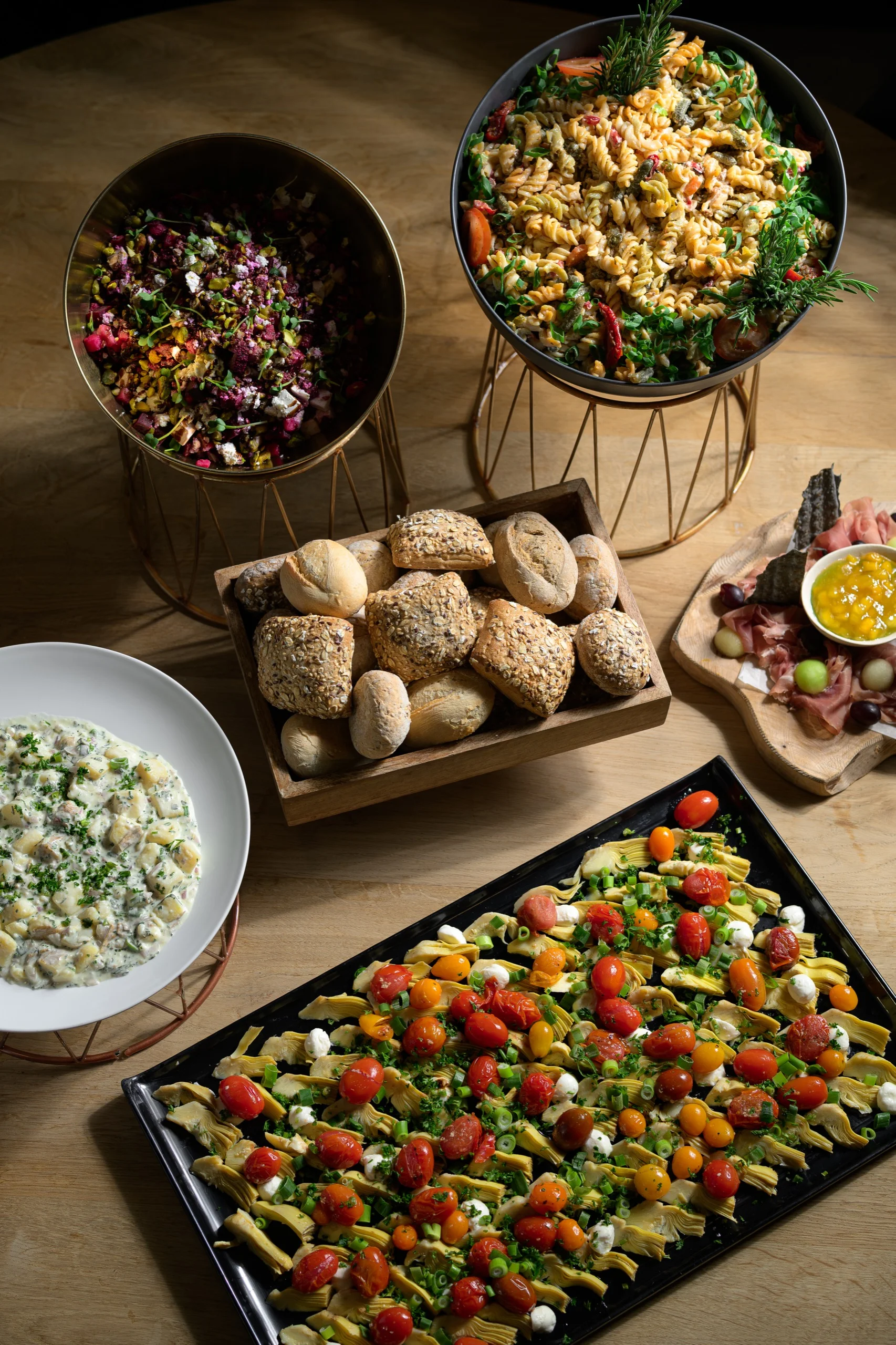
- As a rule, expect 60 to 70 percent more guests after dinner. A wedding with 80 daytime guests will often have 130 to 140 people on the dance floor later on.
- Schedule a second food moment at around 21:30, rather than serving it as soon as evening guests arrive.
- Keep hot food at a minimum of 60 °C and cold food at a maximum of 7 °C, in line with HACCP guidelines.
- Use one flavour direction, such as Mediterranean, in two formats: plated food during the day and hand-held dishes in the evening.
- Decide on a late-night snack based on the party finish time, not instinct.
Why evening guests shape your entire schedule
At La Casserole, we see the same pattern with couples hosting a mix of daytime and evening guests. Catering conversations almost always start with dinner, while the real pinch points tend to emerge later in the evening. Dinner runs over, evening guests arrive at 20:30 hungry and head straight for the bar, while the service team is still clearing the tables. (Services)
That transition is where many catering plans fall apart. It is not because the food is wrong. It is because the timing is. If you approach wedding catering as one uninterrupted menu, you will almost certainly over-cater during the day and under-cater in the evening.
There is another factor at play. The average age at marriage in the Netherlands rose to 38,8 for men and 36,2 for women in 2024. Older couples often have broader social circles, which can mean larger evening groups made up of colleagues, neighbours and friendship groups who do not know each other. In that setting, food is a social connector, not an afterthought.
This case study follows one wedding from the daytime reception through to the late-night snack, showing the decisions that make the difference. If you would like to start with the bigger picture, this complete guide to planning a wedding or private party without the stress offers a broader planning framework.
Where do two guest groups create problems?
The challenge is not the headcount. It is that two groups have completely different appetites at the very same time.
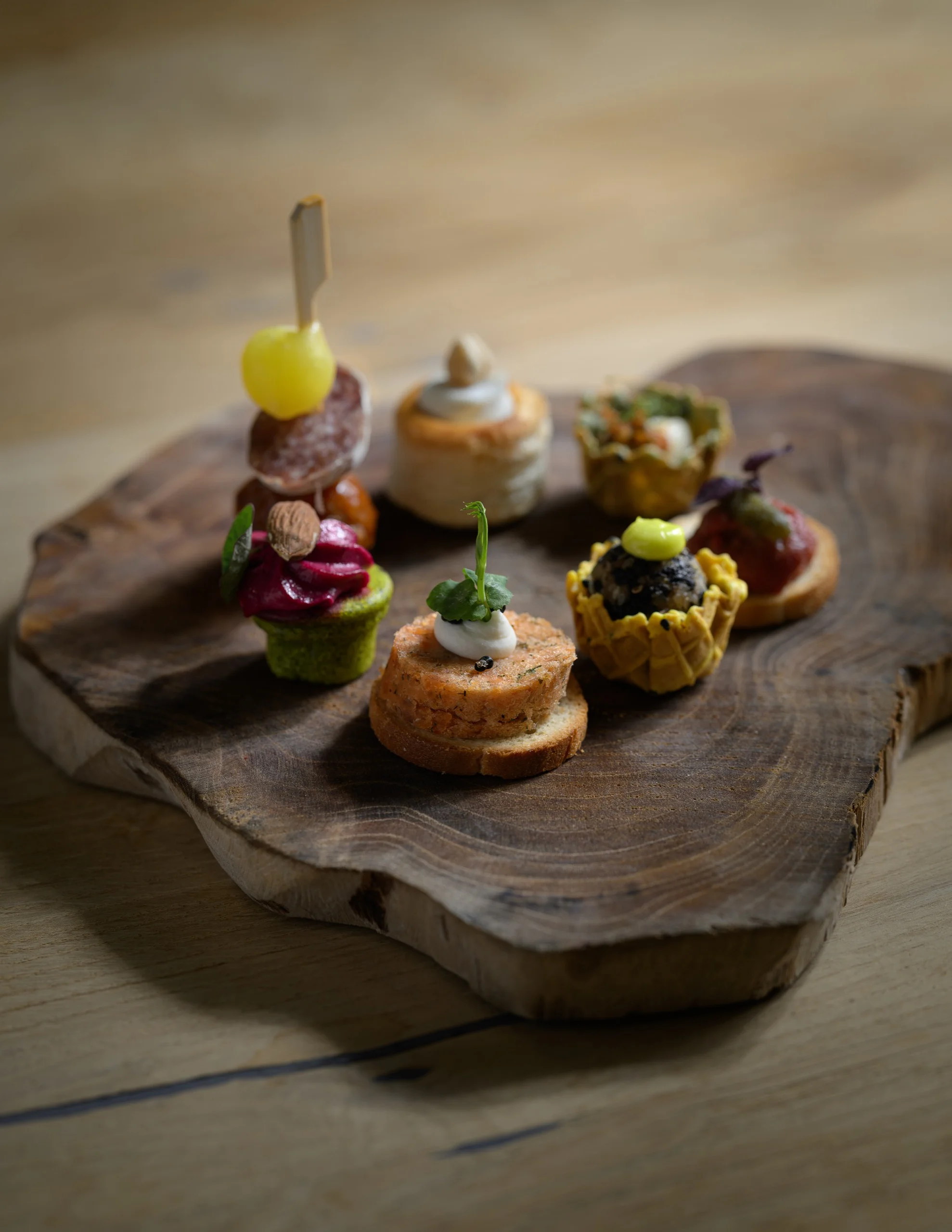
Daytime guests have been there since 14:00. They have had cake, drinks, canapés at the reception and a three-course dinner. By around 21:00, they are at their fullest. Evening guests arrive after a working day, often having had a sandwich as their last meal. Put out an elaborate dessert table at that point, and one group will ignore it while the other still will not have had enough proper food.
The catering gap between 20:00 and 21:30
In practice, the issue develops during this hour and a half. The kitchen is changing over, the service team is clearing down, and there is no visible food activity in the room. Guests who have just arrived see an empty buffet table and a bar serving drinks only. That is when the atmosphere can lose momentum.
The hidden cost: ordering twice
Couples trying to fill that gap often order both extra desserts and an evening buffet. The result is food left untouched. For weddings with 80 daytime guests and around 60 evening guests, a useful rule of thumb is to cater the second food moment for approximately 70 percent of the total headcount, not 100 percent. Daytime guests will graze, but they will eat considerably less.
Checklist:
- Count your evening guests separately and ask about their travel time. Journeys over 45 minutes usually mean guests arrive hungrier.
- Confirm exactly when dinner ends and schedule the second food moment no more than 90 minutes later.
- Ask your caterer for a breakdown by food moment, rather than one all-in price per person.
- Check that evening food can be eaten without cutlery.
How do you plan wedding catering for daytime and evening guests?
La Casserole’s approach to weddings with mixed guest flows comes down to one principle: one flavour theme, two formats. The theme, such as Mediterranean, French-inspired or Asian, remains consistent throughout the day, while the presentation changes to suit each moment.
Step 1: map out the four food moments
A wedding with two guest groups generally has four key moments: the reception from 14:00 to 16:00, dinner from 18:00 to 20:00, the evening food moment at around 21:30, and a late-night snack from 23:30 onwards. Each has a different purpose. The reception should stay light, dinner is the main culinary event, the evening food moment brings the two groups together, and the late-night snack keeps the dance floor going.
Step 2: choose a format that suits how guests are moving
If everyone is seated, a plated meal works. If everyone is mingling, choose food that can be held and eaten easily. For the evening food moment, it is almost always the latter. The difference between a served concept and food stations is greater than most couples expect, and the choice between shared dining and live cooking for event catering matters directly here.
Step 3: plan the temperature logistics
This is the part couples rarely arrange themselves, and it is often where garden and country house weddings run into trouble. The NVWA requires hot food to be kept at 60 °C or above in a hot holding unit or bain-marie, including when food is reheated. Chilled food must be stored at 7 °C or below. At an outdoor summer venue, that means no salads sitting on a buffet for three hours, and hot holding equipment that has access to a reliable power supply. Underestimating the power and weather requirements of an outdoor setup can quickly cause problems, as explained in how to avoid power and weather issues with garden party catering.
Step 4: appoint someone to lead the transition
A second food moment only works if someone announces it. Without a cue, food gets left behind. In practice, the wedding coordinator or service team should mark the moment, ideally alongside a change in music.
Example: 80 daytime guests and 65 evening guests
Example: a typical wedding scenario, created for illustration
Imagine a couple in their thirties planning a wedding at a rural venue in Brabant. The daytime reception has 80 guests: family, witnesses and close friends. From 20:30, another 65 evening guests arrive, mainly colleagues and a wider group of friends. Dinner ends at 20:15.
The original plan was one continuous buffet, opening at 20:00 and remaining available until 22:00. The problem was obvious: daytime guests were full by 20:00, evening guests did not arrive until half an hour later, and the buffet was already partly depleted by then.
In the revised plan, the table was completely cleared at 20:15. At 21:30, more than an hour after the first evening guests had arrived, a compact second food moment opened: three hot hand-held dishes from a live station, plus two cold options. It was calculated for around 100 portions rather than 145. A late-night snack followed at 23:45.
This type of setup usually leads to far less food returning to the kitchen, a noticeably busier dance floor in the hour after the food service, and a natural opportunity for the two guest groups to mingle at the station. Exact results will vary by venue and guest mix.
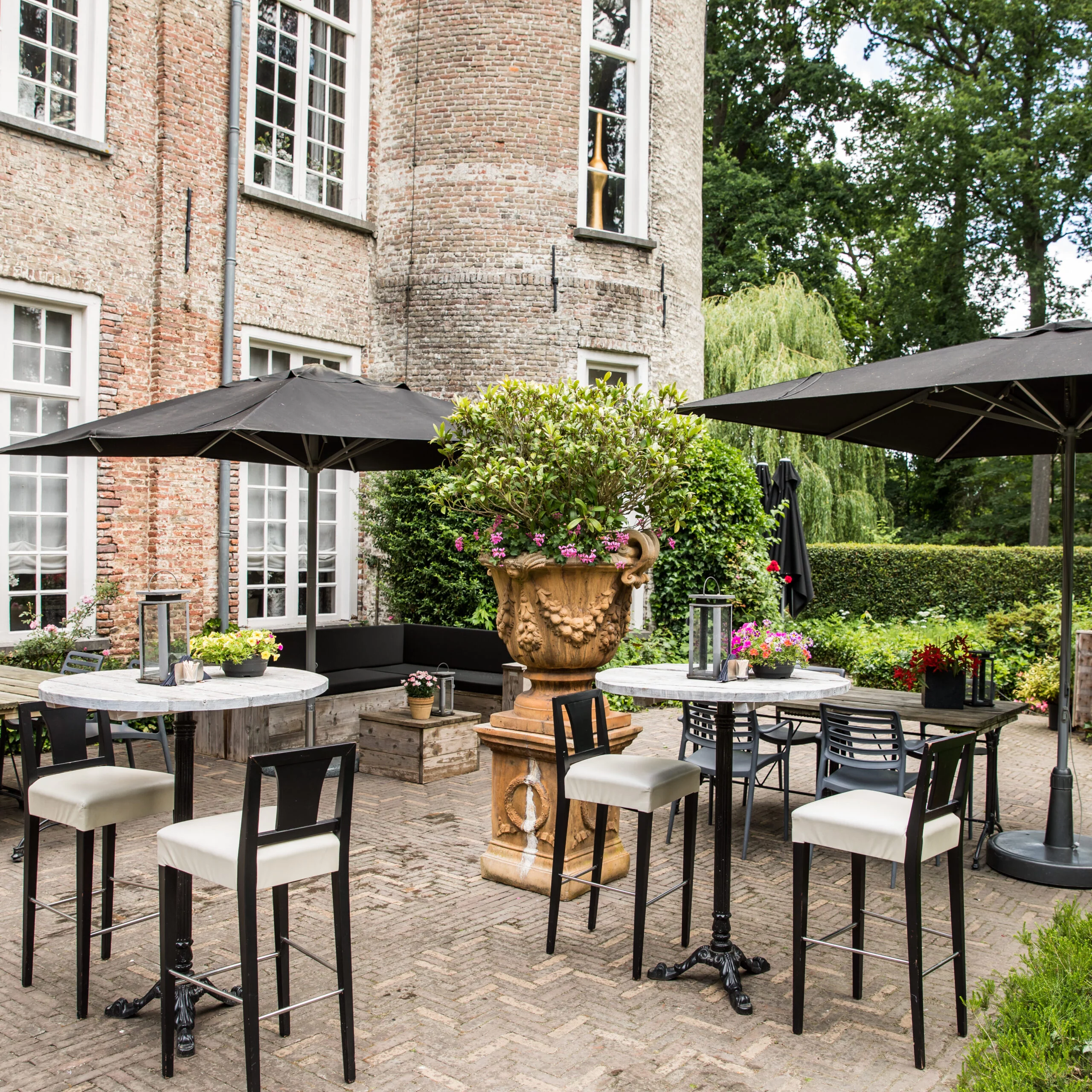
The heart of this scenario is the delay. Serving food as guests arrive may feel welcoming, but it often has the opposite effect. The first forty minutes after arrival are spent finding coats, congratulating the couple and getting a first drink. If food is already out, both groups are likely to miss it.
Which setup works for different numbers of evening guests?
The ratio of daytime to evening guests has more influence on the evening format than the budget does. The decision matrix below summarises the usual options.
| Daytime : evening guest ratio | Recommended evening format | Calculate portions for | Extra service staff | Typical timing |
|---|---|---|---|---|
| 80 : 20 (small addition) | Generous grazing boards at the bar | approx. 50% of total guests | 1 extra team member | 21:00 |
| 80 : 60 (balanced groups) | Live station with 3 hot options | approx. 70% of total guests | 2 to 3 extra team members | 21:30 |
| 60 : 100 (evening-led celebration) | Full walking dinner in the evening | approx. 85% of total guests | 4 extra team members | 21:00 and 23:30 |
| 100 : 15 (intimate addition) | Late-night snack only | approx. 40% of total guests | no extra staff needed | 23:30 |
The second row is by far the most common scenario. Here, a live station is more effective than a buffet because it creates a physical gathering point where the two groups naturally meet. A buffet table is emptied and disappears. A station remains a place to gather. If you are deciding between these formats, this comparison of walking dinners and buffets for parties provides further guidance.
Checklist:
- Work out your daytime to evening guest ratio before discussing the menu, not afterwards.
- If evening guests exceed 60% of the daytime guest count, plan a separate kitchen preparation moment.
- Ask for staffing requirements by food moment, rather than as one total line in the quote.
- Check whether the venue has space for a second evening food station.
What does a second catering moment cost?
A second food moment does not double the cost. Food costs increase, but fixed elements such as kitchen setup, transport and core staffing have already been covered by dinner. In practice, the additional cost per person for an evening food moment is therefore significantly lower than the daytime catering cost.
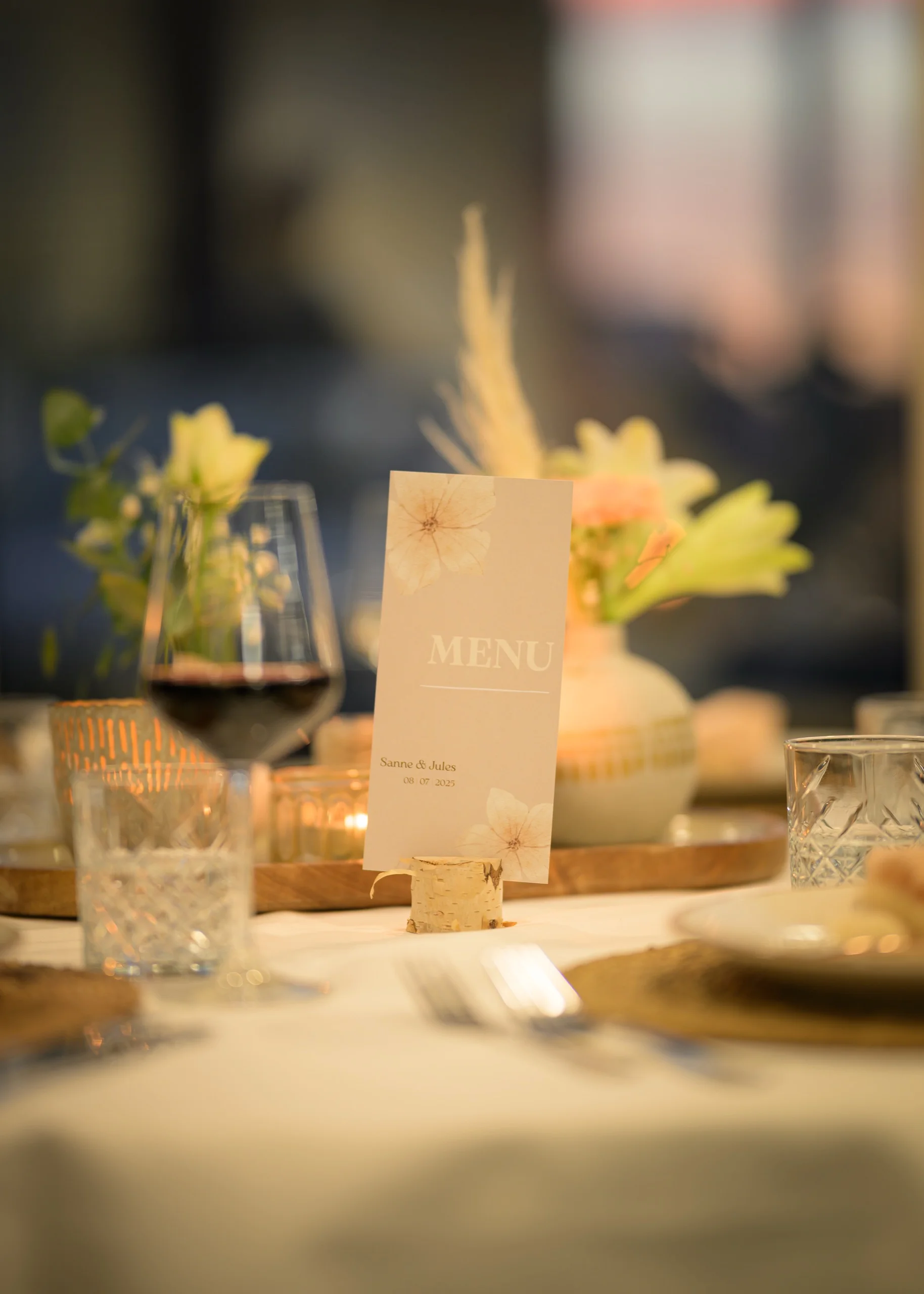
What can push up the budget is a separate cooking setup for the evening food moment in a different location from the daytime kitchen. Always ask whether the station can run from the existing kitchen infrastructure.
Key takeaways
Three things determine whether the plan works.
Timing matters more than menu choice. Even the best dish will be ignored if it is served at the wrong time. A simple hot hand-held dish at 21:30 will outperform an elaborate plated dish at 20:15.
Two formats, one flavour theme. Guests staying all day should feel a sense of continuity. If the theme changes completely, the evening can feel like a different party. If the format stays exactly the same, it feels repetitive.
Over-ordering costs more than a second round. You can prepare more food, but you cannot recover food that has been wasted. At weddings with mixed guest flows, cautious quantities with a kitchen contingency almost always work out more cost-effectively than ordering too much from the start.
A single point of contact makes a real operational difference because the evening food moment affects catering, service, production and music at the same time. With an approach where catering, styling and project management are handled under one direction, the couple does not have to coordinate that transition themselves.
Checklist:
- Put the evening food time in writing in the event schedule.
- Agree who will announce it: the wedding coordinator, DJ or service team.
- Keep a kitchen contingency of around 10 to 15 percent.
- Check that hot holding equipment can run on the available electrical circuits.
Frequently asked questions
How much food should you allow for evening guests at a wedding?
Rule of thumb: plan the second food moment for around 70 percent of the total guest count, not 100 percent. Daytime guests have already had dinner and will usually have only one or two items later in the evening. Evening guests will eat more, so the average requirement is lower than the full guest list suggests. Keep a 10 to 15 percent contingency in the kitchen.
When is the best time to serve evening food at a wedding?
Timing: usually around an hour after the first evening guests arrive, which is often around 21:30. The first forty minutes tend to be spent greeting people and having a first drink. Food served too early cools down and gets overlooked. Tie the moment to a change in music so guests notice it.
Can daytime and evening guests have the same menu?
Not in the same format: one flavour theme can work beautifully, but the serving format should change. Daytime guests are seated and eat from plates, while evening guests are standing and need food they can eat with one hand. Serving the same dish in two forms, such as a stew as a main course and later as a small hand-held dish, keeps everything cohesive without feeling repetitive.
How do you keep hot food safe during a long wedding party?
Temperature limits: the NVWA requires hot dishes to stay at 60 °C or above and chilled items to remain at 7 °C or below. Between those temperatures, bacteria can multiply more quickly. At outdoor events, this means hot holding equipment and refrigeration need enough power capacity, while cold dishes should be replenished in small batches.
What is a late-night snack, and when do you need one?
Late-night snack: a small, savoury dish served late in the evening, usually from 23:30 onwards. Think sandwiches, fries or soup. If the party continues beyond 00:30, it is almost always a worthwhile addition. It helps keep guests from leaving early and can noticeably extend the time spent on the dance floor.
Conclusion
Planning wedding catering for daytime and evening guests does not require a bigger menu. It requires better timing. Treat the day and evening as two moments with one flavour theme, schedule the evening food around an hour after new guests arrive, and calculate portions for roughly 70 percent of the total headcount rather than everyone.
The practical next steps are simple: first establish your daytime to evening guest ratio, then choose a format from the decision matrix, and lock the timing of the second food moment into the event schedule before discussing individual dishes. When requesting quotes, always ask for a breakdown by food moment, including staffing and temperature management.
The weddings that run smoothly are rarely the ones with the most food. They are the ones where someone has carefully planned that transition hour. La Casserole’s approach, with one team overseeing catering, service and planning, is designed to do exactly that.
Looking to host a stylish event in Brabant? Let us handle it!
Sources
- HACCP-regels in de keuken en andere ruimten — NVWA (Nederlandse Voedsel- en Warenautoriteit)
- Huwen en partnerschapsregistraties; kerncijfers — Centraal Bureau voor de Statistiek