

## At a glance
La Casserole operates in a market where caterers, venues and rental suppliers often each handle just one part of an event. That difference becomes clear when choosing between food stations and a seated dinner. A premium experience does not come from the format alone, but from everything around it. **Food stations feel more upscale when guest interaction is the priority and every station is staffed by a chef finishing dishes to order. A seated dinner feels more premium when the evening centres on a programme, speeches or a formal client event.** Not sure which way to go? A hybrid often works best: serve the starter at the table, then move to stations for the main course and dessert.
## Key takeaways
– Choose food stations when networking is the main goal. Choose a seated dinner when you have a structured programme with speeches or an awards presentation.
– An unattended station can quickly feel like a buffet. A chef finishing each dish on the spot makes all the difference.
– Cold dishes must remain at no more than 7°C and hot dishes at at least 60°C, measured at the start and midway through service (Sensz, HACCP guidelines).
– Long queues damage the premium feel more than a simpler menu ever will.
## Why do some corporate events feel more premium than others on the same budget?
You have two proposals in front of you with almost the same cost per guest. One offers five food stations, while the other includes a three course dinner at round tables. Which one will feel more premium to your clients and guests? ([Services](https://la-casserole.nl/services/))
For a marketing manager, this is far from a minor detail. A client evening, product launch or anniversary is a brand moment, and guests see the food as part of that brand experience. Demand for corporate catering is also increasing. According to [CBS (2026)](https://www.cbs.nl/nl-nl/nieuws/2026/36/omzet-horeca-groeit-in-tweede-kwartaal-2026-met-ruim-2-procent), revenue for canteens and catering companies rose by 4,1 percent in the second quarter of 2026, the strongest increase across food and drink businesses. More events also mean your guests have more occasions to compare.
The issue is that proposals tend to compare menus, while the sense of luxury comes from service, timing and the way guests move through the room. Anyone who has organised a reception with [drinks reception catering](https://la-casserole.nl/blog/catering-met-borrelhapjes-zo-maak-je-je-event-een-succes/) will recognise the principle: the format needs to support what guests are there to do. Only then does the menu come into play.
## What is the difference between food stations and a seated dinner?
**Food stations are separate, usually staffed serving points where guests collect smaller dishes themselves, while a seated dinner serves courses at the table on a fixed schedule.** The difference is not the quality of the food. It is who controls the rhythm of the evening: the guest or the kitchen.
### How do food stations work?
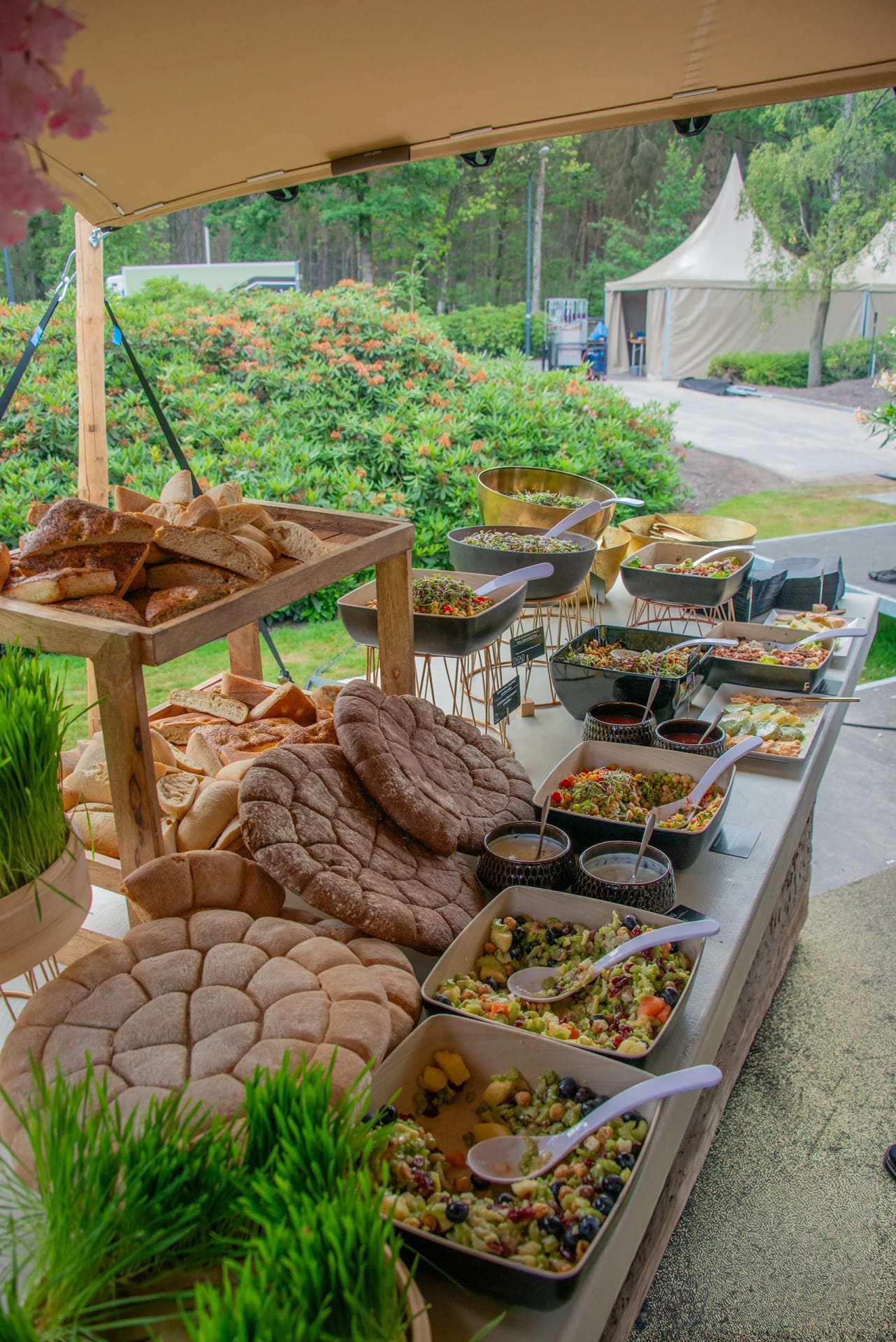
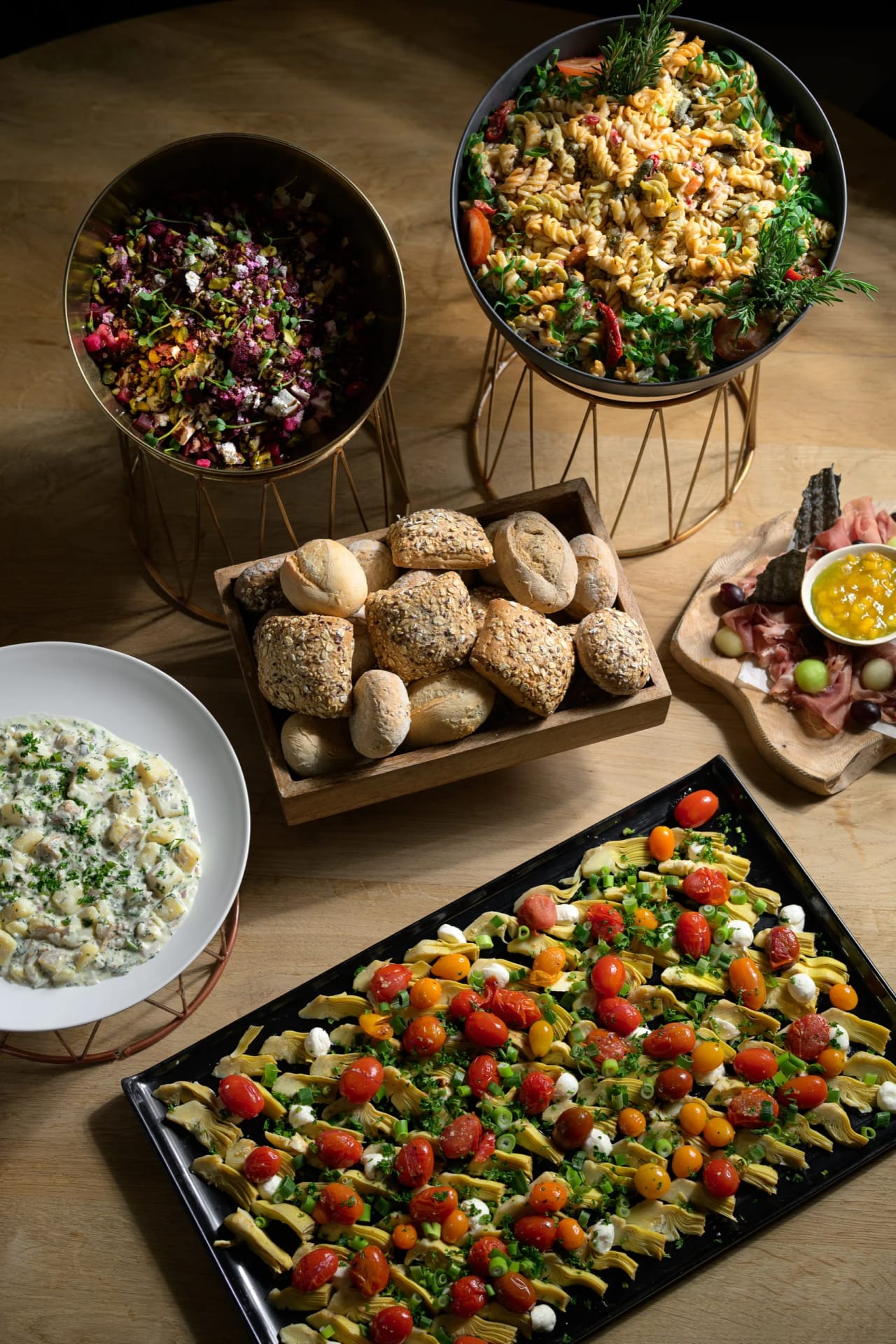
With food stations, you typically spread three to six themed stations across the room. Think of a pasta station where the chef finishes the sauce in a Parmesan wheel, a grill, a raw fish station or a dessert bar. A food truck can also serve as a station, particularly for outdoor events. The difference between stations and a buffet is straightforward: a buffet is one long table where guests help themselves, while stations are spread across the venue and are often manned by a chef who finishes each individual portion. For a closer comparison, see [walking dinner or buffet for your corporate party](https://la-casserole.nl/blog/walking-dinner-of-buffet-voor-je-bedrijfsfeest-wat-werkt-beter/).
### How does a seated dinner work?
At a seated dinner, every guest has an assigned seat, often based on a seating plan. Three or four courses leave the kitchen together, with servers working table by table. Options include [shared dining or live cooking](https://la-casserole.nl/blog/shared-dining-of-live-cooking-wat-past-bij-jouw-event/), where sharing platters are placed on the table or a chef cooks in the room.
Put it into practice:
– Write down your event’s main purpose in one sentence: networking, informing or rewarding.
– Count the programme moments that require every guest’s full attention, such as speeches, demonstrations or presentations.
– If you have two or more of these moments, assigned seating has the advantage.
– When considering stations, always ask whether every station is staffed and who will be running it.
## Food stations vs seated dinner: which performs better across 5 criteria?
Where does each format add to the premium feel, and where can it fall short? The figures below are practical guidelines, not fixed standards. Exact staffing needs depend on the menu, venue and guest count.
| Aspect | Food stations | Seated dinner |
|---|---|---|
| Typical guest count | 50 to 500+ | 20 to 250 per room |
| Length of the meal | 60 to 120 min, flexible | 2 to 3 hours, fixed |
| Staffing guideline | 1 to 2 per station | 1 per 8 to 12 guests |
| Networking | ✅ Guests can move freely | ⚠️ Limited to table companions |
| Speeches and programme | ⚠️ Attention can be divided | ✅ Everyone is seated |
| Temperature control | ⚠️ Check every station | ✅ Each course comes from the kitchen |
### 1. First impressions and pacing
A seated dinner creates an immediate sense of calm: laid tables, folded napkins and everyone being served at the same time. Food stations create a more dynamic first impression, with flames, aromas and chefs at work. But the pace has to be right. If guests spend more than a few minutes in line, the experience can quickly shift from theatre to cafeteria.
### 2. Networking versus the programme
Stations encourage guests to mix. While waiting for pasta, they may start a conversation with someone from another department or one of your clients. A seated dinner limits most conversations to six to ten people at the table. On the other hand, a CEO speech gets full attention during a seated dinner, while the same speech can get lost in the background noise around food stations.
### 3. Staffing and service
This is where the premium impression is made or lost. A station without a chef is simply a buffet with a more expensive name. A dinner with too few servers leaves one table waiting while another is already eating dessert. In both cases, ask how many people will actually be working on the floor, not just how many chefs are in the kitchen.
### 4. Space and guest flow
Stations need clear routes for guests and power access in several places around the room. A seated dinner mainly requires tables, chairs and a kitchen or wash up area close to the dining space. In a narrow room with one entrance, stations can easily create bottlenecks. In that setting, a served dinner will naturally look more polished.
### 5. Where the budget goes
With food stations, more of the budget goes towards chefs, equipment and styling for each serving point. With a seated dinner, the investment is in waiting staff, tableware, linen and furniture. In practice, the total cost is often very similar. Choose based on what you need the evening to achieve, not solely on the price per guest.
## What food safety requirements apply to food stations at an event?
Cold food must be kept at no more than 7°C, while hot food must stay at a minimum of 60°C. According to the [Sensz HACCP guidelines](https://sensz.com/nl/kennisbank/haccp-binnen-de-catering-hygienerichtlijnen-en-tips/), these temperatures should be checked at the start of service and again halfway through the event. Raw products prepared at a station must also be heated to a core temperature of at least 75°C. A seated dinner sends each course out from one kitchen, whereas food at stations remains in the room for longer, which creates more potential risk.
Working in line with HACCP is a legal requirement, including at events, and the [NVWA](https://www.nvwa.nl/onderwerpen/voedselveiligheid/haccp) monitors compliance. If you are cooking in a marquee or food truck, [Ondernemersplein](https://ondernemersplein.overheid.nl/haccp-plan-opstellen-of-hygienecode-gebruiken/) outlines additional requirements for mobile and temporary business premises.
Put it into practice:
– Ask your caterer for its HACCP plan or the hygiene code it follows.
– Have temperatures recorded for every station, both at the start and midway through service.
– Plan smaller portions that are replenished regularly rather than putting out large platters.
– If you are using a marquee, check that the kitchen setup meets the rules for temporary spaces.
## Can you combine food stations and a seated dinner?
The usual question is whether to choose one or the other, but that is often the wrong question. A seated dinner is not automatically more luxurious. For many corporate guests, three hours at the same table can feel more like an obligation than a treat. And stations are not automatically informal when every chef prepares and finishes a dish with genuine attention to the guest.
A hybrid format brings together the strengths of both. Begin with a served starter at the table, so the welcome speech receives everyone’s attention. Then open the food stations for the main course and dessert, allowing guests to circulate freely. To take the experience a step further, a chef can finish a dish at the table, bringing the theatre of a station to a beautifully laid table. Read more about that choice in [chef at the table versus a walking dinner](https://la-casserole.nl/blog/chef-aan-tafel-duurder-dan-een-walking-dinner-maar-gasten-onthouden-het-beter/).
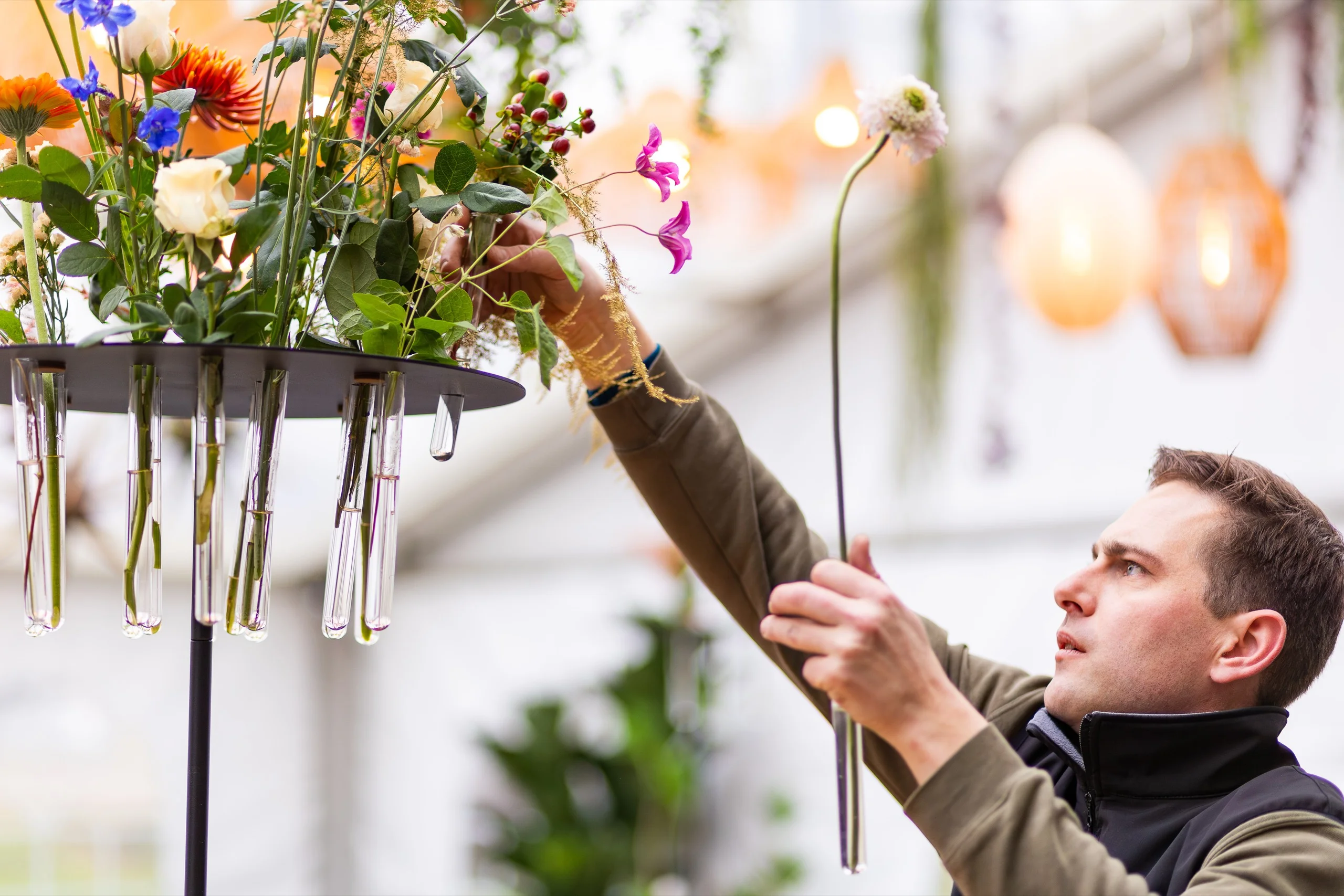
This mid event change does require careful direction. Some tables may need to be removed, lighting needs to shift from dinner to party mode, and guest routes need to open up. Because La Casserole plans catering, styling, technical production and furniture under one project lead, the changeover is built into the event schedule rather than left for three separate suppliers to coordinate on the night.
## Which setup suits your corporate event?
Imagine a marketing manager at a technology company organising a client evening for 150 to 200 guests, including a short product demonstration and a toast from the managing director. The original plan is a three course dinner. As the event takes shape, it becomes clear that the sales team mainly wants to have conversations with clients, something fixed tables make more difficult. A revised plan, with a seated starter during the demonstration and toast followed by four staffed stations, gives both objectives room to work. Time spent tied to one table falls from more than two hours to no more than half an hour, without adding extra programme items.
The same principle applies beyond corporate events. Couples choosing wedding catering are also increasingly opting for a seated start followed by a more relaxed second part of the evening.
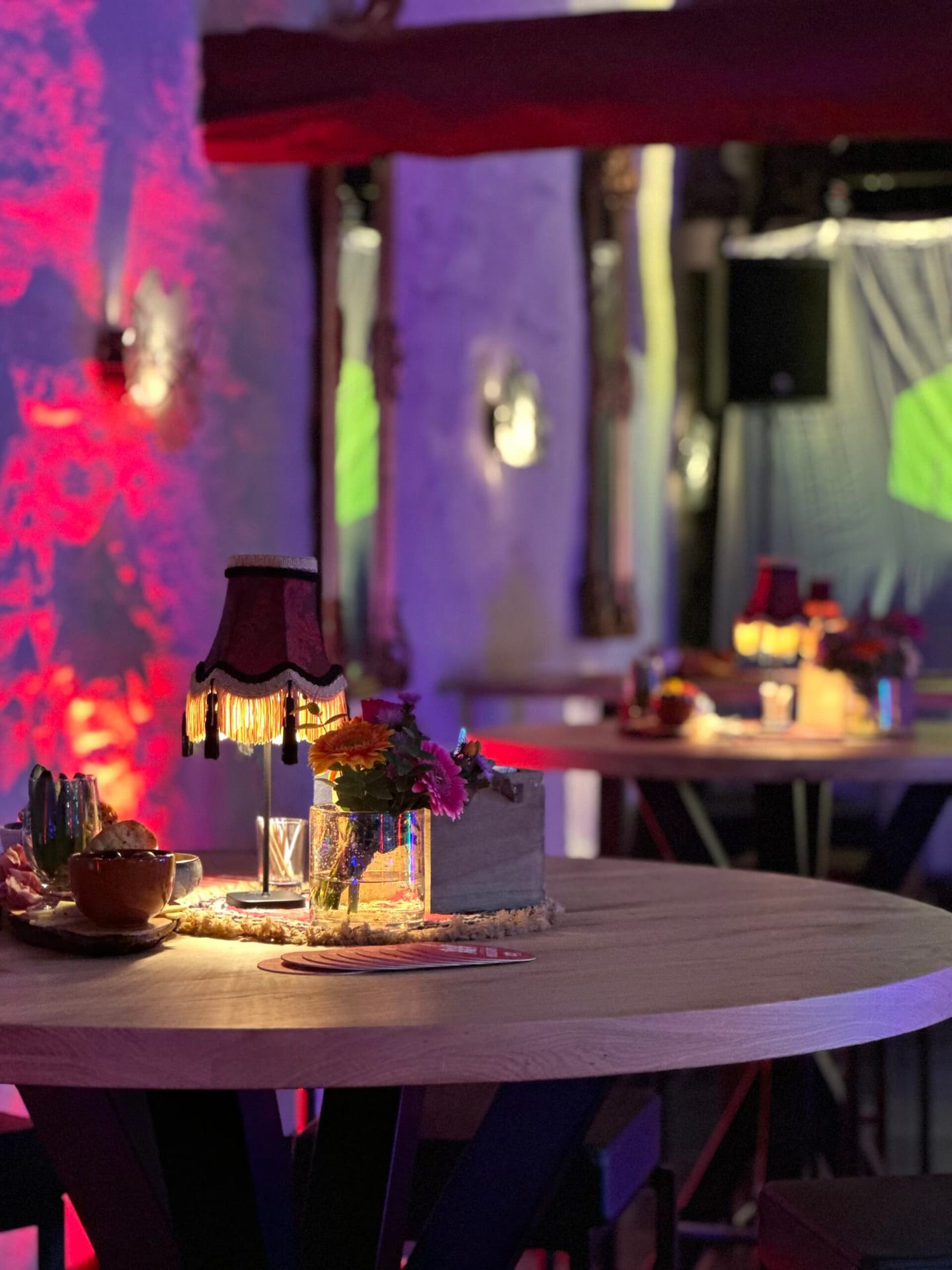
The venue matters too. A characterful space such as Het Ketelhuis in Eindhoven works well for stations among its industrial features, while a historic room enhances a formally laid dinner. La Casserole has its own venues, Kasteel Henkenshage and Het Ketelhuis, so power access, kitchen facilities and guest routes are known in advance. For events at your own premises, the [corporate catering approach in Brabant](https://la-casserole.nl/bedrijfscatering/) is a logical starting point.
Put it into practice:
– Is networking more important than the programme? Choose stations, with at least one chef per station.
– Do you have more than two all guest moments? Choose a seated dinner or at least a seated first course.
– Do you have a narrow room with a single entrance? Choose a served dinner.
– Are you hosting fewer than 40 guests? Consider dinner at one long table, as stations can feel sparse at that size.
## Frequently asked questions
### Which looks more premium: food stations or a seated dinner?
**The premium feel** depends on execution, not the format itself. Staffed stations where chefs finish dishes to order can feel more luxurious at networking events. A seated dinner works best for formal evenings with speeches. As a rule of thumb, if you have two or more all guest moments, assigned seating is usually the better choice.
### How many food stations do you need for 150 guests?
**The number of stations** is usually around one station for every 40 to 60 guests, so three to four for 150 people. Add a dessert station if the dining period lasts longer than an hour. If queues regularly exceed a few minutes, you need an additional station or a second chef.
### Is a seated dinner more expensive than food stations?
**Costs** are often closer than you might expect. Stations require budget for chefs, equipment and styling at each serving point, while a dinner requires waiting staff, tableware and furniture. Compare proposals based on the number of staff working on the floor, not just the price per guest.
### How long does a seated dinner take at a corporate event?
**Dinner duration** for three courses is usually between two and three hours, including short speeches. Food stations are more flexible, typically allowing guests to circulate for one to two hours. If you are planning a party or drinks reception afterwards, include room changeover time in your schedule.
### How does La Casserole help you choose between food stations and a seated dinner?
**End to end planning** is the difference. La Casserole coordinates catering, styling, technical production, furniture and project management through one point of contact. That means the format, guest routes, power requirements and any mid event changeover are designed together. With more than 40 years of experience and over a thousand events delivered, this level of coordination is standard practice.
## Conclusion
Choosing between food stations and a seated dinner is less about which option is more luxurious and more about what you want guests to do. Networking needs movement and well staffed stations. A programme with speeches needs assigned seats and precise service. Score your options against the five criteria: pace, networking versus programme, staffing, space and budget allocation. If you are undecided, a seated first course followed by stations often gives you the best of both.
For your next step, write down three things: the main goal of your evening, the number of all guest programme moments and the dimensions of your room. Then ask your caterer about staffing per station or per table, as well as the HACCP plan. If you are combining catering with a venue in or around Eindhoven, explore the options for [catering with your own chefs on location](https://la-casserole.nl/catering-eindhoven/) alongside your event plan.
## About La Casserole
La Casserole is a full service event partner based in Best, combining catering, styling, technical production, rentals and project management into one complete solution for corporate and private events. With more than 40 years of experience, its own event venues in Brabant including Kasteel Henkenshage and Het Ketelhuis, and an established partner network, the company delivers events from concept through to execution.
Looking to host a stylish event in Brabant? Let us handle it!
Sources
- CBS (2026) — Cbs
- HACCP-richtlijnen van Sensz — Sensz
- NVWA — Nvwa
- Ondernemersplein
- Omzet horeca groeit in tweede kwartaal 2026 met ruim 2 procent — Centraal Bureau voor de Statistiek (CBS)
- HACCP catering: hygiënetips & richtlijnen — Sensz
- HACCP — Nederlandse Voedsel- en Warenautoriteit (NVWA)
- HACCP-plan opstellen of hygiënecode gebruiken — Ondernemersplein (Overheid.nl)