

At a glance
La Casserole operates in a market where wedding venues, caterers and rental companies each handle only one part of the day. For couples deciding between a castle wedding and an industrial celebration, the atmosphere is rarely the real deciding factor. What matters is what each venue is missing. Choose a castle if you want a classic wedding day where the building itself provides the backdrop. Choose an industrial venue if you want flexibility with layout, lighting and the party. A castle usually requires careful logistics within heritage rules, while a warehouse-style venue calls for investment in styling, technical production and acoustics. Factor in those costs before you sign anything.
Key takeaways
- If more than 50 guests are in a building at the same time, a use notification is required, unless the venue already holds a use permit for that number. This applies to both castles and industrial venues.
- If a castle is a national heritage monument, an environmental permit is required for almost any alteration. Permanent fixings and heavy installations are often not allowed.
- An industrial venue is usually an empty shell when you arrive. Styling, lighting and sound often take up a larger share of the budget.
- You can only legally marry at the venue if the municipality designates that space for ceremonies. The ceremony room must be publicly accessible during the ceremony.
Why is it so hard to choose between a castle and an industrial wedding venue?
According to CBS, 68.682 marriages took place in the Netherlands in 2024, slightly more than in 2023. Those couples are choosing from a market where castles and converted factory halls appear side by side at wedding fairs and on venue websites. The Cultural Heritage Agency of the Netherlands reports that the country has around 63.000 national heritage monuments. Around 5.580 fall within the category of castles, country houses and parks, while 9.926 are farms, mills and commercial buildings. An old factory can therefore be a listed monument too, with many of the same restrictions as a castle. (Services)

The challenge is that couples tend to compare photos of finished celebrations, rather than the empty room on the morning suppliers arrive. Those photographs do not show the lighting, tables, acoustic treatment or mobile kitchen units brought in to create the final look. If you choose on atmosphere alone, those costs often appear only in the second quote. The better question is: what needs to be added to make this space feel like your wedding?
How does a castle wedding differ from getting married at an industrial venue?
An industrial wedding venue is a former factory, warehouse or boiler house converted into an event space, typically with an open floor plan, high ceilings and raw materials such as brick, steel and concrete. A castle is its mirror image: it offers plenty of character per square metre, but that character is spread across rooms, corridors and gardens designed centuries ago for a very different purpose.
What a castle brings to the table
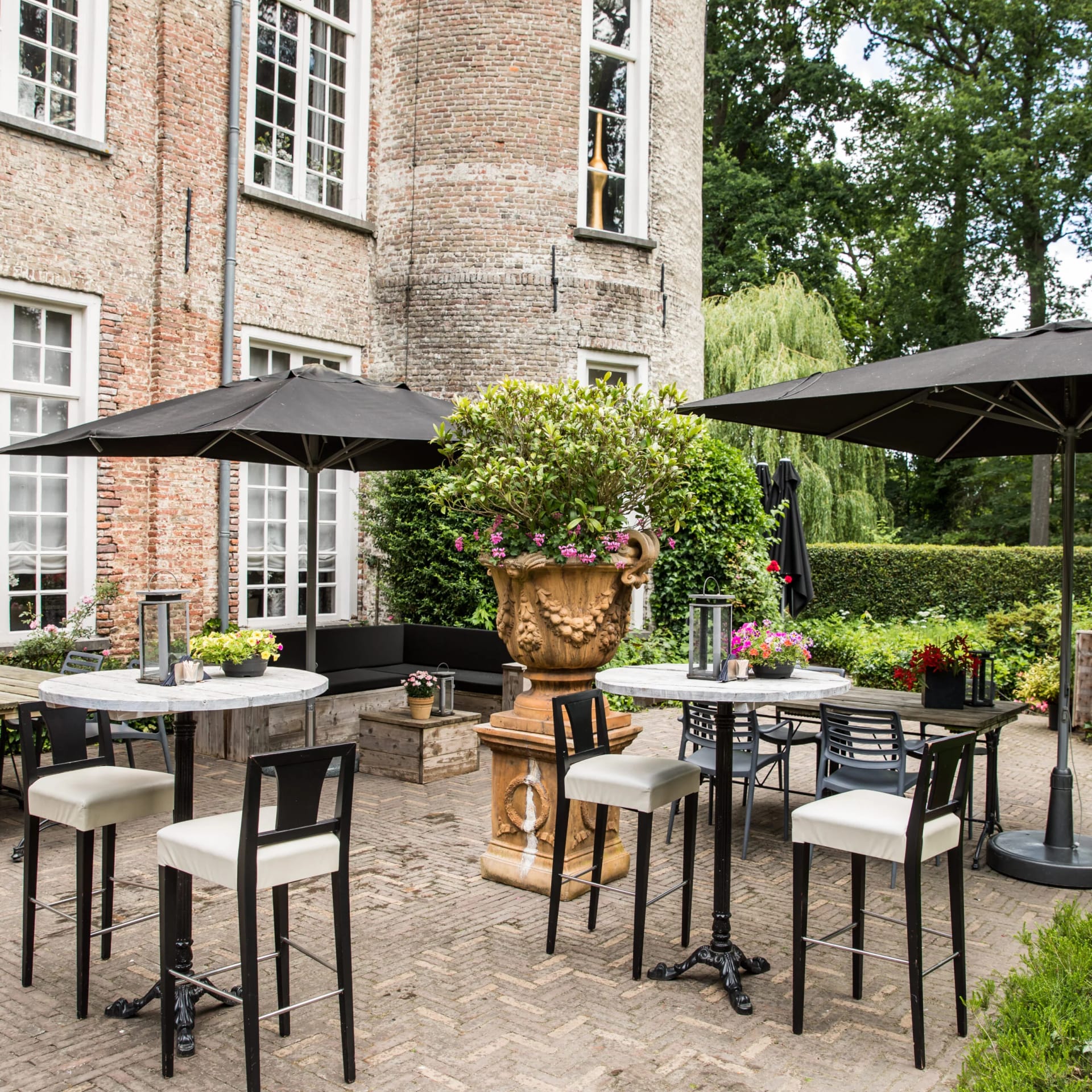
A castle wedding needs very little additional styling. Fireplaces, ornate ceilings and gardens do much of the work, and your photographer has several backdrops within a few minutes’ walk. The trade-off is that the building takes some control of the day. According to Blenheim, alterations to a monument require an environmental permit, with the strictest rules applying to national heritage monuments. In practice, this becomes a set of venue rules: nothing attached to the walls, restrictions on open flames and fixed delivery routes for suppliers.
The kitchen in an old building is not always next to the dining room either. For a four-course seated dinner, that can mean longer walking routes and often extra waiting staff to ensure every plate arrives at the table hot.
What an industrial venue brings to the table
A large hall gives you one open space to divide as you wish: ceremony at one end, dinner in the middle and a dance floor by the bar. That makes a walking dinner, food stations, a buffet or indoor food trucks easy to arrange, while a bbq in the outdoor area often works beautifully too. The downside is that hard walls and concrete floors create echo, something you will notice immediately during speeches or with a live band. The high windows offer lovely daylight, but after dark the room can feel stark without a lighting plan. For a detailed venue example, read the review of whether Het Ketelhuis Eindhoven is suitable for an industrial wedding. If you would rather not coordinate every element yourself, this guide to organising a wedding or private party without the stress explains how one partner can bring everything together.
Here is how to approach it:
- Map out your wedding day hour by hour, from the ceremony through to the final drinks.
- For each part of the day, list what the venue already provides and what you need to bring in: furniture, lighting, sound, styling and kitchen facilities.
- For a castle, ask whether it is a national heritage monument and what rules apply to fixings, candles and set-up times.
- For a hall, ask about power capacity, echo and whether it has a fully equipped kitchen or just a serving point.
Castle wedding or industrial venue: how do costs, catering and regulations compare?
On paper, an industrial venue can look more affordable because the room hire may be lower. The final invoice often tells a different story, as an empty space requires more equipment and suppliers. This table compares the key differences.
| Aspect | Castle | Industrial venue |
|---|---|---|
| Atmosphere without styling | ✅ Instantly complete | ⚠️ Bare, styling required |
| Alterations to the building | ❌ Heritage site: environmental permit required | ⚠️ Usually more flexible, check its status |
| More than 50 guests | ⚠️ Use notification or permit | ⚠️ Use notification or permit |
| Layout for day and evening | ⚠️ Multiple rooms, room changes | ✅ One space, separate zones |
| Best-suited catering | ✅ Seated dinner, high tea | ✅ Walking dinner, food trucks |
| Acoustics for a band | ✅ Smaller rooms soften sound | ⚠️ Echo, acoustic treatment needed |
| Share of budget for styling and technical production | Usually 10-20% of the budget | Usually 20-35% of the budget |
The percentages in the final row are practical estimates. They vary by venue and by couple.
Rules that apply to both venues
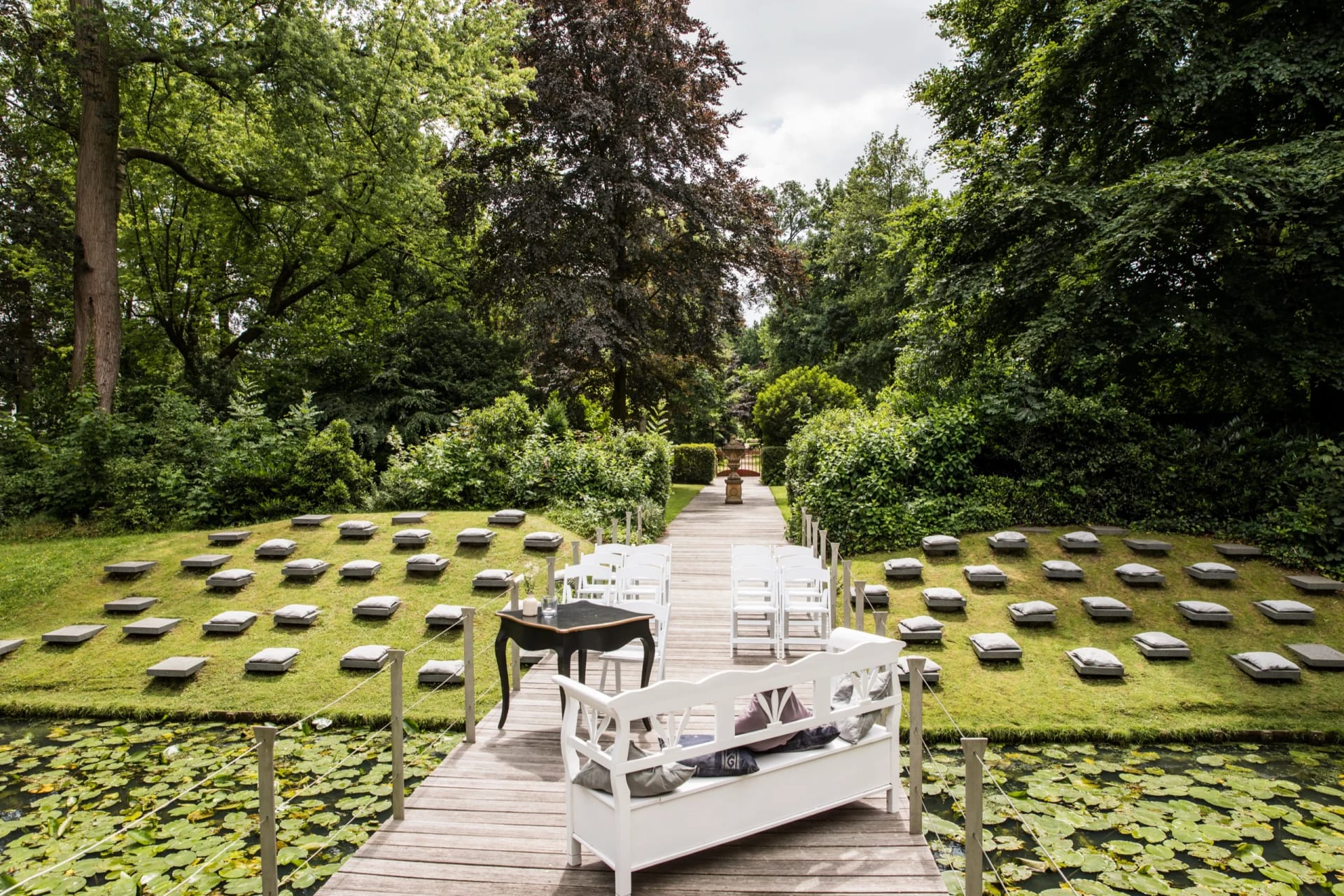
According to the Events Policy 2020 on Overheid.nl, a use notification is required under Dutch building regulations when more than 50 people are present in a building at the same time. This does not apply where a valid use permit already covers that number of people. If you want to hold your legal ceremony at the venue, additional requirements apply. For example, the municipality of Baarn requires the ceremony space to be publicly accessible during the ceremony and to meet fire-safety requirements. Other municipalities use similar conditions, but always check the rules in your own municipality.
Where the budget goes
At a castle, additional spending usually goes into logistics: staff walking longer distances, room changes between parts of the day and sometimes a mobile kitchen in an outbuilding. In a hall, the budget shifts towards styling: furniture, lounge areas, acoustic panels, a lighting plan and tailored sound production. La Casserole brings catering, styling, technical production and rentals together in one event plan. That means the shift is clear in the first quote, rather than appearing when the third supplier sends theirs. For a detailed comparison, see the article on what catering at Het Ketelhuis or a castle really costs.
Which wedding venue suits your guest list and wedding-day plans?
Imagine a couple with around 80 daytime guests and 150 to 170 evening guests, who want the ceremony, dinner and party in one place. At a castle, dinner may take place in the main hall while the party moves to another room. That transition typically takes half an hour to three quarters of an hour, with guests welcomed in the garden or entrance hall with a drink. At an industrial venue, everyone stays in the same space while the team clears tables during speeches to create the dance floor. The result is less disruption, but a greater investment in zoning and lighting to keep the room feeling warm and intimate.
Choose a castle if dinner is the heart of your day
If your wedding revolves around a long dinner, your guest list is manageable and you want plenty of outdoor photo opportunities, a castle is likely to suit you. Accommodation at or close to the venue can also make a two-day celebration possible. This guide to choosing a wedding venue with dinner, a party and overnight accommodation can help you weigh up the options.
Choose an industrial venue if the party comes first
Does the party matter more to you than a formal table plan? Do you want a food-led concept with food trucks, food stations or a walking dinner, or do you want to create your own styling from scratch? Then a hall is the obvious choice. It is a blank canvas, and that is exactly the point.
Still unsure? Compare the same day in two settings
La Casserole manages both Kasteel Henkenshage and Het Ketelhuis, giving couples the chance to price the same menu, service and styling in two completely different settings. That makes the real cost difference much easier to see.
Here is how to approach it:
- If dinner is the focus of your day and you expect fewer than around 120 guests, start by looking at castles.
- If the party is the main event, with a band or dj playing late into the night, start with a hall and ask about sound limits and finishing times.
- Want to marry at the venue? First check whether the municipality can designate the space as a wedding ceremony location.
- Working with a tight budget? Ask both venues for a quote including staff, furniture and technical production, not room hire alone.
Frequently asked questions
How much does a wedding for 100 guests cost?
Total costs vary widely in practice, typically from around €10.000 to more than €25.000, depending on the venue, menu and length of the day. Catering and drinks are usually the biggest expense. At an industrial venue, more of the budget often goes towards styling and technical production, while a castle may require more spending on staff and logistics.
What are some great wedding food ideas?
Popular catering options include a seated dinner, a walking dinner, food stations, a buffet, a bbq or food trucks. A seated dinner usually works well in the rooms of a castle, while food trucks and food stations come into their own in an open hall. Choose based on your schedule: a formal dinner works well when there are lots of speeches, while smaller dishes are better for a party where guests are moving around.
Can you get married with a €5.000 budget?
A €5.000 wedding is possible with a smaller guest list, an afternoon schedule and simple catering such as a bbq or drinks with canapés. Many municipalities offer a simple ceremony at set times for a low fee, or even free of charge. A fully catered evening celebration for 100 guests at a castle or hall will not usually fit within that budget, but creative choices can still make for a personal and memorable day.
How far in advance should you book a wedding venue?
Popular wedding venues are often booked 12 to 18 months ahead during peak season, especially for Fridays and Saturdays between May and September. You will usually find more availability for a winter wedding, a weekday or a Sunday. Start with your preferred date, guest count and budget, then ask several venues about availability straight away.
What should you ask during a venue viewing?
Ask about the following during a viewing:
- maximum capacity for the ceremony, dinner and party;
- wet-weather options;
- hire prices, packages and required suppliers;
- finishing times and sound restrictions;
- parking and public transport access;
- accessibility for guests with limited mobility;
- included technical equipment, furniture and styling;
- supplier set-up and breakdown times;
- options for children, overnight stays and a bridal suite;
- cancellation and postponement terms.
A venue may look stunning in photographs, but it also needs to work in practical terms for your schedule and your guests.
Conclusion
Choosing between a castle wedding and an industrial celebration comes down to atmosphere, budget and how you want to celebrate. A castle offers romance, history and often a complete experience, with the ceremony, dinner and overnight stay all in one place. An industrial wedding venue offers the space for a modern, creative and more personal approach.
So look beyond the appearance of the venue. Consider capacity, catering, accessibility, technical production, wet-weather plans and hidden costs too. Visit several venues, compare quotes carefully and choose the place that feels like a natural fit for your story.
Looking to host a stylish event in Brabant? Let us handle it!
Sources
- CBS — Cbs
- Rijksdienst voor het Cultureel Erfgoed — Cultureelerfgoed
- Blenheim
- Evenementenbeleid 2020 op Overheid.nl — Lokaleregelgeving
- gemeente Baarn — Baarn