

The short answer
On-site private dining is an exclusive dinner for a small group, where a caterer brings the full kitchen setup, service team and styling to your chosen venue instead of hosting you in a restaurant dining room. For executive dinners and special occasions, it is often the better option when confidentiality, uninterrupted conversation and a flexible pace matter more than guest numbers.
- The practical tipping point is usually around 20 to 24 guests across one or two tables
- For a fully catered multi-course dinner with service, expect to pay around €75 to €150 per person, depending on staffing hours and additional requirements
- The host is legally responsible for food safety, even when using an external caterer
- Perishable food must be kept at a maximum of 7 degrees, while hot dishes must remain above 60 degrees. These requirements shape the kitchen setup
- Having one point of contact for the kitchen, service, furniture and technical setup typically saves the most coordination time
Why an executive dinner in the staff restaurant rarely works
Picture this: an executive assistant books dinner for twelve people in the company restaurant. It is affordable, convenient and nobody needs to travel. Then, at eight o’clock, the cleaning team appears at the door, while the conversation about the acquisition has barely begun. (Services)
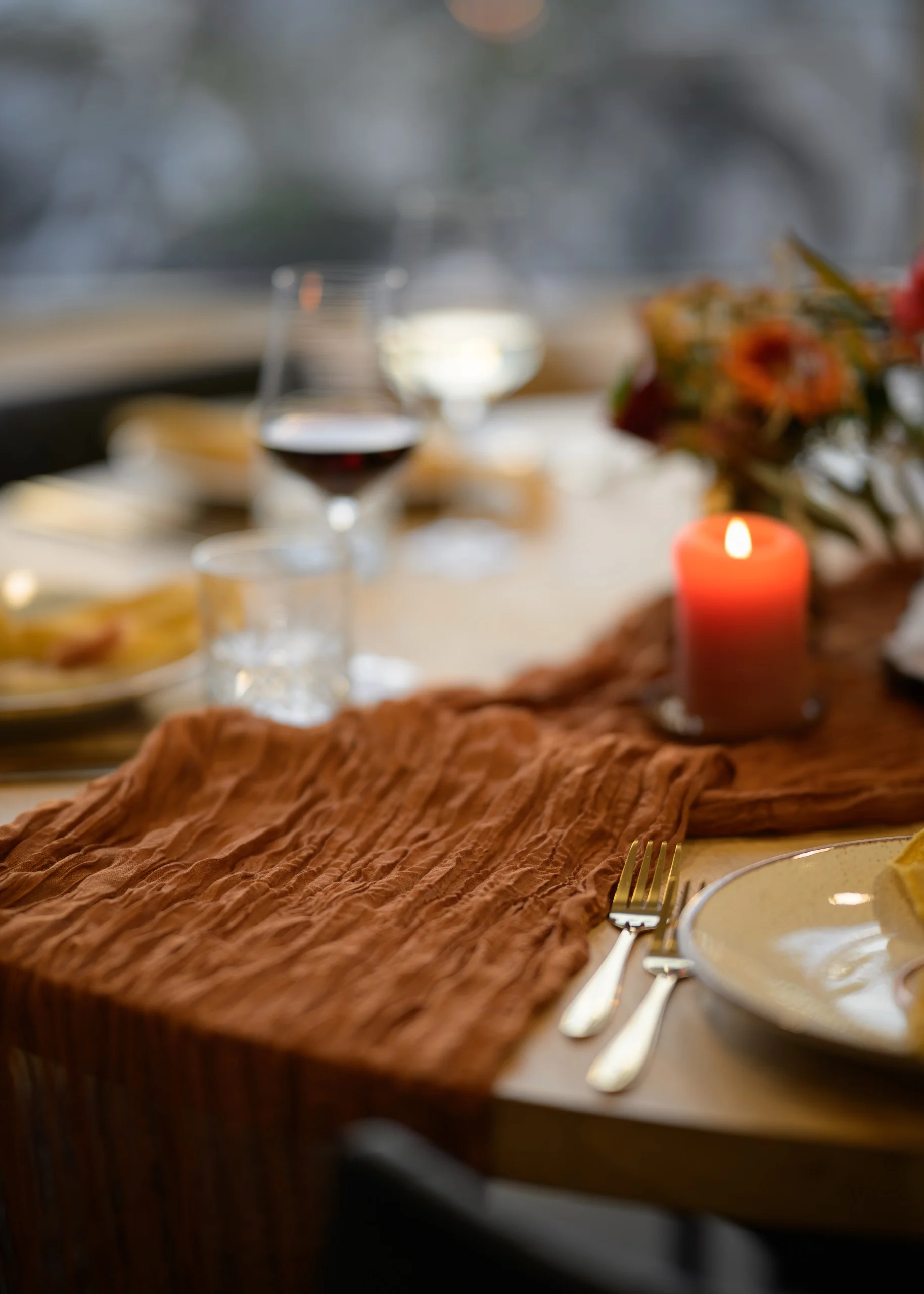
That is the real challenge with an executive dinner. It is not the food, but the time and privacy. La Casserole finds that executives and private clients in Brabant often start with the wrong comparison: the price per head. The real value lies in uninterrupted conversation and a room where nobody can overhear you.
A private room in a restaurant may solve the atmosphere issue, but it brings new constraints: fixed finishing times, other diners a few metres away, and a kitchen that dictates the pace instead of the conversation. On-site private dining reverses that relationship. The space is exclusively yours, the kitchen comes with the caterer, and service follows the evening’s agenda.
If you want to build the evening out further with styling, music and décor, this guide to planning a stylish party in Sint-Oedenrode offers a broader planning approach that also applies to a private dinner.
How big is the on-site catering market in 2026?
The figures show that private catering is no longer a niche. According to CBS, the number of event catering businesses in the Netherlands grew more than sixfold between 2007 and 2024, making it the fastest-growing segment in hospitality. For clients, that means one thing: there is plenty of choice, but quality varies widely.
That growth is continuing. CBS figures for the fourth quarter of 2025 show that canteens and caterers delivered the strongest revenue growth of all hospitality sectors, at 6,2 percent.
What this growth means when choosing a caterer
More suppliers do not necessarily mean more options at the premium end of the market. For a private dinner for ten to twenty-four guests, you need a team that can build a fully functioning kitchen in a venue with no kitchen, including refrigeration, hot-holding equipment and service staff who understand when to approach the table and when to stay out of the way. Far fewer caterers can deliver that than the number of registered businesses might suggest.
One useful question during the selection process: ask how many courses they can serve without interrupting the conversation. A supplier without a clear answer is thinking in terms of platters, not complete evenings.
Which trends are changing private dining for business hosts?
Five shifts are shaping private dinners in 2026 and 2027.
Trend 1: the venue is no longer tied to the kitchen
Executive teams are increasingly choosing venues for their character, not their kitchen facilities. A listed building, showroom, boardroom or an office after hours can all work well, provided the caterer brings a mobile kitchen. In practice, power capacity is often the first obstacle, not the menu. A fully equipped mobile kitchen generally needs several separate electrical circuits, so check this before choosing the dishes.
Trend 2: food safety responsibility is shifting to the host
This is the issue most hosts underestimate. According to the RIVM hygiene guidance for events, measures are legally required whenever food and drink are provided, whether free or paid for. The event organiser must also verify that hired caterers follow the hygiene code, for example by recording this in the contract. If dinner is held in your own office, you are the organiser.
Trend 3: shorter evenings, tighter timing
Business dinners once regularly lasted five hours. Today, the same number of courses is often served within a more compact three to four hour programme. That requires tighter service planning, with more preparation done in advance and less finishing work on site.
Trend 4: the host wants to stay at the table
The most important practical question is not culinary but organisational: can the host remain at the table all evening? That is only realistic when one supplier manages the kitchen, service, furniture and technical setup. Every additional supplier creates another reason for someone to leave the table.
Trend 5: clearer pricing
Clients increasingly ask for quotes broken down into food, staffing hours, equipment hire and logistics. That is sensible. For small groups, a substantial share of the cost usually goes on labour and transport rather than ingredients.
Checklist:
- Confirm the venue’s power capacity, including the number of circuits and amps, before finalising the menu
- State in the booking confirmation that the caterer works in accordance with an NVWA-approved hygiene code
- Ask for the quote to be split into four categories: food, staffing hours, equipment and transport
- Count the number of suppliers. If there are more than two, someone should be explicitly assigned to coordinate them
- Agree the preferred finishing time in advance, then work backwards to establish how many courses will realistically fit
What does on-site private dining cost compared with a restaurant private room?
The honest comparison is not about the price of the plate, but the cost and value of the whole evening. Below is an indicative overview for sixteen guests, based on typical market ranges in Brabant in 2026.
| Aspect | Restaurant private room dinner | On-site private dining |
|---|---|---|
| Indicative price per person | €55 to €90 | €75 to €150 |
| Exclusive space | Often shared or partially screened | Fully private |
| Finishing time | Usually fixed, around 23.00 | Agreed in advance, often after midnight |
| Menu flexibility | Limited to available menu choices | Fully tailored |
| Client preparation time | 1 to 2 hours | 3 to 5 hours with one supplier, considerably more with separate suppliers |
| Additional costs | Room hire, sometimes a minimum spend | Transport, equipment hire and potentially power provision |
The additional cost of on-site private dining is therefore largely about exclusivity and flexibility. For an executive dinner centred on an investment decision or a farewell, that is usually the point of the evening.
When a restaurant private room is still the better choice
For groups looking mainly for a relaxed social evening without a business agenda, and for groups of more than twenty-four people, the calculation often changes. The reasoning behind that tipping point is explained in more detail in this comparison of private dining at home and at an external venue.
How do you plan a private dinner without creating extra work for the host?
Consider a typical scenario. The managing director of a technical supply company with around 180 employees invites fourteen business contacts to dinner in the company’s reception area. There is no kitchen, only one electrical circuit, and the conversation needs to begin at 19.30. When one supplier provides the mobile kitchen, service staff, furniture and lighting, the executive assistant’s preparation time usually drops from several days to a handful of hours, and the host can remain at the table throughout the evening.
That is the thinking behind La Casserole’s approach to private dinners: assess the room’s power supply, access, drainage and available workspace first, then finalise the menu. Doing it the other way around almost always leads to compromises during the event itself.
A step-by-step plan for a seamless evening
- Define the time needed for conversation. How many uninterrupted minutes do guests need? That number should determine the number of courses, not the other way around.
- Measure the space. Allow at least 1,2 to 1,5 square metres per guest at the table, plus a separate kitchen workspace out of sight.
- Check the technical requirements. Power, water, drainage, and the loading and unloading route all matter. Stairs without a lift immediately affect staffing requirements.
- Confirm temperature control. The NVWA checklist for serving food on location requires perishable food to be kept at a maximum of 7 degrees, hot dishes above 60 degrees, and raw ingredients to be heated above 75 degrees. Ask how the caterer will guarantee this at your venue.
- Assign one point of contact. Both sides should have one phone number to call on the evening itself.
The fourth step is the one most often missed. According to the NVWA, most hospitality businesses use the approved hygiene code from industry association KHN. Simply ask about it. A professional supplier will mention the code without being prompted.
Which venue suits an exclusive evening in Brabant?
Choosing a venue for on-site private dining comes down to three things: accessibility, privacy and technical infrastructure. An industrial venue has character, but requires more setup. A boardroom is practical, but may feel flat without styling. A characterful dedicated event venue sits somewhere in between, with the kitchen and infrastructure already in place.
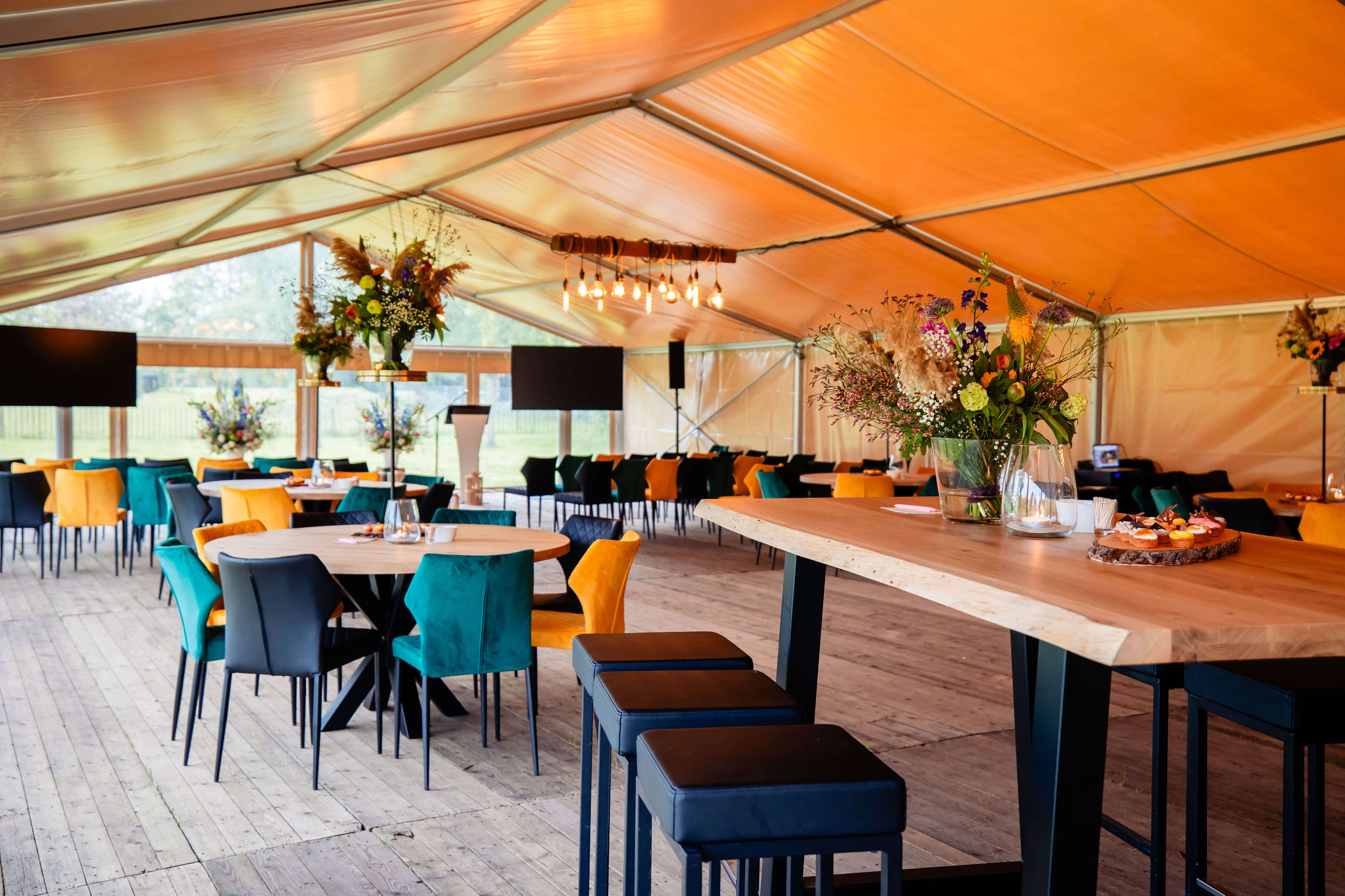
La Casserole operates its own venues in Brabant while also offering a fully mobile service at external locations. That makes for a more honest comparison: the decision can focus on what the evening needs, rather than on what a supplier happens to be able to provide.
Where should you start if the dinner is only three weeks away?
Tight timelines are more common than not with executive dinners. A decision is made, and the dinner needs to happen within a month. It is achievable, provided you reverse the usual order: deal with the hard constraints first, then move on to preferences.
Start with the date and guest count, as those two factors determine everything else. Next, request the venue’s technical specifications. Only once power, space and access have been confirmed does it make sense to discuss the menu. If you are based in or around Eindhoven, the practical details behind luxury catering at a venue in Eindhoven provide a clear picture of what a fully catered evening involves.
For the budget, allow a contingency of around 10 to 15 percent above the quoted amount for last-minute guests, additional drinks and extended hours. This is the most common source of overspend at private dinners.
Checklist:
- Confirm the date and final guest count no later than ten working days in advance
- Request the venue’s technical information sheet: electrical circuits, water, drainage, loading route and lift dimensions
- Ask the caterer to confirm its hygiene code and temperature controls in writing
- Schedule a site visit with both the caterer and venue manager present, rather than meeting them separately
- Set aside a 10 to 15 percent budget contingency for overruns and additional guests
Frequently asked questions
What exactly is on-site private dining?
On-site private dining is an exclusive dinner where a caterer brings the complete kitchen, service team and styling to a space chosen by the client. Unlike dining in a restaurant, the venue is exclusively yours and the menu is fully tailored. In practice, this works best for up to around 24 guests across one or two tables. Above that number, the event begins to feel more like a function room dinner.
How many guests can sit at one table for an executive dinner?
As a rule of thumb, a single conversation that includes everyone remains practical for up to around twelve to fourteen people at one table. Beyond that, people naturally split into smaller conversations. Allow at least 1,2 to 1,5 square metres per guest, including room for service staff to move around. For larger executive groups, two tables of ten often work better than one long table of twenty.
Who is responsible for food safety when catering is held at your own venue?
The event organiser is primarily responsible, even when the food is prepared by an external caterer. RIVM states that the organiser must verify that hired caterers follow the hygiene code, for example by including this in the contract. Always ask for written confirmation of the food safety plan. A supplier working with the NVWA-approved KHN hygiene code should be able to provide this immediately.
How much does a private dinner for twenty people at a venue cost?
As a guide, a fully catered multi-course dinner with service at your venue generally costs between €75 and €150 per person in 2026. The difference mainly depends on the number of courses, the duration of the evening and whether the venue provides its own kitchen, furniture and tableware. A bare venue may also require transport, equipment hire and sometimes power provision. Ask for a quote that lists food, staffing, equipment and logistics separately.
Can you host an on-site dinner without a kitchen at the venue?
Yes, as long as the caterer brings a mobile kitchen with its own refrigeration and hot-holding equipment. The key consideration is power supply. A fully equipped mobile kitchen generally needs several separate electrical circuits. The loading and unloading route also matters, as stairs without a lift immediately affect staffing requirements. Confirm these details during a site visit before the menu is finalised.
Conclusion
The choice between an executive dinner at the office, a restaurant, or on-site private dining rarely comes down to the menu. It depends on three things: how much uninterrupted conversation the evening requires, how private the setting needs to be, and who takes responsibility for food safety.
Once those three points are clear from the start, the answer is usually straightforward. For up to around twenty to twenty-four guests, with a business agenda and a flexible finishing time, a private dinner at a venue of your choice is the stronger option. For larger groups, or an evening that is purely social, a restaurant private room is usually more efficient.
So do not start with the courses. Start with the room: check the power supply, workspace and access, confirm the hygiene code contractually, and appoint one point of contact. A supplier such as La Casserole, which brings the kitchen, service, furniture and technical setup together under one team, makes that final point particularly straightforward. And that is exactly what a host needs to stay at the table all evening.
Looking to host a stylish event in Brabant? Let us handle it!
Sources
- CBS — Cbs
- hygiënerichtlijn voor evenementen van het RIVM — Rivm
- NVWA-checklist voor eten op locatie — Nvwa
- Meer restaurants en catering, minder cafés — CBS (Centraal Bureau voor de Statistiek)
- Omzet horeca groeit in vierde kwartaal met ruim 3 procent — CBS (Centraal Bureau voor de Statistiek)
- Hygiënerichtlijn voor evenementen — RIVM (Rijksinstituut voor Volksgezondheid en Milieu)
- Checklist Veilig omgaan met eten op markten en evenementen — NVWA (Nederlandse Voedsel- en Warenautoriteit)
- Voedselveiligheidsplan of hygiënecode voor horeca en ambachtelijke bedrijven — NVWA (Nederlandse Voedsel- en Warenautoriteit)