

Quick summary
A memorable product launch begins with the moment guests actually experience the product: what they see, taste and hold in the first few minutes after the reveal. Technology can elevate that moment, but it should not define it. Through La Casserole’s work on corporate events, one pattern stands out: marketing teams often book screens and lighting first, then start thinking about catering, styling and guest flow. Reverse that order. First, define the one moment guests should talk about afterwards. Then build the food and setting around it, and bring in the technology last, with one person overseeing every element.
Key takeaways
- Live messages are processed more deeply by the brain than media communications, according to research by Neurensics and the University of Amsterdam, commissioned by EventBranche.nl (Marketingfacts, 2026).
- After an event, 50 to 70 percent of attendees talk about the atmosphere and products, while only 20 to 25 percent mention entertainment (research published by EventBranche.nl).
- Rule of thumb: schedule the first tasting or hands-on product moment within around five minutes of the reveal.
- According to the RIVM, the organiser is responsible for ensuring that all hired caterers follow the Hygiene Code. Put this requirement in writing in the contract.
Why do so many product launches fail to make an impression?
A memorable product launch is one where guests can describe the product afterwards because they have seen, tasted or held it, rather than simply watched it on a screen. (Services)
That may sound obvious. Yet many launches follow a different formula: a stage, an LED wall, a presenter and an aftermovie. Guests spend half an hour watching, applaud, then head to a buffet with no connection to the product.
The issue is rarely the budget. It is the order in which decisions are made. Marketing teams and brand managers are often handed a launch as an extra project on top of ongoing campaigns. Naturally, they begin with the most visible part: the show. Catering, styling and staff are then squeezed into whatever time and budget remain.
Anyone who has had a stylish event managed from concept to delivery knows that the experience is shaped in the transitions. Think about the arrival, the first bite, and the moment people get up and start talking. That is where a launch is won or lost.
Product launch planning: what goes wrong when technology comes first?
A product launch built around technology usually has four pain points that resurface in the post-event review.
The budget is gone before the story takes shape
LED screens, lighting, sound and production management are significant costs. They tend to be booked early because the best suppliers are unavailable during busy periods. Whatever remains is allocated to food and styling, even though those are the areas where the product becomes tangible. A new flavour, sustainable packaging or a piece of hardware needs a moment when guests can get their hands on it.
Guests watch, but barely experience anything
Research published by EventBranche.nl shows that 50% to 70% of attendees talk to friends and family afterwards about the event atmosphere and the products they saw or bought. Only 20% to 25% talk about the entertainment or workshops. A more expensive show does not automatically create more buzz. The product and the environment around it do.
Catering that contradicts the brand story
A premium brand launching with standard Dutch fried snacks and lukewarm wine sends mixed messages. Food can tell the story instead, perhaps through a dish inspired by the packaging colours. There is also a legal responsibility to consider: according to the RIVM, the event organiser is responsible for ensuring all hired caterers comply with the applicable Hygiene Code. When three separate food suppliers are involved, that becomes another monitoring task for the marketing team.
Take the example of a brand manager at a mid-sized food company launching a new product range for 150 to 200 business contacts and retailers. Most of the budget goes on the stage and screens. After the presentation, guests are met with a standard buffet. In the feedback, they mainly mention the venue and the queues for food, but barely recall the product names.
Four suppliers, four run sheets
The audiovisual company, caterer, stylist and venue all work to their own schedule. If the reveal overruns by ten minutes, the serving team may already be standing by with full trays. No one owns the transition.
Put this into practice:
- For every technology cost in the budget, ask: which guest moment does this improve?
- Check that guests can see, taste or hold the product within around five minutes of the reveal.
- Include a requirement to follow the applicable Hygiene Code in every catering contract.
- Appoint one person with overall responsibility for every transition in the programme.
Why do separate audiovisual and catering suppliers often fall short for a launch?
Planning a product launch with a specialist for each element looks sensible on paper. In practice, each specialist optimises their own part. The audiovisual supplier wants a polished show segment, the caterer wants a predictable service schedule, and the venue wants to close on time.
On top of that, quotes are usually compared supplier by supplier on price. Catering becomes a per-head expense rather than a vehicle for the brand story. And if the caterer is brought in too late, the team may discover that the venue has no suitable kitchen or insufficient power for hot food.
The biggest gap is overall direction. No one is protecting the coherence of the launch as a whole. That is exactly why one caterer taking the lead prevents a corporate event from grinding to a halt.
How do you design a product launch around the guest experience, rather than the show?
A product launch designed around the guest experience makes the most of what live events can offer that a screen cannot. According to Marketingfacts (2026), research by Neurensics and the University of Amsterdam, commissioned by EventBranche.nl, found that live messages are demonstrably processed more deeply by the brain than media communications. A launch should use that live advantage, not replace it with a screen guests could just as easily watch at home.
Start with the one moment guests should talk about afterwards
La Casserole’s approach, which brings catering, styling, technology, hire equipment and project management together under one point of contact, makes a different order of planning possible. It looks like this:
- Write the takeaway line. What is the one sentence you want a guest to say to a colleague tomorrow? For example: I tasted the new range, and it was less sweet than I expected.
- Design the reveal moment. Decide what guests see, hear and hold when the product appears.
- Connect food and drink to the product. Choose a catering format that supports the story.
- Style the venue around the guest journey. Let styling follow the route from arrival to reveal to networking.
- Bring in the technology last. Lighting and sound should enhance what is already there.
Let food and styling carry the product story
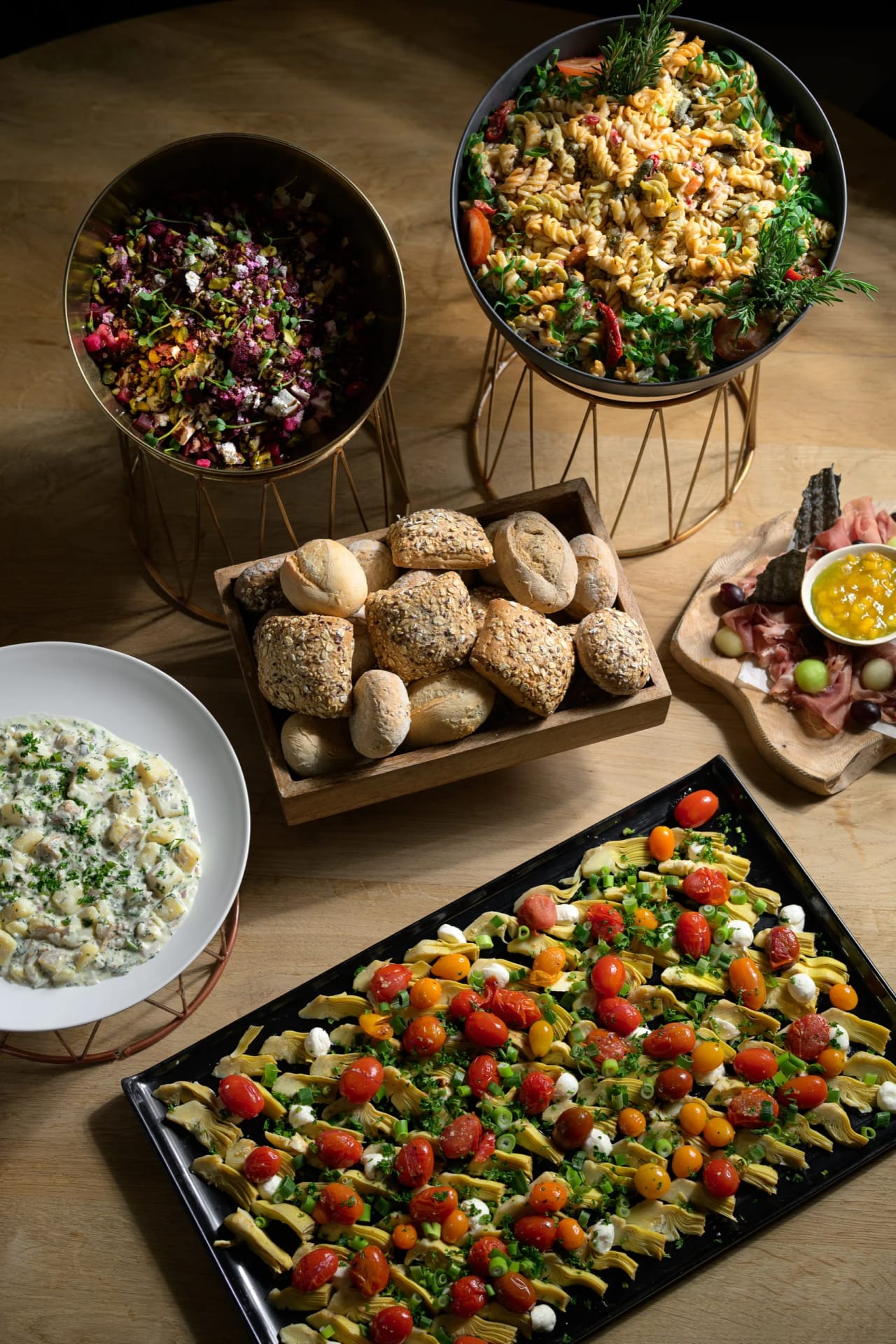
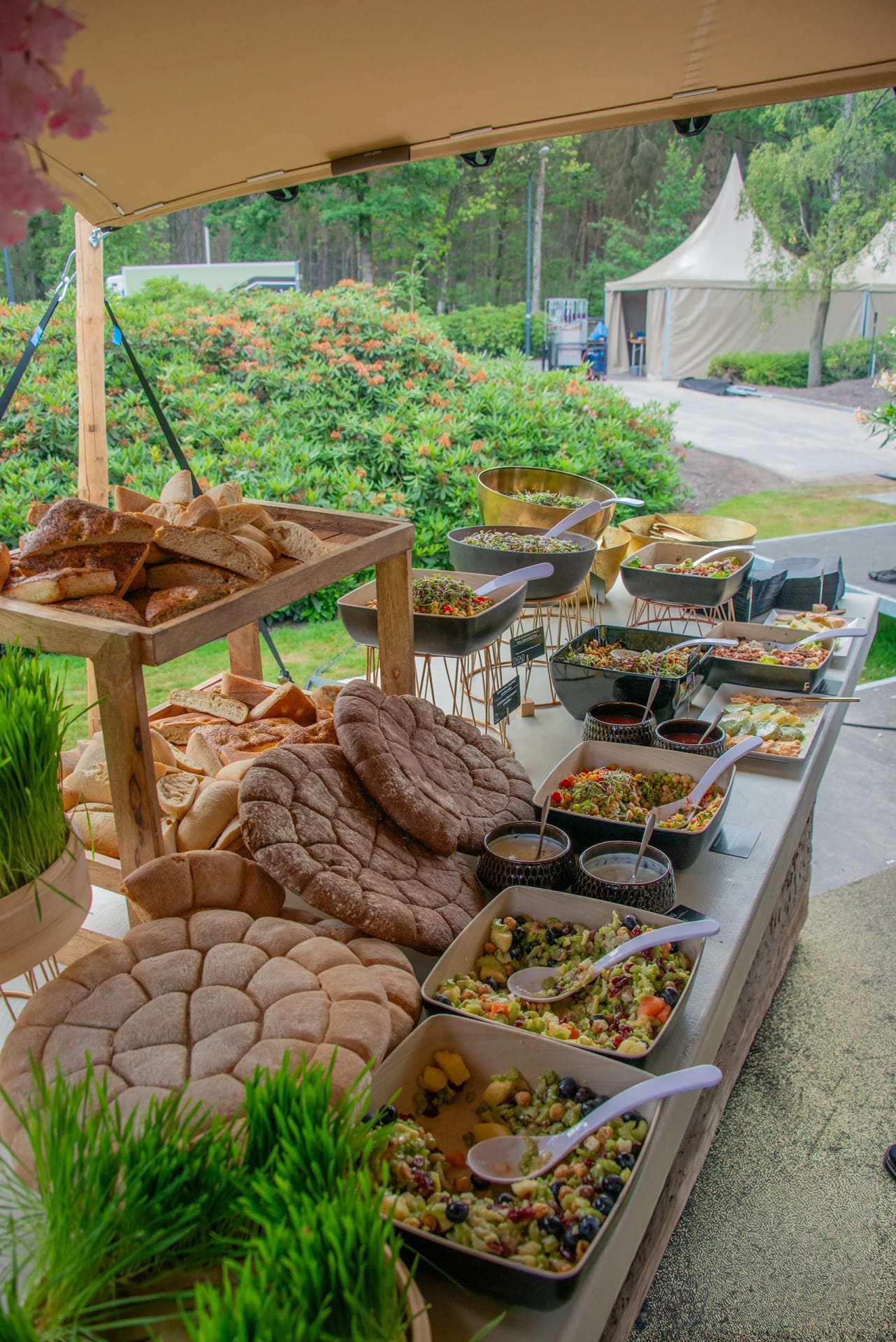
The right format depends on what you are launching. A walking dinner with small courses keeps guests moving and talking, which works particularly well for 80 guests or more. Bespoke food stations can showcase an ingredient or place of origin. A fine dining dinner suits a small, select group of press contacts or key accounts. Food trucks work well for a relaxed outdoor launch. A traditional buffet is rarely the best choice because the queue draws attention away from the product.
For the brand manager in the earlier example, the revised concept might look like this: immediately after the reveal, servers move through the room with a dish inspired by the new flavour. The stage segment is shorter, and part of the technology budget is reallocated to styling and service staff. Guests taste the product while the presentation is still fresh in their minds. Experience from live events suggests that product names are mentioned more often in feedback as a result.
Add technology last
Technology still matters. But a lighting plan that leaves the buffet in darkness, or sound levels that make networking impossible, undermines the launch. Combining catering with in-house chefs on site with lighting and sound managed through the same schedule prevents those clashes.
| Element (indicative real-world ranges) | Separate suppliers, technology first | One lead, guest experience first |
|---|---|---|
| Number of points of contact | usually 3 to 5 | 1 |
| Number of run sheets | 3 to 5 separate | 1 shared |
| Time between reveal and first tasting moment | often 15 to 40 minutes | usually 0 to 5 minutes |
| Coordination meetings in the final 2 weeks | often 6 to 10 | usually 2 to 3 |
| Suppliers to check for Hygiene Code compliance | 1 to 3 caterers | 1 caterer |
How do you prepare a product launch step by step?
Planning a product launch requires timely decisions about the venue, guest journey and key experience moment. A marketing team still searching for a venue six weeks before the date will be forced to choose based on availability, rather than the story it wants to tell. For a launch with 100 to 250 guests, allow eight to twelve weeks of preparation in most cases, depending on the venue and season.
Choose a venue for its kitchen facilities, power supply and guest flow, not just its appearance. The NVWA checks, among other things, whether the space is suitable for food preparation and whether food is stored at the correct temperature. An atmospheric warehouse with no kitchen connection will therefore require additional planning.
Schedule a tasting session that uses the product as an ingredient or source of inspiration. Then hold a full rehearsal with the service team, so the transition from stage to guest experience works down to the minute. More tips for marketers planning a corporate event can help you align the launch with your wider campaigns.
Finally, measure what matters. In your post-event survey, do not simply ask whether people enjoyed the event. Ask which product they remember.
Put this into practice:
- Ask in the post-event survey: name the new product and one of its features. Fewer than half answering correctly? Rework the reveal moment.
- Count the number of shared photos where the product is visible, not just the stage.
- Record how many minutes passed between the reveal and the first tasting moment.
- Log leads and follow-up meetings within a week, then link them to the launch.
Frequently asked questions
How far in advance should you plan a product launch?
Preparation time for a product launch with 100 to 250 guests is usually between eight and twelve weeks. During busy months such as September and December, venues and technology suppliers book up earlier. Secure the venue and catering partner first, then bring in the technology later.
What type of catering works best for a product launch?
The catering format depends on the group size and objective. A walking dinner or food stations work well for around 80 guests or more who need to network, while a fine dining dinner suits a smaller group of press contacts or key accounts. Avoid a traditional buffet immediately after the reveal, as the queue pulls attention away from the product.
How much of the budget should go to technology?
There is no fixed rule for budget allocation, but technology should not be your starting point. First establish the cost of the guest experience: catering, styling and staff. Then decide what level of technology will strengthen that moment, and remove costs that nobody will remember later.
Who is responsible for food safety at a product launch?
The organiser is responsible, according to the RIVM, for ensuring that all hired caterers follow the Hygiene Code. The NVWA monitors temperature control, hygiene and the suitability of the venue. Include this requirement in every catering contract and, where possible, work with as few separate food suppliers as possible.
How can La Casserole help with a product launch?
One dedicated point of contact at La Casserole manages catering, styling, technology, furniture, marquees and project management through one run sheet. The company has more than 40 years of experience, has delivered over a thousand events, and operates its own venues in Brabant, including Het Ketelhuis. This means the reveal, service and styling work together without the need for separate coordination between suppliers.
Conclusion
A memorable product launch comes down to planning in the right order. Start with the one sentence you want guests to repeat afterwards. Then design the reveal moment, choose catering and styling that bring the product to life, and add technology last. The data supports this approach: after an event, attendees mainly talk about the atmosphere and the products, not the show.
The next step is simple. Write down your takeaway line this week, then place it next to your current budget. Are you spending more on screens than on the moment guests taste or hold the product? If so, there is still room to rebalance. If you are looking for corporate catering in Brabant with a dedicated contact person, La Casserole can build your entire launch around one shared run sheet.
About La Casserole
La Casserole is a full-service event partner based in Best, combining catering, styling, technology, hire equipment and project management into one complete solution. With more than 40 years of experience, its own event venues in Brabant (Kasteel Henkenshage and Het Ketelhuis), and a trusted partner network, the company delivers corporate events and private celebrations from concept to completion.
Looking to host a stylish event in Brabant? Let us handle it!
Sources
- onderzoek gepubliceerd door EventBranche.nl — Eventbranche
- RIVM — Rivm
- Marketingfacts (2026) — Marketingfacts
- NVWA — Nvwa
- Waarom evenementen steeds belangrijker worden voor merkbeleving, en wat fysieke zichtbaarheid daarin doet — Marketingfacts
- De impact van events door de ogen van een crossmediaal mediabedrijf — EventBranche.nl
- Hygiënerichtlijn voor evenementen — RIVM
- Eten en drinken verkopen op markten en evenementen — NVWA