

Planning event logistics starts with three questions: how much power will you need, where will the water come from, and what approval does the local authority require? At a venue with permanent utilities, most of the groundwork has already been done. Your main task is to check whether the available capacity suits your menu and technical setup. At an undeveloped site, such as a field, empty warehouse or large garden, you need to arrange everything yourself: a generator or event power distribution board with the required inspection, a temporary water supply, drainage and toilets, and often an event permit. If you choose this type of venue, allow at least three months, and usually longer.
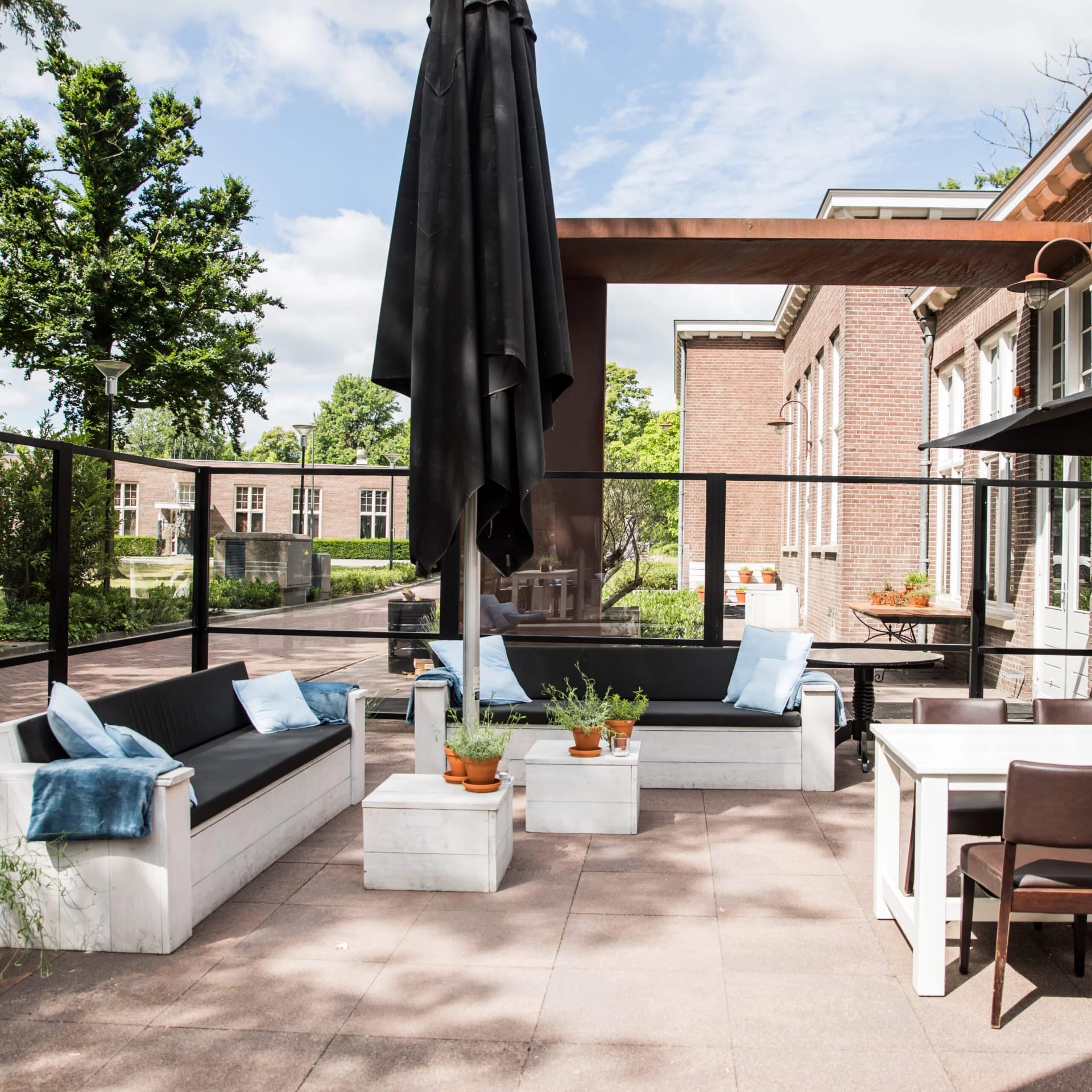
Why do event logistics so often become a problem?
Most organisers choose a venue for its atmosphere, set a date, and only then start thinking about the technical side. That usually works in a standard event hall. It is a very different story for an outdoor venue, where the local authority expects you to arrange the basic infrastructure yourself. Municipality of Best puts it plainly: “In principle, you must arrange facilities such as electricity, water and toilet drainage yourself.” If you want to use municipal facilities, you need to request this when you submit your permit application. (Services)
The second stumbling block is timing. Many people assume the permit comes first and catering is the final detail. In reality, it works the other way round. Municipality of Gooise Meren requires applications to be submitted at least three months in advance. The application also asks how much electrical capacity you need. You can only answer that once your menu, kitchen layout, lighting and sound requirements have been confirmed. If you arrange catering after applying, you are left guessing, and that estimate may later prove inaccurate.
That single number matters more than you might think. A hot kitchen with ovens and induction hobs, a mobile coffee bar, and a live band with lighting can quickly demand more power than a few standard sockets can provide. Find out how to calculate power requirements from your menu in our guide to arranging power, water and drainage at a venue without a permanent kitchen.
This applies whenever you celebrate outside a conventional event venue. Anyone planning a stylish party in Sint Oedenrode at an unusual location will face exactly these questions before a single table is set.
What types of event venues are there, and what do you need to arrange yourself?
Most venues fall into three broad categories. The real difference is not the atmosphere, but what is already in place and what needs to be brought in. That determines how much work is involved in planning your event logistics.
Event hall or venue with a permanent kitchen
Think of a function room, hotel, castle or event venue with its own kitchen. Power, water, sewer connections and toilets are already available. The venue will usually have experience working with the local authority and understand the applicable rules. Your job is to check whether the kitchen is large enough for your guest numbers and whether extra production, such as a stage or lighting show, can run on separate circuits.
Venue with limited facilities
This could be an industrial unit, barn or warehouse. There is usually some power and water, but often no professional kitchen and nowhere near enough toilets for a large group. The risk here is assuming it will all work out. A warehouse may have plenty of sockets, but only one high capacity connection that is already being used for the lighting.
Undeveloped site or private garden
A field, lakeside spot or your own garden. Here, you are starting from scratch. Power comes from a generator or municipal event power distribution board, water from a standpipe or tank, and toilets arrive by truck. A private garden party often does not require a permit. On public land or commercial premises open to visitors, it almost always will. For events at home, see our guide to garden party catering without the usual power and weather headaches.
How do power, water and permits differ between an event hall and an undeveloped site?
Events in the Netherlands have their own electrical standard: NEN 8020-20. According to Eventplanner.nl, this standard does not distinguish between an event lasting a few hours or several months, indoors or outdoors, with dozens or thousands of visitors. An eighty guest wedding in a field is therefore covered just as much as a festival. This is what many organisers overlook: small does not mean informal. It is a key part of event logistics.
| Aspect | Venue with permanent facilities | Undeveloped site or field |
| Power supply | ✅ Permanent circuits available | ⚠️ Generator or event power distribution board |
| Drinking water | ✅ Kitchen tap available | ⚠️ Standpipe or water tank |
| Drainage and toilets | ✅ Connected to the sewer system | ❌ Toilet units and waste collection required |
| Permit | ✅ Often already covered | ⚠️ Notification or permit application required |
| Preparation time | ✅ A few weeks may be enough | ❌ Usually three months or more |
| Layout flexibility | ⚠️ Fixed layouts and operating hours | ✅ Complete freedom of layout |
Power: who carries out the inspection and operates the system?
According to Keuringservice Noord, temporary event installations must be inspected in line with NEN 3140, the standard for managing electrical installations and work equipment. If a new or modified permanent power supply is installed on site, an initial NEN 1010 inspection is also required. If you use a municipal power distribution board, it may only be operated by someone with NEN 3140 certification. You need to arrange that person yourself, as the municipality does not provide one. At an event hall, the owner is responsible for the permanent installation. At an undeveloped site, the responsibility rests with you or the supplier you hire.

Water: standpipe or tank?
At a site without a water connection, you can hire a standpipe from the drinking water company and connect it to an underground fire hydrant. Vitens can supply up to 6 m³ of water per hour this way, for €368,00 per week excluding VAT and usage. That is more than enough for a kitchen and washing-up area. Vitens does not operate throughout the Netherlands. In most of Brabant, Brabant Water is the provider to contact, with its own conditions and rates. If there is no hydrant nearby, a water tank is your remaining option. Calculate how many litres the kitchen and toilets will use, and schedule refills accordingly.
Drainage: the detail everyone leaves too late
Getting water onto site is usually manageable. Wastewater and toilet drainage take more planning. On an undeveloped site, you will need toilet units with holding tanks as well as a drainage solution for kitchen wastewater. You generally cannot simply discharge wastewater onto the ground. Ask the local authority or toilet unit supplier what is permitted at your site.
Permit: a notification or a full application?
Not every event needs a permit. Many municipalities in Brabant use a simplified notification process for small events, while a full permit is required once visitor numbers, noise levels or operating hours exceed certain limits. Those limits vary by municipality and are set out in local municipal bylaws. Our overview of when a notification is enough and when you need an event permit can help you make the right call.
Which venue suits your event, timeline and budget?
The time until your event date is the clearest deciding factor. If your event is less than three months away, a venue with permanent facilities is almost always the safest choice. An undeveloped site that requires a permit is only realistic if the municipality has shorter lead times and you can submit a complete application first time. If you have plenty of time, your options are wider.
Next, consider the menu. A cold lunch, drinks reception snacks or gas barbecue need very little power and water. A seated dinner with hot courses for one hundred guests requires a fully equipped temporary kitchen with refrigeration, ovens and a washing-up area. The more demanding the menu, the more value a permanent kitchen offers.
Then there is the budget. This is where many people get caught out: an undeveloped site may look cheap because the hire fee is low, or even zero. Add a generator and fuel, an inspection, a standpipe or tank, toilet units, wastewater removal, extra pathway lighting and permit fees, and it can easily cost more than the venue hire you were trying to avoid. Choose an undeveloped site for the experience and creative freedom, not because you expect it to be the cheaper option.
Finally, consider who is responsible. At an event hall, much of that responsibility sits with the owner. On an undeveloped site, you as the organiser are accountable for safe power, hygienic water and a valid permit. That does not have to be difficult, as long as everyone knows who is handling each element. For a corporate event, include these tasks in your backwards planning schedule, for example alongside the five key milestones for a corporate event.
Checklist:
- Confirm the menu and technical requirements before applying for the permit, so your stated power requirement is accurate.
- Arrange someone with NEN 3140 certification if you are using an event power distribution board.
- Ask your regional drinking water provider about standpipe hire and the nearest fire hydrant.
- Put drainage and toilets on your list, with a confirmed supplier responsible for delivery and collection.
Frequently asked questions
Do I always need an event permit for a party at a venue?
Not always. A private party in your own garden or at a licensed event hall is usually exempt, and many municipalities allow small events to proceed with a notification. Once the public is attending, public roads are being used, or noise and closing time limits are exceeded, a full permit will generally be required.

What is NEN 8020-20, and does it apply to small events too?
NEN 8020-20 is the Dutch standard for electrical installations at events. It applies regardless of duration, season or visitor numbers, including a company barbecue or wedding on an undeveloped site. The installer or technical supplier you hire should work in accordance with it.
Can I connect a municipal power distribution board myself?
Only if you are certified. Municipal event power distribution boards may only be operated by someone with NEN 3140 certification, and you need to arrange that person yourself. Ask your technical supplier or caterer whether they provide one or whether you need to book one separately.
Is a generator better than an event power distribution board?
It depends on the site. An event power distribution board is quieter and cleaner, but it is not available everywhere and has a fixed maximum capacity. A generator can be placed almost anywhere and matched to your power needs, but it requires fuel, a low noise setup and a location away from guests.
What happens if the power fails during dinner?
A backup plan prevents panic. Professional suppliers split the kitchen, lighting and sound across separate circuits, so one overloaded circuit does not shut everything down. Agree in advance who will manage the installation on site and what the procedure is if a circuit fails.
Is your date set, but you are still deciding between an event hall and an undeveloped site?
Work backwards from your date. If it is less than three months away, choose a venue with permanent facilities. If you have more time and want an undeveloped site, confirm the menu and technical requirements first, then apply for the permit. That keeps your event logistics manageable and avoids unwelcome surprises during setup.
La Casserole in Best combines catering, technical production, rentals, styling and event management for events across Brabant, with one dedicated point of contact from the first idea through to setup. With more than 40 years of experience and its own event venues in Brabant, La Casserole can help you find a fully equipped event hall or plan a site where you are starting from scratch. Share your plans and request advice or a quote through La Casserole, catering and event organisation in Brabant.
Looking to host a stylish event in Brabant? Let us handle it!
Sources
- Gemeente Best — Gemeentebest
- Gemeente Gooise Meren — Gooisemeren
- Eventplanner.nl — Eventplanner
- Keuringservice Noord — Keuringservice-noord
- Vitens
- A-evenement — Gemeente Best
- Evenementenvergunning — Gemeente Gooise Meren
- Norm elektrische installaties evenementen gepubliceerd — Eventplanner.nl