

The short answer
As a caterer, La Casserole finds that the choice between getting married at home and booking a wedding venue only becomes clear when you compare three practical limits: guest numbers, the permits required by the municipality and the technical capacity of the property. For up to around 40 guests, and with good weather on your side, hosting at home can be personal and practical. Once 50 or more people are on site at the same time, a wedding venue often makes more sense, as permits, fire safety, power supply and a wet weather plan become major considerations.

- From 50 people on site at the same time, local policy generally requires a temporary occupancy permit.
- Getting married on private property usually requires an application to have the site designated as a one-off official civil ceremony venue.
- A wedding venue often includes power, toilets, a kitchen and an indoor backup option. At home, you will need to hire all of this separately.
- May, June and September are the busiest wedding months, so book technical suppliers and staff well in advance.
- If you are hosting at home, allow contingency budget for a marquee, refrigeration and flooring.
Why does the choice between a wedding venue and getting married at home feel so uneven?
La Casserole sees this regularly among couples looking for a wedding venue in Brabant: the comparison starts out skewed. A venue hire fee is clearly stated in a quote. The cost of hosting at home is less obvious, because your garden does not send you an invoice. That makes private property seem cheaper than it really is, even though the choice between a wedding venue and getting married at home often comes down to those hidden costs. (Services)
When you get married at home, you are not simply choosing a location. You are taking on a project management role. Power, refrigeration, toilets, a wind-safe marquee, flooring that will not sink after rain, parking, noise limits and neighbours are all handled by a venue manager at an established site. At home, they are your responsibility. That is not an argument against a home wedding. It is an argument against choosing one without assigning someone to manage it.
Timing matters too. According to Statistics Netherlands, around 30 percent of couples marry on a Friday, while May, June and September are the most popular months. Those are exactly the weeks when marquees, refrigerated vehicles, portable toilets and experienced service teams are hardest to secure. If you want a home wedding in June and only start calling suppliers in March, your options will already be limited.
What does getting married at home really cost when you include everything?
Imagine a couple with 85 guests, a large back garden and an outbuilding. On paper, they save the venue hire fee. In reality, they need to add costs that are usually already included at an event venue.
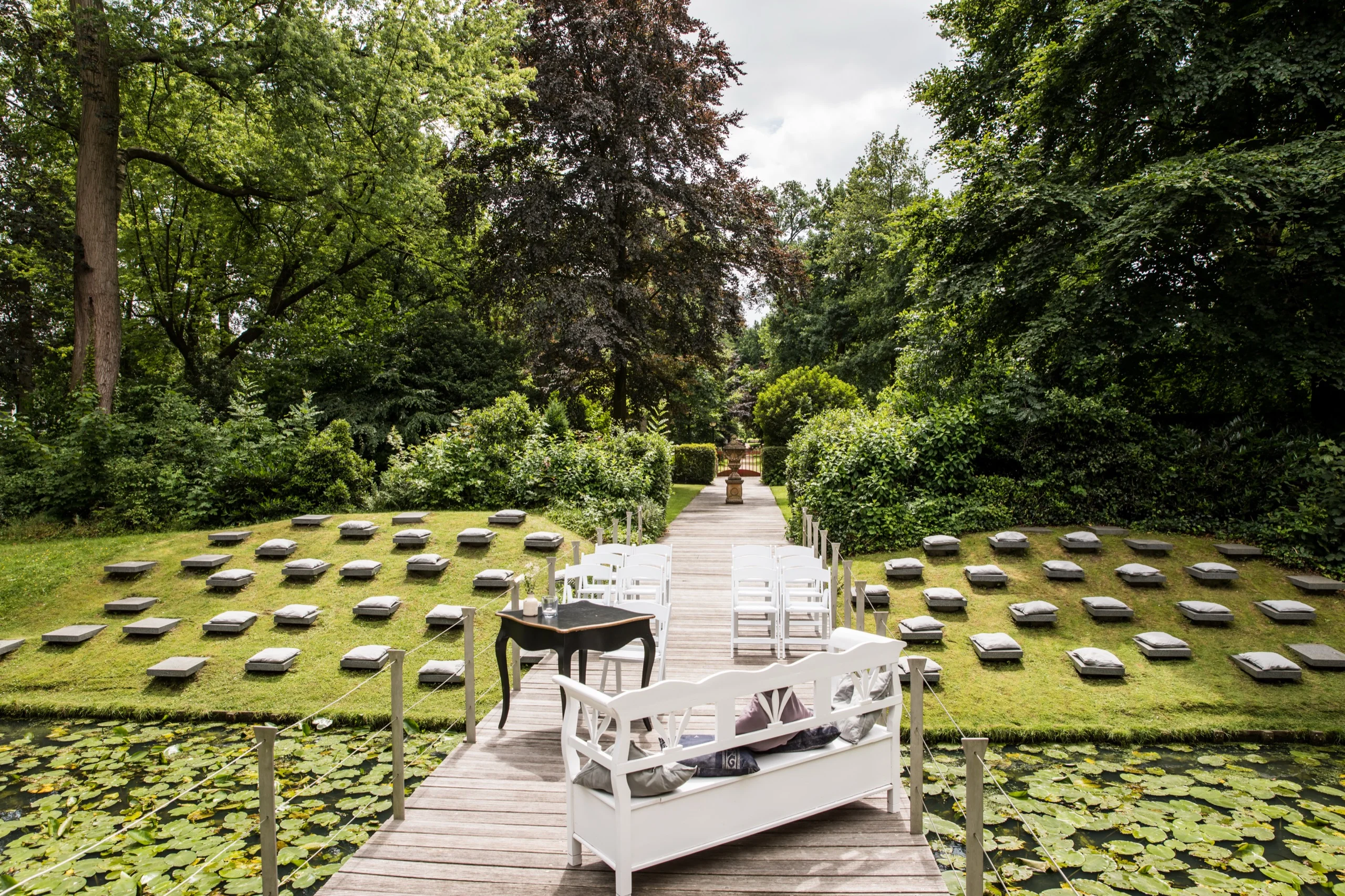
The extra costs of hosting on private property
You may need a structurally sound marquee, temporary flooring, heating or ventilation depending on the season, and a power plan. A standard domestic electrical circuit cannot reliably support induction equipment, refrigeration, coffee machines, lighting and sound equipment all at once. You will also need refrigeration for perishable food throughout the day, portable toilets once the guest list grows beyond a small gathering, plus furniture, tableware, glassware and the logistics to deliver and collect it all.
As a rule of thumb, the more a venue provides, the lower your catering-related hire costs will be. This works both ways, which is why an empty industrial space and an empty garden have more in common financially than many couples expect. For a breakdown by menu format and service hours, see what on-site catering costs for a wedding or corporate event.
Where wedding venues can cost more
A venue will charge a hire fee, often has a minimum spend and may require you to use its in-house caterer. That final point catches many couples off guard, as your choice of menu and budget may be restricted by contract. The same comparison applies to business clients considering an on-site company lunch and its costs, where minimum spend requirements can have just as much impact on the final bill.
The weather plan is a real cost
At home, your indoor option is usually a marquee. At a wedding venue, it is a building. You may not notice the difference until it rains, but then it becomes the difference that matters most. A marquee ordered only two days before the event is often unavailable during peak season. Treat it as a fixed cost, not a backup plan.
Things you can do now:
- Compare the venue quote and the home wedding scenario using the same headings: venue, marquee, flooring, power, refrigeration, toilets, furniture, staff and collection.
- Before placing a hold on a venue, ask specifically about minimum spend and mandatory catering.
- For home weddings in May, June or September, book the marquee and portable toilets at least six months ahead.
- Calculate the power demand of every appliance and compare it with the available electrical circuits. If it does not add up, plan for a generator.
What permits do you need to get married in your own garden?
This is where many plans run into difficulty, and it is not a minor detail. If you want to marry at a location that is not already an official wedding venue, such as your own home or garden, most municipalities require you to apply for it to be designated as a one-off civil ceremony venue. Without that designation, the marriage is not legally valid. This is set out in local policy, for example in the policy on occasional wedding venues issued by the municipality of Etten-Leur.
Fire safety matters too. Under that policy, existing buildings or hospitality premises used as wedding venues need a valid environmental permit for fire-safe use and/or an event permit. A private home is generally not subject to that same permit requirement, but the site must still meet fire safety standards, including a structurally sound marquee and sufficient portable fire extinguishers.
Then there is the threshold that makes the decision much clearer. According to municipal policy on event permits, a temporary fire service occupancy permit is required when 50 or more people will be present at the same time. Fifty guests is not a large wedding. It means that most garden weddings with daytime and evening guests fall within permit territory.
Since the introduction of the Environment and Planning Act, event use rules have automatically been added to every municipal environment plan through the so-called transitional rules. According to the Living Environment Information Centre, these national rules remain in force until a municipality adopts its own rules. In practical terms, garden wedding requirements can vary by municipality and may change over time. Always contact your own municipality rather than relying on what another couple was allowed to do two years ago.
La Casserole starts with a site assessment, not a menu: guest numbers compared with usable floor space, delivery access, available electrical circuits and the permits required for that number of guests. The culinary concept comes only after those conditions are clear. Doing it the other way around costs couples money, because a menu that does not fit the available infrastructure will always need to be changed.
At what guest count does a wedding venue become the better choice?
A useful benchmark is around 40 to 50 guests present at the same time. Below that level, private property is usually manageable with a modest marquee, hired refrigeration and a small service team. Above it, permits, toilets, power demand and parking pressure quickly add up.
| Criteria | Private property, up to around 40 guests | Private property, 80+ guests | Wedding venue |
|---|---|---|---|
| Fire service occupancy permit | Usually not required below 50 people | Required from 50 people present at once | Usually already arranged by the venue |
| Official civil ceremony designation | Application required | Application required | Often already an official wedding venue |
| Power | Existing circuits are often sufficient | Generator or three-phase power required | Available, but check capacity |
| Toilets | Home facilities are often sufficient | Portable toilets required | Available |
| Indoor option if it rains | Marquee | Marquee, a fixed budget item | Building |
| Preparation timeline | A few months | Six months or more in peak season | Depends on venue availability |

This threshold is not a hard rule. A farm with a barn, three-phase power and a paved driveway can host 100 guests more easily than a city garden can host 50. Look at the infrastructure, not just the square footage.
What does this look like for a 90-guest wedding on private property?
Real-world example: an illustrative event catering scenario
Imagine a couple with a detached home and a large garden planning a June wedding with 45 daytime guests and 90 evening guests. The plan is a garden ceremony, a walking dinner and dancing late into the night. Their budget assumes that hosting at home will be cheaper.
The site assessment identifies four issues. The evening headcount exceeds 50 people, so a temporary occupancy permit is required. The garden has one outdoor electrical circuit, which is not enough for refrigeration, hot holding equipment and sound at the same time. There is no covered indoor option for 90 people. The driveway is unpaved, which could block delivery of the refrigerated vehicle and equipment if it rains.
The solution is to begin the permit process early, arrange a generator and distribution by appliance group, treat the marquee and flooring as fixed costs rather than a contingency, and use temporary roadway panels for the delivery route. The menu shifts away from fried items towards dishes that can be prepared with lower peak power demand.
The outcome is that the wedding can still take place at home, but most of the cost advantage over a wedding venue disappears. What remains is the emotional value of celebrating in a place that matters to the couple. Exact outcomes vary, but the disappearing cost advantage is a pattern that consistently surprises couples.
This example shows that the real question is not whether a home wedding is possible, but what it will cost and how much preparation it requires. Couples who work through this early can make a deliberate decision. Those who do it late may choose home and end up paying venue-level costs without getting the benefits of a venue.
What do you gain by choosing the location before the menu?
The order of decisions shapes the outcome. Couples who choose the menu first and the location second often have to make cuts later. A live cooking experience at the table requires different space and power than a buffet, while a walking dinner needs clear circulation routes that a packed garden may not provide.
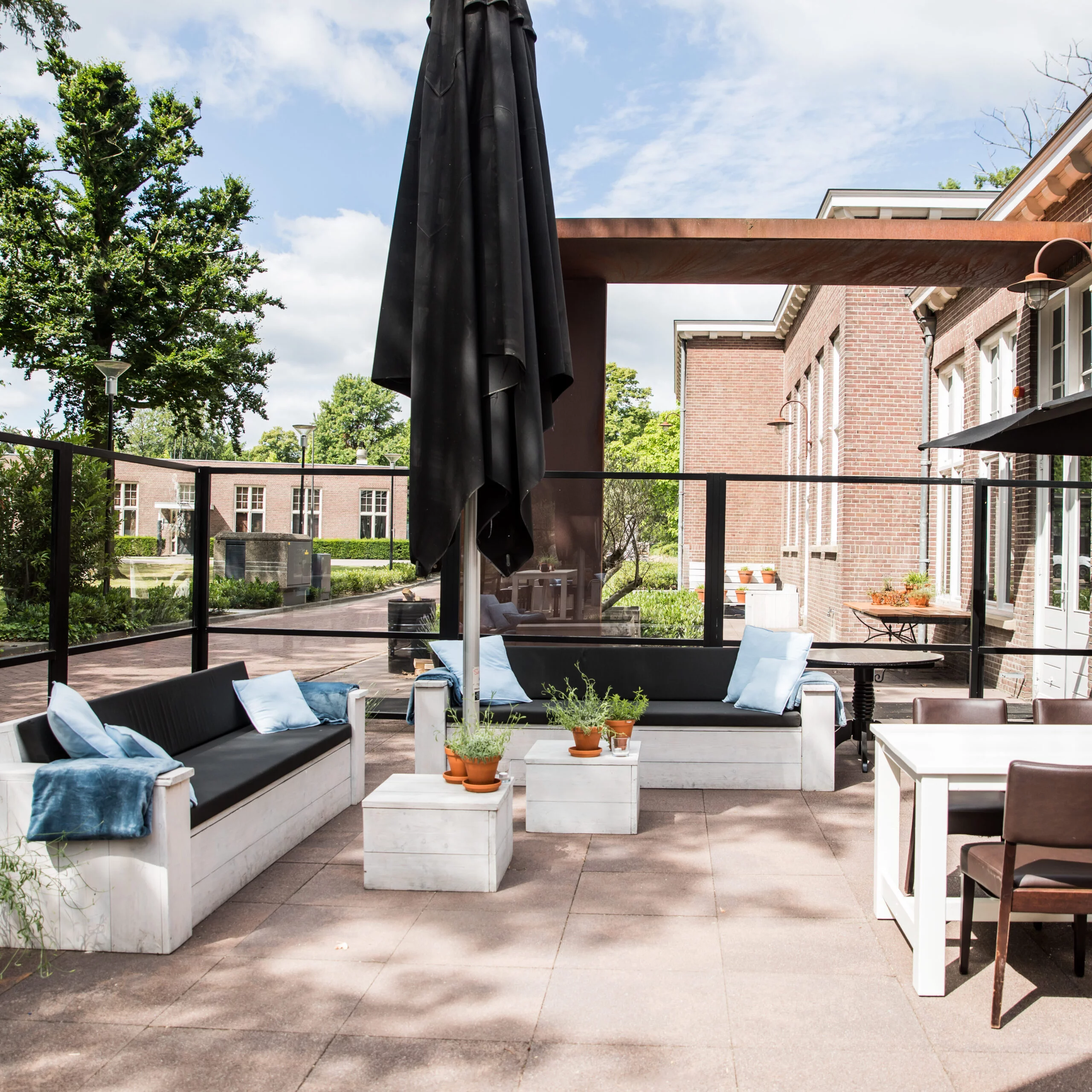
Choose the location first and you gain four advantages: fewer late changes and therefore fewer extra costs; a menu that suits the available infrastructure and carries less risk on the day; a realistic weather plan because the marquee is in the budget from day one; and calmer sourcing because the marquee, toilets and staff are booked before peak season fills up.
Marriage numbers remain consistently high. According to Statistics Netherlands figures, 68.682 marriages took place in the Netherlands in 2024, slightly more than the 67.959 recorded in 2023. That steady demand is concentrated in a handful of months, creating the same yearly shortage of technical suppliers and staff.
For couples exploring the venue route, there is value in choosing a dedicated event venue. La Casserole manages Het Ketelhuis in Eindhoven, where technical arrangements, room layout and catering are planned together rather than across three separate contracts. For the cost side of this type of decision, see the comparison of getting married at Ketelhuis Eindhoven or at a castle and how venue terms shape catering costs.
Things you can do now:
- Contact the municipality about civil ceremony designation and the occupancy permit before announcing your date.
- Set the maximum number of guests present at one time. Above 50 people, assume a permit will be required.
- Finalise the menu only after power, refrigeration and circulation routes are confirmed.
- For a date in May, June or September, book the marquee, toilets and service team at least six months ahead.
Where do couples usually go wrong when planning a home wedding?
Three mistakes come up time and again. First, the guest count is only finalised late in the process, even though it determines the permits and infrastructure. Second, the marquee is treated as an emergency measure rather than essential infrastructure, making it difficult or impossible to hire during peak season. Third, no one takes ownership of logistics, so delivery access, parking and waste collection are left until the week before the wedding.
The counterintuitive conclusion is that a wedding venue can be more expensive for a small gathering, but often cheaper for a larger one. That is the opposite of what most couples assume. For a closer look at venue contracts and technical requirements, read key points couples often miss when choosing a wedding venue in Brabant.
Frequently asked questions
Can you get married in your own garden without a permit?
Official civil ceremony designation is required by most municipalities. The location must be designated as a one-off official civil ceremony venue for the marriage to be legally valid. A private home is generally not subject to a fire-safe use permit, but fire safety requirements still apply, including a structurally sound marquee and sufficient fire extinguishers. Always request the current policy from your own municipality, as requirements differ by area.
From how many guests do I need an occupancy permit?
From 50 people present at the same time, municipal policy generally requires a temporary fire service occupancy permit. At weddings with daytime and evening guests, this threshold is often exceeded in the evening, even if the ceremony itself is small. Base your planning on the highest number present at any one time, not the total number of guests across the day.
Is getting married on private property cheaper than a wedding venue?
Only for smaller guest lists, usually up to around 40 guests. Above that number, you need to add a marquee, flooring, power, refrigeration, portable toilets and furniture. These are items a venue often already provides, so the price difference can largely disappear. Compare both options using the same budget headings before deciding.
Who handles the technical planning and logistics if I get married at home?
One person should take clear ownership of the project to avoid the usual gaps in the plan. La Casserole uses a site assessment to confirm guest numbers, power capacity, delivery access and the weather plan before the menu is set, so the marquee, refrigeration and service team work together. Without a clear owner, parking, deliveries and collection are usually left until the final week.
When should I book for a wedding in May, June or September?
At least six months ahead, and earlier for a home wedding with a marquee. According to Statistics Netherlands, these are the most popular wedding months, and around 30 percent of couples marry on a Friday. Marquees, portable toilets and experienced service teams are therefore in shortest supply. Confirm the date and technical arrangements first, then the menu.
Conclusion
The choice between getting married at a venue or at home cannot be answered by budget alone. It comes down to three checkable facts: the highest number of guests present at the same time, the permits your municipality requires at that number and the infrastructure available on the property. Below around 40 guests, private property is often the most personal and practical option. From 50 guests present at once, the advantage tends to shift towards a wedding venue, because permits, power, toilets and a genuine indoor option become unavoidable.
Start in this order: confirm guest numbers, call the municipality about civil ceremony designation and occupancy permits, assess the property technically, then choose the menu. Couples who follow that sequence stay in control of their budget instead of letting the budget take over their day. That is exactly why a site assessment before the culinary plan pays off in practice.
Looking to host a stylish event in Brabant? Let us handle it!
Sources
- Centraal Bureau voor de Statistiek — Cbs
- beleidsregel over incidentele trouwlocaties — Lokaleregelgeving
- Informatiepunt Leefomgeving — Iplo
- Huwen en partnerschapsregistraties; kerncijfers — Centraal Bureau voor de Statistiek (CBS)
- Trouwen, dashboard bevolking — Centraal Bureau voor de Statistiek (CBS)
- Beleidsregel aanwijzing van een incidentele trouwlocatie tot huis der gemeente — Overheid.nl, lokale wet- en regelgeving
- Beleidsregel evenementenvergunningen — Overheid.nl, lokale wet- en regelgeving
- Gebruiksregels evenementen — Informatiepunt Leefomgeving (IPLO)