

The short answer
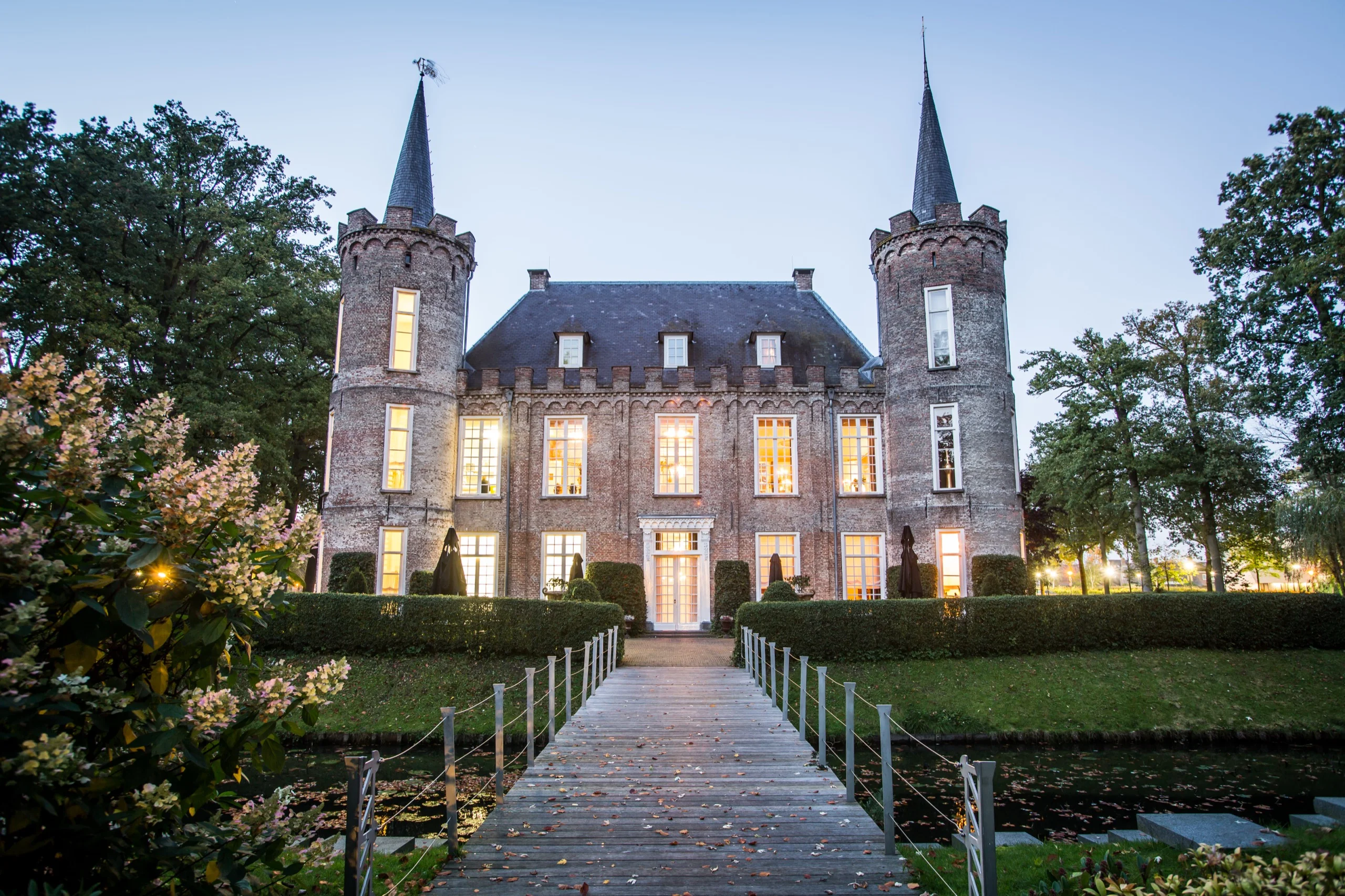
For couples choosing between an industrial hall and a castle venue, La Casserole starts with the venue requirements, not the menu. A wedding at Ketelhuis Eindhoven, an industrial heritage site, calls for a mobile catering setup with its own refrigeration, cooking equipment and washing facilities. A historic venue with an in house kitchen, by contrast, requires less logistics but usually comes with a tighter schedule and fixed service routes.
- For wedding catering in Brabant, expect to pay roughly €75 to €140 per person for a fully catered evening reception, excluding drinks and venue hire.
- A mobile kitchen at an industrial venue often adds €900 to €2.500 for refrigeration, cooking equipment, setup and breakdown.
- Front of house staff typically cost around €45 to €60 per hour per person. A useful rule of thumb is one staff member for every 20 to 25 guests.
- Choose with guest numbers in mind: below 80 guests, atmosphere often matters most. Above 120 guests, logistics tend to take the lead.
- Always request the HACCP plan and refrigeration setup, including at venues without a kitchen.
Why does wedding catering go wrong more often because of the venue than the kitchen?
La Casserole often sees couples compare an industrial hall and a castle venue on the wrong basis: the menu. In reality, the menu is the smallest variable. The biggest costs and risks come from what the venue does not provide: no cold storage, no dishwashing area, no suitable delivery access, no covered route between the kitchen and the reception space. (Services)
This is far from a theoretical concern. At a venue with its own kitchen, a dish can travel from pan to table in under a minute. In a former industrial building, that same plate may need to travel sixty metres across a concrete floor, past a dance floor that is packed by 22.00. At that point, the service route, not the chef, determines the result.
The number of weddings alone makes this worth considering. According to figures from Statistics Netherlands, summarised by Stichting Trouwbranche Nederland, nearly 75.000 marriages took place in the Netherlands in 2022, substantially more than before the pandemic. Many of these celebrations are held at venues designed primarily as event spaces, rather than restaurants. For most couples, that means the caterer needs to bring the kitchen with them.
For a broader approach, see the same principle in this complete guide to organising a business event in Brabant without the stress: assess the venue’s technical requirements first, then plan the programme.
What does an industrial event venue such as Ketelhuis Eindhoven mean for your catering plan?
An industrial event venue is a building intended for events but without hospitality infrastructure. The space provides character and square footage, while the caterer supplies the kitchen, refrigeration, tableware and washing facilities. Ketelhuis Eindhoven is a good example. Its setting also explains why this type of venue has become so popular. Strijp-S in Eindhoven was originally a Philips industrial site, and since 2000 its former factory buildings have been transformed into homes and creative business spaces. These buildings were made for machinery, not guests, which creates striking ceilings, steel structures and acoustics that need careful planning.

Three technical details to confirm in advance
First, power. A mobile kitchen with induction equipment, hot holding units and refrigeration typically requires between 20 and 40 kW for a medium sized wedding. Ask for the available capacity in kW, rather than simply counting power sockets.
Second, refrigeration, which is also the most important legal consideration. The NVWA requires chilled products to be stored at 7°C or below, and frozen products at -18°C or below. At a venue without cold storage, this means a refrigerated trailer or mobile cold room, plus temperature logs throughout the day.
Third, waste disposal. Grease disposal, wastewater and waste separation are often not arranged at industrial venues. Budget separately for waste containers and water disposal.
How acoustics affect your menu
A steel framed hall with concrete surfaces reflects sound. At a seated three course dinner, tables of ten can struggle to hear each other even with just sixty guests in the room. This is why a more flexible format often works better in these spaces: food stations or a walking dinner, with seating available for guests who prefer it. It also reduces peak demand on the kitchen, since not everyone eats at exactly the same time.
Things you can do now:
- Ask the venue in writing for its available power capacity in kW, the number of three phase connections, and the distance in metres between the kitchen area and the reception space.
- Check whether there is a lockable, covered space of at least approximately 25 m² for use as a production kitchen. If not, budget for a kitchen tent.
- Ask the caterer to specify the refrigeration setup: a refrigerated vehicle, mobile cold room or insulated transport boxes, as well as who logs the temperatures.
- Walk the route from kitchen to tables in person, checking for thresholds, stairs and doors that may be closed during the party.
Castle venue, industrial hall or private garden: what does it really cost?
The comparison below assumes an evening wedding with drinks reception, main course and dessert, excluding drinks and venue hire. These figures are indicative and vary with guest numbers, season, day of the week and service level. Weekends and peak season, from May to September, are typically 10 to 20 percent more expensive.
| Aspect | Industrial venue, such as Ketelhuis Eindhoven | Historic venue with an in house kitchen | Private garden or estate |
|---|---|---|---|
| Kitchen facilities | ❌ Mobile kitchen required | ✅ Permanent production kitchen | ❌ Fully mobile setup |
| Indicative food price per person | €85 to €130 | €90 to €140 | €75 to €110 |
| Fixed equipment costs | €900 to €2.500 | €200 to €600 | €1.200 to €3.500 |
| Service staff per 100 guests | 4 to 5 staff members | 4 to 6 staff members | 4 to 5 staff members |
| Example total for 100 guests | €11.500 to €16.500 | €11.000 to €17.000 | €10.500 to €15.500 |
| Practical guest capacity | 80 to 400 | 40 to 150 | 30 to 120 |
| Weather risk | ⚠️ Indoors, but the outdoor kitchen is vulnerable | ✅ Mostly indoors | ❌ A tent is often essential |
Cost example: 100 guests in an industrial hall
Imagine a couple booking an evening wedding for 100 guests at Ketelhuis Eindhoven or a similar industrial event venue in the region. A realistic breakdown could look like this: food and canapés at €100 per person comes to €10.000. Four service staff working seven hours at roughly €50 per hour comes to €1.400. A kitchen team of three chefs, including prep and breakdown, costs around €2.100. Mobile refrigeration and cooking equipment add €1.400. Tableware, glassware and linen come to €900. Transport, setup and breakdown add €700.
That brings the total to approximately €16.500 excluding VAT, or around €165 per guest for the food and full delivery. Drinks are charged separately, usually €22 to €40 per person for an evening package. At a historic venue with its own kitchen, the split changes: equipment costs fall to a few hundred euros, but venue hire and mandatory minimum spend are often higher.
Where catering quotes differ most
In practice, six items account for most of the difference between two quotes for the same celebration: minimum spend per person, weekend and public holiday surcharges, travel time and transport, setup and breakdown hours, dietary requirements such as vegetarian, halal and gluten free options, and whether tableware, glassware and linen are included or charged separately. Also ask about cancellation terms and the date on which guest numbers become final. If ten guests cancel two weeks before the wedding, a strict contract may still charge you in full.
The approach La Casserole uses for wedding catering in Brabant therefore begins with a technical venue inspection before a single dish is planned: power, water, refrigeration, delivery access, service routes and a weather contingency plan. At Ketelhuis Eindhoven, that assessment shapes the menu, not the other way around.
How many staff and what kitchen setup do you need for 60, 120 or 250 guests?
For a seated dinner, the standard rule of thumb is one service staff member for every 20 to 25 guests, plus one chef for every 40 to 50 guests. At food stations or a walking dinner, you can often reduce service staffing slightly to around one person per 30 guests, because guests serve themselves and move around the room.
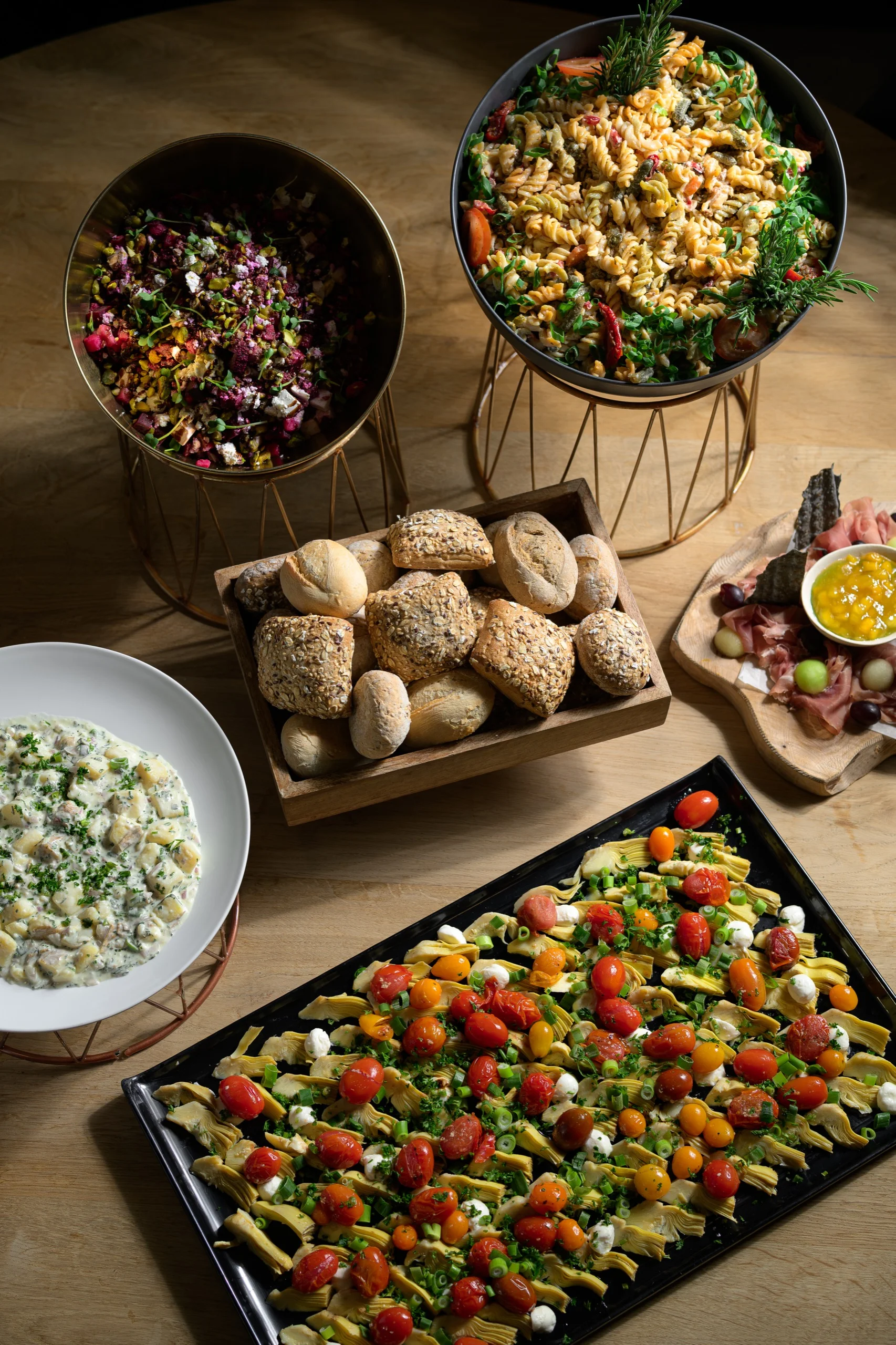
For 60 guests, a compact mobile kitchen of approximately 20 m² with two chefs can work well. At 120 guests, you need a second cooking line and separate refrigeration for hot and cold items. Washing up also moves from a manual process to a mobile pass through dishwasher. Above 250 guests, two deliveries are often more practical than one large load: one in the morning for equipment and refrigeration, then a second shortly before the event with fresh ingredients.
The biggest planning mistake in this sector is budgeting staff only for the duration of the celebration. At Ketelhuis Eindhoven and similar industrial venues, setup usually begins four to six hours before the first guest arrives, while breakdown continues for two to three hours after the last guest leaves. That is six to nine paid hours that never make it into the wedding photos.
Which venue suits your guest numbers and style?
In practice, the decision comes down to three things: guest count, your preferred level of formality and how much logistics you are willing to manage.
For fewer than 80 guests, a venue with its own kitchen nearly always wins on convenience and often on price too, since fixed equipment costs are spread across fewer people. Between 80 and 150 guests, it is a genuine trade off, where atmosphere and the guest experience can be the deciding factors. Above 150 guests, the balance often shifts towards an industrial hall such as Ketelhuis Eindhoven. The square footage, ceiling height and loading access simply make larger gatherings easier to deliver.
One practical factor that is often overlooked is the delivery route. A castle or country estate with a gravel drive and narrow gate may not be able to receive a twelve metre lorry. An industrial building on a former factory site usually can. It may sound like a minor detail, but it determines whether equipment arrives in one delivery or three vans, which quickly affects transport costs and setup hours.
Couples deciding between an industrial and historic setting should first read how to choose an event venue in Brabant with catering. If you are considering Ketelhuis Eindhoven, this analysis of Het Ketelhuis Eindhoven as a wedding venue sets out the technical requirements for each part of the day.
Things you can do now:
- Compare your final guest count with the practical capacity in the table above. If you have fewer than 80 guests, request quotes from venues with their own kitchen first.
- Measure the narrowest point on the delivery route. If it is less than 3,5 metres wide, ask the caterer whether equipment must arrive by van, and what that will cost.
- Decide whether guests will be seated or circulating. For a seated dinner, allow one service staff member per 20 to 25 guests. For food stations, allow one per 30.
- Ask every caterer to list setup and breakdown hours separately. If they are missing, they are either hidden in the quote or will be added later.
- Put the weather contingency plan in writing, including the latest decision point, usually 48 to 72 hours before the date.
What should you look for when comparing caterers in the Eindhoven area?
The catering market is busy. According to Statistics Netherlands, turnover in the canteens and catering sector rose by 6,2 percent in the fourth quarter of 2025, the largest increase of any hospitality sector in that period. When demand is high, it pays to book early: strong caterers are often reserved six to twelve months ahead for popular Saturdays in peak season.
Check three things with every supplier. First, the food safety plan. Caterers are legally required to work with a food safety plan or hygiene code based on HACCP, according to the NVWA, with the requirements set out in Regulation (EC) No 852/2004. Ask how that plan will be applied at a venue without a kitchen.
Second, experience with this specific type of venue. A caterer who has worked at Ketelhuis Eindhoven or a comparable hall before will know where the three phase power is located and how long the service route is. That reduces the chance of unexpected costs.
Third, find out how many points of contact you will have on the day. Does the caterer use subcontractors for tents, furniture and technical production, and if so, who coordinates them? La Casserole’s full service offering brings catering, styling, furniture, tents and project management together under one project manager. This is designed to prevent a common problem: with three separate suppliers, issues can fall between the cracks. With one contract, accountability is clear.
Frequently asked questions
How much does wedding catering cost per person in Brabant?
As a guide, expect €75 to €140 per person for food and full delivery at an evening wedding, excluding drinks and venue hire. At a venue without its own kitchen, add around €900 to €2.500 for mobile refrigeration, cooking equipment, setup and breakdown. Quotes vary according to minimum spend, weekend surcharges, travel time, dietary needs, and whether tableware and linen are included. Always ask for an itemised quote rather than a single price per guest.
Is Ketelhuis Eindhoven suitable for a wedding with 200 guests?
Yes, industrial event venues of this kind generally work well from around 80 guests up to several hundred. The limiting factor is rarely the space itself. It is usually the kitchen setup: above 150 guests, you need a second cooking line and separate refrigeration for hot and cold items. At this size, allow for eight to nine people across the service and kitchen teams. Ask the caterer to provide a floor plan showing the kitchen, refrigeration and service routes in advance.
How many staff do I need for a seated wedding dinner?
A useful rule of thumb is one service staff member per 20 to 25 guests and one chef per 40 to 50 guests. For food stations or a walking dinner, service staffing can drop to around one person per 30 guests because guests move around independently. Always include setup and breakdown hours in your budget. At a venue without a kitchen, these usually add six to nine paid hours per member of the catering team.
Who arranges the catering, tent and technical production if the venue has no kitchen?
At venues without hospitality infrastructure, having one contract and one project manager is far less stressful than coordinating three separate suppliers. La Casserole combines catering, styling, furniture, tents and project management in one service, beginning with a technical venue inspection. A practical question to ask any provider is this: who makes the call on the day if the power fails or it rains? If they cannot give you a name, the coordination is not properly covered.
How far in advance should you book wedding catering?
For Saturdays between May and September, booking six to twelve months ahead is common. Outside peak season, and for Fridays or Thursdays, three to six months may still be enough. Alongside your date, agree the last date on which you can adjust your guest numbers, typically two to three weeks before the wedding, and review the cancellation terms at each stage.
Conclusion
Choosing between a wedding at Ketelhuis Eindhoven and a historic venue with its own kitchen is not simply a matter of taste. It is a practical calculation based on facilities. An industrial building offers space, ceiling height and easy loading access, but it requires a mobile kitchen, refrigeration that meets HACCP requirements, and six to nine extra hours for setup and breakdown. A venue with its own kitchen removes those costs, but may charge higher venue hire fees and require a minimum spend.
Three steps will help you move forward: compare your guest count with the practical capacity of each venue type, request three itemised quotes that show setup and breakdown hours separately, and ask every provider how power and refrigeration will be handled at your venue. Once you have those three answers in writing, you can make a true like for like comparison. That is exactly where La Casserole starts too: first the technical plan, then the menu.
Looking to host a stylish event in Brabant? Let us handle it!
Sources
- cijfers van het CBS, samengevat door Stichting Trouwbranche Nederland — Stichtingtrouwbranchenederland
- NVWA schrijft voor — Nvwa
- het Centraal Bureau voor de Statistiek — Cbs
- Omzet horeca groeit in vierde kwartaal met ruim 3 procent — Centraal Bureau voor de Statistiek (CBS)
- HACCP — Nederlandse Voedsel- en Warenautoriteit (NVWA)
- Voedselveiligheidsplan of hygiënecode voor horeca en ambachtelijke bedrijven — Nederlandse Voedsel- en Warenautoriteit (NVWA)
- HACCP-regels in de keuken en andere ruimten — Nederlandse Voedsel- en Warenautoriteit (NVWA)
- Aantal huwelijken circa 75.000 (bron: CBS) — Stichting Trouwbranche Nederland