

The short answer
A walking dinner for a corporate party works best when you want guests to keep moving and meet new people throughout the evening. Food stations are a stronger choice when you want small groups to settle in, with food as the focal point and more flexibility around the pace of the evening. Start with the event objective, not the menu.
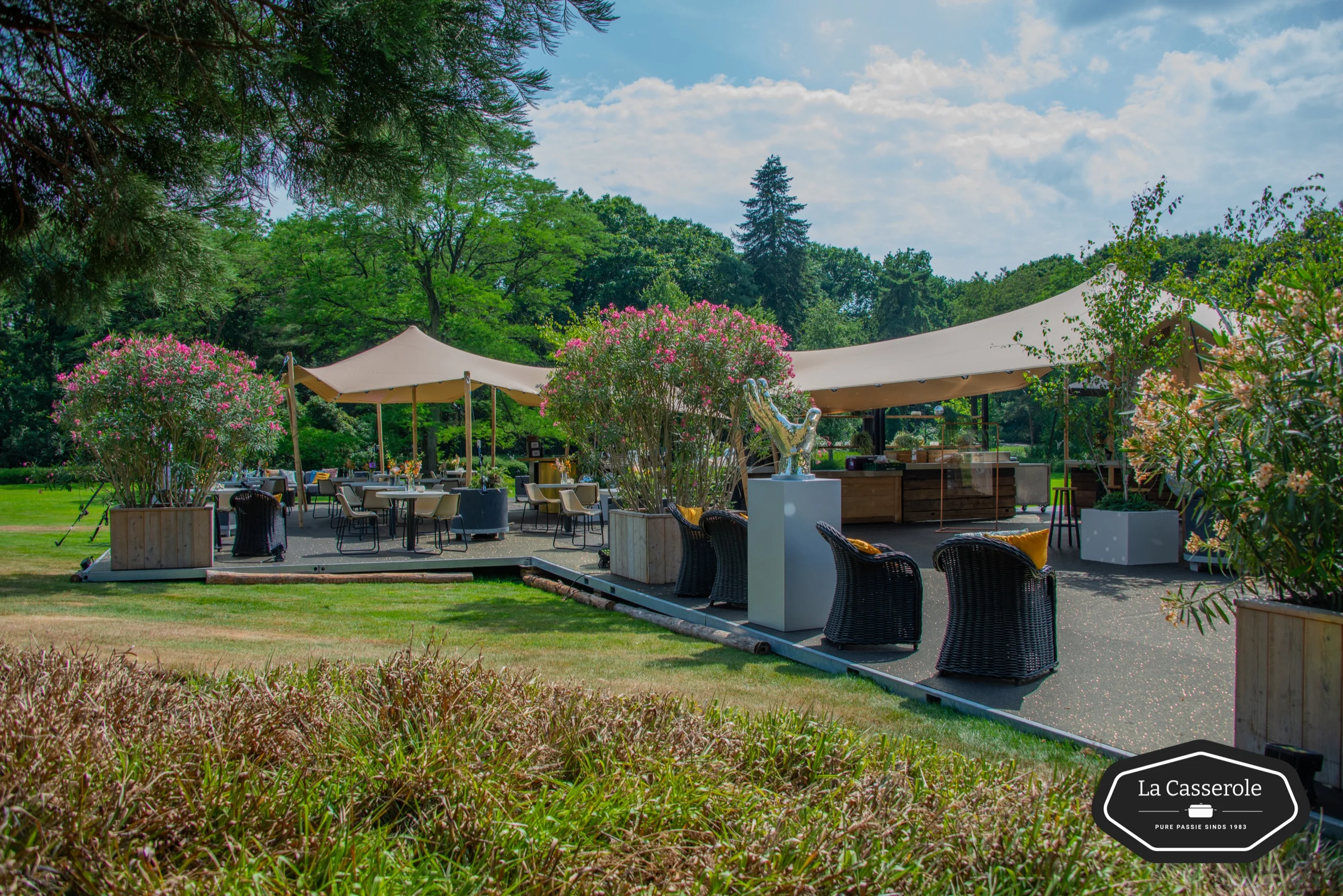
- Walking dinner: servers circulate with 5 to 8 small courses while guests stand and move around
- Food stations: 3 to 6 fixed stations that guests visit themselves, often with a chef cooking on site
- As a general rule, guest flow becomes the limiting factor for a walking dinner above 150 guests
- With food stations, plan for 20 to 40 guests per station to keep queues short
- Both formats must meet the NVWA’s HACCP requirements for food prepared on site
Introduction
La Casserole operates in a market where caterers, venues and event agencies each offer one piece of the puzzle. A common challenge with corporate events is that HR and office managers receive three separate proposals with similar menus and vastly different prices, yet nobody explains which setup best serves the purpose of the evening. (Services)
And that purpose can vary dramatically. A department brought together after a restructuring needs something very different from a team celebrating a record year. Yet the choice between a walking dinner for a corporate party and food stations is often made based on taste or budget alone.
The figures show just how busy this market has become. According to CBS, the number of event catering businesses in the Netherlands has increased more than sixfold since 2007, reaching around 27,000 businesses. It is now the largest category within food and beverage services, ahead of restaurants. More suppliers mean more choice, but also more proposals that look much the same.
This guide sets out the four questions that make the decision clearer, along with a planning framework and the execution mistakes to avoid.
Why the right catering format can make or break your corporate party
Picture this: an office manager at a technical services company with 180 employees is planning the annual party in an industrial venue. Leadership wants the new branch and head office teams to get to know each other. A walking dinner sounds like the perfect lively format. But the venue is narrow, the bar is tucked into a corner, and servers have to weave through 180 people with fully loaded trays.
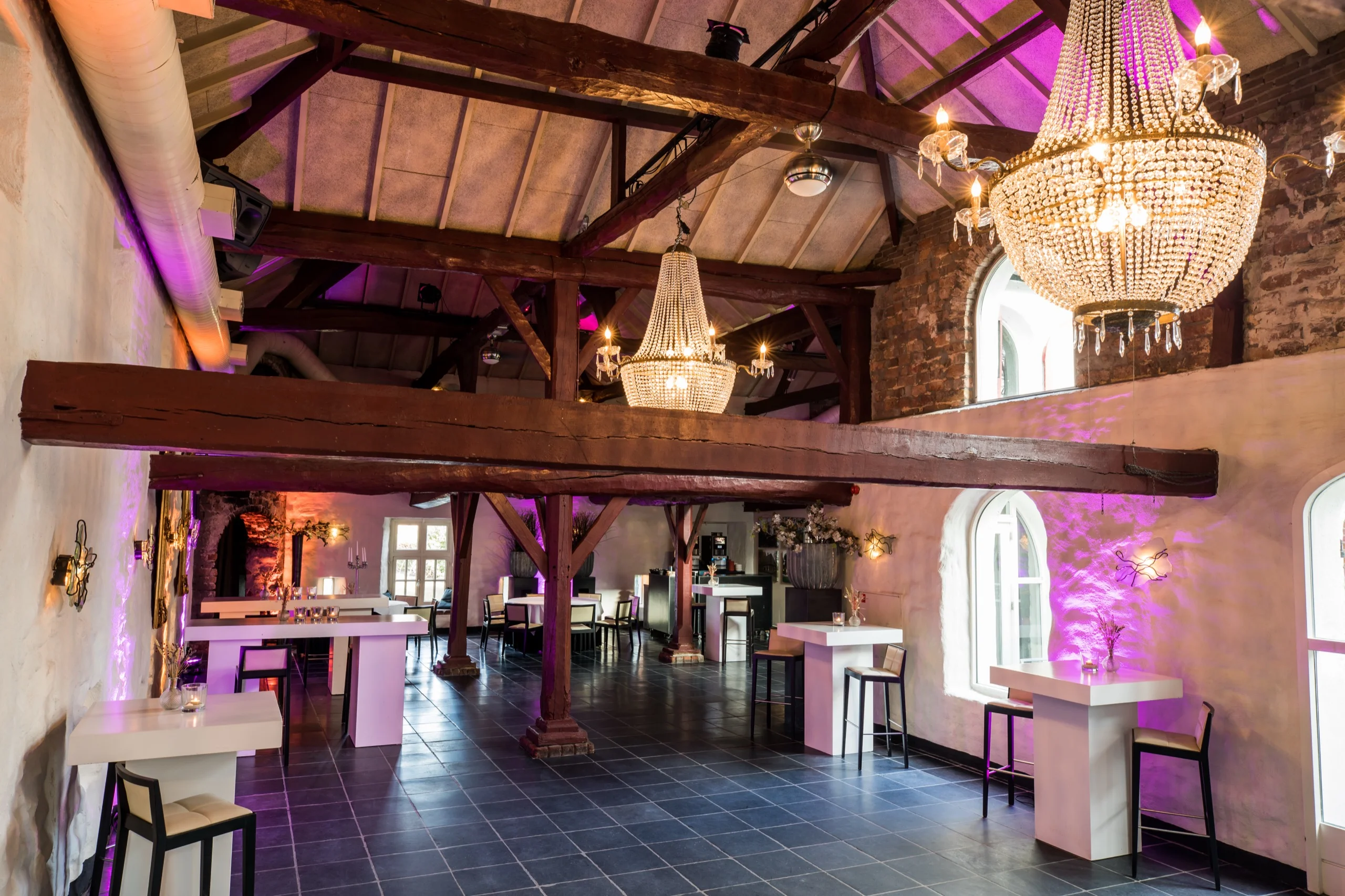
What happens next is easy to predict: guests stay put because walking away could mean missing the next course. The format designed to encourage movement ends up doing the exact opposite.
That is the heart of it. At an event, food determines where people stand, how long they stay there and who they talk to. So this is not simply a menu decision. It is a decision about how the evening will work. In practice, a poor fit cannot be rescued with better food or a great DJ.
Question 1: Do you want guests to mingle or settle into groups?
A walking dinner keeps guests circulating, while food stations draw them together. That is the first, and most important, distinction.
With a walking dinner, the food comes to the guest. Servers circulate with small courses, usually 5 to 8 in total. Guests have no reason to stay in one spot, so they naturally move around. It works particularly well when teams or departments need to get acquainted, after a merger, or following a period of rapid growth with lots of new faces.
With food stations, guests go to the food. A pasta station, grill or oyster bar each becomes a temporary hub where people gather and queue alongside colleagues they may not know. Conversation starts with what is happening in the pan, which often breaks the ice more naturally than a name badge ever could.
There is a counterintuitive lesson from real events: many organisers assume a walking dinner is the most social option, while food stations often lead to more meaningful conversations. With a walking dinner, chats can be brief and superficial because service interrupts every few minutes. At a station, a small group may stand together around the same chef for 5 to 10 minutes.
If you are weighing up these formats and considering live cooking as well, the comparison of shared dining and live cooking as catering formats offers further guidance.
Question 2: How many guests are coming, and how much space do you have?
Guest numbers decide the issue more often than taste does. As a rule of thumb, a walking dinner runs smoothly for around 120 to 150 guests. Beyond that point, the service route becomes so long that the last guest may receive a cold course or be served twenty minutes after the first.
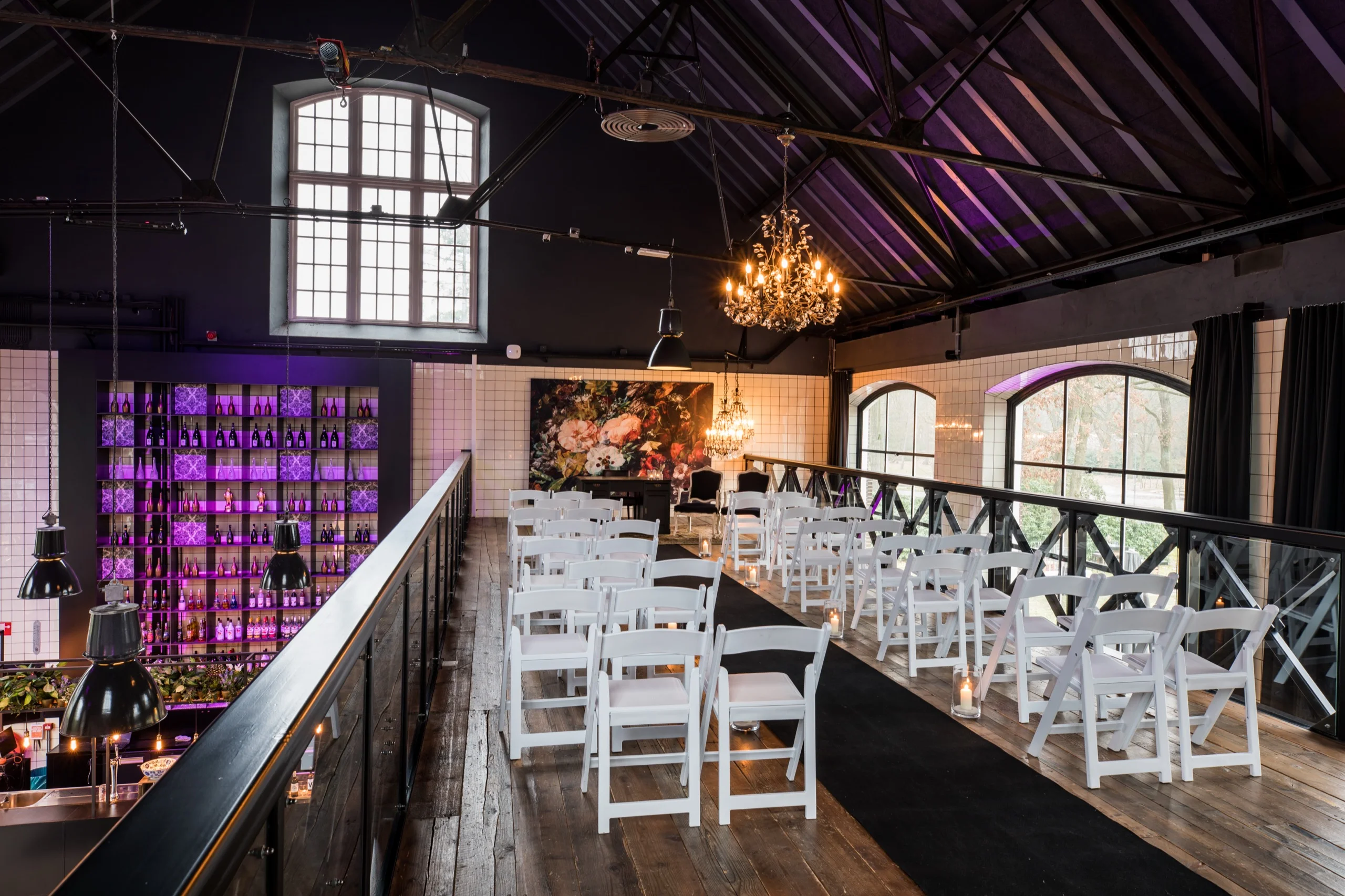
Food stations are easier to scale. Usually, you should allow for 20 to 40 guests per station. For 200 guests, that means five to eight stations spread around the room so no queue leaves people waiting for more than a few minutes.
The venue itself matters just as much. A long, narrow hall with one entrance is a poor fit for a walking dinner. Servers must repeat the same route while guests congregate near the bar. A venue with several zones, or multiple rooms, gives food stations much more room to breathe.
| Criteria | Walking dinner | Food stations |
|---|---|---|
| Runs smoothly up to | around 120 to 150 guests | 300 guests and beyond |
| Number of dishes or stations | 5 to 8 courses | 3 to 6 stations |
| Guests per service point | Not applicable, servers circulate | usually 20 to 40 |
| Staffing intensity | High: around 1 staff member per 20 guests | Lower: 1 to 2 chefs per station |
| Typical dining duration | 90 to 120 minutes | 60 to 150 minutes, with flexibility |
| Clear circulation space needed | Plenty, for both servers and guests | Moderate, for queues around stations |
| Venue with one entrance | Higher risk | Works well |
How the layout affects the bar
One detail that is often overlooked: with food stations, the bar should be separate from the food areas. Otherwise, two queues will cross over. With a walking dinner, the opposite is true. Guests standing at the bar are easy for servers to reach, so the bar can be a central feature.
When to combine both formats
For parties of more than 200 guests, a hybrid setup often works better than choosing just one format. Start with 45 minutes of circulating canapés to break the ice, then open the food stations. This does require a kitchen capable of handling two separate service moments, which is exactly where many standalone caterers fall short.
Do it yourself:
- Measure the net clear floor space, excluding the stage, bar and cloakroom, then divide it by the number of guests. Below 1 m² per guest, choose food stations
- Count the entrances to the dining area. One entrance and more than 120 guests means a walking dinner is not the right choice
- Ask the caterer how many service staff they will provide. Fewer than 1 per 25 guests for a walking dinner warrants further questions
- Walk the route from the kitchen to the furthest point in the room. If it is more than 40 metres or includes stairs, place stations closer to guests
Question 3: How tightly scheduled does the evening need to be?
The third question is about control. Is there a speech from the leadership team, an awards presentation or a film about the past year? If so, you need a format you can pause.
A walking dinner gives you that control. The kitchen decides when each course goes out, so you can create a ten minute pause between courses three and four for a speech. Everyone has the same thing in hand, and nobody is left standing in a queue.
Food stations are more informal, which also makes them harder to pause. A station that has just started carving a fresh rib cannot simply close down. In practice, an interruption at the stations usually takes twice as long as planned, because guests queue again once the speech is over.
If there is no fixed programme, that flexibility becomes an advantage. Guests can eat when it suits them, late arrivals do not miss out, and the evening flows naturally from drinks to dinner to the dance floor.
Question 4: What does this mean for food safety and technical requirements?
This is where planning gets practical, and where most do it yourself approaches go wrong. Food stations mean preparing food in the event space: frying, grilling, carving and keeping dishes warm. According to the NVWA, anyone who prepares and sells food at markets or events several times a year is legally required to work with a HACCP food safety plan. The Dutch Food Hygiene Decree and EU food information regulations, including allergen rules, also apply.
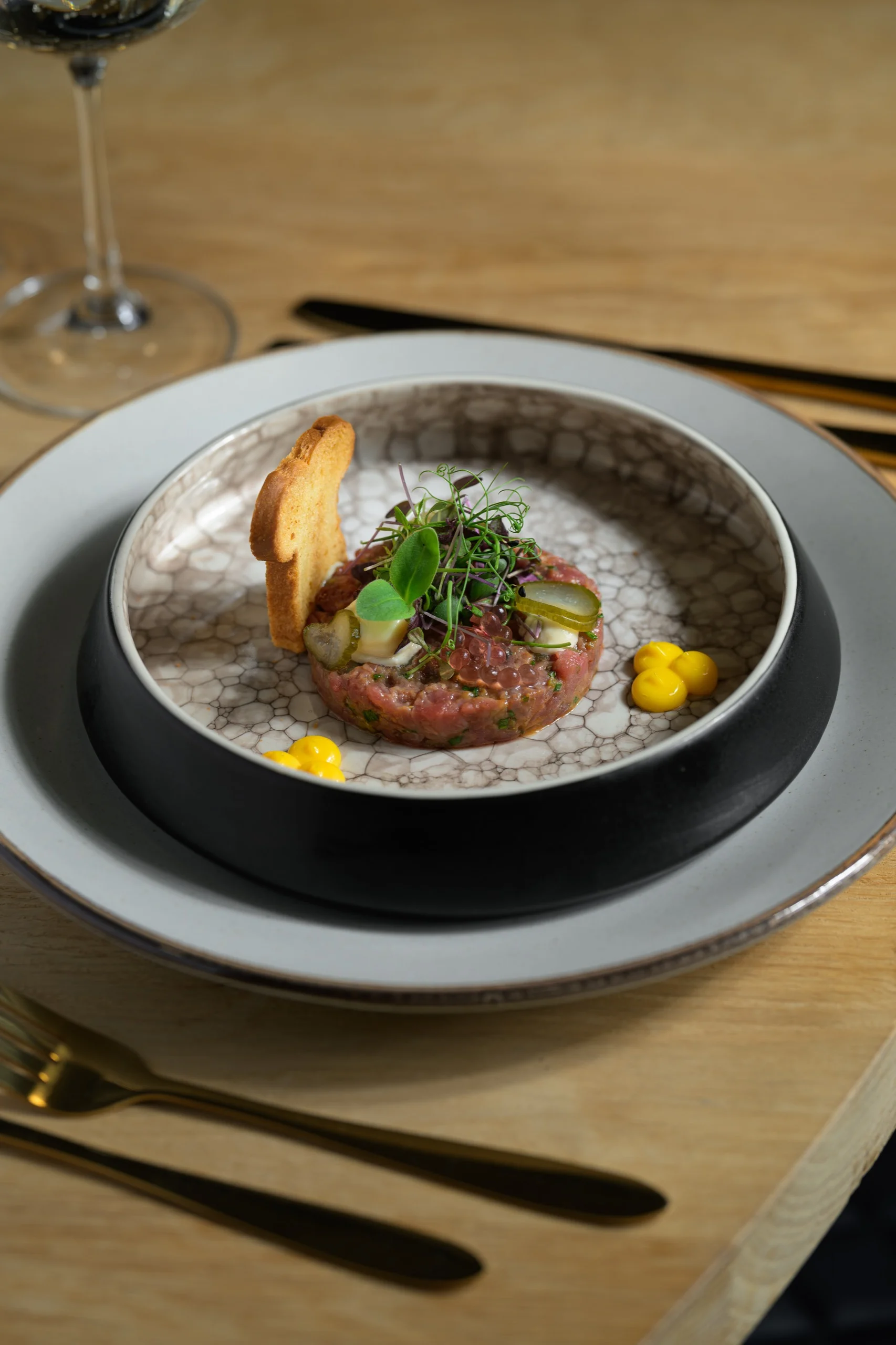
A professional caterer will generally meet this requirement through an NVWA-approved hygiene code. According to the NVWA, most hospitality businesses use the hygiene code issued by industry association KHN, which has been approved as a food safety plan.
For an office manager, this leads to one practical question for the caterer: which hygiene code do you work under, and who records temperatures on site? This matters more for food stations than for a walking dinner because more stages of food preparation take place in the room.
Power, extraction and the cost nobody saw coming
Every hot station needs power. An induction wok, griddle or hot holding unit can quickly push a standard electrical circuit to its limit when you have four to six stations. Industrial venues often have three phase power available, while castle venues and garden locations often do not. That may mean hiring a generator, an expense that rarely appears in separate catering proposals.
La Casserole avoids this issue by bringing catering, technical production, furniture and project management together in one plan. Power requirements and menu design are decided at the same time, rather than addressed as an afterthought. That saves money, but more importantly, it prevents the day of the event discovery that two stations cannot run at once.
Extraction is the second consideration. Frying food in an unventilated room means guests will still smell like dinner the next day. Low smoke cooking techniques or stations positioned near a door can solve the problem, but that needs to be reflected in the floor plan, not improvised during setup.
Step by step: from event objective to the right catering format
Step 1: Write the purpose of the evening in one sentence
Not “a nice party”, but something you can test decisions against: “two newly merged departments need to put faces to names” or “we want to thank the team for a record year”. That sentence should inform every choice that follows. Without it, conversations get stuck on menu preferences.
Step 2: Confirm guest numbers and expected attendance
Attendance at corporate parties is usually lower than the number of registrations. Build in a margin and agree a final guest number deadline with the caterer, usually 5 to 7 working days before the event. A 10 percent variation is less disruptive for food stations than for a walking dinner with a fixed number of courses.
Step 3: Choose the venue to suit the format, not the other way around
A raw industrial hall calls for a different approach than a castle venue with several rooms. If you are still deciding which type of venue fits your event, the comparison between a castle and an industrial hall for a corporate party sets out the key criteria for capacity, accessibility and technical requirements. Ask the venue about available electrical circuits and whether it has a commercial wash up kitchen.
Step 4: Finalise the floor plan and guest flow
Map out the bar, stations or service areas, cloakroom, stage and toilets. Walk the route from the entrance to the bar, then from the bar to the food. Do the routes cross? Move things around. This is the step most often skipped, and it delivers the biggest payoff.
Step 5: Ask the caterer for a fifteen minute timeline
Do not ask for a menu alone. Ask for a schedule: when does course one go out, when does station two open, and when does the kitchen close? For a walking dinner, check the gap between the first and last guest served for each course. Once it exceeds 15 minutes, service starts to feel uneven.
Step 6: Test the dietary and allergen plan
Ask how vegetarian, vegan and halal guests will be served without having to wait separately. For a walking dinner, this can be done with clearly marked trays. For food stations, provide a substantial plant based station rather than a side option. That prevents the familiar complaint that vegetarian guests were served the same tomato three times.
Step 7: Confirm one point of contact for the event day
Who makes the call if it rains, the power fails or the speech overruns? You need one name and one phone number. When you work with separate suppliers, that person is usually you, which means you do not get to enjoy your own party.
What does it cost, and where is the difference?
The price comparison between the two formats is often not what people expect. A walking dinner for a corporate party is labour intensive, usually requiring around one service staff member per 20 to 25 guests. Food stations need fewer circulating servers, but they do require qualified chefs in the room, equipment, transport and sometimes additional power.
In practice, the overall costs are often closer than the menu price suggests. To see how the figures work for a medium sized group, review the cost breakdown for a dinner for 50 people in 2026.
A growing market does not make negotiations any easier. According to CBS, canteens and catering businesses saw the strongest revenue growth in the hospitality sector in the fourth quarter of 2025, at 6,2 percent. Popular autumn dates therefore book up early.
Professional tips from the event floor
There are three things experienced organisers do differently.
They serve the first course later. Guests tend to arrive gradually at corporate parties. If food starts 15 minutes after the official start time, a third of the room may miss the opening. Starting with 30 to 45 minutes for drinks usually works better.
They position the most appealing station furthest from the entrance. It draws guests into the space and avoids the familiar bottleneck by the door. The same principle applies to the bar at a walking dinner.
They also keep one course or station in reserve. If the evening runs longer than expected, there is still something warm to serve at half past ten. A sandwich or soup at that point can noticeably extend the party. For more on what it takes to organise an event like this, see La Casserole’s full service approach.
Do it yourself:
- Schedule the first food service at least 30 minutes after the official start time
- Put the most popular food station at the point furthest from the entrance, with the bar in between
- Reserve one extra course or station for after 22.00, and agree who has authority to make that call
- Ask the caterer who will still be in the kitchen at 22.00 and how long hot food service will continue
Common mistakes you can avoid
The first mistake is choosing the format because it worked at the last party. A team that has grown from 60 to 160 people needs a different setup, even if everyone enjoyed the previous menu.
The second is serving too many courses at a walking dinner. More than eight courses turns the evening into a conveyor belt and guests lose interest. Seven is usually the upper limit.
The third is setting up stations without staff. An unattended buffet labelled as a food station misses the very thing that makes the format work: the chef as a conversation starter.
The fourth is treating dietary requirements as an afterthought. Collect them during registration, not three days before the event.
And the fifth is having no contingency plan for outdoor venues. If stations are outside, there must be an alternative for 12 degrees and rain. If you are considering a garden or outdoor venue, this practical guide to garden party catering without the hassle of power and weather explains how to plan for it.
Frequently asked questions
What is the difference between a walking dinner and food stations?
It comes down to guest flow. At a walking dinner, servers bring small courses to guests, usually 5 to 8 in total, while guests keep moving around. With food stations, guests visit 3 to 6 fixed points, often where a chef prepares food on the spot. The first format encourages guests to mix, while the second creates temporary groups around the food.
At what point does a walking dinner become impractical for a corporate party?
At around 150 guests. As a rule of thumb, a walking dinner works smoothly for around 120 to 150 guests if the venue has multiple entrances and sufficient open floor space. Above that number, the gap between the first and last guests served becomes too wide. A hybrid setup, with circulating canapés first and stations afterwards, works better.
Are food stations more expensive than a walking dinner?
Not necessarily. Food stations require fewer circulating servers, but they need chefs in the room, equipment and sometimes extra power from a generator. A walking dinner generally requires around one service staff member per 20 to 25 guests. In practice, the overall costs are often similar. The real difference is more likely to be in technical production and transport than in the menu.
Who is responsible for food safety when cooking takes place in the event space?
The caterer, through an approved hygiene code. The NVWA requires anyone who prepares and sells food at events several times a year to work with a HACCP food safety plan. As the client, explicitly ask which hygiene code the caterer works under and who handles temperature records on site. This is particularly important for food stations compared with circulating courses.
Where can I find a provider that handles catering, technical production and venue planning together?
Choose an event partner with its own venues and project management team. La Casserole combines catering, styling, technical production, furniture and venue hire through a single point of contact. It also has its own venues in Brabant, including Kasteel Henkenshage and Het Ketelhuis in Eindhoven. The practical benefit is that power requirements, menu design and the floor plan are developed together rather than forced to fit at the last minute.
Conclusion
The choice between a walking dinner for a corporate party and food stations comes down to four questions: do you want guests to mingle or settle into groups, how many guests and how much space do you have, how structured is the programme, and what technical and food safety requirements come with the preparation?
Want guests to mingle, have up to around 150 people and need a tightly managed schedule? Choose a walking dinner. Expect larger numbers, a more relaxed evening and space for chefs in the room? Food stations are likely the better fit.
Start by defining the event objective in one sentence. Then create a floor plan with guest routes, and only then ask the caterer for a fifteen minute timeline. When you choose the format based on the objective rather than the menu, you stay in control of the evening. With more than 40 years of experience and over a thousand events delivered, La Casserole works in exactly that order: first the objective, then the format, then the menu.
Looking to host a stylish event in Brabant? Let us handle it!
Sources
- CBS — Cbs
- NVWA — Nvwa
- Eten en drinken verkopen op markten en evenementen — NVWA (Nederlandse Voedsel- en Warenautoriteit)
- Voedselveiligheidsplan of hygiënecode voor horeca en ambachtelijke bedrijven — NVWA (Nederlandse Voedsel- en Warenautoriteit)
- Meer restaurants en catering, minder cafés — CBS (Centraal Bureau voor de Statistiek)
- Omzet horeca groeit in vierde kwartaal met ruim 3 procent — CBS (Centraal Bureau voor de Statistiek)