

The short answer
At corporate parties and conferences, La Casserole sees that premium catering is not about paying more for food. It is about putting the menu, service team, kitchen equipment, furniture and event schedule under one accountable partner. The real value lies in the behind-the-scenes coordination guests never notice: an on-site kitchen that meets HACCP requirements, accurate allergen information, and a run sheet where speeches, hot courses and sound cues all line up. When you hire separate suppliers, that coordination lands on your desk. That split in responsibility is exactly why corporate events so often run into trouble.

Key takeaways
- Caterers are legally required to work with a food safety plan or hygiene code based on HACCP. The NVWA, the Netherlands Food and Consumer Product Safety Authority, monitors compliance.
- Hot food should be held at 60°C or above, while chilled products must remain at 7°C or below. At an outdoor venue without a permanent kitchen, these requirements shape your entire setup.
- Since European Regulation 1169/2011, guests must be informed about 14 legally defined allergens, including for unpackaged food served at a buffet.
- Before the pandemic, the Dutch business events market generated 5,2 billion euros in revenue and supported more than 70.000 jobs (Eventplatform).
- A useful rule of thumb: for fewer than around 40 guests at a venue with a kitchen, separate suppliers can work well. Above that number, or at an empty venue, the coordination points quickly pile up.
Why do corporate events so often get held up by suppliers?
La Casserole operates in a market where caterers, wedding venues, event agencies and rental companies usually each handle one part of the day, but rarely take ownership of the whole event. That is where things become difficult for the client. You end up with four contracts, four invoices and four suppliers pointing at one another as soon as the schedule changes. (Services)
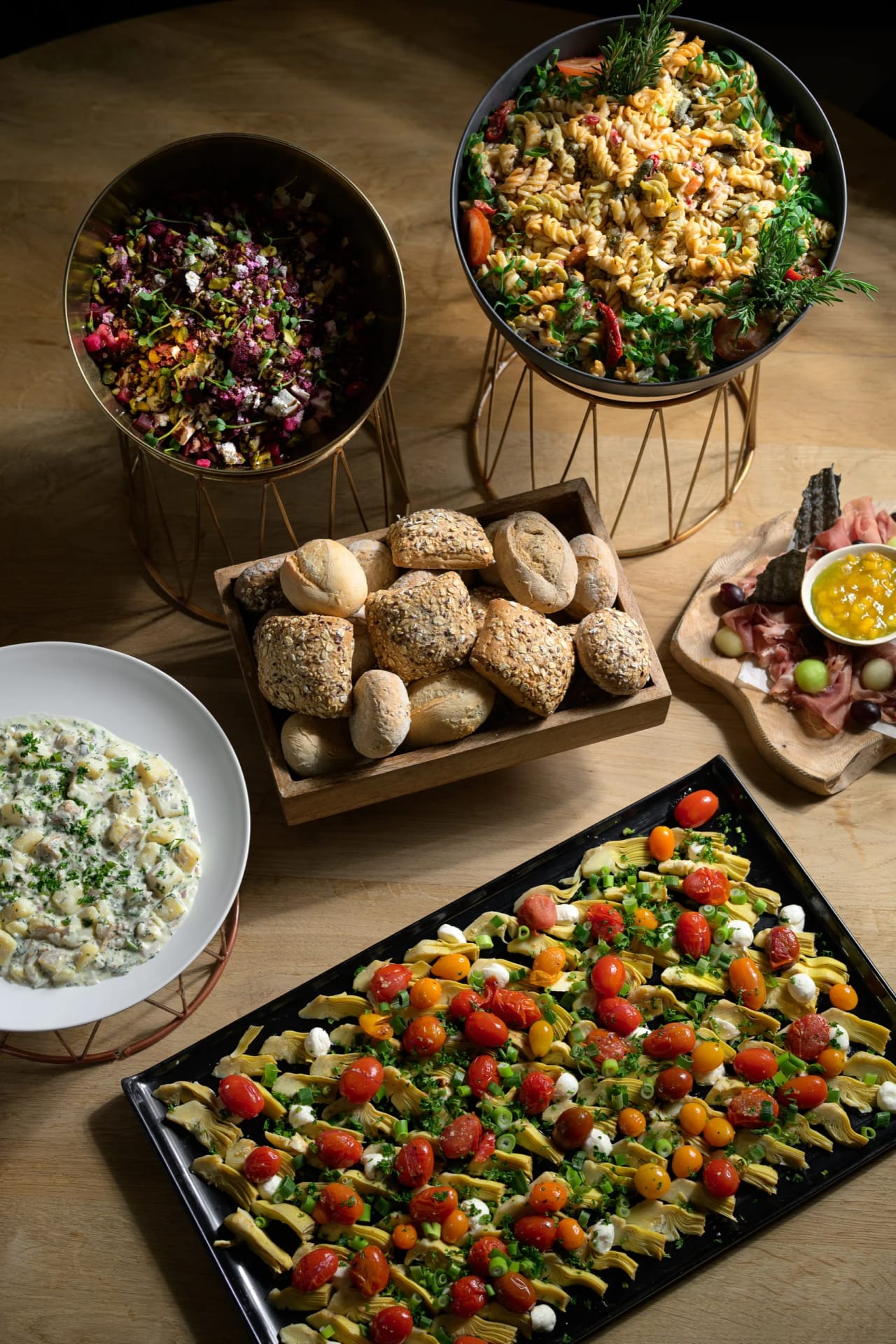
Sound familiar? You book a caterer, a furniture rental company for cocktail tables and a lighting supplier. On the day, you discover that the kitchen equipment and sound system have been connected to the same electrical circuit. Nobody takes responsibility because nobody was asked to check it.
The overlooked cost of a corporate event is not the menu. It is the time your office manager or marketing manager spends coordinating everything: comparing quotes, aligning delivery schedules, sharing guest numbers with three different suppliers and acting as the central point of contact on the day itself. Those hours may not appear on any quote, but they still cost you. If you want one partner to manage everything from concept through delivery, this guide to how one event partner manages the entire event explains the approach in full.
How large is the Dutch business events market?
The figures show this is far from a niche market. According to Eventplatform, before the pandemic the Dutch business events market generated 5,2 billion euros in revenue and supported more than 70.000 jobs, with hundreds of thousands of business events and more than 130 million visitors each year.
Demand for premium catering is growing alongside it. Entree Magazine reports, based on figures from KHN and FSIN, that total hospitality revenue in the Netherlands reached 33,9 billion euros in 2025, an increase of 3,8 percent.
What this growth means for your event planning
More demand means less availability from strong kitchen teams. In practice, popular dates, particularly Thursday evenings in autumn and the weeks around the holiday season, are usually booked months ahead with experienced providers. If you call six weeks before an event for 150 guests, you are no longer choosing from the best options. You are choosing from whoever is still available.
What does premium on-site catering cost, and how does it compare with hiring separate suppliers?
An honest comparison is not about the price per guest. That figure is often lower when you book suppliers separately. What matters is the total cost, including coordination, rentals, technical setup and risk.

Imagine an office manager at a technology company with around 200 employees planning an anniversary party on company grounds: approximately 180 guests, a walking dinner and music until midnight. Booking separately can quickly involve five suppliers: catering, service staff, a tent, furniture and sound. Coordinating them typically takes several dozen hours spread across several weeks. With a premium catering partner managing the entire event, that often comes down to a handful of planning meetings. The biggest gain is less tangible: if something goes wrong on the day, there is one number to call.
| Aspect | Separate suppliers | Full-service partner |
|---|---|---|
| Number of contracts (event for 150 to 200 guests) | Usually 4 to 6 | 1 |
| Client coordination time | Often several dozen hours | Usually 5 to 10 hours |
| Point of contact in an emergency | Different contact for each supplier | 1 central contact |
| Power and technical coordination | Client responsibility | Partner responsibility |
| Cost per guest | Often lower | Often higher |
| Risk of gaps in the event run sheet | High at an empty venue | Limited |
For a detailed breakdown of costs per guest and catering format, this overview of what on-site catering in Brabant costs is a useful starting point.
The counterintuitive conclusion: full-service is not always the best choice
For fewer than around 40 guests, at a venue with a functioning kitchen and no technical requirements, booking separate suppliers is almost always more affordable. A private dinner for twelve board members in a restaurant private room does not need an event manager. The tipping point is not the budget. It is the number of suppliers who need to work in the same space.
Which legal requirements apply to catering at an external venue?
This is the part clients rarely check, and it is where the difference between a professional and an amateur supplier becomes clear. With premium catering, these checks should be a standard part of the preparation.
Food safety and temperatures
Caterers and commercial kitchens that prepare and supply food to businesses are required by the NVWA to operate under a food safety plan or hygiene code based on HACCP. The related temperature standards are clear: chilled food at 7°C or below, frozen food at -18°C or below, and hot food held at 60°C or above.
At a castle estate, former industrial building or garden venue, that means mobile refrigeration, hot-holding equipment and, therefore, sufficient power. A buffet left open for three hours on a summer day without active cooling is not a style choice. It is a food safety risk.
Allergens and guest care
Under European Regulation 1169/2011, guests must be informed about the presence of 14 legally defined allergens, including gluten, eggs, fish, peanuts, tree nuts, soy, milk, crustaceans, molluscs, celery, mustard, sesame, sulphites and lupin. This also applies to unpackaged dishes at a walking dinner or buffet.
In practice, an allergen card for each dish works far better than leaving a list at the bar afterwards. At weddings and private parties, where guests have mixed dietary needs and not everyone has completed a form in advance, this saves the service team dozens of individual questions throughout the evening.
Technical safety and fire safety
In addition to food safety, catering kitchens must meet Dutch technical standards for issues such as electrical equipment safety and the fire safety of extraction systems, as Horecava explains. At temporary venues, this is often the point where a caterer without an in-house technical team cannot deliver.
Checklist:
- Ask for the caterer’s HACCP plan or hygiene code, and how it will be applied at an external venue
- Request allergen information for every dish, not a general disclaimer
- For hot buffets, check that hot-holding equipment at 60°C or above is included, and confirm which electrical circuit it will use
- Ask who is responsible for residual current protection and allocating electrical circuits at the venue
- Confirm who will clear the kitchen and remove waste. At empty venues, this becomes a point of debate more often than you might expect
What should you look for when choosing premium catering for a large event?
Most quote comparisons go wrong because they are not comparing like for like. One supplier charges separately for service staff, while another includes them. One supplies tableware, while another does not.
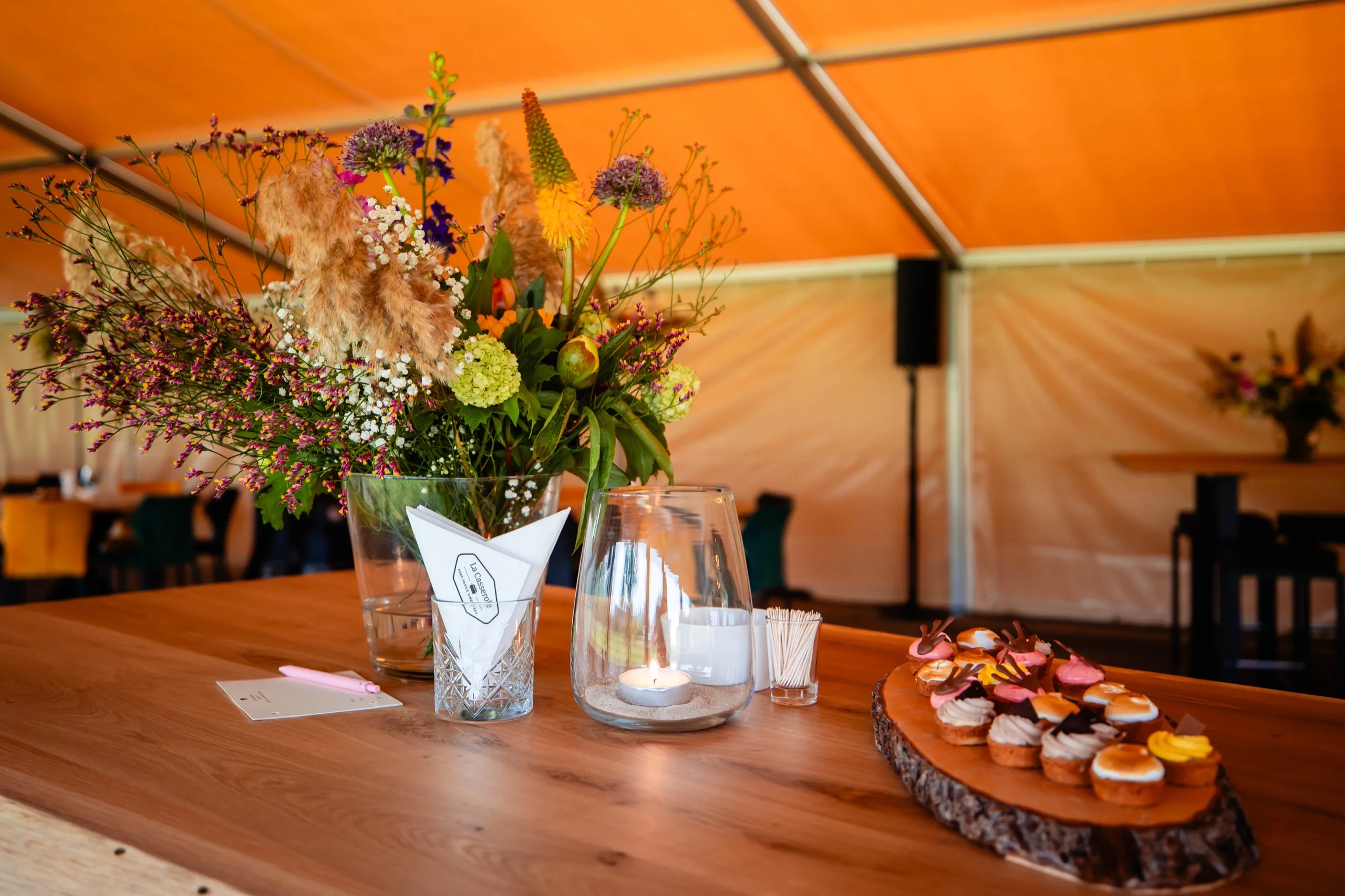
Best practice checklist for event catering:
- Request every premium catering quote using the same guest count and end time: extending an event by one hour has a bigger impact on staffing costs than adding an extra course.
- Ask suppliers to state exactly what is included: tableware, glassware, linens, service staff, setup, breakdown and waste removal. This is where many price differences come from.
- Visit the venue with the caterer: the kitchen space, access route and power supply determine what is realistically possible from a culinary perspective.
- Choose the catering format before selecting the menu: a walking dinner, seated dinner and buffet each need different staffing levels and schedules.
- Ask about staffing per guest: service ratios for a seated dinner are generally tighter than for a buffet, and guests notice the difference in waiting time between courses.
- Name one day-of contact, with a phone number: La Casserole works this way, with one project manager coordinating catering, styling, technical setup and rentals.
- Agree on a deadline for the final guest count: this is typically around one week to ten days before the event.
- Ask for a weather contingency plan: for garden parties and outdoor venues, this determines whether you can still adapt on the day, as explained in this guide to garden party catering and avoiding power and weather problems.
Tick off these eight points before choosing a supplier and you will have a much clearer view of the real differences between quotes.
What mistakes do clients make most often with premium catering?
Three mistakes repeatedly come up at corporate events and weddings.
First, choosing the menu before securing the venue. A four-course fine dining concept needs a working kitchen or a fully equipped mobile kitchen. At an empty venue, that becomes a separate investment that often only appears in the final round of quotes.
Second, letting the event programme dictate the timing instead of the kitchen. If a speech overruns while the main course is ready, quality suffers. Experienced suppliers build flexibility into the event run sheet and agree in advance on who makes the call if the programme slips.
Third, underestimating the need for service staff. Staffing levels determine whether guests are left waiting. With premium catering, this is often the difference between an event guests rate highly and one they consider average, even though it can look like a minor line item in a quote.
Checklist:
- Schedule the venue assessment before choosing the menu
- Ask the caterer to help write the event run sheet, rather than simply receiving it afterwards
- Ask explicitly how many service staff will be present, then compare this across quotes
- Agree on who makes decisions on the day if the programme runs late
Frequently asked questions
What does a wedding for 150 guests cost?
Total budget. Costs vary widely depending on the venue, catering format and duration, but catering is usually the largest part of the budget. A seated dinner generally costs noticeably more per guest than a buffet, while an empty venue adds costs for kitchen equipment, furniture and power. Always request a quote based on your actual end time, as the final two hours are often relatively expensive because of staffing costs.
What is the difference between a walking dinner and a buffet?
Catering format. At a walking dinner, service staff circulate with small courses, allowing guests to remain on their feet and mingle. At a buffet, guests serve themselves. A walking dinner requires more service staff and tighter timing, while a buffet needs more hot-holding equipment that must meet the NVWA standard of 60°C or above. Walking dinners are a strong fit for networking events, while buffets often work better for larger groups with a fixed programme.
Does a caterer need to provide allergen information for unpackaged food?
Yes, it is legally required. Under European Regulation 1169/2011, caterers must inform guests about 14 defined allergens, regardless of whether food is prepackaged. Ask for information for each dish rather than a general statement. A good supplier includes this as standard with the final menu, usually one to two weeks before the event.
Can you have a party at home or on your own premises fully catered?
Yes, provided the power supply and space are suitable. For premium catering at home or on company grounds, a solid surface, vehicle access and sufficient electrical capacity are usually more important than the kitchen space itself. Suppliers that provide catering alongside tents, furniture and technical equipment can arrange this as one complete package. Arrange a site visit in advance to avoid most day-of surprises.
How far in advance should you book a caterer for a corporate event?
Rule of thumb: three to six months. For autumn events and the holiday season, good kitchen teams are typically booked months ahead. Smaller groups of up to around 30 guests can often be arranged with less notice, while experienced suppliers may also accommodate coffee receptions and funeral catering with only a few days’ notice. Reserve the date first. The menu can follow later.
Conclusion
Choosing premium catering with one event lead is not a luxury decision. It is a risk-management decision. If you are organising an event for more than around 40 guests at a venue without a permanent kitchen, you are essentially choosing between coordinating the event yourself or having someone else coordinate it. With separate suppliers, responsibility for power, temperatures, allergens and timing sits with you.
Take three practical next steps: confirm the venue and guest count before discussing the menu, request every quote based on identical requirements, and check each supplier’s HACCP plan and allergen records. The same applies to couples and private clients: the difference is in the event run sheet, not the menu.
That is also the basis of the La Casserole approach, where catering, styling, technical setup and project management are handled by one project lead.
About La Casserole
La Casserole is a full-service event partner based in Best, combining catering, styling, technical setup, rentals and project management into one complete solution for corporate and private events. With more than 40 years of experience, its own event venues in Brabant and an established partner network, the company delivers events from concept to execution. Its clients include marketing managers, HR managers, office managers, executives and couples across Brabant.
Looking to host a stylish event in Brabant? Let us handle it!
Sources
- NVWA — Nvwa
- Eventplatform
- Entree Magazine — Entreemagazine
- Horecava
- HACCP — Nederlandse Voedsel- en Warenautoriteit (NVWA)
- HACCP-regels in de keuken en andere ruimten — Nederlandse Voedsel- en Warenautoriteit (NVWA)
- Allergenen — Nederlandse Voedsel- en Warenautoriteit (NVWA)
- De economische waarde van zakelijke evenementen — Eventplatform