

Quick summary
A walking dinner is a multi-course dinner served to standing guests, who move around freely instead of sitting at assigned tables. For corporate events, that creates far more networking potential: in a single evening, guests typically speak to three to five times as many people as they would during a traditional seated dinner. La Casserole handles walking dinners from concept to execution, including menu design, service, food safety, and venue coordination.
Key takeaways:
- Usually five to eight courses, served every 15-20 minutes, for a full program of 2 to 4 hours
- A common planning guideline is at least 1.5 to 2 square meters per guest
- The legal allergen information requirement under European Regulation 1169/2011 also applies to walking dinners
- A full-service approach prevents the organizer from having to coordinate between the caterer, rental company, and venue
- Suitable for groups of around 30 guests up to several hundred
The problem: networking that doesn’t really happen
Any HR manager at a mid-sized manufacturing company will recognize this immediately. You organize a client evening for 80 guests, book a beautiful venue, serve a three-course dinner, and at the end everyone agrees it was a lovely night. But ask two weeks later who made valuable new connections, and the room goes quiet. Most people spent the whole evening talking to the same few people at their table. (Services)
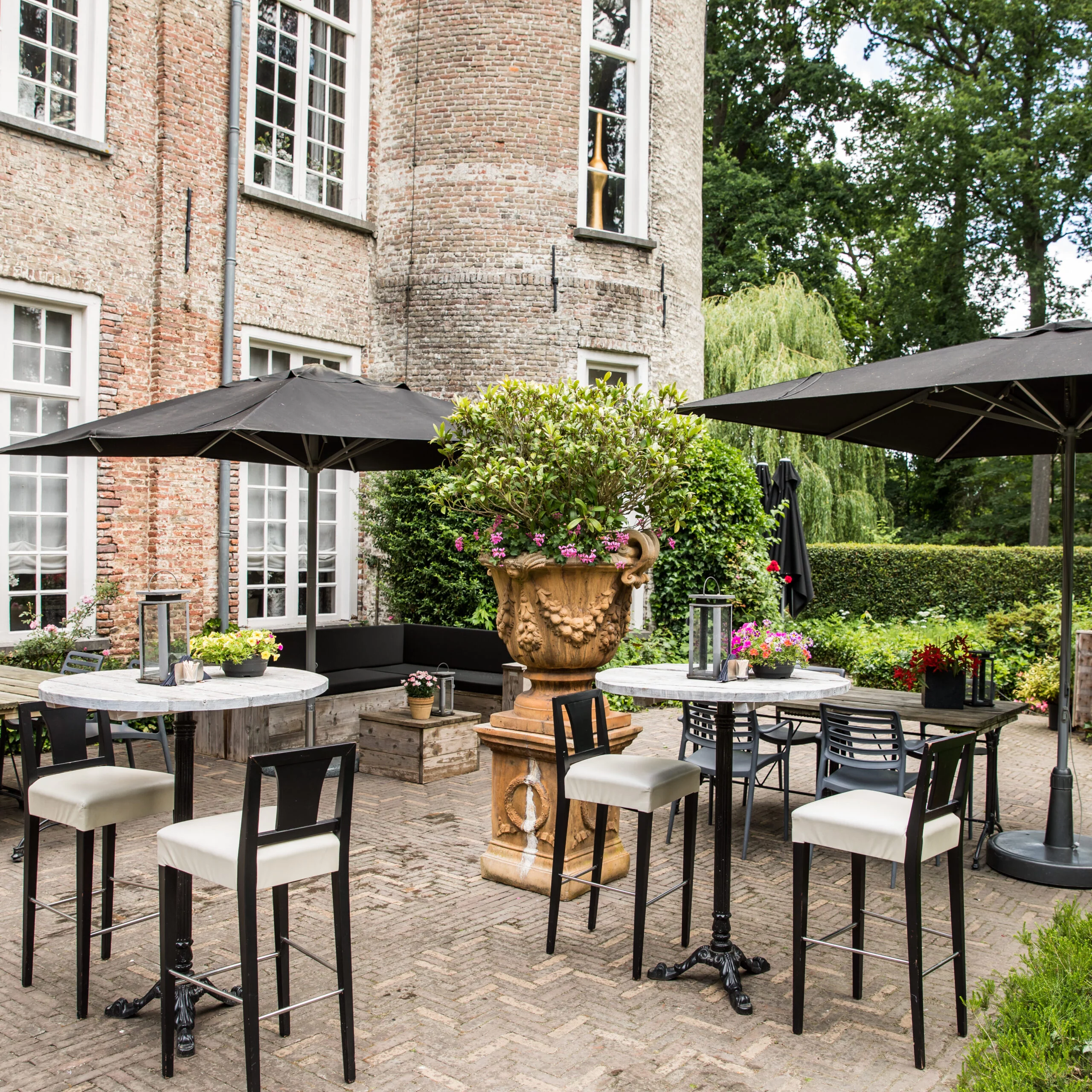
That’s the structural weakness of a seated dinner as a networking format. The table plan dictates who talks to whom. No matter how thoughtfully it’s arranged, assigned seating creates boundaries guests rarely cross on their own. The result is an enjoyable evening with limited business value.
The seating plan as an invisible wall
At a seated dinner, conversations are mostly limited to the people directly around you. In a group of 80, most guests will speak to fewer than 10 people. For a client event, product launch, or department gathering, that’s a missed opportunity. The food may be excellent, but the social goal, creating new connections, remains largely unmet.
What organizers often underestimate
Many companies default to a seated dinner because it feels more polished or more formal. But formal doesn’t automatically mean effective. A walking dinner works extremely well for networking receptions, product launches, and events where you want different teams or companies to mix. The energy is different: guests move around, switch conversations naturally, and meet people they probably would never have approached otherwise.
What you can do:
- Ask yourself what the main purpose of the event is: presentation or connection?
- Look back at a previous seated event and count how many new contacts guests actually made
- If networking is the goal and your group is larger than 40 people, consider making a walking dinner your default format
- Save a seated dinner for occasions with a clear ceremonial element, such as an anniversary, speech, or award presentation
Why traditional catering setups often fall short
The issue isn’t just the format. It’s also the way many companies organize walking dinners. Often, the food comes from one supplier, the venue from another, and the service staff from a third. That means three points of contact, three invoices, and three chances for miscommunication.
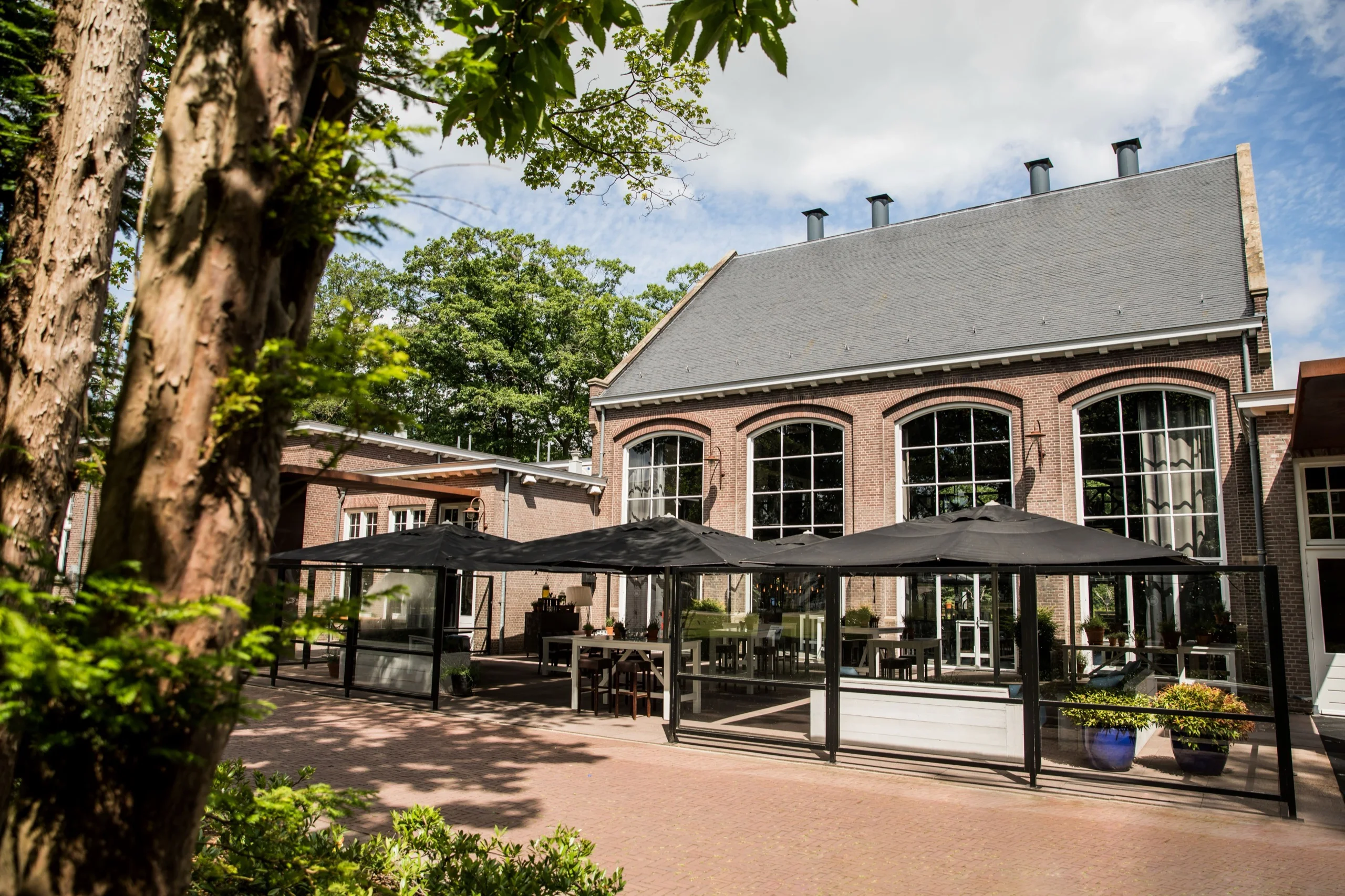
Fragmented coordination costs time and quality
If the caterer brings one type of tableware but the venue delivers the wrong cocktail tables, the organizer often doesn’t discover the mismatch until the day of the event. As a rule of thumb, plan for at least 1.5 to 2 square meters per guest. People need room to move, there need to be high tables for setting down plates and glasses, and staff must be able to circulate with trays without constantly bumping into guests. If the layout and furniture plan don’t work together, it immediately affects the flow and the atmosphere.
Food safety: an overlooked risk
At a walking dinner, food is constantly moving through the room. That places greater demands on temperature control than a buffet or seated dinner. In line with the guidelines of the Netherlands Food and Consumer Product Safety Authority (NVWA), every catering company should work with a HACCP food safety plan. Hot dishes must be kept continuously at a minimum of 60 °C, and cold dishes at a maximum of 7 °C. Any caterer that fails to manage this properly puts guests at risk and leaves the client in a difficult position.
There is also a legal duty under European Regulation 1169/2011 to inform guests about the 14 officially recognized allergens, including for unpackaged food such as the dishes served at a walking dinner. If this isn’t handled properly, the risk is not just a fine from the NVWA, but a serious incident.
The cost of unclear agreements
A walking dinner involving multiple suppliers also tends to create confusion around costs. Expect to pay roughly €25-45 per person for a walking dinner, and add 15-20% for unexpected costs such as dietary requests, extra service, or last-minute changes. Once that budget is split across three separate vendors, it becomes much harder to keep a clear view of what the evening really cost.
What you can do:
- Check whether your caterer has a valid HACCP plan and ask for confirmation in writing
- Ask in advance how allergens are documented for each dish across the 14 required categories
- Review whether the room layout, furniture, and catering setup are coordinated by one party
- Set a maximum budget in advance, including a buffer for last-minute adjustments
A better approach: from separate elements to one integrated concept
The most effective approach, and the one La Casserole uses for corporate walking dinners, is full integration. Not a caterer operating in isolation, but one partner designing and delivering the menu, layout, service, furniture, and logistics as a single concept.
Menu design as a strategic tool
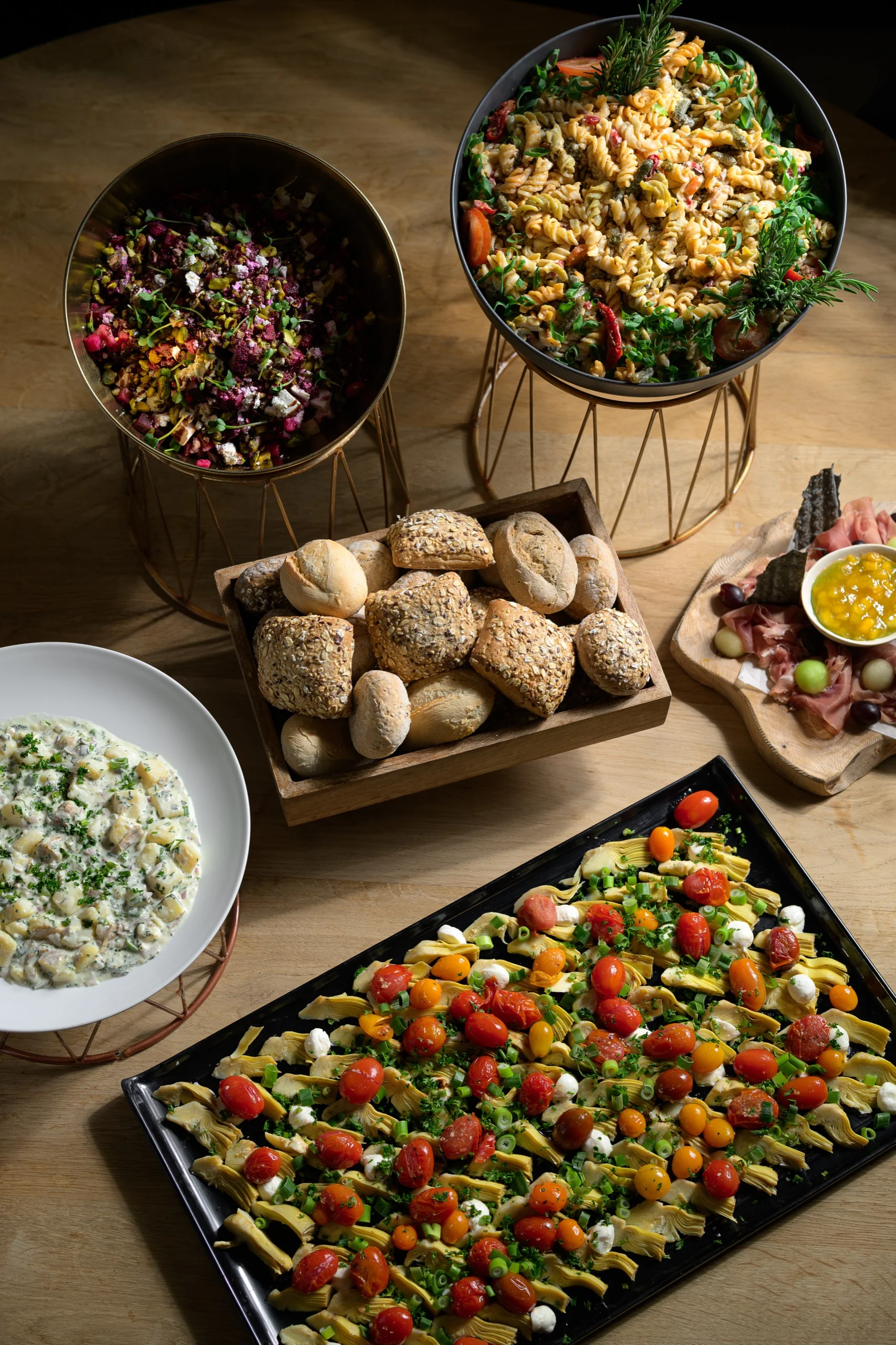
A standard walking dinner includes five to eight courses, building from light to more substantial dishes. A typical structure might include two cold canapés, two warm intermediate courses, a heartier course with fish or meat, and one or two desserts. The portions are smaller than at a seated dinner, but together they make up a complete meal. La Casserole uses a menu structure where the rhythm of the courses also sets the pace of the evening. A strong flow usually means one course every 15 to 20 minutes, giving guests enough time to eat, talk, and then be surprised by the next dish.
Choosing bite-sized dishes that can be eaten while standing isn’t a compromise. It’s a deliberate design choice. Smaller portions give the chef more room to play with flavor, presentation, and texture. In practice, La Casserole often sees the food itself become a conversation starter: guests respond to what they taste, and that naturally opens the door to new conversations.
Layout as networking design
The placement of cocktail tables, food stations, and walking routes isn’t just a logistical detail. It shapes the networking experience. The ideal venue for a walking dinner offers enough space for guests to move freely, may include different zones for food, drinks, and socializing, and matches the atmosphere you want to create.
La Casserole combines catering with its own furniture and venue support. At its own event venues, such as Het Ketelhuis in Eindhoven, that spatial dynamic is already built into the concept. For external venues across the region, the layout is mapped out with the client before the first guest arrives. If you’d like more background on the full-service approach La Casserole uses for business events, you’ll also find information there about scale and venue options.
Staffing as a quality benchmark
A walking dinner requires more staff than a buffet. Food is actively served throughout the room, so there must be enough people to reach all guests efficiently. A practical guideline is one service staff member per 20 to 25 guests, plus kitchen staff for preparation and finishing. La Casserole works with permanent teams who know the walking dinner format well, so execution doesn’t depend on temporary staff encountering the concept for the first time.
What you can do:
- Ask your event partner for a layout sketch, including walking routes and station placement, before signing off
- Check the staffing ratio: fewer than one staff member per 25 guests usually leads to delays in service
- Discuss which courses will be served hot and how temperature control will be maintained
- Ask whether there will be one fixed contact person on-site coordinating the evening
Comparison: walking dinner versus other catering formats for business events
| Feature | Walking dinner | Seated dinner | Buffet |
|---|---|---|---|
| Networking value | High: guests move freely | Low: limited to table neighbors | متوسط: movement happens at the serving station |
| Use of space | Efficient: no chairs needed | Space-intensive: table + chair per guest | Moderate: central setup |
| Course structure | Usually 5-8 small courses | Usually 3-5 courses | Open choice, no fixed order |
| Suitable for formal presentations | Less suitable | Very suitable | Limited |
| Price per person (common estimate) | €25-45 excl. VAT | €35-65 excl. VAT | €20-40 excl. VAT |
| HACCP temperature-control requirements | Strict: continuous 60°C/7°C | Standard | Standard |
| Staff per 25 guests | 1 service staff member + kitchen | 1-2 staff members | 1 staff member |
Practical implementation tips for organizers
Anyone planning a walking dinner for a business event will face a series of decisions. Most of the issues La Casserole sees in practice with new clients aren’t culinary at all, but logistical: not enough space, unclear allergen communication, or a course schedule that doesn’t fit the overall evening program.
Timing and program integration
A walking dinner usually lasts 2 to 4 hours as part of a full evening event. For a shorter two-hour program, five courses is common. For a full evening, for example with drinks first and the walking dinner afterwards, six to eight courses are a better fit. The schedule should align with the other elements of the event, such as a welcome speech, a presentation, or a formal closing. La Casserole creates a detailed run-of-show for each event, coordinating the culinary moments with the rest of the program.
If you’re considering a walking dinner as part of a broader business event concept, the article on full-service catering for corporate events offers more insight into how all the moving parts come together in one coordinated approach.
Allergens and dietary requirements are not optional
At a walking dinner, food circulates through the room and guests don’t always have direct access to ingredient information. That makes clear allergen communication even more important. La Casserole works with a fixed allergen register for each menu, documenting every course against the 14 legally required allergens under European Regulation 1169/2011. Service staff are trained to answer guest questions immediately and accurately.
What changes at a larger event venue in Eindhoven?
For larger groups, say 100 to 300 guests, the logistics of a walking dinner change significantly. More guests mean more stations, more staff, and more carefully planned circulation routes. Because you don’t need seating for everyone, the space can be used more efficiently and the guest count can increase. That makes the walking dinner format particularly well suited to larger event venues in and around Eindhoven, where floor space doesn’t have to be a limiting factor.
The choice of venue also has a direct impact on the atmosphere. Spaces with character, such as industrial architecture or artistic details, naturally spark conversation and make the event more memorable. La Casserole guides this process as one integrated whole, from venue selection to execution, including styling and technical support. More information about this complete concept is available on the page about catering and event organization by La Casserole.
What you can do:
- Define the total time block for the walking dinner and choose the number of courses accordingly: 2 hours = 5 courses, 3 hours or more = 6-8 courses
- Collect dietary requirements and allergies at least two weeks before the event through the registration form
- Check whether the venue meets the guideline of 1.5-2 m² per guest
- Ask for a run-of-show that links catering moments to the rest of the event schedule
For a more detailed comparison between a walking dinner and a dinner show, the article dinner show with chef at the table or walking dinner is a useful reference.
Frequently asked questions
How many courses should a walking dinner have for a business event?
A walking dinner typically includes five to eight courses, moving from lighter dishes to more substantial ones. For a two-hour program, five courses is standard. For a full evening event with drinks beforehand, six to eight courses usually work better. La Casserole matches the number of courses to the overall event schedule so the culinary flow supports the evening rather than disrupting it.
How much does a walking dinner cost per person for a corporate event?
A typical price range for a walking dinner is around €25 to €45 per person excluding VAT, including staff and equipment. The final price depends on the number of courses, the quality of the ingredients, the drinks package, and the level of service. La Casserole prepares a tailored quote based on group size, venue, and menu composition, so there are no unpleasant surprises after the event.
How does La Casserole handle food safety at a walking dinner?
Food safety at a walking dinner requires active temperature control throughout the evening. La Casserole works according to a HACCP food safety plan, as required by the NVWA, with hot dishes kept continuously at a minimum of 60 °C and cold dishes at a maximum of 7 °C. In addition, every dish is documented against the 14 legally required allergens under European Regulation 1169/2011, and service staff are trained to inform guests correctly.
What’s the difference between a walking dinner and a buffet?
A buffet is self-service: guests collect their own food from a central setup. At a walking dinner, the food comes to the guests, served throughout the room by staff. That means the service level and overall experience are much closer to a seated dinner than to a buffet. For corporate events where presentation matters, that distinction makes a real difference: guests don’t have to queue, and every dish is presented consistently.
Is a walking dinner suitable for large groups at an event venue in Eindhoven?
For groups of 100 guests or more, a walking dinner can be especially effective because there’s no need to seat everyone, allowing the space to be used more efficiently. The logistics do become more complex: more guests require more food stations, more service staff, and more carefully planned circulation routes. La Casserole coordinates that scale-up as part of the complete setup, including room layout, furniture, and station design, tailored to event venues in Eindhoven and the surrounding area.
Conclusion
A walking dinner isn’t the obvious choice for every business event, but it is a smart one. It solves a specific problem: the fixed seating plan that determines who talks to whom during a traditional dinner. By getting guests moving and spreading the culinary experience across five to eight courses, it creates an evening where networking happens naturally.
The key is getting the execution right. Food safety, allergen documentation, room layout, and staffing levels are not small details. They determine whether the event runs smoothly or falls apart. La Casserole brings all of these components together in one approach, from menu design to breakdown. That’s what ultimately matters: an event guests remember and business relationships that grow stronger because of it. More information about La Casserole’s event approach in Brabant can be found at la-casserole.nl.
Looking to host a stylish event in Brabant? Let us handle it!
Sources
- Nederlandse Voedsel- en Warenautoriteit (NVWA) — Nvwa
- Meer restaurants en catering, minder cafés — Centraal Bureau voor de Statistiek (CBS)
- Werken volgens het HACCP-systeem — Nederlandse Voedsel- en Warenautoriteit (NVWA)
- Allergenen — Nederlandse Voedsel- en Warenautoriteit (NVWA)
- Walking dinner organiseren: wat je moet weten — KOM Catering & Events
- Welke catering opties zijn populair bij bedrijfsfestivals — Dutch Standard Events