

Quick answer
A work drinks event works when catering, atmosphere, and flow are planned as one joined-up experience, not as separate pieces that happen to share a room. The food needs to fit the moment, the layout should encourage people to move around, and the service rhythm often decides whether guests stay or start heading for the door early. That is why la-casserole approaches a corporate drinks reception as a complete concept, where the menu, styling, and guest flow are designed together from the very first draft.
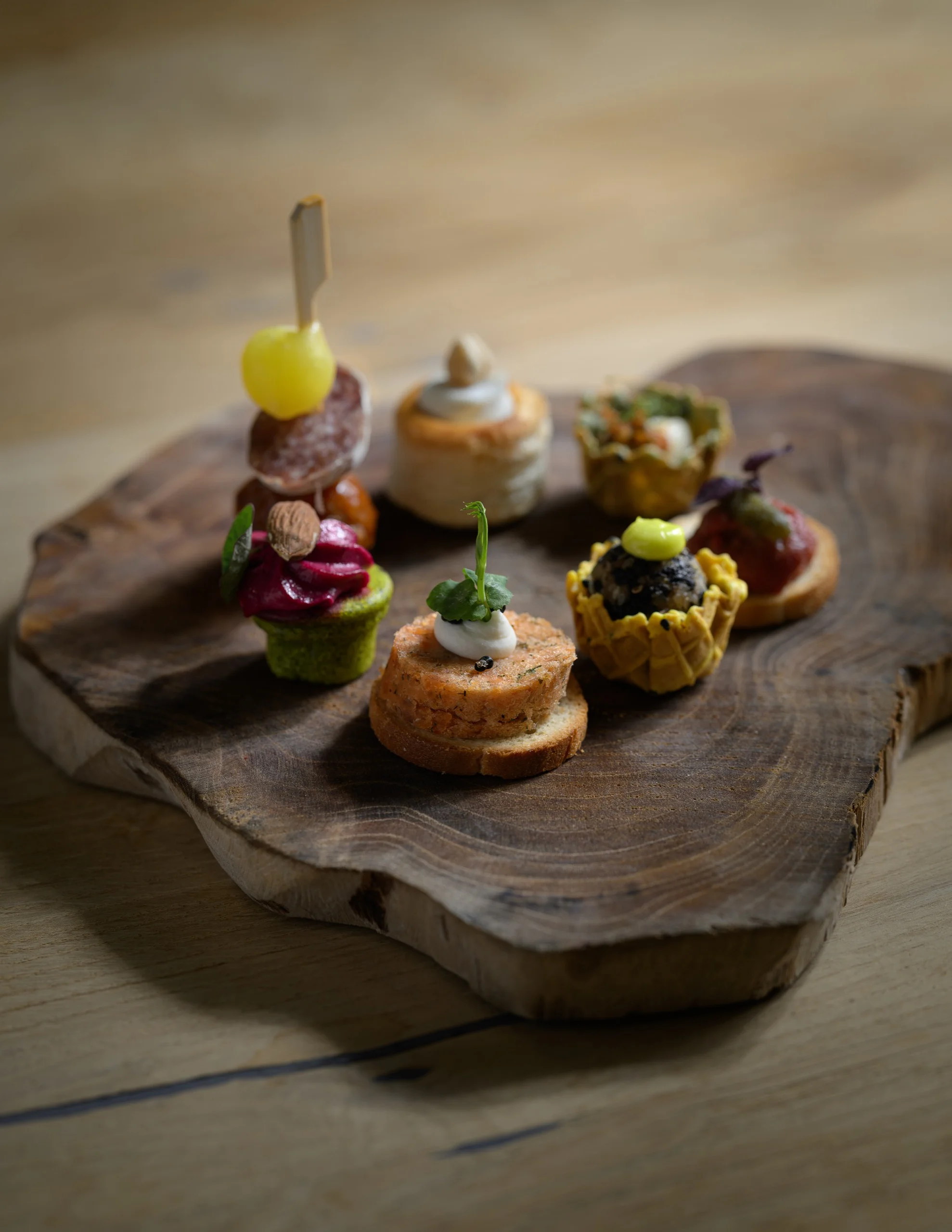
- As a safe planning guideline, allow around two to two and a half guests per square metre when mapping out the space
- As a rule of thumb, plan 6 to 10 canapés per person for a drinks event lasting two to three hours
- Spread bars and service points across the room to avoid bottlenecks in one spot
- For an event with fewer than 250 guests in Eindhoven, a notification is often enough instead of a full permit
- Using one partner for catering, styling, and technical production cuts down coordination time and reduces the number of contacts
Introduction
When clients enquire about a corporate drinks event, la-casserole often sees the same pattern: most questions are about the menu, while atmosphere and flow are just as important to the final result. You have probably seen it yourself. An event where everyone ends up in the same corner after half an hour, the bar gets jammed, and by 8 pm half the room is already collecting coats. The food was perfectly fine, but the event never really took off. (Services)
That usually has very little to do with the menu alone. It comes down to how people move through the space, how quickly they can get a drink, and whether they have enough reasons to circulate.
A drinks reception is not just a dinner with fewer chairs. It is its own format, with its own logic. Once you understand that, you plan it differently: not around a list of dishes, but around guest behaviour. This guide walks through catering, atmosphere, and flow step by step, with practical benchmarks, a comparison of service styles, and the mistakes you are better off avoiding.
Why a corporate drinks event delivers more value than you think
A drinks reception may feel informal, but it is often the moment when colleagues talk across teams and clients relax in a way they never would in a meeting. That is exactly why a well-run event has real business value: stronger networking, easier informal alignment, and better connection.
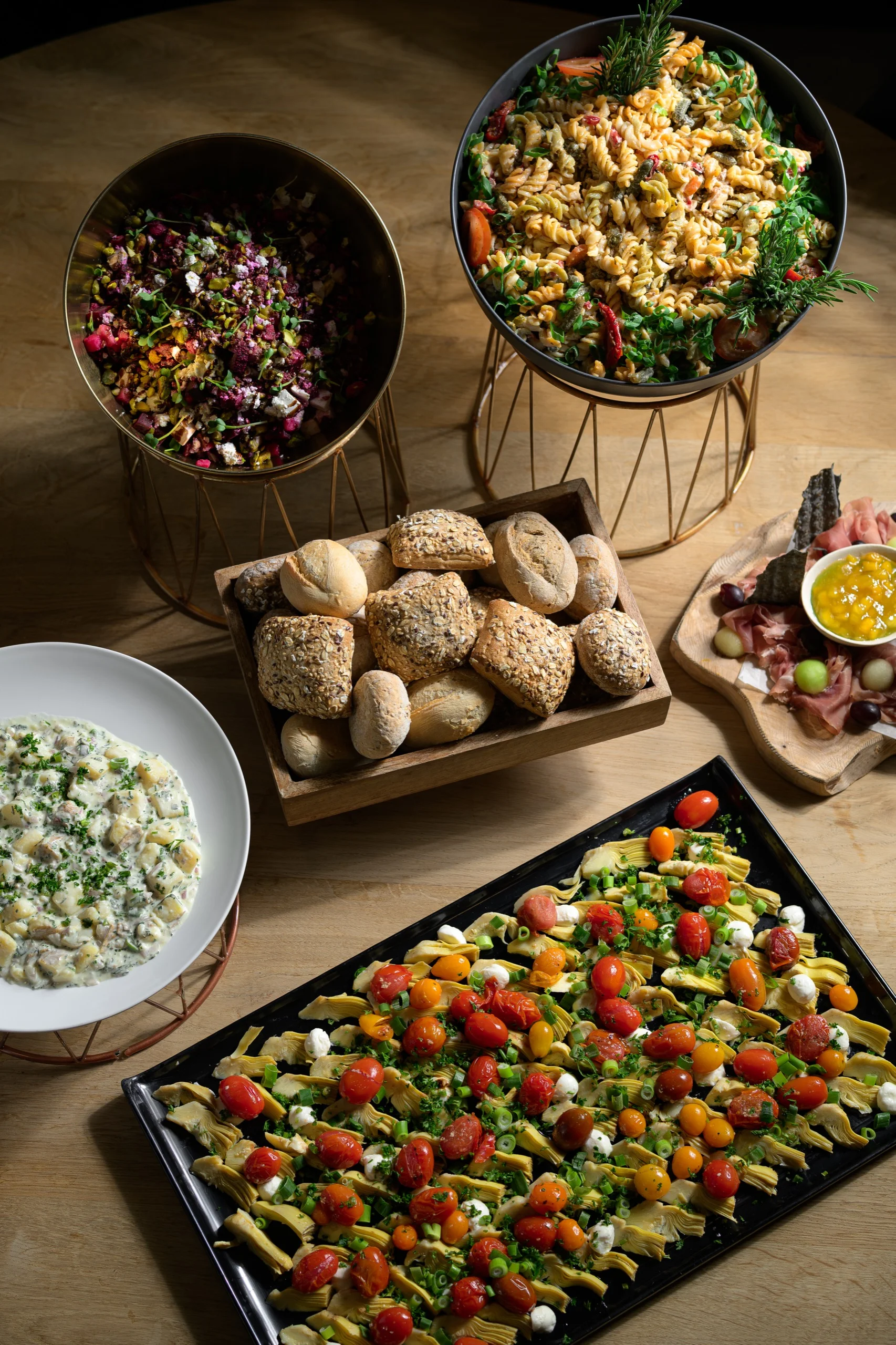
The catering market reflects that shift. According to the Statistics Netherlands (CBS), turnover for canteens and catering companies grew by almost 20 percent in 2023, the strongest increase within the hospitality sector. In other words, businesses are clearly investing more in food and drink around work-related moments.
That growth continued. According to CBS, hospitality revenue in 2025 was 3.9 percent higher than in 2024, while food and drink venues grew by 4.8 percent. Corporate events and catering are growing alongside that trend.
A drinks event that hits the mark extends average dwell time and increases the number of conversations per guest. Those are the KPI’s that matter, not how many leftover croquettes are still on the tray at the end.
How much space, food, and drink do you need for a work drinks event?
A successful work drinks event starts with three numbers: space per guest, bites per person, and service points per hundred visitors. Get those right, and you avoid most of the problems that typically show up on the night itself.
Space per guest
For crowd density at event venues, the Event Safety Knowledge Centre (KCEV) often uses an average of two to two and a half people per square metre as a safe benchmark. There is no universal rule, and during peak moments density can be higher without becoming unsafe straight away. For a drinks event where people should be able to move comfortably, it makes sense to plan on the more generous end of that range.
So for 100 guests, allow roughly 40 to 50 square metres of clear circulation space, not including bars, poseur tables, and cloakroom areas. If the room is tighter than that, congestion builds quickly and the number of conversations drops.
Canapés and drinks
As a rule of thumb, plan around six to ten canapés per person for a drinks event lasting two to three hours, increasing that number if the reception is effectively replacing dinner. For drinks, caterers usually estimate two to three servings per person in the first hour, with demand tapering off afterwards. la-casserole adjusts the balance of hot and cold, savoury and sweet, to match the timing, because a 4 pm drinks reception needs a different build than a post-conference event at 7 pm.
Checklist:
- Calculate circulation space: guests divided by 2 gives your minimum number of square metres of clear floor space
- Place at least 1 service point or bar per 50 guests to break up queues
- Plan 6 to 10 canapés per person for 2 to 3 hours, more if the event replaces dinner
- Allow 1 poseur table per 6 to 8 guests, so people have somewhere to put down their glass
- Check whether the venue has enough power points for bars, hot holding equipment, and lighting
Walking dinner, seated dinner, or passed canapés: what suits your event?
The service style shapes guest behaviour more than the menu itself. A seated dinner keeps people fixed to one table, passed canapés keep them moving, and a walking dinner sits somewhere in between.
| Service style | Guest movement | Networking potential | Duration | Space per guest | Best for |
|---|---|---|---|---|---|
| Passed canapés | High | High | 2 to 3 hours | approx. 0.5 m² | Reception, networking drinks |
| Walking dinner | Medium | Medium to high | 2.5 to 3.5 hours | approx. 0.7 m² | Client event, launch |
| Seated dinner | Low | Low to medium | 2 to 4 hours | approx. 1.2 m² | Executive dinner, anniversary |
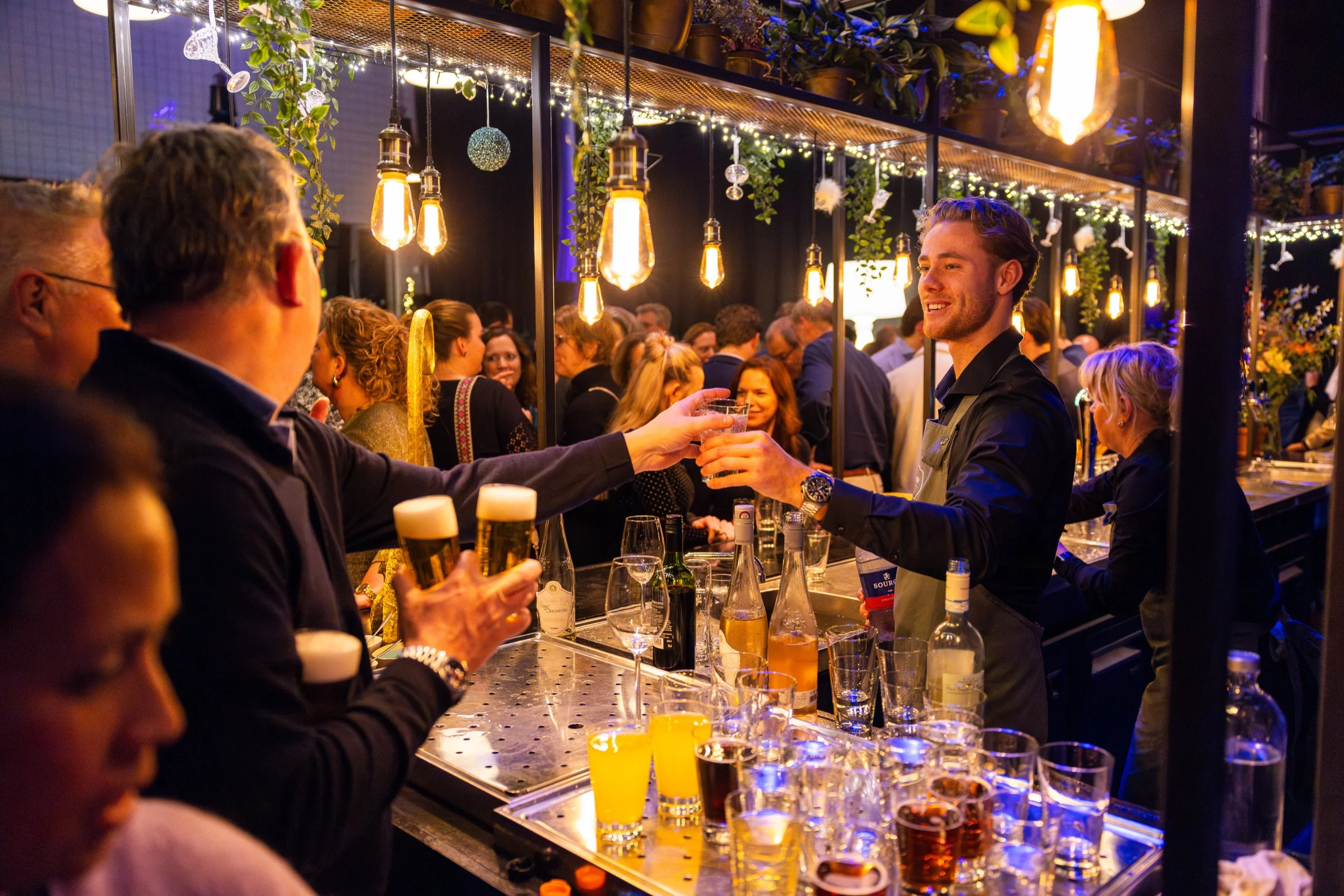
For a networking drinks event or reception, passed canapés usually win because guests naturally switch conversation partners. If you want more depth and a stronger culinary story, a walking dinner is often the better fit. If you want a clearer framework for weighing movement against connection, this guide on choosing between a walking dinner and a buffet for business events is a useful place to start.
Here is a practical example. Picture a marketing manager at a software company with 120 employees, combining a product launch with after-work drinks. If she chooses a seated dinner, most guests stay with their table group and half the room never speaks to each other. If she opts for passed canapés and two bars placed in different parts of the venue, the number of interactions per guest rises noticeably, and the evening shifts toward the informal networking that should be driving the launch in the first place.
Step by step: how to organise a corporate drinks event without the stress
You can break the planning process down into six steps. Follow them in order, and most day-of surprises disappear before they happen.
Step 1: Define the goal and the guest mix
Start by deciding what the event is meant to do: bring teams together, thank clients, or launch a brand. That goal determines the service style, timing, and visual setup. A networking goal calls for movement and passed canapés, while a celebration can be more static.
Step 2: Choose the venue and check the permit requirements
Match the venue to your expected guest count and the atmosphere you want to create. For an event or drinks reception in Eindhoven, Ondernemend Eindhoven states that an event permit is generally required, but for fewer than 250 visitors and a duration of no more than one day, a notification is often sufficient. Also check the venue profile. From the 2026 event year onward, the municipality of Eindhoven has updated the profiles for 20 event locations, which according to Municipality of Eindhoven include details such as setup and breakdown times and maximum sound levels.
Step 3: Design the flow on paper
Map the room before you order anything. Where is the cloakroom, where are the bars, where are the food points? Never place bars and food stations side by side, because that creates one single traffic jam. Spread them out instead, so guests move through the space and naturally bump into new people.
Step 4: Build the food concept
Choose bites that suit the time of day and your audience, and make sure dietary requirements are covered. la-casserole builds menus around the service rhythm: which bite is served when, how many front-of-house staff are needed, and how everything stays at the right temperature. Hot food also brings HACCP into play. Any business serving food professionally must, according to the Netherlands Food and Consumer Product Safety Authority (NVWA), work with a food safety plan or hygiene code based on HACCP.
Step 5: Plan the atmosphere, technical setup, and styling
Lighting, sound, and styling are what turn a canteen into an event. Soft lighting, music at a level people can still talk over comfortably, and a few visual focal points all help set the tone. Using one party to combine catering, styling, and technical production helps prevent suppliers from working at cross purposes.
Step 6: Test the rhythm and appoint one decision-maker
Walk through the event in your head: arrival, peak, and wind-down. Put one person in charge of decisions on the day, so no one is stuck making phone calls during the reception itself. la-casserole provides on-site project management for exactly that reason, allowing the client to be a host rather than a problem-solver.
Checklist:
- Put the goal, guest count, and finish time on one A4 before requesting quotes
- Check with the municipality whether you need a notification or a permit application (threshold: 250 visitors)
- Draw a floor plan with bars and food points spread out, at least 1 point per 50 guests
- Record dietary needs and allergens, and confirm the HACCP arrangements with your caterer
- Appoint one on-site decision-maker and share the event run sheet with all suppliers
Why one event partner works more efficiently than separate suppliers
If you split a drinks event into separate contracts for catering, hire equipment, lighting and sound, and styling, you usually pay for it in coordination time. Every supplier has its own delivery window, its own contact person, and its own assumptions about who is handling what.
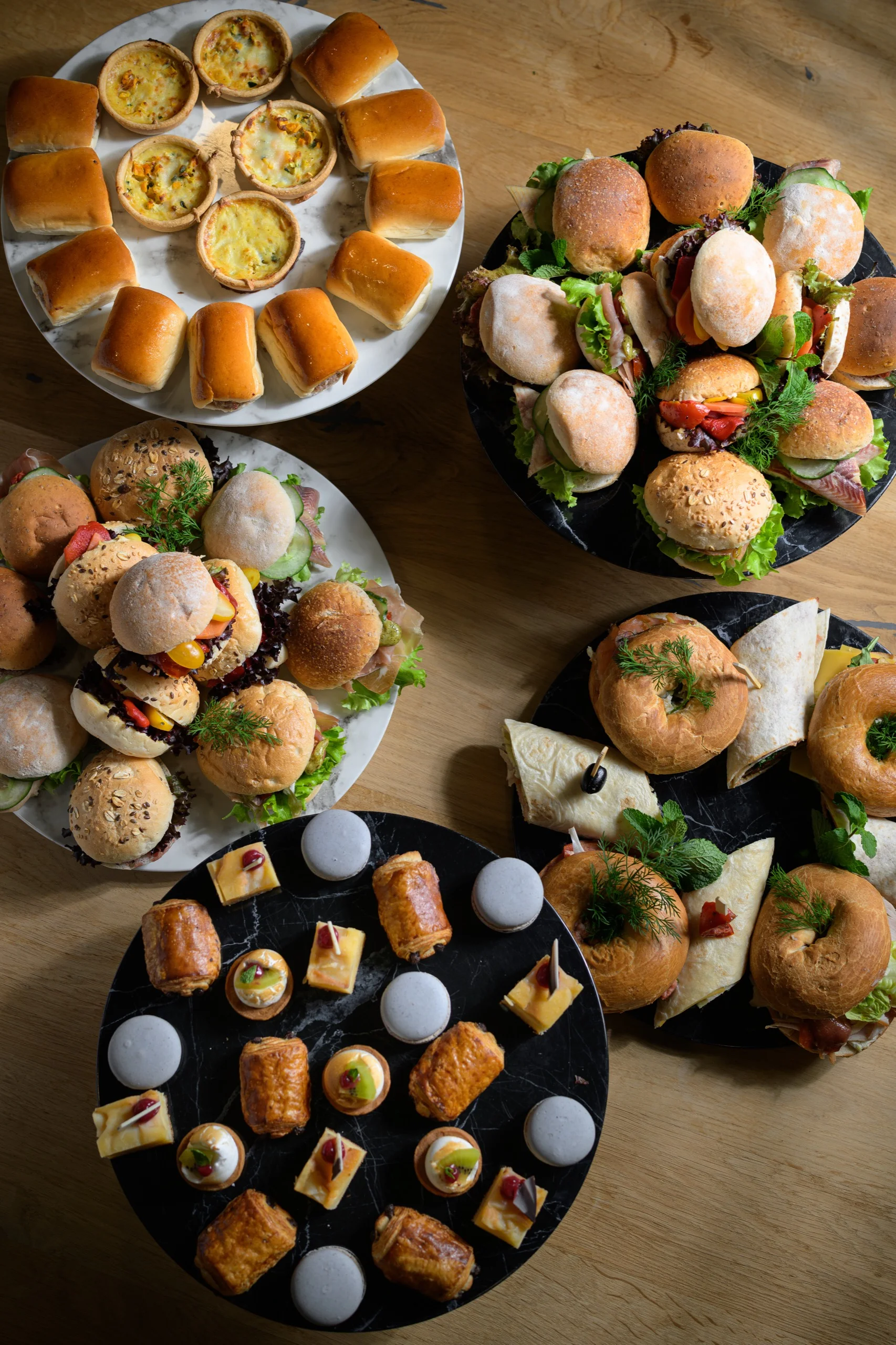
The la-casserole approach, where catering, styling, technical production, furniture, and project management all sit under one lead, removes those handover moments. One run sheet, one point of contact, one party responsible if anything shifts. With more than 40 years of experience and over a thousand events delivered, that coordination is built into the process.
The real benefit shows up in the margin for error. Separate suppliers tend to point at each other when something goes wrong, while an integrated partner fixes it internally. For the client, that means fewer emails beforehand and no firefighting during the event itself. If you are exploring the wider question of catering for a conference or client day, you will see the same principle at work there too: the more moving parts you bundle together, the calmer the execution becomes.
Creating the right atmosphere: lighting, sound, and styling that support the event
Atmosphere is the part clients underestimate most often, yet it plays a huge role in whether guests feel comfortable and stay longer.
Sound is the quickest mood killer. If the music is too loud, people either shout or leave. Too quiet, and the room starts to feel like a meeting space. Aim for a level where a conversation at arm’s length still feels effortless. Lighting does the rest. Warm, softened lighting lowers the barrier to staying, while harsh fluorescent light sends people home early.
Styling does not have to be elaborate. A consistent colour accent, a few well-dressed poseur tables, and a focal point at the entrance can give the event direction without filling the room with decor. la-casserole aligns that styling with the brand identity or event theme, whether that is Italian, Mediterranean, or Burgundian. The aim is one coherent look, not a collection of unrelated decorative elements.
Common mistakes when organising a drinks reception
Most disappointing drinks events go wrong for the same reasons, and nearly all of them are avoidable.
The first mistake is not having enough service points. One bar for 150 people means a queue, and a queue means everything grinds to a halt. The second is placing food and drinks together, which causes one corner to clog up while the rest of the venue sits empty. The third is too many chairs. Once people sit down, they stop circulating, so for a networking event, keep seating to a minority of guests.
A fourth classic mistake is poor timing of the food. If the first bites arrive too late, guests drink on an empty stomach and energy drops fast. If everything comes out too quickly, you run out halfway through the evening. A caterer who paces service across the whole event keeps the energy level steady.
Finally, do not skip a backup plan for outdoor events. A garden drinks reception without cover or a wet-weather fallback can empty out in ten minutes. If you are planning something outside, it is worth reading up on how to avoid hassles with power and weather at a garden party before the invitations go out.
Frequently asked questions
How many canapés should you allow per person for a corporate drinks event?
As a rule of thumb, allow six to ten canapés per person for a drinks event lasting two to three hours. If the event replaces dinner, that can rise to twelve or more, with a higher share of hot and more substantial bites. The timing matters too: a 4 pm drinks event calls for lighter food than a 7 pm reception.
Do I need a permit for a corporate drinks event in Eindhoven?
That depends on the scale. For an event or drinks reception in Eindhoven, an event permit is generally required, but for fewer than 250 visitors and a duration of no more than one day, a notification to the municipality is often enough. Check this well in advance, because permits have lead times and venue profiles can impose extra requirements around sound and operating hours.
What works better for a networking drinks event, passed canapés or a seated dinner?
Passed canapés are usually the better choice for networking, because guests naturally switch conversation partners and meet more people. A seated dinner anchors people to one table and limits the number of contacts they make. Choose seating only if the goal is celebration or deeper conversation, not networking.
How much space do I need for a drinks event with 100 guests?
Use roughly two guests per square metre as a comfortable benchmark, so around 40 to 50 square metres of clear circulation space for 100 people, excluding bars and cloakroom areas. Peak moments can be denser, but planning too tightly leads to bottlenecks and fewer conversations. Always leave breathing room around service points.
Why do companies choose one event partner instead of separate suppliers?
One partner reduces coordination time and lowers the risk of mistakes. When catering, styling, and technical production are managed under one lead, as they are with la-casserole, you have one run sheet and one point of contact instead of five different suppliers working around each other. That shortens preparation time and helps avoid finger-pointing on the day itself.
Conclusion
A work drinks event that people genuinely remember does not come from a good menu alone. It comes from catering, atmosphere, and flow all working together: enough service points, bars spread across the venue, a layout that encourages movement, and a service rhythm that keeps the energy up. Start with the goal, sketch the flow on paper, check the permit requirements, and shape the food concept around the time of day.
That joined-up thinking is exactly what tends to fall apart when you work with separate suppliers. An integrated approach, where la-casserole brings catering, styling, technical production, and project management together under one lead, takes the coordination pressure off the client. That way, you get to be a guest at your own event. If you want your next corporate drinks reception to deliver real value, do not start with the canapé list. Start with guest behaviour.
Looking to host a stylish event in Brabant? Let us handle it!
Sources
- Centraal Bureau voor de Statistiek (CBS) — Cbs
- Kenniscentrum Evenementenveiligheid (KCEV) — Kcev
- Ondernemend Eindhoven — Ondernemendeindhoven
- Gemeente Eindhoven — Eindhoven
- Nederlandse Voedsel- en Warenautoriteit (NVWA) — Nvwa
- Omzet horeca blijft nagenoeg gelijk in vierde kwartaal — Centraal Bureau voor de Statistiek (CBS)
- Omzet horeca groeit in vierde kwartaal met ruim 3 procent — Centraal Bureau voor de Statistiek (CBS)
- HACCP — Nederlandse Voedsel- en Warenautoriteit (NVWA)