

A well planned corporate event run sheet has five core elements: a minute by minute schedule from setup through breakdown, a contact list that shows who can make which decisions, supplier arrangements, a venue floor plan and a contingency plan. Event details, catering and safety should not sit in separate sections. They are essential fields woven through all five. This is what a wedding or corporate event caterer needs to see: not just when dinner starts, but where the kitchen will be, who manages the allergy list and what happens if it rains.

Why do corporate events run into trouble when the programme looks fine?
A programme is written for guests. A run sheet is written for the people delivering the event. Your guest programme might say, “Dinner at 19.00.” Your run sheet should say that the kitchen must be up to temperature by 17.30, the room must be reset by 18.30, guests enter through the side entrance at 18.45, and the first course is served at 18.55. (Services)
Most organisers create their run sheet from the guest’s perspective. That makes sense, but it often leaves out the moments where things go wrong: the handovers. Moving from drinks to dinner, from a plenary session to lunch, or from dinner to the party. At those points, the catering team, technicians and venue staff all need to act at once. If nobody is assigned to give the go ahead, everyone waits for someone else.
A useful rule of thumb is to give every transition an owner and a clear time when they give the signal to start. If that is difficult to define, it usually means too many suppliers are working independently. Read more about avoiding that in our guide to planning a corporate event or party without the stress.
What are the 5 essential parts of a corporate event run sheet?
These are the five main sections, along with the fields each one should include.
1. A minute by minute schedule, from setup to breakdown
Start with the event basics: date, venue address, expected guest count, event objective, budget range, plus a version number and date. Then create a schedule with five columns: time, activity, owner, location and requirements.
Do not start when guests arrive. Start with the first delivery, which for an evening event may be in the morning or early afternoon. Likewise, do not end with “party ends”. Your schedule should run until the room is empty and handed back to the venue. Organisers often overlook breakdown time, even though the venue will be working to it.
2. A contact list with decision making authority
A list of names and phone numbers is not enough. Include each person’s role, when they can be reached and what they are authorised to decide. Can the caterer open an extra bottle of wine, for example, or does that need your approval?
Assign one overall event lead for the day. Ideally, this should not be you if you are also welcoming guests. Also include the venue emergency number, the first aid coordinator and the technician to call in the event of a power failure.
3. Supplier arrangements
Give every supplier their own section, including arrival time, loading area, power requirements, what they are bringing themselves, when everything must be ready and when they need to leave.
For catering, add fixed fields for the final guest count and its deadline, dietary requirements and allergens by guest or table, service times, the drinks package and bar closing time. Document how food safety will be managed too. According to the Dutch Food and Consumer Product Safety Authority, professional food providers must work with a food safety plan based on HACCP or an appropriate approved hygiene code. GGD Haaglanden highlights the same considerations for hospitality providers at events. In practice, this includes keeping hot food above 60 °C during service and chilled products below 7 °C, as this guide to HACCP in hospitality explains. If your venue does not have a permanent kitchen, ask the caterer exactly how they will maintain those temperatures on site.
4. A venue floor plan
Map out two routes: one for guests, and one for staff and suppliers. Mark the kitchen or serving area, power points, emergency exits, first aid point, cloakroom and smoking area. This prevents staff carrying full trays through the middle of a speech.
Your floor plan may also be useful for event permits. Depending on the municipality, venue, scale and activities, an event may require a permit or formal notification. Check your local authority’s event rules and application times well in advance. Some municipalities request a floor plan and safety plan. For example, guidance from the municipality of Amstelveen (2025) states that, following police advice, the safety plan forms part of the event permit application.
5. A contingency plan
For every scenario, write down four things: the trigger, who decides, the latest time a decision can be made, and what changes as a result. Consider bad weather during an outdoor activity, higher or lower attendance than expected, a late speaker, a power cut or an unwell team member.
For example, drinks are planned outdoors. Agree that the event lead will decide around the start of the afternoon, based on the weather forecast, whether to move drinks inside. Include safety arrangements too: who leads an evacuation, where first aid is located and how the crew communicates.
How do you create an event run sheet with your caterer?
A run sheet is not written in one sitting. It develops throughout the planning process, and your caterer will provide a substantial part of the information. This is how the process usually works:
- Briefing. You share the objective, guest count, budget and date. The caterer asks about the venue, audience and atmosphere you want to create.
- Venue visit. You walk through the space together. The caterer assesses the kitchen or serving area, power supply and loading route, then drafts an initial floor plan.
- First draft. The caterer or event partner supplies a draft minute by minute schedule. You add programme elements such as speakers, an awards presentation or a product reveal.
- Final numbers and dietary requirements. These are usually confirmed one to two weeks beforehand, although the exact deadline varies by caterer. Supplier sections can then be finalised.
- Final version and team briefing. Everyone works from the same version number. On the day, the event lead runs through the plan briefly with the crew.
Planning a larger programme across multiple rooms? This conference run sheet is particularly helpful for coordinating lunch rotations and room changes.
Which events need a detailed run sheet?
Not every event needs all five sections in full detail. A comprehensive run sheet is especially worthwhile in these situations:
- An HR manager at a medium sized company planning a staff party for one hundred or more colleagues at an external venue without a permanent kitchen.
- A marketing manager arranging a product launch with technical production, a timed reveal and press or clients in the room.
- An office manager organising a conference or full day programme with multiple sessions, coffee breaks and a lunch changeover.
- A couple getting married at one venue for their ceremony, dinner and party, who do not want to be the point of contact on the day.
For an office Friday drinks gathering with a few dozen colleagues, this would be excessive. A one page checklist will do. You also do not need one for dinner at a restaurant, as the restaurant will have its own established processes.
The clearest dividing line is the number of suppliers. Once you are working with three or more separate suppliers, the contact list becomes the most important section. Otherwise, nobody is overseeing the handovers. That is why many organisers choose one caterer to coordinate the entire event.
What should you ask a wedding or corporate event caterer before signing?
Whether a run sheet works on the day depends largely on the supplier helping to deliver it. Ask every provider these questions:
- Who creates and manages the run sheet? Will you provide it, or will the caterer create it and manage version updates?
- Will there be one point of contact on the day? Can that person also make decisions involving other suppliers?
- How will you ensure food safety at this venue? Ask about the HACCP plan or hygiene code, as well as refrigeration and hot holding equipment.
- What do you handle in house, and what do you outsource? Think styling, technical production, furniture and tents. Every outsourced supplier needs an additional section in your run sheet.
- What is your contingency plan for bad weather or higher attendance? A good provider will already have a clear answer.
- When are final numbers due, and what does a later change cost? This determines how much flexibility you have for late registrations.
If you get vague answers to the first two questions, you will probably be writing the run sheet yourself and taking the calls on the day as well.
Frequently asked questions
How far in advance should you start an event run sheet?
Timing depends on the scale of the event. For a larger corporate event or wedding, begin with the event basics and minute by minute schedule several months in advance. If a permit or notification is required, check your local authority’s processing time first and work backwards from that date.
How much does a caterer cost for a wedding or corporate event?
The cost depends on guest numbers, catering style, event duration, staffing, equipment hire and technical production. A full run sheet makes costs visible that might otherwise only appear afterwards, such as additional service hours for an overrun programme or power provision at an outdoor venue. Always compare quotes on a like for like basis.
Who manages the run sheet on the day?
The event lead named in your contact list. Ideally, this is someone from the caterer or event partner, not the organiser who is also greeting guests. That person communicates any changes so that nobody is working from a different version.
Is a wedding run sheet different from a corporate event run sheet?
The structure is the same: the same five sections. At a wedding, emotional moments such as the ceremony, speeches and first dance carry more weight and follow a fixed order. Corporate events are more likely to depend on speakers, technical production and a firm finish time.
How detailed should a minute by minute schedule be?
Transitions need the greatest level of detail, often in blocks of five to fifteen minutes. A longer period with no changes, such as the party after dinner, can be planned more broadly. If you are unsure, ask your caterer when their team needs to do the most things at once.
Where should you start with your event run sheet?
Start with the event basics and a rough minute by minute schedule, then ask your caterer to help complete supplier arrangements, the floor plan and contingency plan. Choose a supplier that will also deliver the run sheet on the day, so you do not have to be the central point of coordination.
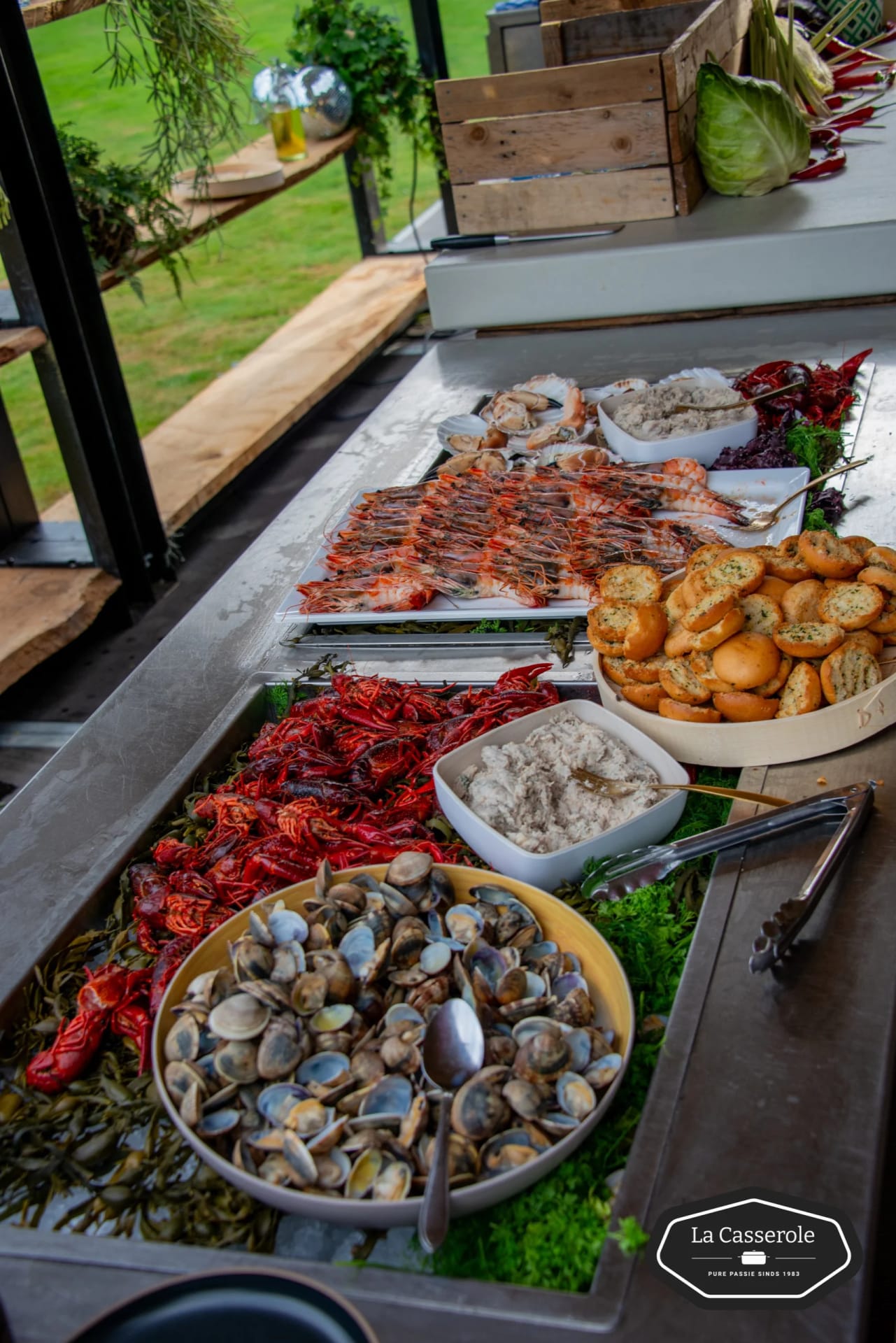
La Casserole brings together catering, styling, technical production, equipment hire and project management, with one central point of contact from concept to breakdown. Looking for advice on a wedding or corporate event run sheet? Request advice or a quote for your own event from La Casserole.
More event run sheet FAQs
Who creates the run sheet for a wedding or event?
The organiser, wedding coordinator, event manager or caterer can create it. In practice, a shared run sheet works best: you set the priorities and requirements, while suppliers add their own timings, setup needs and contact details.
When should an event run sheet be finished?
Create a first draft as soon as the venue, date and main event elements are known. Keep updating it throughout the planning process. A final version should be ready one to two weeks before the event and shared with all relevant suppliers.
What is the difference between a run sheet and a script?
A run sheet covers the full event operation: timings, tasks, suppliers, logistics and contingency scenarios. A script is usually a shorter document for a host, wedding coordinator or speaker, covering wording, cues and announcements.
Does every supplier need the full run sheet?
Not always. A photographer does not need every catering detail, but they do need to know when the key moments take place. Share the full version with the event coordinator and a relevant, concise version with each supplier.
How do you plan for delays?
Build buffer time around elements that frequently run over, such as arrivals, speeches, ceremonies and dinner. The run sheet should also state clearly who decides when the programme needs to be shortened or adjusted.
Conclusion
A good event run sheet creates calm before and during your event. By breaking the schedule into clear time blocks, assigning responsibilities and allowing for the unexpected, everyone knows what needs to happen and when. That leaves you free to focus on your guests, the atmosphere and the moments that matter.
Looking to host a stylish event in Brabant? Let us handle it!
Sources
- GGD Haaglanden — Ggdhaaglanden
- deze uitleg over HACCP in de horeca — Fosterrefrigerator
- de leidraad van de gemeente Amstelveen — Amstelveen
- Eten en drinken verkopen op markten en evenementen — Nederlandse Voedsel- en Warenautoriteit (NVWA)
- Horecagelegenheden op evenementen — GGD Haaglanden
- Leidraad opzetten Veiligheidsplan Evenementen voor evenementenorganisatoren — Gemeente Amstelveen
- HACCP horeca: regels en verplichtingen — Foster Refrigerator