

Full service catering is the right choice when your event calls for more than food and drink. Think of a venue without a permanent kitchen, where technical production, styling, furniture and staff all need to come together seamlessly. For an office drinks reception or lunch for twenty people, it is usually unnecessary. Full service catering means one supplier takes care of more than the food: they provide service staff, equipment, setup and breakdown, and often styling and technical production too, with one point of contact taking overall responsibility. A useful rule of thumb: if you need to coordinate three or more suppliers, having one team manage the whole event almost always saves time and reduces risk.

When Is Standard Catering Not Enough for Your Event?
Catering covers a wide range of services. Broadly speaking, there are three options. With delivery catering, platters are dropped off and you handle the rest. Catering with service includes chefs and front of house staff. With full service catering, one provider manages the complete setup around the food. (Services)
The difference becomes clear when you are working with an empty venue. A staff party for 150 people in a warehouse or marquee requires far more than a menu. You may need power, refrigeration, tables, tableware, a bar, lighting, sound and someone to remove the waste afterwards. The same applies to couples getting married in a barn or on a country estate.
There is now plenty of choice. The Kamer van Koophandel counted more than 27,000 event caterers at the start of 2024, 133 percent more than five years earlier. According to CBS (2026), revenue from canteens and catering rose by 6.2 percent at the end of 2025, faster than any other hospitality sector. More suppliers also means greater variation in what businesses mean by catering. If you are celebrating somewhere out of the ordinary, this guide to hosting a stylish party at a unique venue explains how the venue and catering influence each other.
What Can Go Wrong When You Use Separate Suppliers for a Corporate Event or Wedding?
The food itself is rarely the issue. Problems tend to arise in the gaps between suppliers. Four challenges come up time and again:
- Gaps in the arrangements. The hire company delivers the tables, while the caterer assumes they will be laid. Nobody has ordered the table linen. Or the caterer’s refrigerated truck needs its own power circuit, which was never included on the schedule.
- Clashing schedules. The DJ wants to run a soundcheck at 4 pm while the kitchen team is setting up in the same area. Trucks from three suppliers all arrive at the single loading bay at once.
- Compliance responsibilities become fragmented. According to the NVWA, caterers must work with a food safety plan based on HACCP. Guests must also receive information about 14 legally required allergens, including gluten, peanuts, tree nuts and milk. If you have a food truck, a cake maker and a separate bar, that means three businesses must each be aware of dietary requirements.
- The organiser’s hidden hours. An office manager plans the party alongside their regular job. A couple getting married may be emailing eight suppliers at once. That time does not appear on any quote.
Why Does Managing Separate Suppliers Often Save Less Than You Expect?
Using separate suppliers can look cheaper because you can choose the best price for each element. But that is rarely a like for like comparison. One caterer includes tableware and transport, while another does not. One hire company sets up the tables, while another simply leaves them at the door.

What often gets overlooked is coordination. Each supplier usually builds a margin for uncertainty into their price: extra staff hours, backup equipment or a charge for waiting time. With five suppliers, you may be paying for that contingency five times. When one provider plans the whole event, some of that duplication disappears. This is the point many clients miss: in practice, the price difference between sourcing everything separately and choosing full service event catering is often smaller than the quotes suggest.
The biggest drawback becomes apparent on the day itself. If something goes wrong, suppliers may point to one another. If nobody has overall responsibility, the organiser automatically takes it on, holding a phone instead of enjoying a drink. To understand what you should and should not expect in a quote, read this overview of what is included in full service catering.
When Is Full Service Catering the Best Choice for Your Event?
Do not focus only on guest numbers. Look at the number of handovers. Every supplier who depends on another for power, space or a time slot creates another potential point of failure. Full service event management removes many of those handovers: one schedule, one event plan and one team responsible for food safety and allergens across the full menu.
| Situation | What usually works best |
|---|---|
| Office drinks or lunch for up to around 40 guests | Delivery catering or drinks catering, possibly with one staff member |
| Dinner at a venue with its own kitchen and permanent inventory | Catering with service, or the venue’s own package |
| Staff party in a marquee, warehouse or empty hall | Full service catering, including hire equipment and technical production |
| Wedding at a venue without a kitchen | Full service catering with styling and on the day coordination |
| Conference or product launch with several rooms and AV | Full service with project management |
Full service is not automatically the better option. If the venue already has a kitchen, furniture and an in house technician, an external full service provider may mean paying for things that are already available. For a regular lunch or monthly drinks reception, corporate catering with a dedicated contact person is usually more than enough.
For couples who are unsure, this article on arranging catering, styling and technical production separately for your wedding can help. It explains when managing separate suppliers can still work well.
How Can You Arrange Full Service Catering Without Unpleasant Surprises?
Start with the event schedule, not the menu. Once you know how the day will unfold, from the welcome and speeches to dinner and the party, you can work out what food, staff and equipment you need. Then follow these steps:
- Request a quote with a clear breakdown for every element. Ask for food, drinks, staff hours, equipment, transport, setup and breakdown, waste removal, styling and technical production to be listed separately. That way, you can see exactly what is included.
- Ask about food safety. A caterer should work with its own HACCP plan or an industry hygiene code approved by the NVWA. Also ask how allergen information for each dish will be communicated to guests.
- Arrange a site visit in advance. Power capacity, access routes, kitchen space and a bad weather option are common pitfalls.
- Agree on one decision maker for the event day. You need someone who is authorised to make decisions, not simply a phone number to call.
- Set the rules around guest numbers in writing. You will usually confirm final numbers around one to two weeks beforehand. Ask what happens if attendance is higher or lower than expected.
As a guide, corporate events are generally booked three to six months ahead, while weddings are often booked nine to twelve months in advance. During peak season, from May through September and in December, availability fills up sooner.
Frequently Asked Questions
Is full service catering more expensive than booking caterers separately?
On paper, it often is, because equipment hire, staffing and coordination are all included in one price. But when you compare everything fairly, including separate hire costs, transport and your own time, the difference is usually smaller. Always ask for an itemised quote so you can compare each cost properly.
What is the difference between full service catering and an event agency?
An event agency develops and coordinates the event, but often outsources the catering. With full service catering, the team coordinating the event also runs the kitchen. That means fewer links between your brief and what arrives on your guests’ plates.
Can I still arrange some elements myself with a full service package?
Yes, in most cases. Your own DJ, a photographer friend or a cake from your favourite bakery can all fit into a full service package. Let the catering team know early, so these suppliers can be included in the event plan and the setup and power schedule.
Does full service catering work for a party at home or in the garden?
Absolutely. It can work particularly well at home because there is often no large scale kitchen, furniture for bigger groups or waste removal in place. Just make sure you consider power, ground conditions and a covered kitchen area in case of rain.
How can I check whether a caterer is properly organised?
Ask detailed questions about their HACCP procedures or hygiene code, allergen policy and insurance. It is also worth asking for references from events of a similar size and at a comparable type of venue.
Where Should You Start With Your Own Event?
Count the suppliers and handovers your event requires. If there are three or more, or if your venue does not have a kitchen, full service catering is almost always the least stressful and often the most cost effective option.
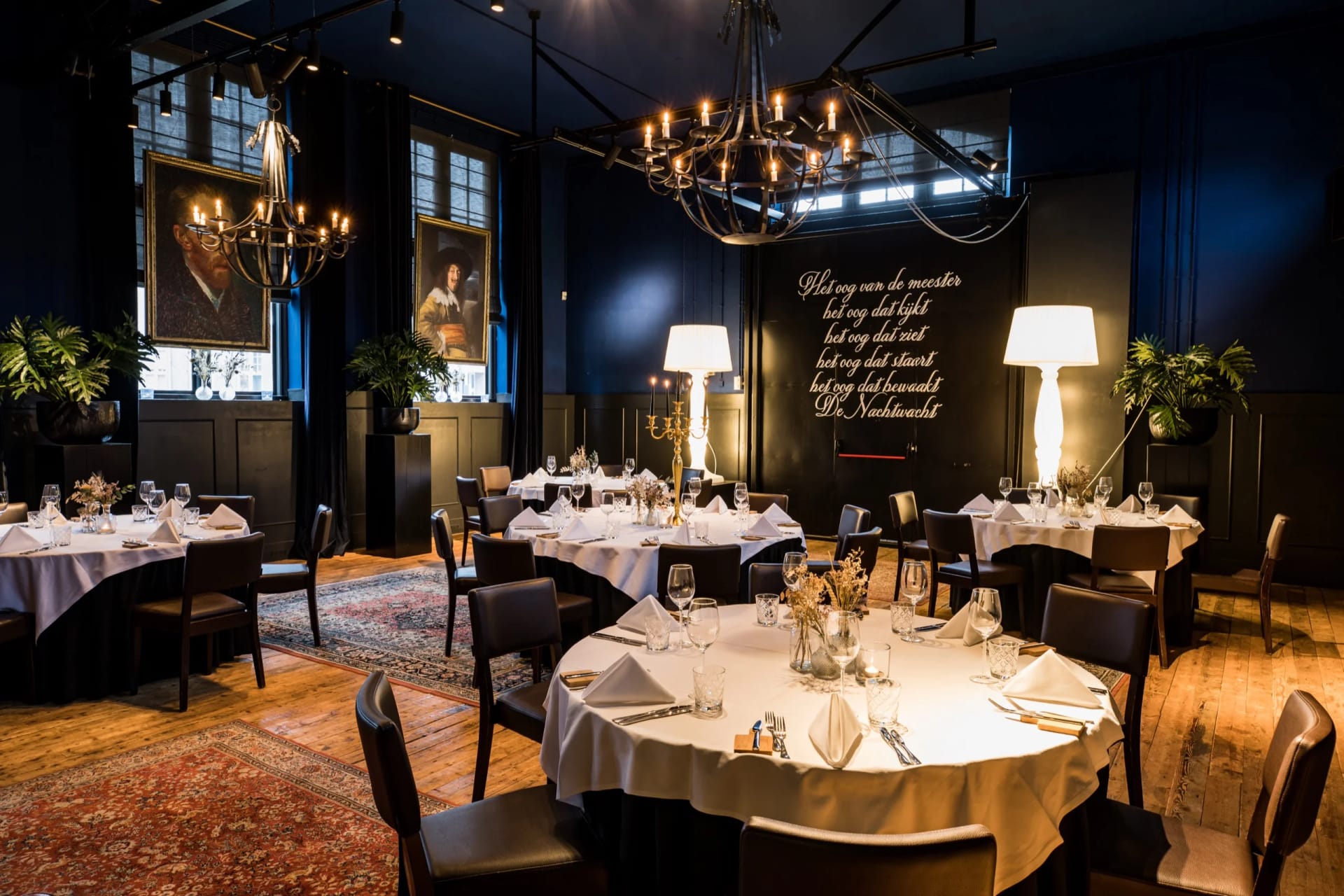
La Casserole brings together catering, styling, technical production, equipment hire and project management, with one point of contact from the first conversation through to breakdown. Not sure whether full service support suits your corporate event or wedding? Share your plans with La Casserole for tailored advice or a personalised quote.
Conclusion
Full service catering is about more than having food and drinks delivered. You are choosing a team to manage the full guest experience, from the menu and service staff to the setting, technical production, logistics and breakdown.
It is particularly valuable when you are hosting a larger group, working in a private or empty venue, have limited time for coordination, or want to avoid separate suppliers working at cross purposes. The investment is not just in the catering itself. It also gives you clarity, peace of mind and an event that runs smoothly for both guests and organisers.
Looking to host a stylish event in Brabant? Let us handle it!
Sources
- Kamer van Koophandel — Kvk
- CBS — Cbs
- NVWA — Nvwa
- Data dinsdag: evenementenseizoen 2024 geopend met fors meer eventcateraars — Kamer van Koophandel (KvK)
- Omzet horeca groeit in vierde kwartaal met ruim 3 procent — CBS (Centraal Bureau voor de Statistiek)
- HACCP — NVWA (Nederlandse Voedsel- en Warenautoriteit)
- Allergenen — NVWA (Nederlandse Voedsel- en Warenautoriteit)
- Voedselveiligheidsplan of hygiënecode voor horeca en ambachtelijke bedrijven — NVWA (Nederlandse Voedsel- en Warenautoriteit)