

The short answer
La Casserole supports weddings for up to around 120 guests where couples deliberately choose at-home BBQ catering. It lets them keep the atmosphere of their own space without being tied to a formal venue package. In our experience, this only works well when power, water, a weather contingency plan and food safety arrangements are agreed in advance, and when everyone is clear about the costs and responsibilities attached to the venue.
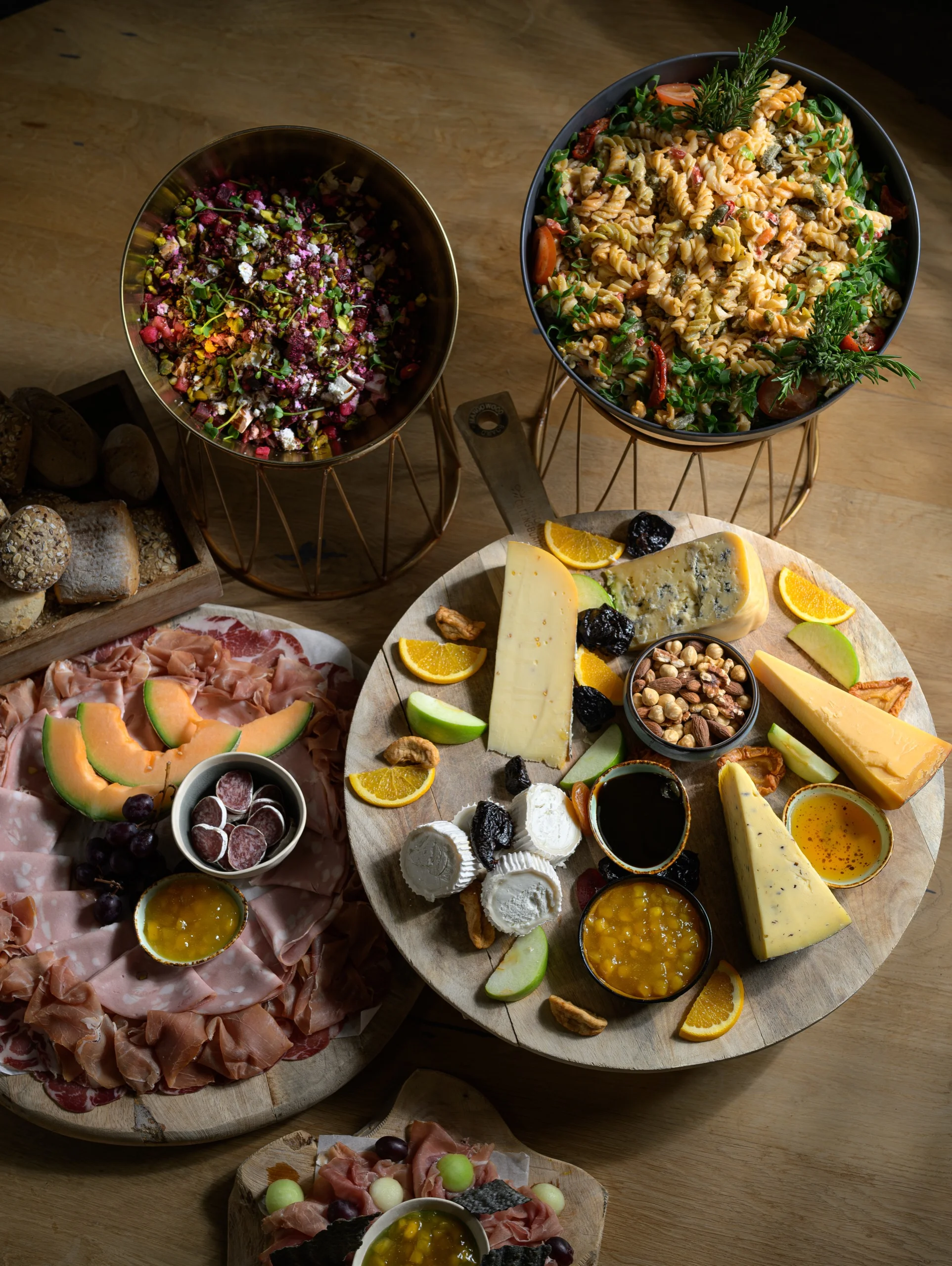
- Hosting at home or on private land removes venue hire costs, but you will need to budget for a marquee, furniture, toilets and technical equipment
- According to the KVK, hot food must stay at a minimum of 60 degrees until delivery, while chilled food must be kept at no more than 7 degrees
- Caterers are required to work with a HACCP food safety plan or hygiene code, which can be inspected by the NVWA
- Build a weather plan around firm decision points, usually 5 to 10 days before the event
- Using one supplier for catering, technical production and hire equipment avoids the usual gaps between separate vendors
Why do garden weddings run into technical problems more often than food problems?
When couples arrange their own venue, La Casserole often sees almost all attention go to the menu. Yet the first real issues nearly always involve power, water and waste disposal. A garden measuring 800 square metres is not a culinary challenge. A fuse box with 1 x 16 amps certainly can be. (Services)
That is the central misconception about at-home BBQ catering. It may look like the straightforward option, but technically it is the most bare-bones starting point. On private land, everything has to be built from scratch. At an established venue, refrigeration, drainage, lighting and heating are already in place, as are the practical details, such as where the washing-up goes and whether the neighbours will tolerate music at 11.30 pm.
At the same time, the move towards relaxed, personal celebrations is unmistakable. According to CBS, 68.682 marriages took place in the Netherlands in 2024, slightly more than the previous year. Couples are clearly moving towards flexible, personal formats: a ceremony in the family garden, one long table, and a BBQ that runs through the evening rather than a single dinner at eight o’clock.
If you would like to see how the same planning logic applies to corporate events, the guide to organising a corporate event in Brabant without the stress follows the same order: venue first, technical setup second, menu last.
How big is the wedding catering market in Brabant right now?
The catering sector is growing faster than the wider hospitality industry. According to CBS, canteens and caterers recorded the largest revenue growth of any hospitality segment in the third quarter of 2025, at 6,4 percent. That growth is not limited to business lunches. At-home BBQ catering for private celebrations is also a significant part of the market.
What this means for availability
A busy market directly affects lead times. In practice, reputable caterers in Brabant often fill their Saturday calendars for May, June and September well before the season starts, commonly 6 to 12 months ahead. Couples who only begin requesting quotes in March for a June date will have far fewer options left.
What is driving price pressure
Labour and ingredient costs have a direct impact on quotations. This is why service staff are often quoted separately rather than included in the per-guest price. Always ask whether staff hourly rates include travel, set-up and breakdown time. For a 100-guest celebration, the difference can become a substantial cost you had not allowed for.
Which trends are shaping wedding catering in Brabant for 2026 and 2027?
Trend 1: BBQ as the main event, not a backup plan
BBQ has moved well beyond the basic garden party. Couples are choosing charcoal and ceramic grills, chefs serving at the table, aged meat, grilled vegetables as a proper course, and fish cooked on a plancha. The result is an informal setting with food that can rival a seated dinner. With at-home BBQ catering in Eindhoven and the surrounding area, the focus is on cooking on site rather than delivering food to be reheated.
Trend 2: seamless timelines rather than a hard split
The traditional divide between the daytime programme and evening party is fading. Instead of dinner at 19.00 and evening guests arriving at 21.00, couples are choosing one continuous flow: drinks, food from the grill, a sweet finish and a late-night snack. For the caterer, that means longer staffing hours and more moments when temperature control is critical.
Trend 3: tighter enforcement of outdoor food safety
Cooking outside beneath a marquee is subject to the same rules as a professional kitchen. According to the NVWA, every business that prepares, processes or sells food must work with a food safety plan or hygiene code based on HACCP. Couples are asking about this more often, especially where children or guests with allergies are attending.
Trend 4: fewer suppliers, with one party in charge
Five years ago, couples were often happy to coordinate six separate suppliers: a caterer, marquee hire company, furniture hire company, lighting and sound supplier, refrigeration supplier and staff agency. Today, patience for that level of coordination has dropped. The number of touchpoints does not rise in a straight line. Every additional supplier must coordinate access times, space and logistics with all the others.
Trend 5: a longer season, extending into September and October
The traditional peak months are fully booked, so couples are moving to the edges of the season. That calls for heated marquees, menus with more warming dishes and a more realistic weather plan than you might need in June.
What do these changes mean for your own wedding plans?
Every trend above translates into a practical decision in your event plan. Choosing at-home BBQ catering as the main meal means setting aside space for a cooking area with enough clear workspace and adequate distance from guest tables. Smoke travels, and a grill two metres from the top table rarely goes down well.
A seamless all-day schedule also affects your staffing budget. A continuous concept running from 16.00 to 01.00 usually requires more service hours than a tightly scheduled dinner, even if everyone eats the same amount. This is exactly where low-cost quotes tend to cut corners.
A simple example that gets to the heart of it
Imagine a couple hosting a relaxed celebration for 90 daytime guests and 130 evening guests in the garden of a family home. They are comparing two options. Option A involves six separate suppliers, each with their own delivery time, invoice and liability. Option B uses one supplier for catering, the marquee, furniture, refrigeration and technical production.
With option A, the classic gap appears: the marquee team arrives at 09.00, the power supply is scheduled for 14.00, but the refrigeration needs to be running at 12.00. Someone has to spot that problem. With option B, there is one event plan and one person accountable for it. Couples who choose this route mainly notice the time saved during the build-up: in the final two weeks, calls and emails often fall from dozens to just a handful.
| Aspect | Separate suppliers (5 to 6 parties) | One event partner |
|---|---|---|
| Points of contact | 5 to 6 | 1 |
| Coordination in the final 2 weeks | usually 15 to 30 | usually 3 to 6 |
| Delivery windows on the day | 5 to 8 windows | 1 to 2 windows |
| Responsibility if something fails | shared, often unclear | one party |
| Invoices | 5 to 6 | 1 |
| Weather plan | separate for each supplier | one decision point |
La Casserole brings catering, styling, technical production, furniture and marquees together in one event plan, which is exactly what the right-hand column is designed for. The difference is not the food. It is knowing who to call if the power fails at 17.00.
Checklist:
- Count the suppliers in your current plan. Once you have more than four, coordinating them yourself starts to take serious time
- Ask every supplier to confirm set-up and breakdown times, and whether these are included in the price
- Agree who is responsible for distributing power between the kitchen, refrigeration and music
- Check whether service staff are quoted by the hour or per guest, and confirm their finish time
- Set one decision point for the weather plan, including a named contact and telephone number
How can you avoid problems with at-home BBQ catering, power, refrigeration and food safety in the garden?
At-home BBQ catering depends on three technical essentials: enough dedicated power circuits, chilled holding space and a covered workspace for staff. Get these three right and you have covered most of the risk.
Power: plan ahead, not after the fact
A professional BBQ setup may run mainly on gas, but refrigeration, hot-holding equipment, lighting and sound do not. In an average home with one or two spare circuits, you can quickly reach the limit with 100 guests. Ask your caterer for a power schedule for each appliance, then add the demand from the band or DJ. If there is any doubt, a generator costs less than an evening with half the lighting out.
Refrigeration: the standard is non-negotiable
There is no room for improvisation here. According to the KVK, hot food must remain at a minimum of sixty degrees until delivery, while chilled food must be kept at a maximum of seven degrees. On a warm summer day, a garden without chilled holding space cannot meet that standard with cool boxes alone. A refrigerated van or cold storage unit is not a luxury, it is an essential requirement.
The plan behind the kitchen
The HACCP requirement is anchored in European legislation. Regulation (EC) No 852/2004 sets out the requirements for a catering company’s food safety plan. According to Ondernemersplein, that plan is based on the 7 core principles of the HACCP system, identifying hazards and critical control points throughout food preparation. Just ask about it. A caterer who is vague on this point is not the right choice for a garden wedding.
Weather: decide early, not on the day
The most common mistake at a garden celebration is delaying the marquee decision. Marquees are in short supply during peak season. If you only call on Wednesday for a Saturday event, you may pay an urgent booking fee or find that nothing is available. A practical approach is set out in this guide to garden party catering and avoiding power and weather problems.
Checklist:
- Check your fuse box: count the spare circuits x 16 amps, then compare that with your caterer’s power schedule
- Ask how food will be kept chilled when it is 25 degrees outside: cool boxes, a refrigerated van or a chilled indoor space
- Ask the caterer to confirm that they work under a hygiene code or HACCP plan
- Put the marquee decision in the calendar, usually 5 to 10 days before the event
- Provide a covered workspace of at least several square metres for each chef
What can you take from corporate event planning and apply to your wedding?
Couples often underestimate how much they can learn from corporate events. A product launch for 250 guests and a relaxed wedding for 130 guests share the same bottleneck: keeping guests moving smoothly at food service. Corporate events manage this with minute-by-minute schedules. Weddings rarely do.
The rule of thumb is simple. One BBQ station can usually serve 50 to 70 guests without creating a queue longer than a few minutes. For 130 guests, that means two stations or staggered service for each course. The same reasoning behind choosing between a walking dinner and buffet applies just as much to at-home BBQ catering in a garden.
The second lesson is to have one dedicated point of contact on the day. That is standard at corporate events, but at weddings it is often handed to a sibling or friend who is also meant to be enjoying the day. That works, until something goes wrong.
Checklist:
- Plan one serving point for every 50 to 70 guests, or stagger the meal service
- Appoint one person who is not part of the ceremony to be the supplier contact
- Create a timeline that includes delivery and arrival times, not just the wedding programme
- Test the route from kitchen to tables. Keeping it under 25 metres helps food stay at the right temperature
Frequently asked questions
How much does at-home BBQ catering cost for a wedding?
The price per guest depends on the number of courses, the quality of the meat and fish, and whether a chef is grilling on site. In reality, a well-organised wedding BBQ with service staff costs considerably more than a standard garden BBQ, largely because staffing, refrigeration and equipment are included. Always request a quote that clearly shows service, set-up, breakdown and transport costs separately. Otherwise, you are not comparing like for like.
How many guests can you realistically host at a wedding in your own garden?
Up to around 120 guests is usually manageable with a good caterer, provided there is room for a marquee, kitchen workspace and parking. Above that number, toilets, power capacity and parking pressure matter more than the food itself. As a rule of thumb, allow at least 1 to 1,5 square metres of marquee space per guest for a seated meal.
Does a caterer need a permit to cook in a private garden?
For the cooking itself, the key requirement is food safety. The caterer must work under a HACCP food safety plan or hygiene code that can be inspected by the NVWA. The celebration itself may require a notification or permit from the local authority, for example for amplified music, a marquee above a certain size or serving alcohol. Check with your municipality around eight weeks beforehand, as processing times vary.
Does wedding catering work well at a venue such as Het Ketelhuis Eindhoven?
Yes, and it immediately solves part of the technical setup. A venue such as Het Ketelhuis Eindhoven already provides power, toilets and covered space, so much of the weather contingency planning is taken care of. The trade-off is that you are working with fixed end times and the layout of the building, while a private garden gives you complete freedom over styling and timing.
How far in advance should you book a wedding caterer in Brabant?
Six to twelve months is realistic for Saturdays in peak season, especially in May, June and September. For weekdays or winter dates, three to six months can often still work. Book your venue first, then secure the caterer straight away, because the venue determines what type of kitchen setup is even possible.
Conclusion
Couples choose at-home BBQ catering because it allows the celebration to feel truly their own: no fixed venue schedule, no end time imposed by someone else, and food that has come a long way in recent years. The price of that freedom is coordination. Everything a venue normally provides, from refrigeration and lighting to drainage, has to be arranged by you.
The order that works in real life is simple: confirm the venue and technical setup first, then finalise the menu. Check the available power, ask for the HACCP plan, agree one weather decision point and keep the number of suppliers low. Do that, and you will have time to enjoy your wedding rather than spend the day making calls. That is also why La Casserole brings catering, marquees, technical production and staff together in one event plan: not because it includes more, but because nothing gets missed in between.
Looking to host a stylish event in Brabant? Let us handle it!
Sources
- het CBS — Cbs
- de NVWA — Nvwa
- de KVK — Kvk
- Ondernemersplein
- HACCP — Nederlandse Voedsel- en Warenautoriteit (NVWA)
- Catering vanuit huis: wat moet je regelen — Kamer van Koophandel (KVK)
- Regels voor voedselveilig werken — Ondernemersplein / Rijksoverheid
- Voedselveiligheidsplan of hygiënecode voor horeca en ambachtelijke bedrijven — Nederlandse Voedsel- en Warenautoriteit (NVWA)