

At la-casserole, we see it all the time: weddings, team dinners, product launches, and networking events each call for a different catering approach. Shared dining and live cooking are not interchangeable trends. Shared dining brings guests together through dishes served to the table, while live cooking turns the act of cooking into part of the experience. The right choice depends on what you want your event to achieve, how the venue is set up, and how many people you are hosting.
- Both concepts must comply with HACCP, which is legally required
- Live cooking with open flames often requires an event permit, usually to be submitted at least eight weeks in advance
- la-casserole can combine both concepts under one fully managed service, from kitchen planning to permits
Introduction
In our work at la-casserole, especially for weddings and corporate events, we often notice that clients choose a catering format first and only then think about what they actually want the event to do. With shared dining or live cooking, that order should be reversed. Too often, people go for canapés, a walking dinner, or a buffet simply because it sounds familiar, not because it fits the occasion. (Services)
Both shared dining and live cooking have become hugely popular in recent years. They both promise an experience, but they create very different ones. Shared dining is all about the table: platters being passed around, guests serving one another, conversations starting naturally. Live cooking puts the chef in the spotlight, preparing dishes in front of guests and making the cooking itself part of the entertainment.
That choice affects far more than the menu. It shapes the flow of the evening, the room layout, the number of staff you need, and even whether permits may be required. This guide compares both concepts side by side, with practical criteria to help you decide what works best for your event.
What is the difference between shared dining and live cooking?
Shared dining is a style of eating where guests share dishes from serving platters placed on the table, while live cooking involves chefs preparing food on site as part of the guest experience. The real difference is not the food itself, but the social dynamic around it.
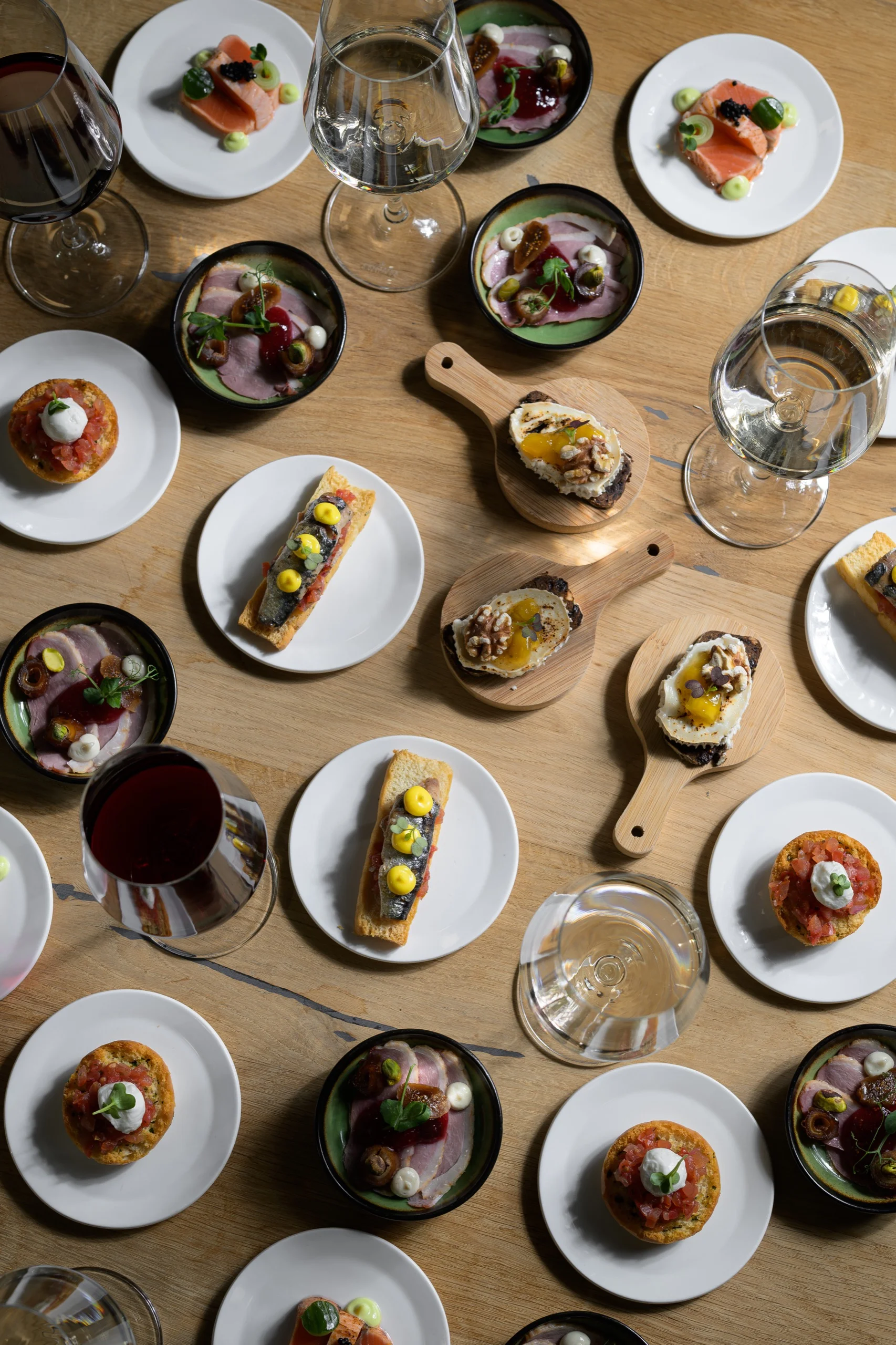
With shared dining, everyone stays seated at the table. Dishes are passed around, people serve one another, and conversation tends to flow more easily. It has a naturally social effect. Put ten strangers at one table, and within twenty minutes they are usually talking because sharing food breaks the ice without forcing it. That makes shared dining especially effective for weddings where two families are meeting for the first time, or for team dinners where departments need to mix.
Live cooking works differently. Guests move to a cooking station, watch a chef finish a risotto or grill a piece of fish, then take away a freshly prepared plate. It is more dynamic, more mobile, and visually engaging. That makes it a strong fit for events where energy, movement, and networking matter more than staying seated for a long meal.
A common misconception is that live cooking is always the more exciting option. In reality, experienced planners ask a more useful question: do you want guests to settle in and connect, or do you want them to move around and mingle?
When is shared dining the right fit for your event?
Shared dining works best when connection is the main goal and guests have time to sit down and enjoy the moment. Think of an intimate wedding dinner, a family celebration, or a team dinner marking the end of a project.
Weddings and private celebrations
For a wedding dinner with 60 to 100 guests, shared dining creates a warm, welcoming atmosphere that suits the day beautifully. Serving platters on the table feels less formal than a plated meal, and guests can start enjoying the food without waiting for each course to be served. For couples weighing up their options, this is often the key decision in wedding catering: plated service for elegance, or shared dishes for a more relaxed and sociable feel.
Corporate dinners focused on team connection
Imagine an HR manager at a mid-sized tech company planning a year-end dinner for 80 employees. The goal is simple: get departments that rarely interact to actually talk to each other. A formal three-course dinner often keeps people in their usual circles. Shared dining with a thoughtful seating plan helps break that pattern, because passing dishes and serving one another creates natural interaction. You usually notice the difference afterwards, when guests stay longer, chat more freely, and the atmosphere feels less stiff than at a traditional dinner.
One thing to keep in mind: shared dining needs tables with enough space. Too many dishes on a cramped table can quickly feel cluttered.
How to make it work:
- Choose shared dining if at least half of your guests do not already know each other well
- Aim for round or long tables seating 8 to 12 people for the best group dynamic
- Plan 4 to 6 shared dishes per table so there is variety without overcrowding the space
- Check whether your venue has enough table surface, because shared dining usually needs more room than plated service
When does live cooking work better?
Live cooking shines when experience, energy, and visual impact matter more than keeping guests at the table. At a product launch or networking event, for example, you usually want people to move around, strike up conversations, and come across memorable moments as they do.
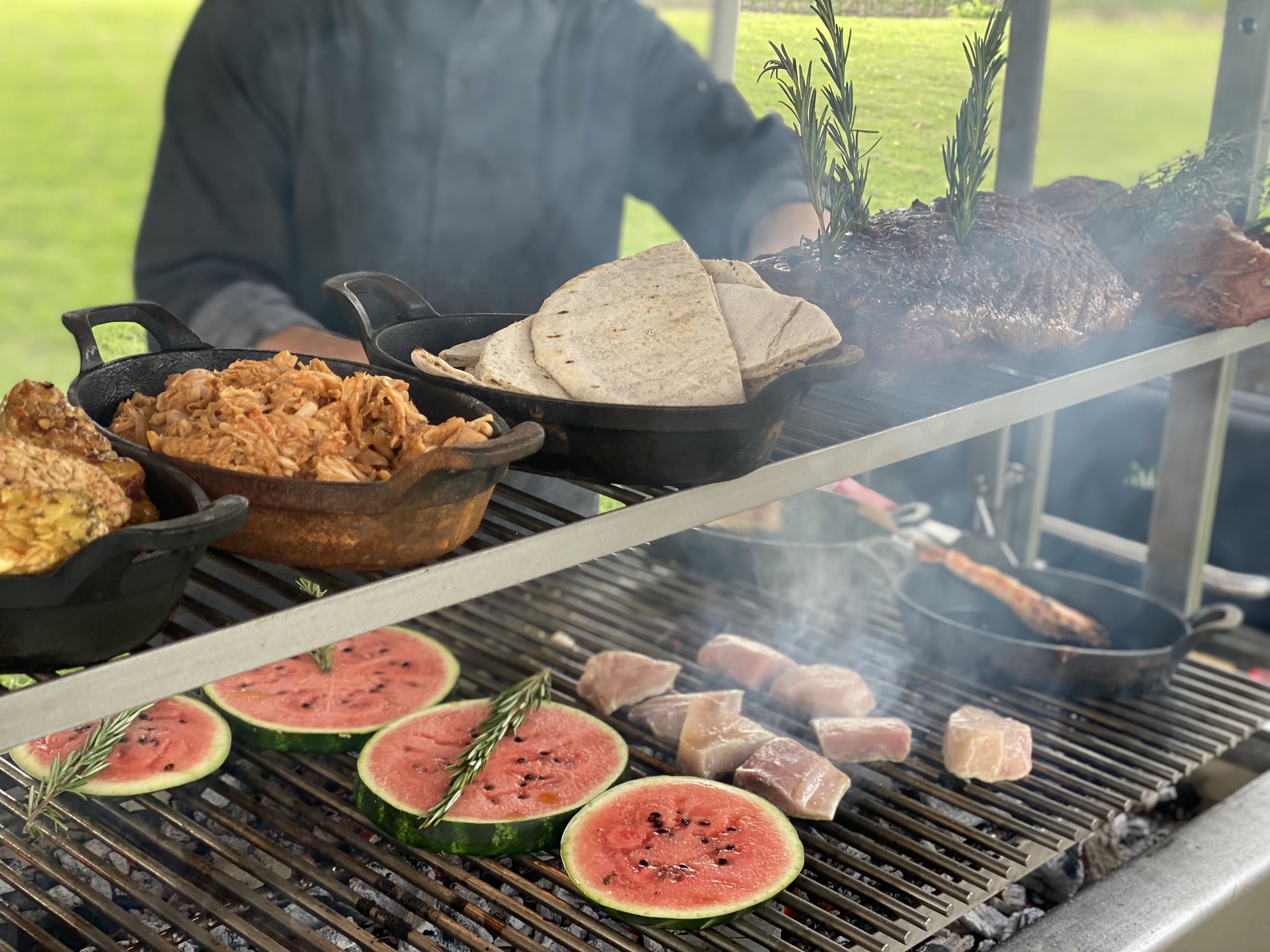
The show element is the big draw. A chef hand-rolling pasta, working a teppanyaki grill, or finishing desserts in front of guests gives people something to watch and talk about. It also works as part of your brand experience. At a product launch, a polished culinary presentation can subtly reinforce the idea that your brand cares about detail and quality.
Live cooking also suits events with a looser structure. If a company drinks reception gradually turns into dinner, you do not need everyone seated at the same time. Cooking stations spread throughout the venue keep the event moving. If you have ever wondered why some corporate drinks events feel lively while others fizzle out, live cooking often provides a natural focal point that draws people in.
The downside is complexity. Live cooking requires more equipment, more chefs on site, and extra safety measures if open flames are involved. That means you need a caterer who understands logistics and regulations as well as food.
What legal requirements apply to live cooking and shared dining?
Whichever concept you choose, some rules are non-negotiable. Every caterer, including those offering shared dining and live cooking, must work in line with the HACCP system, which is legally required. In practice, hospitality businesses often use the hygiene code issued by Koninklijke Horeca Nederland.
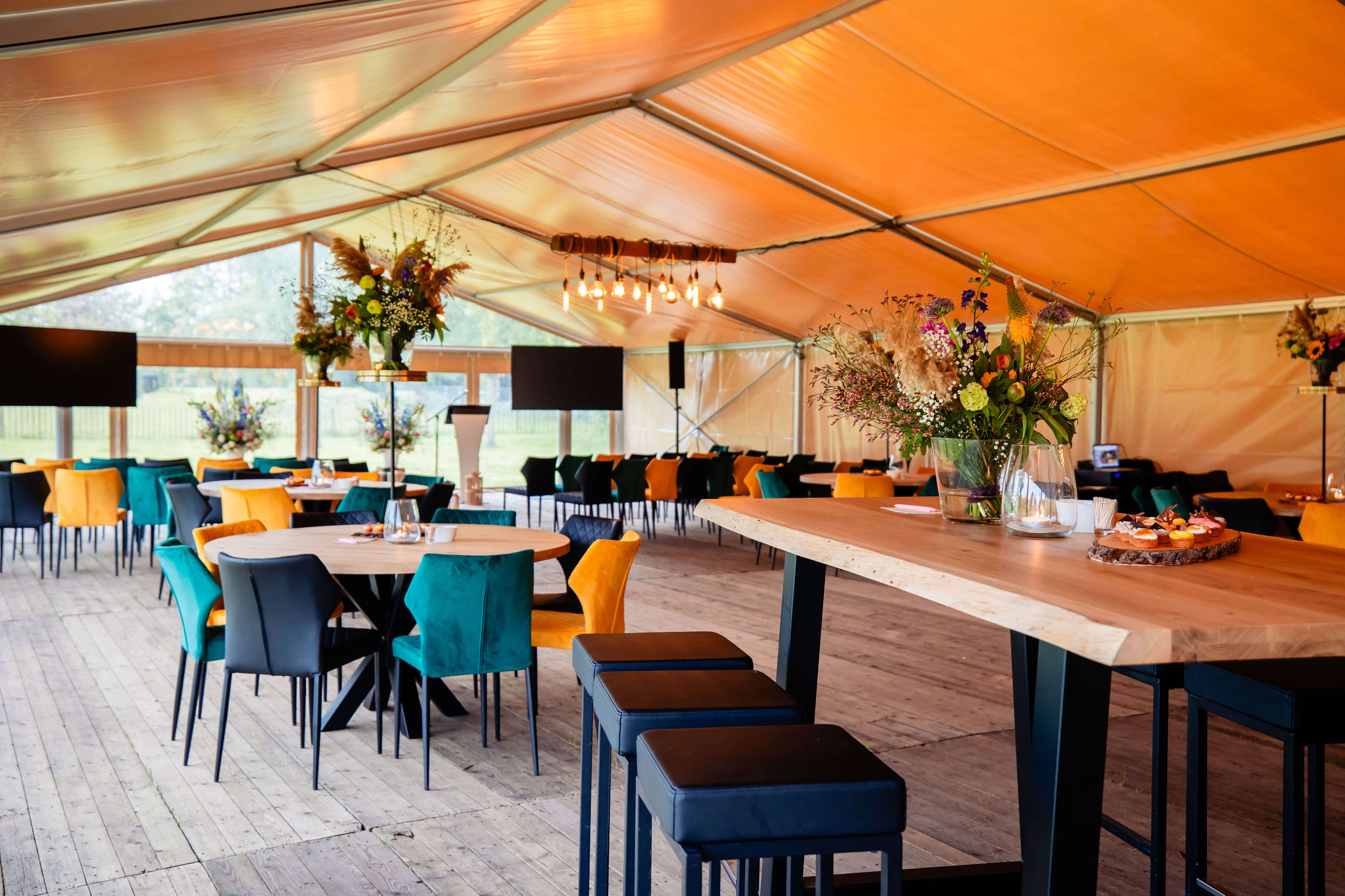
For off-site events, the picture becomes more complex. Anyone preparing and selling food at an event must, just like permanent caterers, work with a food safety plan. Mobile event spaces such as marquees must also meet specific hygiene requirements, including access to hot and cold running water. This is exactly why live cooking at an outdoor venue or in a temporary structure can be challenging: you need to arrange water, refrigeration, and waste systems in a place that was not originally designed for catering.
The organiser also has legal responsibility
One point many clients underestimate is that responsibility does not sit with the caterer alone. Under Dutch food safety law, the event organiser is also legally required to take measures to reduce the risk of guests becoming ill from contaminated or spoiled food. That includes requirements around preparation, storage, packaging, and transport.
Fire safety and open flames
Live cooking with open flames or heat sources is subject to fire safety rules. These are regulated through local municipal rules such as the APV, and an event permit usually needs to be submitted at least eight weeks in advance. If you only decide on a teppanyaki station three weeks before the event, that deadline can become a serious problem.
How to handle this properly:
- Ask your caterer for an up-to-date HACCP plan or hygiene code before signing off
- If live cooking is planned on location, check whether hot and cold running water is available
- Submit any required event permit to the municipality at least eight weeks in advance
- Clearly agree who is responsible for cooling and storage, because organiser and caterer share that responsibility
Shared dining or live cooking: the comparison
The decision becomes much clearer when you compare both concepts side by side on the factors that really matter: goals, costs, logistics, and group size.
| Criterion | Shared dining | Live cooking |
|---|---|---|
| Primary goal | Connection at the table | Experience and movement |
| Ideal group size | 20 to 120 guests | 40 to 250 guests |
| Guest behaviour | Seated, staying at the table | Moving around, spread across the space |
| Service intensity | متوسط | High, with chefs on site |
| Space required | Larger tables | Space for cooking stations |
| Permit for open flames | Usually not required | Often required, 8 weeks in advance |
| Indicative cost per guest | From around 35 to 70 euros | From around 45 to 90 euros |
These price ranges are only rough guidelines and can vary significantly depending on the menu, number of courses, and level of service. For a more detailed look at what goes into a corporate catering budget in 2026, the biggest cost factors are usually the combination of food, staffing, and equipment, not one flat amount per person.
Why one event partner makes all the difference
With both concepts, the food idea is actually the easy part. Execution is what makes or breaks the event. Live cooking sounds fantastic until you realise you need to coordinate chefs, stations, power, water, extraction, and permits across several suppliers who may never have worked together before.
That is why la-casserole works with a fully managed approach: catering, styling, technical setup, furniture, and project management all handled through one point of contact, backed by more than forty years of experience and over a thousand events delivered. In practice, that means the kitchen team knows the room layout, the technical team knows where the cooking stations will go, and the permit application is aligned with the menu plan.
This kind of integration is not a luxury. In live cooking, the position of a station affects power routes, ventilation, and guest flow. In shared dining, the table plan determines whether sharing feels effortless or awkward. When one partner oversees the full chain, you avoid the usual communication gaps between separate suppliers. More about the all-in approach from la-casserole shows how concept, food, and logistics all fit together.
There is another reason this matters: the catering and events sector continues to grow steadily. In the Netherlands, turnover in canteens and catering rose by 2,6 percent in the first quarter of 2026 compared with the year before. Higher demand also means more suppliers, and that naturally creates bigger differences in quality and execution.
Results and benefits of making the right choice
What do you gain when you match the catering concept to the goal of the event, instead of the other way around? The benefits usually come down to four things.
First, the atmosphere. With shared dining, guests tend to stay at the table longer and more spontaneous conversations happen, which is exactly what you want at team dinners and weddings. With live cooking, the energy in the room tends to rise because there is always something happening.
Second, the flow of the event. A concept that matches the moment helps you avoid awkward lulls. Live cooking keeps a drinks reception moving, while shared dining gives a dinner structure, calm, and rhythm.
Third, value for money. If you decide in advance what the event needs to achieve, you avoid paying for show elements that do not add anything. An intimate wedding dinner does not need a teppanyaki station. A product launch may benefit from one.
And fourth, risk control. If you factor in permits and food safety requirements early on, you are far less likely to find your live cooking concept falling apart three weeks before the event because a permit was never arranged.
Key takeaways
The core point is simple: choose the concept based on your event goals, not on what happens to be trendy. Shared dining brings people together. Live cooking creates impact. Both require the same legal food safety foundation through HACCP, but live cooking adds extra logistical and permit-related demands.
For weddings and team dinners where connection is the priority, shared dining is usually the stronger option. For product launches, networking events, and drinks receptions where you want a buzz in the room, live cooking often has the edge. And if you are undecided, remember that the two do not have to compete. A live cooking station for starters followed by shared dining at the table can give you both excitement and connection, provided the execution is carefully managed.
Frequently asked questions
What exactly is shared dining, and how does it work?
Shared dining is a way of serving food where guests share dishes placed in the middle of the table. It naturally encourages conversation because serving and passing food creates easy interaction. It works especially well for groups of 20 to 120 guests seated at spacious tables, where bringing people together is the main aim.
When is live cooking a better choice than shared dining?
Live cooking is the stronger option when experience and movement matter more than a long seated meal, such as at product launches and networking events. The cooking becomes part of the setting and gives guests something to engage with. Just keep in mind that open flames usually require an event permit, often to be applied for at least eight weeks in advance.
What legal requirements apply to catering at an event?
Food safety is the starting point. Every caterer is legally required to work in line with HACCP, including at temporary events. On top of that, the organiser also has legal responsibilities to prevent spoiled or unsafe food, and temporary venues such as marquees must meet hygiene requirements including hot and cold running water. If live cooking involves open flames, fire safety rules and permit applications also come into play.
How can la-casserole help choose between these concepts?
la-casserole brings catering, styling, technical planning, and project management together under one point of contact, backed by more than forty years of experience. That means the food concept, room layout, technical setup, and permit process are planned as one joined-up whole. It helps prevent the coordination issues that often arise when separate suppliers each handle only part of the job.
Can you combine shared dining and live cooking at one event?
Absolutely. In practice, the two are often combined very successfully. A popular format is a live cooking station during the reception or starter course, followed by shared dining at the table for the main meal. This gives you the theatre of live cooking and the social warmth of shared dining, as long as one partner is managing the timing and logistics properly.
Conclusion
The real question is not whether shared dining or live cooking is better. It is what your event needs to achieve. If you want guests to connect and stay seated, shared dining is the natural choice. If you want energy, movement, and a memorable visual experience, live cooking is likely the better fit. And in many cases, the strongest solution is a smart combination of both.
Whatever you choose, execution is what determines the result. Food safety, permits, technical setup, and room layout all need to work together, and that is easiest when one partner oversees the whole process. That is exactly where the strength of la-casserole lies, from culinary concept to permits and on-site setup. Start with the goal of the event, and you will not just choose better food, you will make a better event decision overall.
Looking to host a stylish event in Brabant? Let us handle it!
Sources
- wettelijk verplicht — Nvwa
- net als vaste cateraars werken met een voedselveiligheidsplan — Ondernemersplein
- wettelijk verplicht maatregelen te nemen — Ggdhaaglanden
- evenementenvergunning doorgaans minstens acht weken van tevoren — Lokaleregelgeving
- groeide in het eerste kwartaal van 2026 met 2,6 procent — Cbs
- HACCP — Nederlandse Voedsel- en Warenautoriteit (NVWA)
- Regels voor voedselveilig werken — Ondernemersplein (Rijksoverheid)
- Horecagelegenheden op evenementen — GGD Haaglanden