

Quick summary
A cooking workshop for a corporate outing is an interactive culinary session where colleagues cook together in small groups and then sit down to enjoy what they’ve made. It blends team building with a clear end result: a dinner you’ve created yourselves. La Casserole hosts cooking workshops at its own venues across Brabant, including Kasteel Henkenshage in Sint-Oedenrode and Het Ketelhuis in Eindhoven.
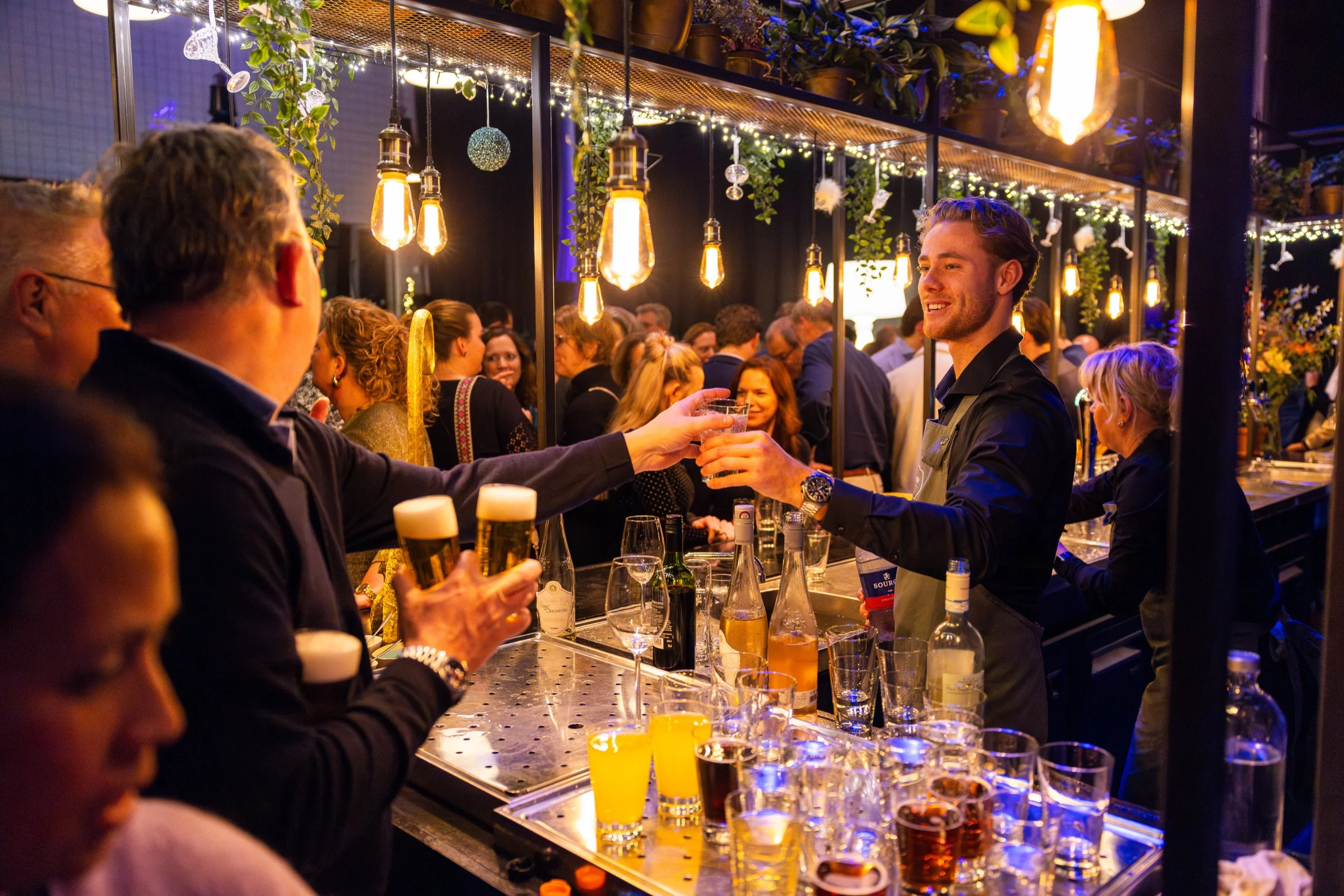
- Cooking workshops in Brabant are typically available for groups of 10 to 80 people
- Most sessions last between 2.5 and 4 hours, including the shared meal
- The venue shapes the atmosphere: a castle creates a very different feel from an industrial space
- A full-service setup (venue, guidance, catering and drinks from one provider) saves a significant amount of coordination time
- North Brabant is home to more than 366,000 business locations, making it one of the Netherlands’ biggest business markets
Why a cooking workshop is different from the average corporate outing
La Casserole sees the same pattern time and again in requests for corporate outings in Brabant: HR managers and office managers want something that offers more than the usual after-work drinks, but without the barrier of a sporty or high-adrenaline activity. A cooking workshop hits that sweet spot. It’s easy to join, but highly engaging. (Services)
What many organisers underestimate is how naturally cooking creates group interaction. At a walking dinner or drinks reception, people tend to mingle with whoever happens to be nearby. During a cooking workshop, everyone works toward one shared goal: the dish has to be ready before dinner starts. That automatically calls for communication, task-sharing and coordination, without anyone needing to label it “team building.”
The hidden advantage: informal connection
At corporate events for larger organisations — say, a department of 25 to 50 employees — one thing stands out: colleagues who normally only email each other often end up having real conversations for the first time during a cooking workshop. The kitchen counter is a social leveller: no one has to be the expert, and everyone can contribute. La Casserole deliberately works with small cooking teams of 4 to 6 people, so no one fades into the background as a spectator.
What sets a cooking workshop apart from other team activities
With active outings, there’s always the risk of discomfort: not everyone is equally keen on climbing, cycling or karting. In an escape room, the quickest thinker often sets the pace. Cooking works differently. Chopping ingredients, tasting sauces, keeping an eye on timing — almost everyone can take part at a level that feels comfortable. That makes the experience far more inclusive.
What to do:
- Collect dietary requirements and allergies at least 2 weeks in advance (vegan, gluten-free and nut allergies are the most common)
- Decide whether you want a competitive element (teams judged against each other) or a collaborative format (everyone cooks one menu together)
- Ask the provider whether the chef also explains techniques or mainly guides the process; technical insight adds learning value
- Check whether drinks and service are included, so you don’t end up with separate invoices afterward
Why booking separate elements for a cooking workshop often causes problems
The market for cooking workshops in Brabant is broad. Kookstudiobrabant.nl already lists around 20 venues in North Brabant alone. Many providers offer the workshop itself, but the venue, catering, drinks and follow-up arrangements are handled through separate agreements with separate parties. In practice, that tends to lead to three common issues.
Problem 1: the coordination breakdown
An HR manager at a mid-sized manufacturing company books a cooking studio for 35 people. The venue provides the room, an external company supplies the chef, drinks are ordered separately from a caterer, and transport still hasn’t been arranged. On the day itself, it turns out the studio doesn’t have enough plates for dessert because the caterer assumed the venue would provide them. No one had confirmed it. It’s not a disaster, but confidence in the organisation takes a hit.
Problem 2: the wrong venue for the experience
A cooking workshop in a sterile company canteen lacks the sense of occasion that makes the format so effective. The setting plays a huge role in the overall experience. An anonymous workshop room with fluorescent lighting creates a very different mood from a castle kitchen or an industrial venue with high ceilings. For companies looking to impress new hires or business contacts, the venue matters just as much as the menu.
Problem 3: the post-workshop drop-off
Many cooking workshops end when the meal is over. After that, you’re on your own: there’s no longer a clear contact person, the venue needs to be cleared, and the atmosphere quickly fizzles out. Providers who only sell the workshop often don’t offer an after-drinks option or a follow-up space.
What to do:
- Ask each provider explicitly: who is the contact person on the day itself, and which parts are they responsible for?
- Make a checklist of everything required (venue, chef, assistants, ingredients, drinks, plates/cutlery, aftercare) and assign responsibility for each item
- Review venue photos critically: does the atmosphere match your company culture?
- Ask for a full event timeline, including setup and breakdown time
How a full-service approach makes a cooking workshop stronger
This is where La Casserole stands out as an event partner. Its approach combines workshop guidance from in-house chefs with the venue, catering, drinks packages and, where needed, styling in one package. That may sound obvious, but in practice it’s anything but standard.
La Casserole manages several cooking studios in Brabant, including venues at Kasteel Henkenshage in Sint-Oedenrode, Het Ketelhuis in Eindhoven and its own location in Best. That spread matters: depending on your group size, the atmosphere you want and where your company is based, there’s a fitting option.
Kasteel Henkenshage as a standout setting
For organisations that want to pair their corporate outing with a memorable backdrop, Kasteel Henkenshage offers something special. According to Wikipedia, the castle’s history dates back to the 14th century: the name “Henkenshage” already appears in historical sources in 1387. The castle is a protected national monument (monument number 33650), and that status has helped preserve it for future generations.
After the De Girard de Mielet van Coehoorn family donated the castle under strict conditions for public use, it began operating as an event venue in 1998. Since then, La Casserole has managed the location. In practical terms, that means your workshop takes place in the same castle where, in September 1944 during Operation Market Garden, General Maxwell Taylor established his headquarters with the 101st American Airborne Division. That historical layer gives the experience a story standard cooking studios simply can’t match.
The cooking workshop at Kasteel Henkenshage: how it works in practice
The cooking studio at Kasteel Henkenshage is reserved exclusively for your group. La Casserole’s own chefs lead the programme, drinks packages are included, and for larger groups the drinks are served separately by staff. After the cooking and dining, the castle room remains available for after-drinks or additional programme elements. That removes the earlier pitfall entirely: there is no awkward gap after the workshop.
What to do:
- Compare venues by atmosphere (castle vs. industrial vs. neutral) and match that to your goal: impressing clients calls for a different backdrop than an internal team event
- Ask whether the cooking studio is exclusive to your group; shared sessions can weaken the group dynamic
- Check whether the chef is available after the workshop to answer questions about techniques
- Discuss timing in advance: an afternoon workshop ending in lunch feels different from an evening session with a three-course dinner
Comparing cooking workshop formats: which one suits your group?
Not every cooking workshop is the same. The format you choose has a direct impact on the atmosphere, duration and cost.
| Format | Group size | Duration | Atmosphere | Best for |
|---|---|---|---|---|
| Competitive (teams vs. teams) | 20-60 people | typically 3-4 hours | Energetic, lightly competitive | Departments that rarely work together |
| Collaborative (one menu together) | 10-30 people | typically 2.5-3.5 hours | Intimate, relaxed | Management teams, client groups |
| Chef-led (watch and join in) | 10-25 people | typically 2-3 hours | Educational, easy-going | Small groups, beginners |
| Themed workshop (e.g. Italian, Burgundian) | 15-50 people | typically 3-4 hours | Rich culinary focus | Client events, anniversaries |
When choosing a theme, the rule of thumb is simple: the more specific the theme, the stronger the experience — but also the more preparation it requires. A Burgundian theme at Kasteel Henkenshage naturally fits the surroundings better than an Asian fusion concept in the same castle. La Casserole aligns the theme and menu with both the venue and the client’s preferences.
If you’d like to explore how networking and informal settings work together in culinary formats, the article on why a walking dinner really changes business networking offers additional insight. And for teams considering a broader event concept, the comparison in dinner show with chef at the table or walking dinner is also worth reading.
What to do:
- Ask yourself what the main goal is: connection (choose collaborative), energy (choose competitive) or learning (choose chef-led)
- Match the format to the makeup of the group: for an international team, a familiar cuisine theme such as Italian or French can lower the barrier to participation
- Request quotes from at least two providers; compare not just the per-person rate, but exactly what’s included (ingredients, drinks, service, venue costs)
- Schedule the outing at a point in the week that supports attendance: Thursday or Friday usually performs better than Monday
Frequently asked questions
How much does a cooking workshop for a corporate outing in Brabant cost?
Cooking workshop prices vary widely and depend heavily on the format, venue, group size and what’s included. With providers that charge separately for the venue, chef, ingredients and drinks, the final per-person cost is often significantly higher than the headline price suggests. Companies that choose a full-service partner such as La Casserole pay one all-in rate, which helps avoid coordination costs and unexpected extras. Always ask for an itemised quote so you can compare formats and providers fairly.
How does La Casserole help organise a cooking workshop?
La Casserole runs cooking workshops for corporate outings at its own venues in Brabant, including Kasteel Henkenshage in Sint-Oedenrode and locations in Eindhoven and Best. Sessions are led by in-house chefs, drinks packages are included as standard, and the cooking studio is reserved exclusively for the group. That means one point of contact for the entire day, from arrival through to after-dinner follow-up. You can find more about the catering and venue options on the La Casserole catering Eindhoven page.
How many people can take part in a cooking workshop at La Casserole?
Group size varies by venue and format. At Kasteel Henkenshage, groups of 20 to around 60 people can be comfortably accommodated in a workshop format, while the castle’s total capacity reaches around 600 people for larger events. For smaller groups of 10 to 20 people, the cooking studio in Best is a practical option. La Casserole advises on the most suitable venue based on your group size and preferred format.
What’s the difference between a cooking workshop and a walking dinner for a corporate event?
A cooking workshop is hands-on: participants prepare the dishes themselves and then enjoy them together. A walking dinner is passive from the guest’s point of view: dishes are served while guests move around freely and speak to different people. Cooking workshops encourage collaboration within a fixed smaller team, while walking dinners are better for broader, informal networking across the whole group. The right choice depends on whether your main goal is stronger bonds within small teams or wider interaction across the room.
What makes Kasteel Henkenshage a special venue for a corporate outing?
Kasteel Henkenshage in Sint-Oedenrode is a protected national monument, with the name appearing in historical records as early as 1387. It includes remnants of 15th-century masonry and has a notable wartime history as the headquarters of the 101st American Airborne Division. Since 1998, La Casserole has operated the castle as an event venue with exclusive booking per event. That historical context gives a corporate outing a sense of story and atmosphere that a standard workshop location simply can’t offer.
Conclusion
A cooking workshop as a corporate outing in Brabant works best when the venue, guidance and catering are organised as one seamless whole. Booking separate elements through different providers often leads to coordination mistakes, breaks in the atmosphere and unexpected costs. La Casserole’s approach — combining in-house chefs, exclusive cooking studios in characterful venues and full-service catering — removes those risks in a structural way.
Kasteel Henkenshage adds another dimension that’s hard to find anywhere else in Brabant: a venue with more than six centuries of history, protected monument status and a story colleagues will remember long afterward. For HR managers and office managers looking to make their corporate outing stand out from the usual team day, that difference matters. Explore the full range of La Casserole’s event services in Brabant to request a tailored quote.
Looking to host a stylish event in Brabant? Let us handle it!
Sources
- ruim 366.000 bedrijfsvestigingen — Allecijfers
- Kookstudiobrabant.nl — Kookstudiobrabant
- werd het in 1998 in gebruik genomen als evenementenlocatie — Kasteel-henkenshage
- 101e Amerikaanse Airborne Divisie — Oorlogsgravenstichting
- Provincie Noord-Brabant in cijfers en grafieken — AlleCijfers.nl (gebaseerd op CBS-data)
- Kasteel Henkenshage – Wikipedia — Wikipedia
- Henkenshage, Sint-Oedenrode | Monumenten.nl — Monumenten.nl (Rijksmonumentenregister, Rijksdienst voor het Cultureel Erfgoed)
- Sint-Oedenrode, monument in kasteel ‘Henkenshage’ — Oorlogsgravenstichting