

Quick summary
A walking dinner is the better fit for events built around networking and movement, while a buffet works best for groups who want to sit down, connect at the table, or follow a tightly planned schedule. La Casserole sees this all the time with corporate clients: the decision rarely comes down to taste. It is usually about the program, the space, and the kind of guest behavior you want to encourage. A walking dinner keeps people circulating, while a buffet creates calm and structure.
- Walking dinner: 5 to 8 small courses, guests mingle as they eat, ideal for networking receptions and product launches
- Buffet: unlimited self-service, guests sit or gather around tables, well suited to larger groups and informal company parties
- Walking dinner price: typically 45 to 75 euros per person, depending on the number of courses
- Portion guideline: for a full walking dinner, allow 6 to 8 bites or small dishes per guest
- Logistics: a walking dinner needs more service staff and careful pacing, while a buffet needs more floor space and power for hot holding equipment
Introduction
La Casserole often notices that marketing managers and HR teams ask, “walking dinner or buffet?” a little too early in the planning process. The format gets chosen first, and only then does anyone ask what the event is actually supposed to achieve. That is the wrong way round. (Services)
Take this example: a marketing manager at a software company with 120 employees is planning a client event. The goal is to get customers talking to account managers. If she chooses a buffet with fixed seating, people often settle into their own circles within ten minutes. The networking goal disappears the moment everyone sits down.
The catering market is growing too. According to CBS (Statistics Netherlands), the canteens and catering sector posted revenue growth of 6.2 percent in the fourth quarter of 2025, the strongest growth of any hospitality segment. More companies are outsourcing events, which makes the choice between dining formats even more important. If you understand the logic behind both options, you are far less likely to make an expensive mistake. For the bigger picture, this guide on organizing a business event in Brabant without the hassle is also worth reading.
What is the difference between a walking dinner and a buffet?
A walking dinner is a roaming dining format where guests are served several small courses, or collect them from stations while mingling, while a buffet is a central food setup where guests build their own plate. The real difference is not the food itself, but the behavior each format encourages.
Walking dinner: movement and mingling
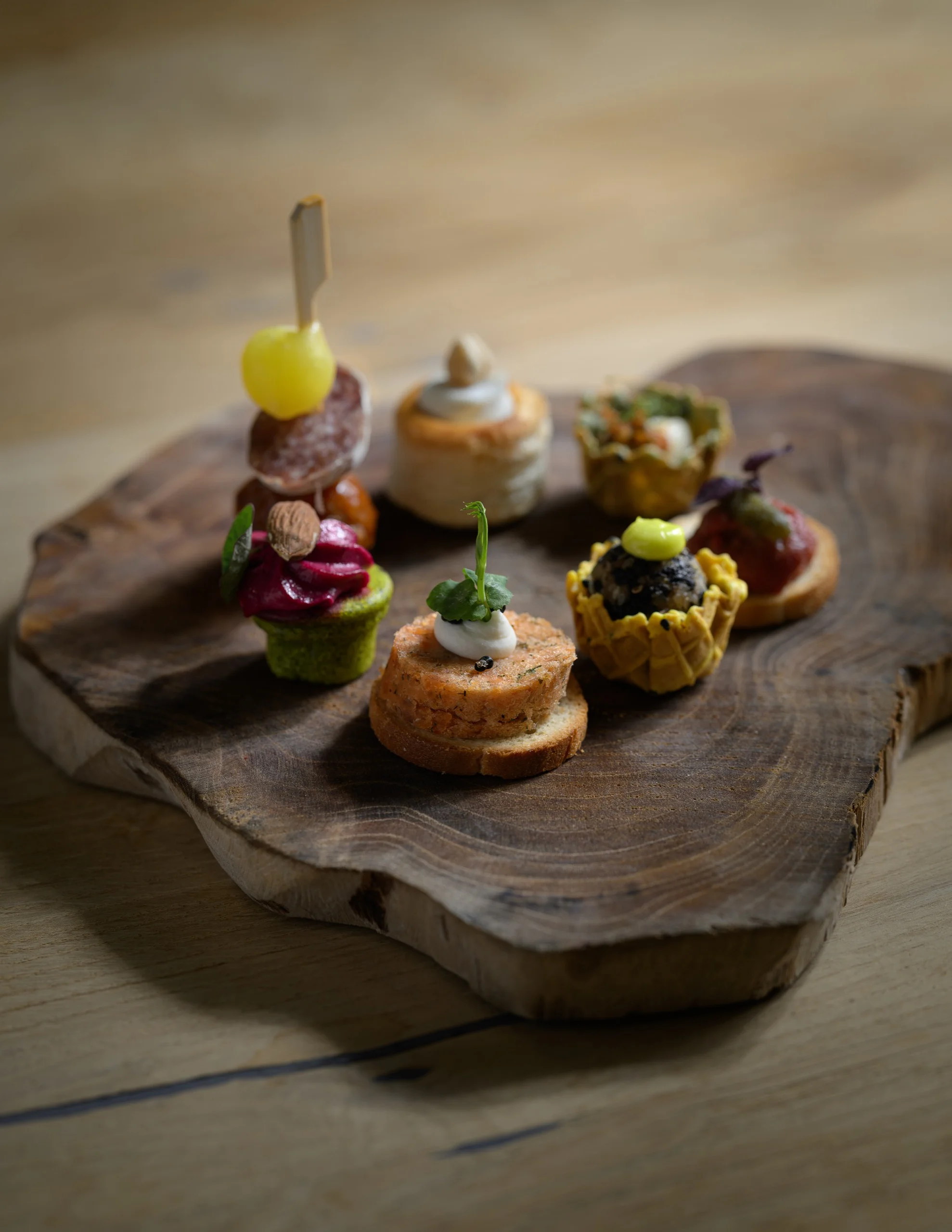
With a walking dinner, service staff bring around small dishes in courses, or guests pick them up from different food stations. Portions are smaller, but the variety is higher. For a complete meal, you would usually plan for 6 to 8 bites or mini dishes per guest, spread across 5 to 8 courses. Because people keep moving, you naturally get more interaction between guests who do not already know each other.
The trade-off is that a walking dinner needs more service staff and tighter timing. If the courses come too quickly, guests feel overloaded. Too slowly, and the energy in the room starts to dip.
Buffet: choice and pace in the guest’s hands
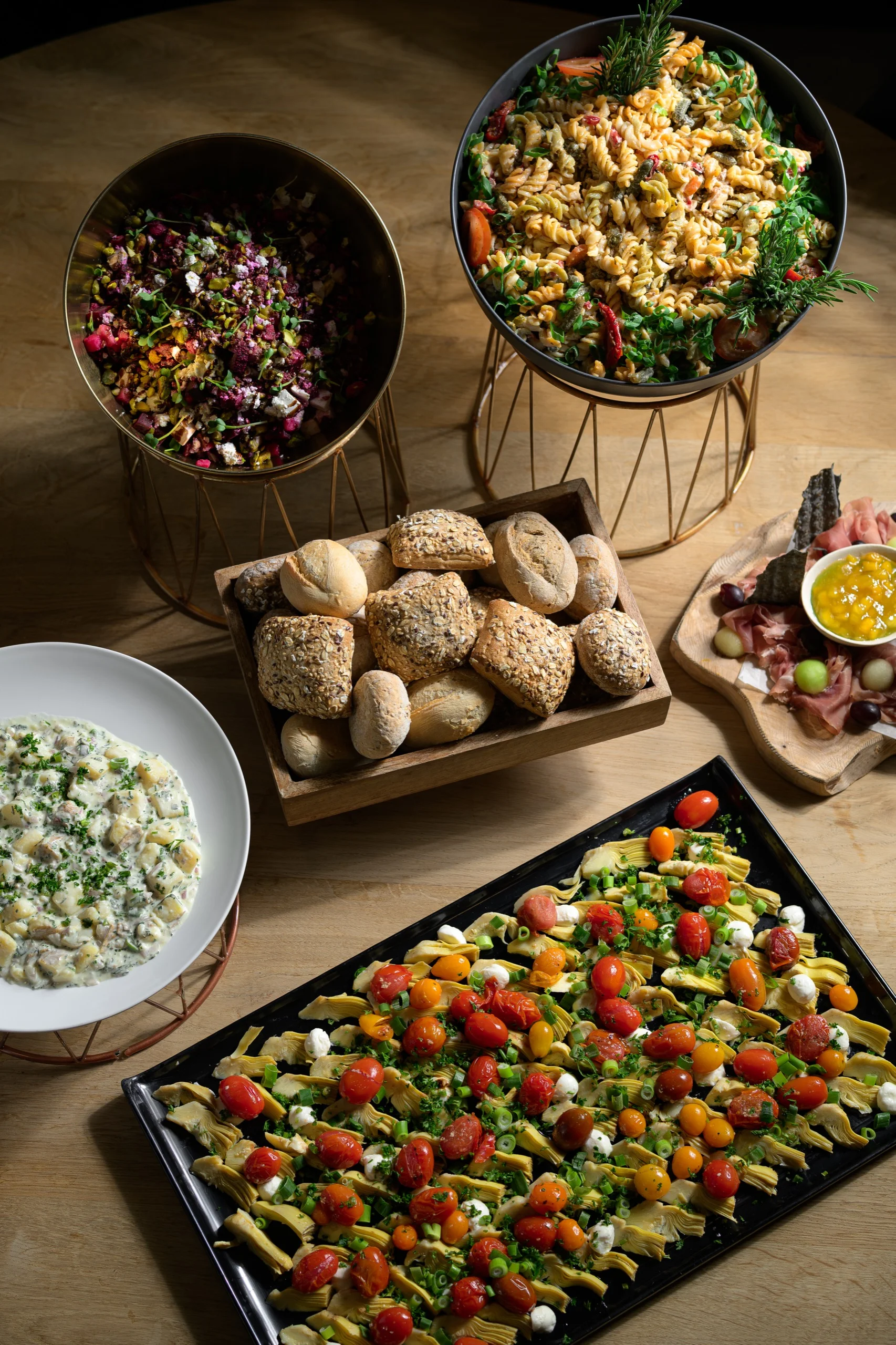
At a buffet, guests decide when to eat and how much to take. That works well for larger groups and for events where food is not the main feature. A buffet is usually more efficient in terms of staffing, but it does require more square footage and power for hot holding equipment.
Food safety matters for both
What many clients do not realize is that the same legal food safety standards apply to both formats. According to the Dutch Food and Consumer Product Safety Authority (NVWA), HACCP is mandatory for anyone preparing or selling food, including caterers providing walking dinners and buffets on location. With a buffet that stays open for a longer period, temperature control becomes a key point to watch closely.
How to use this in practice:
- Want guests to interact and mingle? Choose a walking dinner
- Running a program with speakers? A buffet creates more calm and structure
- More than 150 guests and limited service staff? A buffet is easier to scale
- Check whether your caterer can clearly demonstrate HACCP compliance for hot holding
What does a walking dinner cost per person in 2026?
In 2026, a walking dinner typically costs between 45 and 75 euros per person, depending on the number of courses, the service level, and the location. A buffet is often in a similar or slightly lower price range, mainly because it requires less active service.
What drives the price up
The number of courses is the biggest cost factor. A 5 course walking dinner usually sits at the lower end of the range, while 7 or 8 courses with more premium ingredients push the price closer to the top. Service is another major factor: a walking dinner needs more staff per guest than a buffet, because each course has to be actively served.
The market is continuing to rise steadily. CBS reports that the first quarter of 2026 marked the twentieth consecutive quarter in which the hospitality sector generated more revenue than the year before. Catering prices are rising along with that trend, which makes a clear, detailed quote more important than ever.
Hidden costs that can throw off your budget
If your event is at an external venue or in a garden setting, there are often extra costs that are not included in the per person price: power supply, hot holding equipment, furniture, and transport. For outdoor events, electricity is often the sticking point. If you are planning a garden party, it helps to read how to avoid issues with power and weather in advance, because if the generator fails, both a walking dinner and a buffet come to a halt.
What you should expect for the price
An all-in rate will usually include food, service staff, tableware, setup, and breakdown. Always ask exactly what is and is not included. A price of 50 euros per person without service can easily be more expensive than 65 euros all-in.
How to use this in practice:
- Ask for a per person quote that includes service, tableware, setup, and breakdown
- For outdoor venues, budget 10 to 20 percent extra for power and furniture
- Decide on the number of courses early, because this affects both price and guest experience
- Compare quotes based on all-in pricing, not just the food cost
How many bites and courses do you need per person?
For a walking dinner that replaces a full meal, you will usually need 6 to 8 small dishes or bites per guest, spread over 5 to 8 courses. Underestimate that, and guests go home hungry. Overestimate it, and you end up paying for food that never gets eaten.
The math behind a satisfying meal
A small course at a walking dinner is typically a few bites: an amuse bouche, a mini dish, or a small dessert. If the walking dinner is replacing a full evening meal, you will generally want to aim for 7 or 8 courses. If it is part of a drinks reception rather than the main meal, 4 or 5 courses is often enough. Imagine an HR manager at a manufacturing company with 80 employees organizing an anniversary event. If they serve a 5 course walking dinner after drinks, part of the group may still feel hungry. With 7 courses, it more clearly takes the place of dinner.
How this differs from a buffet
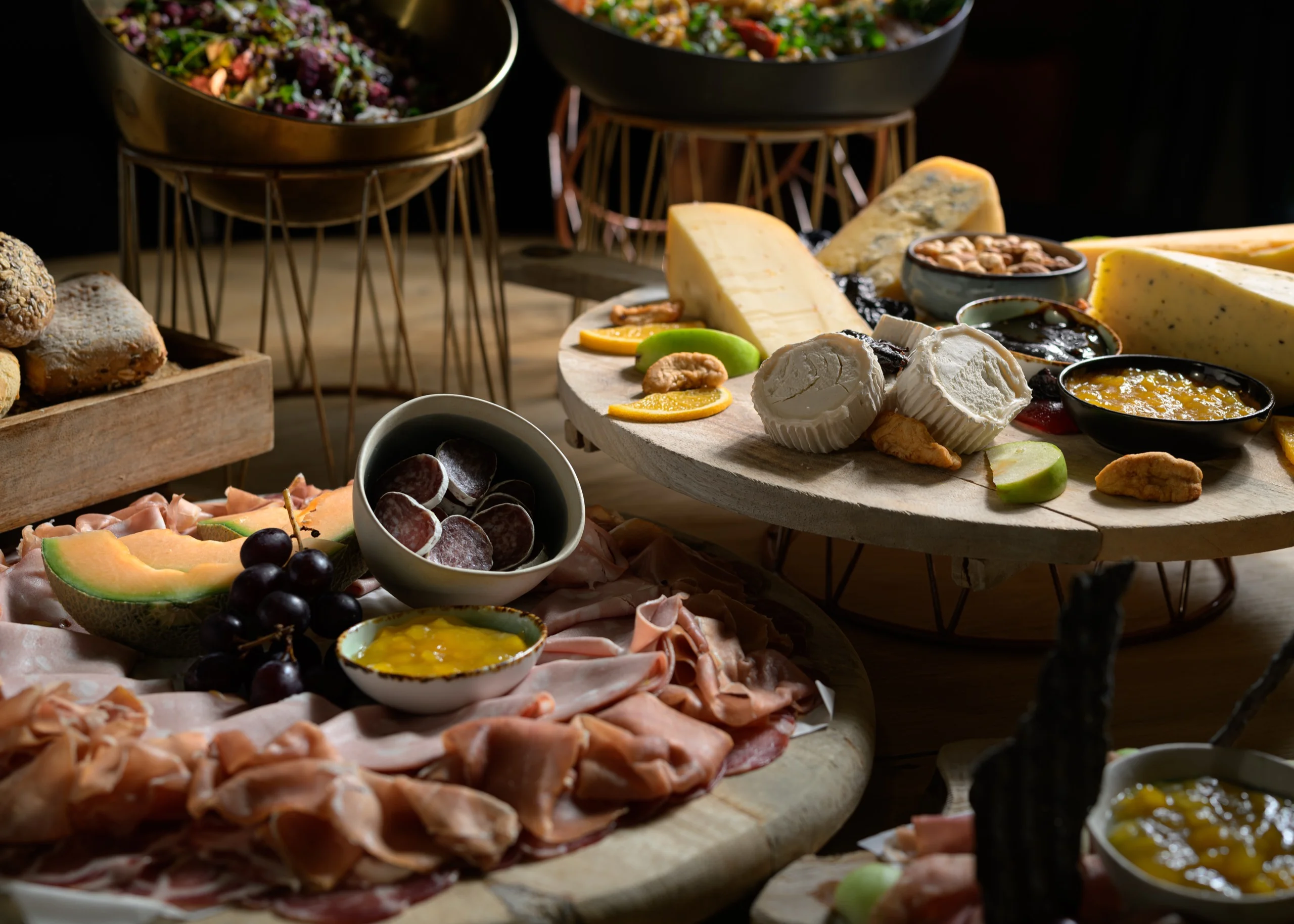
With a buffet, guests control their own portion size. That means you do not need to count courses, but you do need enough variety and volume. A practical rule of thumb is to offer at least 3 to 4 hot items, 2 to 3 cold dishes, and a dessert section.
Accounting for dietary requirements
Allergens and dietary needs matter in both formats. In a walking dinner, it is easier to label each course clearly than at an open buffet where guests serve themselves from shared dishes. La Casserole uses a system that records allergens for every dish, which makes communication with guests who have dietary requirements much easier in a walking dinner setting.
How to use this in practice:
- Full meal? Plan 6 to 8 dishes per guest
- Add-on to drinks? 4 to 5 courses is usually enough
- For a buffet: at least 3 hot items, 2 cold dishes, and 1 dessert component
- Collect dietary requirements at least two weeks in advance
Detailed comparison: walking dinner versus buffet
The choice between these two formats usually comes down to five decision points: networking goals, group size, available space, event schedule, and budget. The table below lays out the main differences side by side.
The numbers at a glance
| Aspect | Walking dinner | Buffet |
|---|---|---|
| Price per person | 45 to 75 euros | 40 to 65 euros |
| Number of courses or components | 5 to 8 courses | 6 to 10 components |
| Staffing | More service staff | Fewer service staff |
| Networking impact | High (guests keep moving) | Low (guests stay put) |
| Space required | Open circulation space | Buffet tables plus power supply |
| Ideal group size | 30 to 150 guests | 50 to 300 guests |
When networking is the deciding factor
For a product launch or client event, movement is often the whole point. A walking dinner encourages guests to circulate, which creates more natural opportunities for account managers and clients to meet. A seated buffet setup usually does the opposite.
When scale and speed matter more
At a large company party with 250 guests, a walking dinner becomes logistically demanding. You need a lot of staff to serve all those courses smoothly. A buffet is much easier to scale in that situation. Bringing catering, furniture, technical support, and staffing together under one point of coordination is exactly where La Casserole’s full-service approach stands out from separate suppliers who each only handle one piece of the puzzle.
Food safety at temporary venues
External venues come with extra requirements. According to Ondernemersplein (Dutch government business portal), mobile and temporary business spaces such as event tents must meet specific food safety standards. At a buffet in a tent, temperature control is often more challenging than in a controlled indoor kitchen environment.
How to use this in practice:
- If networking is the main goal, a walking dinner usually wins
- More than 200 guests? A buffet is often the more realistic option
- External venue or tent? Check the caterer’s approach to mobile food safety
- Tight speaker schedule? A buffet gives you more control over timing
Which option fits your event?
The right format should follow the goal of your event, not your personal preference: first decide what the event needs to achieve, then choose the dining style that supports that behavior. A strong event partner starts there, not with a menu.
Decision guide by event type
For a networking reception or client event with fewer than 150 guests, a walking dinner is usually the stronger choice. For an informal company party or anniversary celebration with a large group, a buffet tends to work better. For a conference with a tightly timed agenda and short breaks, a buffet is practical because guests can eat at their own pace without waiting for courses. If you are planning catering for that kind of event, this article on choosing the right catering for a conference or client day is a useful next read.
Food safety culture as a quality signal
A professional caterer is only as good as their approach to hygiene. Since 2021, food safety culture has been a mandatory part of European hygiene legislation, according to the NVWA. Caterers can meet these requirements through the hospitality Hygiene Code from KHN, an NVWA-approved HACCP plan that, according to the KVK (Dutch Chamber of Commerce), cost 110 euros excluding VAT in January 2026. Ask your caterer how they manage this in practice. It is one of the clearest ways to separate a true professional from an occasional supplier.
Hybrid formats are also possible
This is not an all or nothing choice. An event can begin with a walking dinner during the networking portion and move into a dessert buffet later in the evening. La Casserole combines dining formats when the program calls for it, matching the timing of the courses and the buffet opening to the event schedule.
How to use this in practice:
- Networking event, fewer than 150 guests: choose a walking dinner
- Large company party, more than 150 guests: a buffet is often better
- Conference with a tight agenda: choose a buffet with a short service window
- Not sure? Combine both, such as a walking dinner with a dessert buffet
- Always ask your caterer about HACCP and the Hygiene Code
Frequently asked questions
How much does a walking dinner cost per person?
In 2026, a walking dinner typically costs between 45 and 75 euros per person. The final price depends on the number of courses, the service level, and the location. For an external venue or garden party, budget 10 to 20 percent extra for power, furniture, and transport, and always ask for an all-in quote that includes service.
What is the difference between a walking dinner and a buffet?
A walking dinner is a roaming meal made up of small courses, while a buffet is a central self-service setup where guests serve themselves. The difference is really about guest behavior: a walking dinner keeps people moving and encourages networking, while a buffet creates a calmer atmosphere and is easier to scale for large groups. For networking events, a walking dinner is usually the stronger option.
How many bites per person do you need for a walking dinner?
For a full meal, you will usually need 6 to 8 small dishes per guest, spread across 5 to 8 courses. If the walking dinner is more of an addition to drinks than a full dinner replacement, 4 to 5 courses is often enough. Too few courses leaves guests hungry, while too many leads to food waste and unnecessary costs.
What do you serve at a walking dinner?
A walking dinner usually consists of small courses that together form a complete menu: amuse bouches, hot and cold mini dishes, and a dessert in bite-sized form. The food is designed to be easy to eat while standing or moving around, usually with just a fork or by hand. Variety and themes, such as Mediterranean or Burgundian-style menus, also shape the overall experience.
How does La Casserole help you choose between a walking dinner and a buffet?
La Casserole starts with the goal of the event rather than a fixed menu, and brings together catering, service, furniture, and technical support under one point of coordination. With more than forty years of experience and its own event venues in Brabant, La Casserole matches the dining format to the program, group size, and available space, while safeguarding food safety in line with HACCP. That helps you avoid choosing a format that works against your networking goals or event schedule.
Conclusion
Choosing between a walking dinner and a buffet is not really about food preferences. It is a strategic event decision. If you want guests to mingle and connect, a walking dinner encourages exactly that. If you need calm, scale, or a tightly controlled speaker schedule, a buffet gives you more structure. Start with the goal of the event, not the menu.
The catering market is continuing to grow, and food safety requirements are becoming stricter, which makes outsourcing to a partner with a proven HACCP process a smarter choice than ever. When catering, service, furniture, and technical support are managed under one point of coordination, you save time and reduce stress. La Casserole’s approach, aligning the dining format with the event schedule, shows how to make that choice in a practical way without compromising on logistics or guest experience.
Looking to host a stylish event in Brabant? Let us handle it!
Sources
- CBS (Centraal Bureau voor de Statistiek) — Cbs
- Nederlandse Voedsel- en Warenautoriteit (NVWA) — Nvwa
- Ondernemersplein (Rijksoverheid) — Ondernemersplein
- KVK (Kamer van Koophandel) — Kvk
- Omzet horeca groeit in vierde kwartaal met ruim 3 procent — CBS (Centraal Bureau voor de Statistiek)
- Omzet horeca groeit in eerste kwartaal 2026 met ruim 2 procent — CBS (Centraal Bureau voor de Statistiek)
- HACCP — Nederlandse Voedsel- en Warenautoriteit (NVWA)
- Regels voor voedselveilig werken — Ondernemersplein (Rijksoverheid)